In this article
- Make your first plate a complete decision
- Give each food a job on the plate
- Keep the protein visible
- Give vegetables some space
- Choose the starch instead of collecting it
- Use your own crockery as a reference
- Make second helpings a separate decision
- Handle biryani without pretending it is plain rice
- Do not arrive at dinner desperate to eat
- Adjust the routine, not your entire cuisine
Want a plan built around your job and desi food? Try 1:1 online coaching with Coach Usman.
The easiest place to practise portion control is before the serving spoon reaches your plate.
At a desi dinner table, portions rarely arrive as a clear decision. Someone passes the roti basket. You add rice while waiting for the salan. Another spoon of gravy lands on top because the first serving looks dry.
Nothing seems excessive on its own. But by the time you start eating, you have built a meal without really choosing its size.
The answer is not to stop eating family food. It is to make the serving process more deliberate.
Make your first plate a complete decision
Portion control works better when you can see what you intend to eat before you begin.
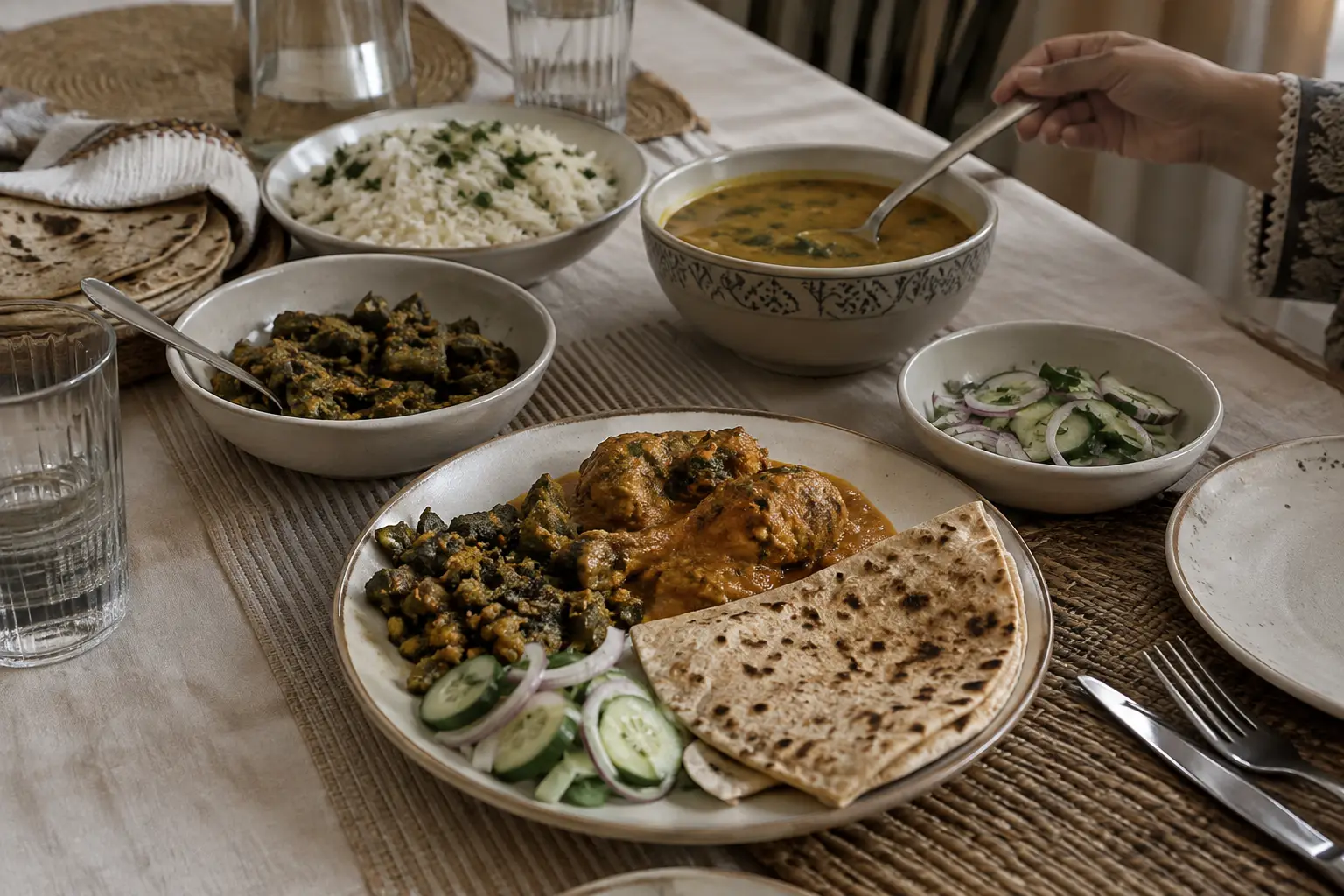
That means putting together a complete plate rather than eating roti while still deciding how much rice, chicken or daal to take. It also means noticing food served outside the plate: the roti beside you, the raita bowl and anything you pick at while standing in the kitchen.
Try this serving order:
- Choose your main protein food, such as chicken, fish, meat, eggs or daal.
- Add sabzi or salad where available.
- Choose your roti, rice or a deliberate combination of both.
- Add gravy and sides with attention rather than automatically.
This is not a rule about which food you must eat first. It is a way to stop the easiest-to-serve foods from taking over the meal.
Give each food a job on the plate
A useful desi plate needs more than a smaller pile of everything. It should still feel like a proper meal.
Keep the protein visible
With chicken salan, look at the chicken you have served, not just the volume of sauce. A deep bowl of gravy with a small piece of chicken is different from a serving with a meaningful amount of meat.
The same applies to qeema mixed with potatoes or a curry with a few pieces of fish. Notice what is actually there.
Daal, chana and rajma can also contribute protein, along with carbohydrate and fibre. They do not have to fit neatly into a single food category to belong in your meals.
Give vegetables some space
Sabzi, cucumber, tomatoes or leftover cooked vegetables can help make a meal more filling without relying entirely on extra roti or rice.
But vegetables are not automatically light regardless of preparation. Sabzi cooked with plenty of oil still deserves a deliberate serving. You do not need to fear it; just avoid treating the portion as unlimited.
Choose the starch instead of collecting it
Roti and rice can both fit into a fat-loss plan. The common problem is taking a usual serving of each without adjusting either.
If you want both, make each serving smaller than you would if it were your only starch. If you prefer roti, enjoy it without adding rice simply because the dish is on the table.
Use your own crockery as a reference
“Have a bowl of rice” is vague when household bowls vary so much. Rotis also differ in size, thickness and added fat.
For a practical starting point, use the same plate, katori and serving spoon most days. Serve rice in a similar way rather than pressing it down sometimes and piling it high at other times.
You are creating a repeatable reference, not pretending your spoon is a precise measuring tool.
Once your usual meal is consistent, adjustments become easier. You can serve slightly less rice or a little less oily gravy while keeping the rest of the meal satisfying.
Changing everything at once makes it harder to know what is helping.
Make second helpings a separate decision
A first plate can be sensible while repeated top-ups quietly turn dinner into a much larger meal.
Before refilling, finish what you have and pause. Ask yourself:
- Am I still hungry, or does the food simply taste good?
- Was my first plate missing something substantial?
- Would more chicken, daal or vegetables satisfy me?
- Am I reaching for food because everyone else is still eating?
There is no need to turn this into a test of willpower. If you are hungry, have more food. The useful change is choosing the refill rather than accepting every passing dish.
At a family table, a simple “That was lovely; I’ll take more if I need it” can protect that pause without making dinner awkward.
Handle biryani without pretending it is plain rice
Mixed dishes need a slightly different approach. You cannot always divide biryani, pulao or haleem into tidy sections on a plate.
Instead, serve the main dish deliberately, then add a side that makes the meal feel complete. With biryani, that might mean cucumber salad and raita rather than extra rice while searching for another piece of chicken.
At a dawat, look at the food before serving yourself. Choose what you actually want instead of taking a full helping of every dish.
You can enjoy biryani and dessert. The practical question is whether you want generous portions of everything, or more moderate portions of the foods you value most.
Do not arrive at dinner desperate to eat
Portion decisions become harder when you have spent the day on chai and whatever was available at work.
For an office worker, a proper lunch may make dinner easier to manage. For someone on shifts, packing a meal can be more useful than expecting perfect restraint after a long commute.
If evening grazing is a recurring issue, look at your chai-time and evening eating habits, not just your dinner plate.
The aim is to arrive hungry enough to enjoy dinner, not so hungry that serving becomes a race.
Adjust the routine, not your entire cuisine
Portion control supports fat loss when it helps you eat less energy than you use over time. A neatly arranged plate alone cannot guarantee that.
If your weight trend is not moving down, review the repeatable extras: refills, cooking oil, sweetened chai and weekend meals. This guide to why weight loss can stall can help you examine the wider pattern.
Start with one ordinary meal. Use familiar crockery, build a complete plate and make refills a conscious choice.
You do not need to reject roti, daal or family dinners. You need a serving routine that lets you enjoy them while staying aware of how much you eat.
This is general fitness information, not medical advice. Please talk to a doctor before changing your diet or exercise routine, especially if you have a health condition.
FAQ
Can I eat roti and rice in the same meal?
Yes. Serve smaller amounts of each than you would if either were your only starch, rather than automatically taking your usual full serving of both.
Do I need to weigh all my desi food?
Not necessarily. Consistent crockery and serving habits offer a practical starting point, although they do not measure calories precisely.
What if I am still hungry after my plate?
Have more food if you need it. Check whether your first serving included enough substantial food, such as chicken, daal and vegetables, rather than only reducing portions.
Can portion control work at a dawat?
Yes. Look at the options first, choose the dishes you most want and serve deliberately. You do not have to taste everything or avoid your favourite foods.
Coach Usman, 12+ years of coaching experience
1:1 online coach for Pakistani men worldwide, building fat-loss plans around real jobs, shifts and desi food.
coachusman.comWant a coach who builds the plan around you?
Coach Usman builds your diet and training around your job, your schedule and the desi food you already eat.
Start with Coach UsmanComments (0)
No comments yet. Be the first.