In this article
- Keep the family menu, change your meal structure
- Give roti a job, not the whole job
- Make your usual roti easier to judge
- Serve a starting meal, then reassess
- Change the support around dinner
- Use familiar dinners as your starting point
- When dinner is chicken salan
- When dinner is daal and sabzi
- When dinner is biryani or a dawat spread
- Adjust the pattern, not your food identity
Want a plan built around your job and desi food? Try 1:1 online coaching with Coach Usman.
A fat-loss plan becomes harder to follow when it requires a different dinner from everyone else at home.
The family is eating roti and chicken salan. Your plan says grilled chicken and steamed vegetables. You arrive home late, the separate meal isn’t ready, and suddenly ordinary dinner feels like going off track.
That is a planning problem, not a character flaw.
With 12+ years of coaching experience, my approach is practical: make your usual food workable before building a completely new menu. For Pakistani men, that often means keeping roti and changing how the rest of the meal comes together.
Keep the family menu, change your meal structure
Fat loss requires an overall calorie deficit: eating less energy than your body uses over time. Removing roti is not a requirement.
Roti contributes energy, so its size and amount matter. But so do cooking oil, extra gravy, sweet chai, snacks and everything else you eat. Blaming the bread while ignoring the whole day gives you an incomplete picture.
The useful question is not, “Can I eat roti?”
It is, “How can I make this meal satisfying without eating more than I need?”
That question lets you work with daal, sabzi, eggs, chicken, fish and ordinary home cooking. It also saves you from expecting whoever cooks at home to run a separate diet kitchen.
Give roti a job, not the whole job
Roti is part of the meal. It does not need to carry the entire meal.
If lunch is mostly roti with a little gravy, you may finish without much protein or vegetable volume. Another roti becomes the easiest way to make lunch feel complete.
Instead, build the meal around these parts:
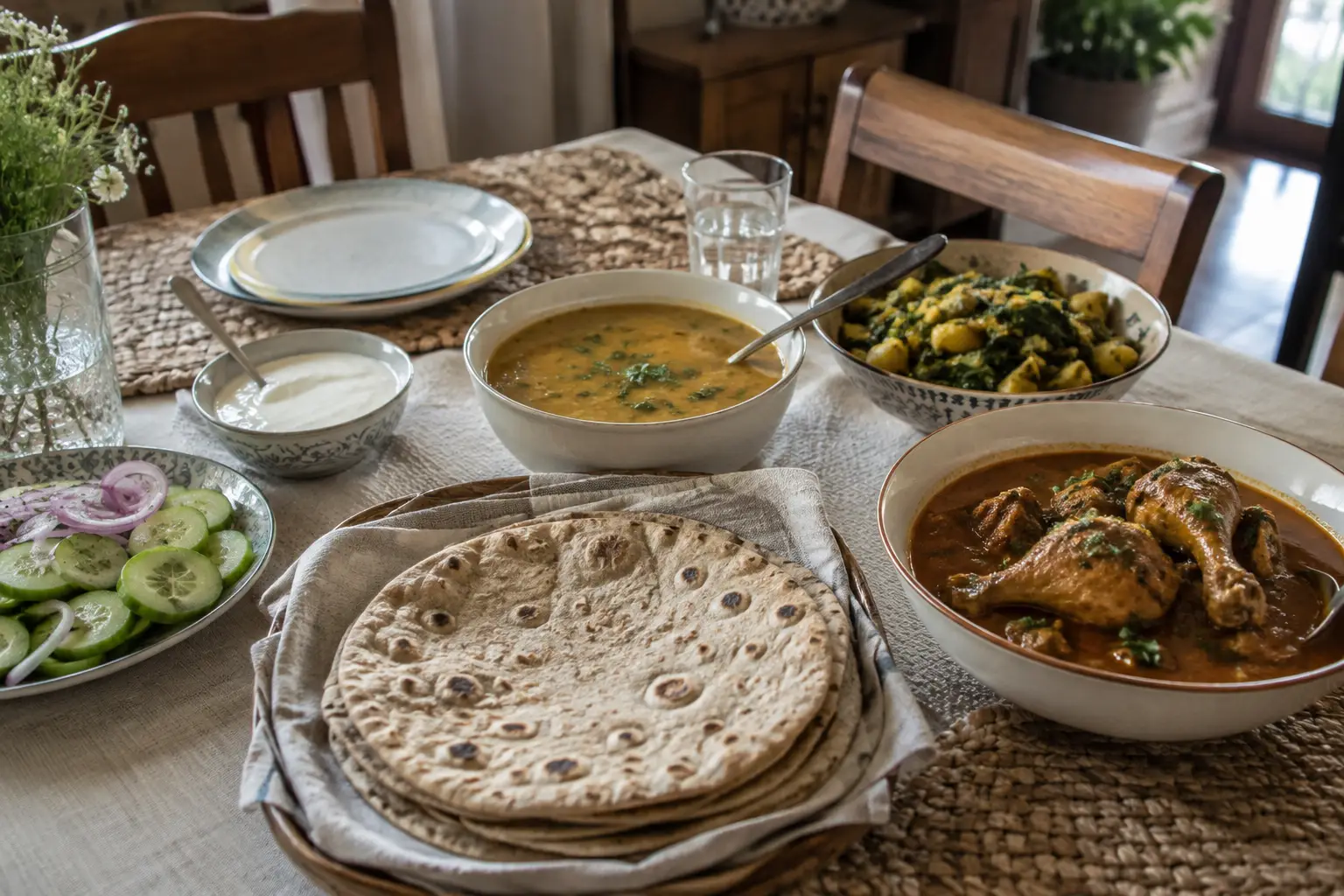
- A protein source: chicken, fish, eggs, lean meat, daal, chana or beans.
- Vegetables: cooked sabzi, salad or a combination you enjoy.
- Roti: an amount that fits your appetite, activity and overall intake.
- Enjoyable extras: chutney, raita or some gravy, served deliberately rather than added on autopilot.
Daal and chana provide protein as well as carbohydrate. They are useful foods, not unlimited foods. Where practical, pairing them with plain yogurt or another protein source can help make the meal more substantial.
You do not need a perfect plate. You need something more balanced than bread carrying a small amount of salan.
Make your usual roti easier to judge
“How many rotis should I eat?” sounds straightforward, but a roti is not a fixed measurement.
A small, thin homemade roti is different from a large, thick one. Added ghee or oil changes the meal too. Someone doing physical work may also need a different amount of food from someone sitting at a desk most of the day.
Start by making your usual serving reasonably consistent. Use a similar roti size when possible, and notice what goes alongside it.
You do not have to weigh every family dinner. But if the bread changes size, the salan becomes richer and the snacks increase, it becomes harder to understand why progress has changed.
For practical ways to make serving more deliberate, read desi portion control at the serving spoon.
Serve a starting meal, then reassess
Put your initial meal on a plate rather than eating directly from a constantly refilled spread.
Eat at a comfortable pace. Before taking more, pause and check whether you are still physically hungry or simply continuing because hot roti has arrived.
If you are hungry, you can eat more. The point is to make that a decision, not a rule that you must ignore your appetite.
Change the support around dinner
Keeping roti works best when you stop asking dinner to fix an underfed, disorganised day.
Imagine a workday with chai for breakfast, a rushed lunch and a long commute. By dinner, you are hungry enough to eat whatever arrives first. Trying to solve that with stricter bread rules misses the bigger issue.
Build a more reliable lead-in to dinner:
- Have a proper lunch rather than saving all your food for later.
- If dinner will be late, plan something simple such as plain yogurt and fruit, or an egg with a small meal.
- Keep an easy protein option available when the family meal is mostly sabzi.
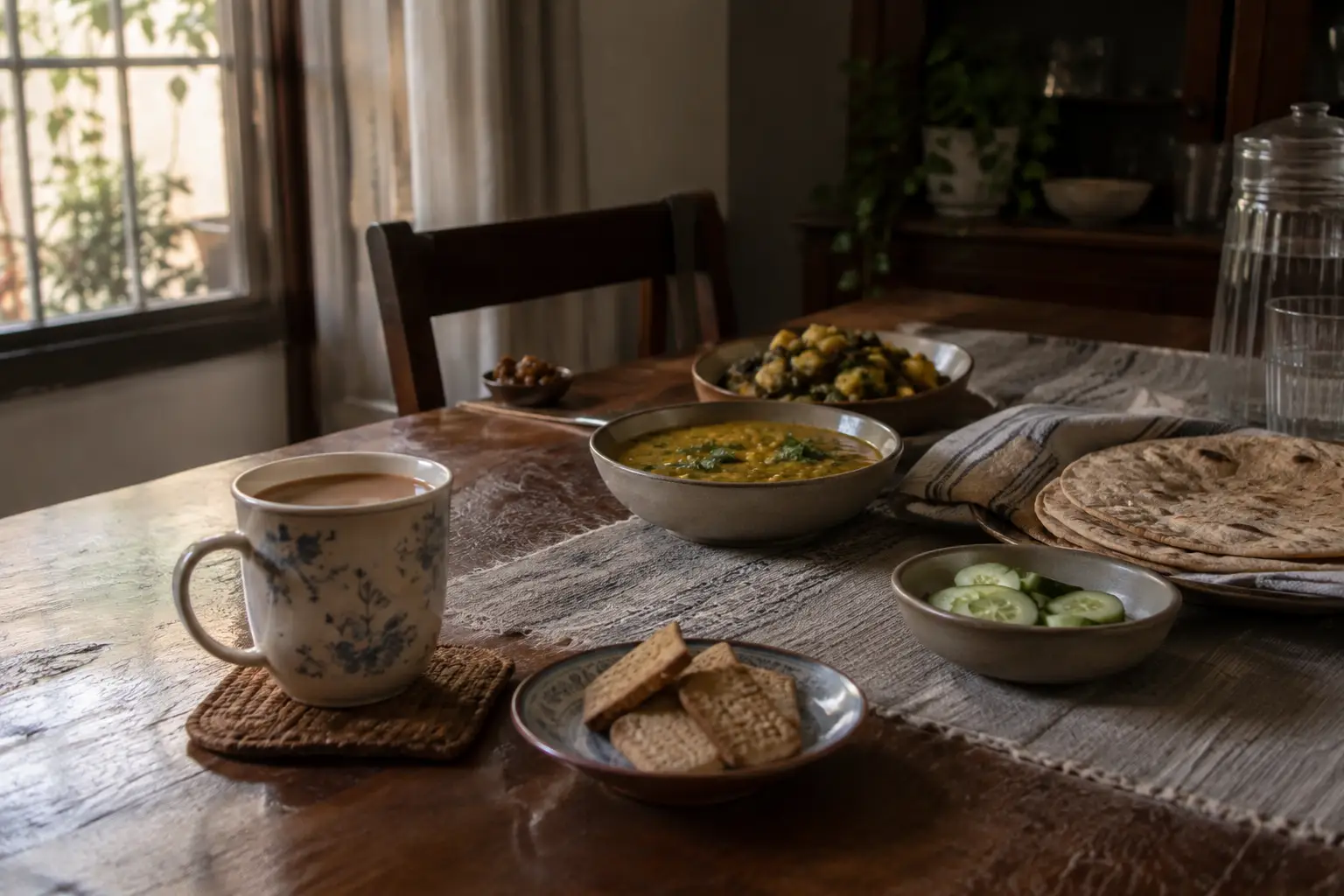
- Notice whether repeated sweet chai and biscuits have become an unplanned meal of their own.
For a man working shifts in the Gulf or arriving home late in the UK, meal timing may look different. The principle stays the same: avoid regularly reaching your main meal both exhausted and extremely hungry.
Use familiar dinners as your starting point
You do not need a collection of special fat-loss recipes. Start with what is already being cooked.
When dinner is chicken salan
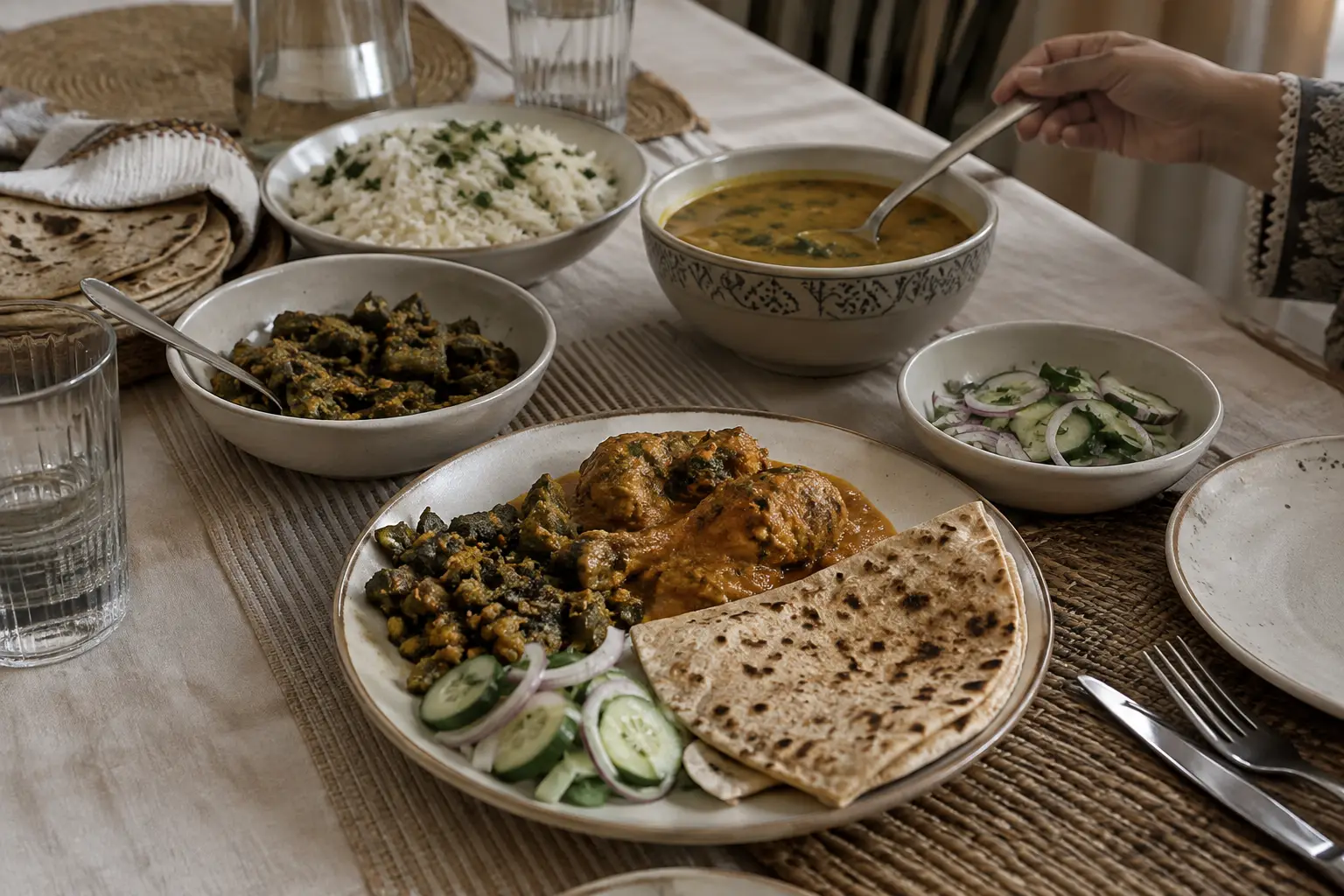
Keep the roti. Serve chicken pieces rather than mostly gravy, and add salad or cooked vegetables if available. Enjoy the salan without repeatedly topping up the plate just to finish extra bread.
When dinner is daal and sabzi
Keep both. Build a satisfying serving, include roti deliberately, and consider plain yogurt alongside it. Notice the oil used in cooking without treating daal or sabzi as the problem.
When dinner is biryani or a dawat spread
Roti is allowed, but it is not compulsory. If you want biryani, enjoy it rather than adding bread from habit. Choose the foods you actually want, serve them, and avoid turning one social meal into a whole weekend of unplanned eating.
Adjust the pattern, not your food identity
Give your routine enough consistency to judge it fairly. Look at your weight trend under similar conditions, how clothes fit, hunger and how manageable the plan feels.
If progress is not moving in the direction you want, review the whole pattern before banning roti. Check changing portions, oily extras, drinks, weekend meals and daily movement. This guide to why weight loss can stall can help you organise that review.
Make a manageable adjustment, then reassess. Avoid cutting everything at once.
The goal is not to prove you can live without Pakistani food. It is to build a way of eating you can repeat at home, around work and with your family. Roti can stay at that table.
This is general fitness information, not medical advice. Please talk to a doctor before changing your diet or exercise routine, especially if you have a health condition.
FAQ
Can I eat roti every day and still lose fat?
Yes. Roti can fit into a calorie deficit. The amount you eat and your overall food intake matter more than removing it.
How many rotis should I eat for weight loss?
There is no universal number. Roti size, your activity, the rest of your meal and your overall intake all affect what works for you.
Should I replace roti with rice?
You do not need to. Either can fit a fat-loss plan. Choose what you enjoy and pay attention to portions and what accompanies it.
Can I eat roti at night?
Yes. Eating roti at night does not automatically prevent fat loss. Your overall eating pattern matters more than the clock.
Coach Usman, 12+ years of coaching experience
1:1 online coach for Pakistani men worldwide, building fat-loss plans around real jobs, shifts and desi food.
coachusman.comWant a coach who builds the plan around you?
Coach Usman builds your diet and training around your job, your schedule and the desi food you already eat.
Start with Coach UsmanComments (0)
No comments yet. Be the first.