
In this article
Want a plan built around your job and desi food? Try 1:1 online coaching with Coach Usman.
The version of you who makes the fitness plan is often better rested than the version who has to follow it.
On a quiet Sunday, training regularly and preparing every meal sound manageable. By Thursday, work has run late, the fridge looks empty, and someone has brought home biryani.
Suddenly, the plan feels like another job.
In my 12+ years of coaching, I have learned not to treat every difficult week as a motivation problem. Often, the real issue is that the plan only works under good conditions.
I want my clients to have a routine their tired self can follow, not just one their enthusiastic self approves of.
Why the excitement wears off
A new goal gives you something fresh to think about. You imagine feeling stronger, looking better in your clothes, or getting through the day with more energy.
That excitement can help you begin. But eventually, the actions become familiar. You are packing lunch again. Doing the same lifts again. Deciding what to eat while everyone else orders takeaway again.
The effort is immediate. Progress is usually less obvious from day to day.
Meanwhile, work and family still need you. A Pakistani man working shifts in the Gulf may have very different training options from someone working from home in Canada. Neither needs a lecture about wanting it badly enough.
My approach is simple: use motivation when it appears, but do not make it responsible for keeping the whole routine alive.
Build the plan around an ordinary difficult day
When I help my clients organise their routines, I want to understand the difficult days, not just the free ones.
Ask yourself:
- When does work usually become unpredictable?
- What food is available when I get home tired?
- Which training time competes least with family responsibilities?
- What do I stop doing first when the week gets stressful?
- Does my routine depend on cutting into sleep?
These questions tell you where the plan needs support.
If evening training repeatedly clashes with family dinner, another motivational video will not fix the timing. You need a different slot or a shorter session.
If lunch is regularly missed, arriving home hungry is not a surprising failure of discipline. Make lunch easier to access before judging your evening choices.
Give your routine a full version and a fallback
I like a fallback plan because it removes the choice between doing everything and doing nothing.
The full version is what you follow when time and energy allow. The fallback is a smaller, useful action for a genuinely difficult day.
It is not a punishment. It is not something you must compensate for later.
For training
Your full session might include your planned lifts and accessories. Your fallback could keep the main movements and leave out the extras.
Decide this before you reach the gym. Otherwise, you can spend your limited time negotiating with yourself.
Keep familiar exercises, record what you do, and avoid turning a shorter session into a frantic challenge. My guide to progressive overload explains how to make training purposeful without constantly chasing novelty.
Sometimes the sensible choice is rest, especially when training would replace needed sleep. A fallback should reduce pressure, not create another rule to feel guilty about.
For food
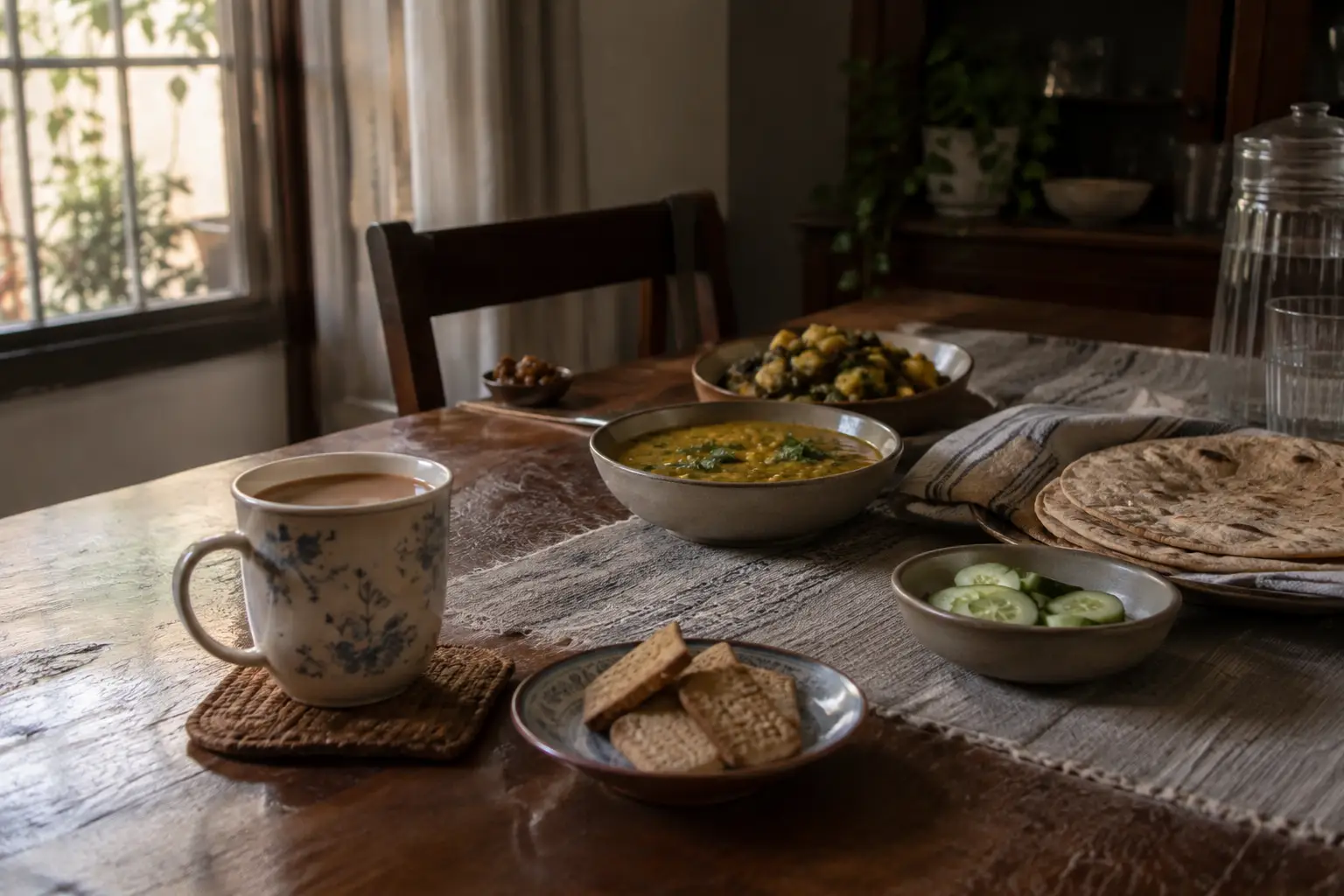
Your full version might be a prepared lunch. Your fallback could be an easy meal assembled from what is already available: eggs with roti, leftover chicken with sabzi, or daal with plain yoghurt.
These meals do not need to look impressive. They need to be practical enough to repeat.
Keep suitable ingredients available, and decide what a reasonable serving looks like before hunger takes over. For a simple starting point, use my approach to portion control with the serving spoon.
Remove decisions before you need willpower
A plan can look simple on paper and still contain too many decisions.
Which workout? What time? What should I eat afterwards? Is there anything ready at home?
I encourage my clients to settle the repeat questions in advance.
Put your training clothes where you will see them. Save your workout somewhere easy to open. Keep a reliable lunch option for workdays. Agree on training time with your family rather than hoping nobody needs you.
For shift workers, an event can be a better cue than a clock time. Training after waking may be more dependable than insisting on an evening session when your schedule keeps changing.
The goal is not to organise every minute. It is to make the next useful action obvious.
Stop turning a missed action into a broken week
One missed workout does not require a new programme. A dawat does not mean you have ruined your eating routine.
The bigger problem is often the story that follows: the week is spoiled, so you might as well restart on Monday.
I want my clients to practise returning without drama.
After an unplanned meal, have your next normal meal. After a missed session, check the next realistic training slot. Do not squeeze everything into an already crowded day to prove a point.
If the same disruption keeps happening, adjust the plan. If it was an unusual day, move on.
Consistency includes returning. It does not mean nothing ever interrupts you.
Review the routine, not your character
At the end of the week, look at what actually happened.
Which actions were easy to repeat? Which ones needed ideal conditions? Did your fallback help, or was it still too demanding?
Then change one practical thing. Prepare lunch earlier. Move a session. Keep an easy dinner available. Protect your bedtime instead of squeezing more into the evening.
Avoid rewriting your whole life because of one frustrating week.
My goal is not to keep my clients permanently motivated. It is to help them build a routine that still makes sense when enthusiasm is quiet.
Before your next busy day, choose your fallback workout, your easy meal, and your next realistic opportunity to act. That is a more useful starting point than waiting to feel ready again.
This is general fitness information, not medical advice. Please talk to a doctor before changing your diet or exercise routine, especially if you have a health condition.
FAQ
Is it normal for fitness motivation to fade?
Yes. Excitement changes as a routine becomes familiar and other demands compete for attention. A workable plan should not depend on feeling enthusiastic every day.
What should I do when I do not feel like training?
Check what is getting in the way. A shorter, planned session may help when time is tight. If training would replace needed sleep, adjust the schedule instead.
Will a fallback routine become an excuse?
Give it a clear purpose and review how often you use it. If you always need the fallback, your main plan may need to fit your actual schedule better.
How do I restart after missing several days?
Return at the next realistic opportunity with a manageable session or your next normal meal. Avoid trying to make up for everything at once.
Coach Usman, 12+ years of coaching experience
1:1 online coach for Pakistani men worldwide, building fat-loss plans around real jobs, shifts and desi food.
coachusman.comWant a coach who builds the plan around you?
Coach Usman builds your diet and training around your job, your schedule and the desi food you already eat.
Start with Coach UsmanComments (0)
No comments yet. Be the first.