In this article
- How do I progress from wall push ups to floor push ups?
- How should I do a wall push-up correctly?
- When should I move my hands to a lower surface?
- How many push-ups should I do each week?
- What if I cannot do a floor push-up yet?
- How can I fit push-up training into a weight-loss plan?
- How do I know when I am ready for a floor push-up?
- What should I do next?
Want a plan built around your job and desi food? Try 1:1 online coaching with Coach Usman.
A push-up can feel like a long way off when even the easiest version leaves your arms shaking. If you are learning how to progress from wall push ups to floor push ups, the answer is not to force a full push-up before you are ready. Build strength in stages, practise a few times each week, and keep each rep controlled.
Push-ups can help you develop upper-body strength, but they do not directly remove belly fat. For weight loss, pair regular strength training with a manageable calorie deficit and daily movement. You do not need to stop eating roti or avoid family meals to make progress.
How do I progress from wall push ups to floor push ups?
Think of the movement as a ladder. You start standing, then gradually lower the height of your hands until you are doing push-ups on the floor. Each lower position asks your chest, shoulders, arms and trunk to work a little harder.
A useful sequence is:
- Wall push-ups.
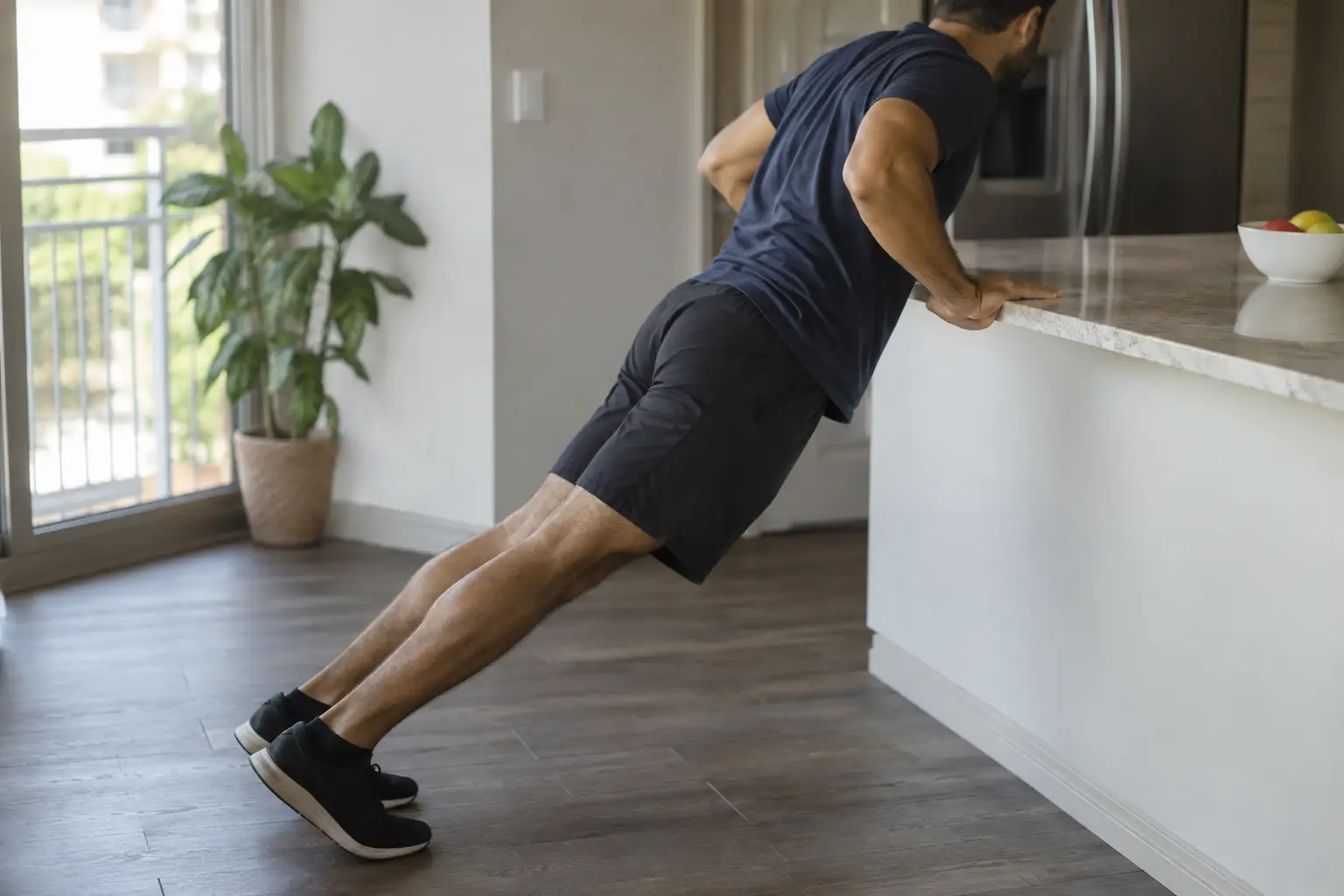
- High incline push-ups with your hands on a sturdy counter or fixed bench.
- Lower incline push-ups using a stable, lower surface.
- Knee push-ups on the floor, if they help you practise the same body position.
- Floor push-ups.
You may not need every stage. If a particular step feels too difficult, go back to the previous height and build more controlled repetitions there. The goal is not to rush down the ladder; it is to earn the next step with good form.
“Choose the hardest version you can repeat with control—not the hardest version you can survive once.”
How should I do a wall push-up correctly?
Stand facing a wall, about an arm’s length away. Place your hands on it around chest height and slightly wider than shoulder-width. Step your feet back a little so your body leans towards the wall.
Keep your body in one straight line from head to heels. Bend your elbows to bring your chest towards the wall, then press the wall away to return to the start. Your elbows should angle back rather than flare directly out to the sides.
Try this check before each set:
- Brace your middle gently, as if preparing for a light nudge.
- Keep your head in line with your body; do not reach your chin towards the wall.
- Move your chest and hips together instead of letting your waist sag.
- Use a comfortable range of motion that you can control.
- Breathe out as you press away from the wall.
Start with 2 or 3 sets of 6 to 10 repetitions. Rest for about a minute or two between sets. Stop a set when your form begins to change, even if you could force out more reps.
When should I move my hands to a lower surface?
Move to a lower incline when you can complete all your planned wall push-ups with steady form, without pain, across two or three training sessions. For example, if you are doing 3 sets of 10 wall push-ups with control, try a sturdy counter next time.
Keep the same basic technique at each height. Your hands stay on a stable surface, your body remains straight, and you lower yourself under control. Do not use a surface that can slide, tip or roll. A fixed kitchen counter or secure exercise bench is safer than a lightweight chair.
At the new height, your repetitions may drop. That is normal. You might begin with 3 sets of 5 or 6, then add repetitions gradually. When you can do around 3 sets of 10 to 12 controlled reps, test a slightly lower surface.
How many push-ups should I do each week?
For a beginner, practising two or three times a week is a sensible start. Leave at least a day between focused sessions if your arms or chest are still tired. A short routine is easier to fit around work, family meals and a changing schedule than a demanding daily plan.
Try this simple session:
- Wall or incline push-ups: 2–3 sets of 6–10 reps.
- Bodyweight squats to a chair: 2 sets of 8–12 reps.
- A comfortable walk: 10–20 minutes when your schedule allows.
Keep the push-up sets controlled and finish while you still have a little in reserve. You can find more guidance on starting strength work in how many sets per muscle per week for beginners.
If you are also losing weight, you do not need to turn every workout into a calorie-burning test. Strength sessions help you practise and build strength; food portions and everyday activity also matter. A practical approach to meals can include familiar foods such as eggs, daal, chicken, roti and chawal, with portions that suit your overall needs.
What if I cannot do a floor push-up yet?
That does not mean you are failing. The floor version places more of your bodyweight through your arms and chest than a wall version does. Keep training at the incline where your reps stay controlled, and build strength over time.
You can test a floor push-up occasionally, but avoid repeatedly attempting messy reps. One or two careful attempts after a warm-up are enough to check whether the movement is becoming more manageable. If your body starts to sag or you cannot lower yourself smoothly, return to an incline variation.
Knee push-ups can be another option, but keep a straight line from your knees through your hips and shoulders. Do not fold at the waist. Some people find incline push-ups easier to control because they practise a full-body line; choose the variation that lets you use consistent technique.
If you feel sharp pain, stop the movement rather than pushing through it. If you have a medical condition, check with your doctor before starting a new exercise routine.
How can I fit push-up training into a weight-loss plan?
Keep the workout small enough to repeat. You might do it at home before work, after a shift, or while dinner is being prepared. You do not need a perfect training time or a full gym setup to begin.
For food, start by making one meal more filling rather than changing everything at once. For example, include a clear protein source with lunch, serve a deliberate portion of roti or chawal, and add vegetables where they are available. Keep meals familiar and adjust portions gradually.
If your routine keeps changing, a written plan can reduce daily decision-making. The CU Fit app includes daily workouts that unlock as you progress, a custom diet built around foods you already eat, and weekly check-ins with photos, weight and waist measurements. It also includes progress charts and a “bad day” reset if you slip. Coach Usman personally reviews your progress after 6 check-ins. The app has a 7-day money-back option.
For more support with food and training, you can read about a weight loss coach in Pakistan. If you want direct one-to-one coaching instead, Premium online coaching is the higher-support option. You can also see CU Fit pricing before deciding what suits you.
How do I know when I am ready for a floor push-up?
You are ready to test the floor when you can complete your current incline variation for about 3 sets of 10 controlled repetitions, with your body steady and no uncomfortable pain. This is a practical guide, not a rule that every person must follow exactly.
For your first floor attempt, place your hands just wider than shoulder-width and brace your middle. Lower yourself only as far as you can control, then press back up. If you cannot complete a full rep, do not force it. Return to your incline and keep building.
Progress can also mean a lower hand position, a slower lowering phase or cleaner repetitions—not just a full push-up. Keep a simple record of the variation, surface height and repetitions. That helps you see changes even before you reach the floor.
What should I do next?
Choose a wall or incline height where you can do 2 or 3 controlled sets. Practise two or three times weekly, add repetitions gradually, and lower your hand position only when your technique stays steady. Keep your meals and weight-loss plan realistic enough to follow during ordinary workdays, not only on a perfect week.
Want a plan built around your job and your food? Start with CU Fit at coachusman.fit for an affordable custom diet and workout plan. Want Coach Usman to coach you 1:1? Choose Premium coaching at coachusman.com.
This is general fitness information, not medical advice. Please talk to a doctor before changing your diet or exercise routine, especially if you have a health condition.
FAQ
How long does it take to progress from wall push-ups to floor push-ups?
It varies with your starting strength, practice and recovery. Train two or three times a week, progress when you can control your current variation, and avoid rushing to a harder version.
Are incline push-ups better than knee push-ups for beginners?
Both can help. Incline push-ups let you adjust difficulty by changing hand height, while knee push-ups practise the movement on the floor. Choose the version that lets you keep your body controlled.
Do push-ups help with weight loss?
Push-ups build strength, but they do not target fat loss in one area. Weight loss depends on your overall eating pattern and activity; strength training can be one useful part of that plan.
Coach Usman, 12+ years of coaching experience
1:1 online coach for Pakistani men worldwide, building fat-loss plans around real jobs, shifts and desi food.
coachusman.comWant a coach who builds the plan around you?
Coach Usman builds your diet and training around your job, your schedule and the desi food you already eat.
Start with Coach UsmanComments (0)
No comments yet. Be the first.