In this article
- How to choose affordable protein foods in Pakistan: a six-point checklist
- Check 1: Choose a protein source before you build the meal
- Check 2: Compare the protein in a normal serving
- Check 3: Compare cost per meal, not just cost per kilo
- Check 4: Use affordable foods in different ways
- Check 5: Watch the extras that change the meal
- Check 6: Make the plan fit your week
- A simple affordable protein day
- Make protein part of a weight-loss plan
- Conclusion: How to choose affordable protein foods in Pakistan
Want a plan built around your job and desi food? Try 1:1 online coaching with Coach Usman.
At the grocery shop, the cheapest protein choice is not always the one that gives you the most protein for your money. If you are working out how to choose affordable protein foods in Pakistan, start by comparing useful portions—not just the price of a packet. That matters when you are trying to lose weight, feeding a family, and eating the meals already made at home.
Protein can help make meals satisfying and support muscle while you lose weight. But you do not need a special product, a complicated menu, or chicken at every meal. A few practical checks can help you choose foods that fit your budget and routine.
How to choose affordable protein foods in Pakistan: a six-point checklist
Use this checklist while planning meals or shopping. Prices change by area and season, so compare the options available to you rather than relying on one fixed price list. A food that is affordable for one household may cost more or be less convenient for another, so use your local prices and your normal serving sizes.
Check 1: Choose a protein source before you build the meal
Look at your usual meal and ask: what is the main protein here? It could be eggs at breakfast, daal at lunch, or chicken at dinner. Starting with that choice helps you build around what you already eat instead of buying a separate “diet food” shop.
For example, a meal of roti and vegetables may be filling, but it can be low in protein if there is no meaningful portion of daal, eggs, meat, fish, or another protein-rich food. Keep the familiar meal; add a sensible protein portion where you can. If the family meal already includes a protein source, you may only need to check whether your serving contains a useful amount.
Check 2: Compare the protein in a normal serving
A packet price can be misleading. Compare how much protein you get from the portion you will actually eat. As rough examples, two eggs provide around 12–14 grams of protein; a cup of cooked daal often provides about 15–18 grams; and 100 grams of cooked chicken may provide roughly 25–30 grams. Values vary by size, recipe, and preparation.
These numbers are estimates, not a reason to weigh every bite. Use them to notice the difference between a food that is the main protein source and one that adds only a little. Roti, rice, and vegetables can all be part of your meal, but they are not usually as protein-dense as eggs, chicken, fish, or daal.
The amount in your own serving may differ from these examples. A thicker daal recipe, for instance, may have a different balance of lentils and liquid. Use the estimates as a simple comparison rather than treating them as exact figures.
Check 3: Compare cost per meal, not just cost per kilo
A larger pack may cost more upfront but last for several meals. On the other hand, a low-cost food may need a very large portion to provide much protein. Think about what a normal serving costs and how many meals it can cover.
Try this simple comparison at home:
- Write down the price of two or three protein options you buy regularly.
- Estimate how many servings each pack or batch provides.
- Note the approximate protein in one serving.
- Consider preparation time and whether the food will be eaten before it spoils.
- Choose the option that fits your budget, taste, and cooking time.
You do not need a calculator for every shop. Even a quick comparison between eggs, daal, chicken, and fish can show which choices are practical for your household this week. You can repeat the comparison when prices change or when you are planning meals for a different number of people.
Check 4: Use affordable foods in different ways
Affordable eating works better when one ingredient can fit more than one meal. Eggs can go with roti or vegetables. Daal can be served alongside a smaller portion of rice or roti. Chicken can be cooked once and used in a home meal and a packed lunch. If your family eats fish, compare local options and use a portion that suits your budget.
Daal is useful and often economical, but its protein comes with carbohydrates too. That does not make it a bad choice. It simply means you can consider the whole plate: a bowl of daal, a suitable portion of roti or chawal, and vegetables or salad if available. You can also vary the meal across the week so that you are not relying on just one food.
If you do not eat meat, build around foods you do eat rather than assuming you need a costly substitute. This Pakistani vegetarian protein guide has more meal ideas.
A budget-friendly meal is one you can buy, cook, enjoy, and repeat—not one that looks perfect on paper.
Check 5: Watch the extras that change the meal
The protein food itself may be affordable, while added oil, large portions, or frequent extras raise the meal’s total calories. Fat loss still depends on your overall eating pattern, not on buying a particular protein food.
You do not need to remove roti or rice. Start with a clear serving, include a protein source, and avoid adding more oil than the recipe needs. At home, cooking methods such as boiling eggs, grilling, or using a measured amount of oil can make portions easier to manage. When a family dish is richer, serve yourself a planned amount and add a protein portion if the dish has little.
Small, repeatable adjustments are often easier to maintain than changing every part of a family meal at once. For example, you could begin by serving a consistent amount of rice or roti and checking that lunch or dinner includes a clear protein source.
Check 6: Make the plan fit your week
A food is only a useful choice if you can store, prepare, and eat it safely. If you have a busy shift, cook in batches when possible and refrigerate food promptly. For meals without reliable cold storage, use options that are safe for the conditions rather than carrying cooked food unrefrigerated for hours. This guide to high-protein meals for long shifts covers practical planning for work.
Also consider who shares your kitchen. If meals are cooked for the whole family, choose a protein source that can be added to the shared dish or served alongside it. You do not need to demand a separate menu to make progress. A small addition to a shared meal may be more realistic than preparing a completely different meal for yourself.
A simple affordable protein day
Here is one example to adapt based on your appetite, budget, and family meals:
- Breakfast: Two eggs with one or two rotis and any vegetables available.
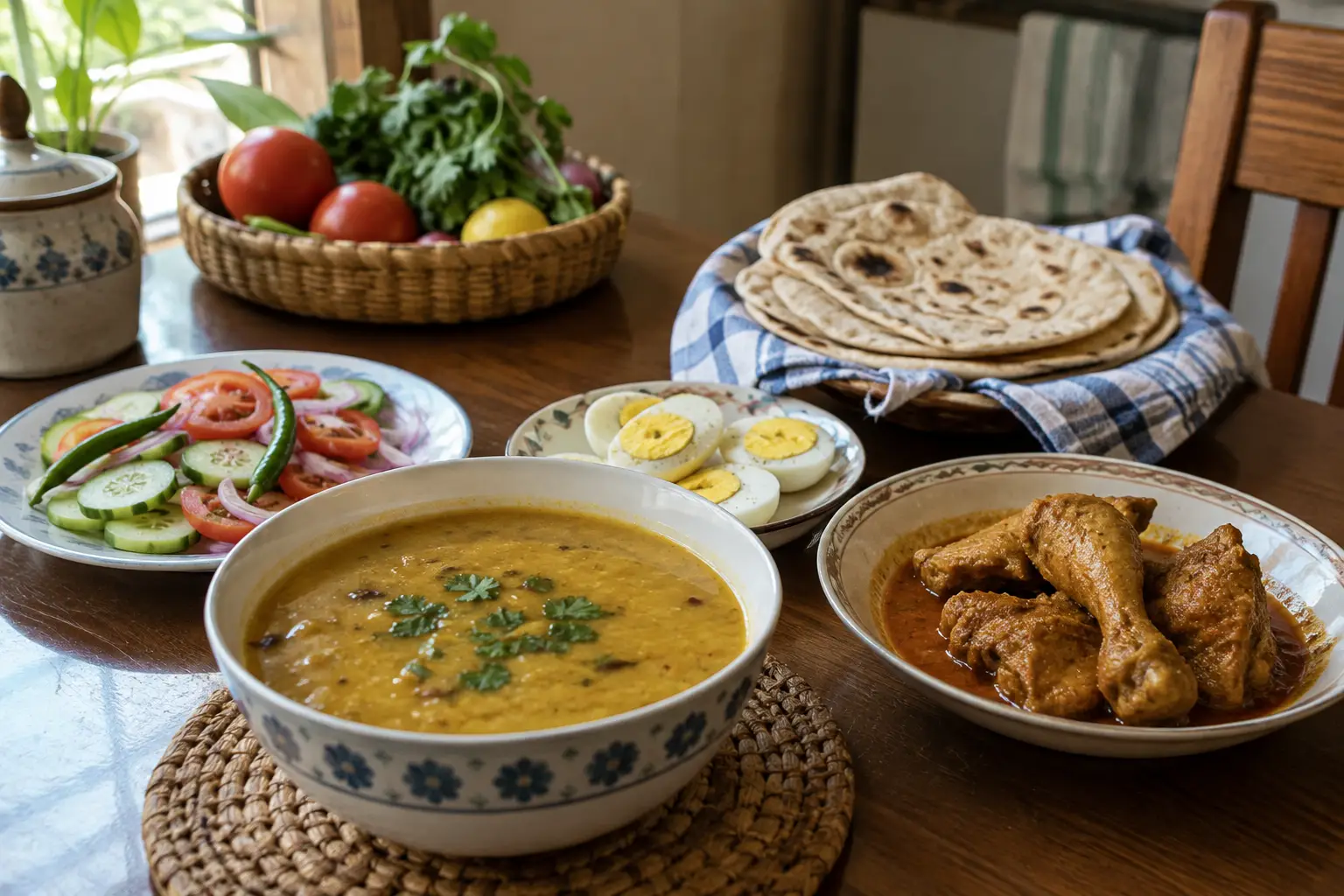
- Lunch: Daal with a measured portion of chawal or roti, plus salad or cooked vegetables.
- Dinner: Chicken, fish, or eggs with a familiar family meal and vegetables.
- If needed: Use a regular meal or snack that includes a protein food rather than buying a costly product by default.
This is not a fixed diet plan. Portions depend on your needs and the rest of your day. If you are losing weight, a manageable calorie deficit matters; adding protein while ignoring total portions will not automatically create fat loss.
For a start, look at your meals for three days. Mark the meals that have a clear protein source, then choose one meal to improve. That could mean adding an egg at breakfast or choosing a larger serving of daal at lunch. Make one change you can repeat before trying to redesign every meal. If the first change does not fit your schedule or budget, adjust it rather than abandoning the plan.
Make protein part of a weight-loss plan
Set a realistic goal: include a protein source in most main meals, shop according to your budget, and keep portions consistent enough to review. Combine this with regular movement and strength training if suitable for you. If your schedule is tight, a short home workout can still be a useful start; the key is choosing something you can repeat.
If planning meals and workouts together feels difficult, CU Fit offers an affordable coaching app with a custom diet built around foods you already eat, daily workouts that unlock as you progress, and weekly check-ins with photos, weight, and waist. You can use the app’s progress charts and Coach Usman Assistant chat, and Coach Usman personally reviews your progress after six check-ins. It also includes a bad-day reset and a 7-day money-back option.
If you want to learn more about coaching support in Pakistan, see weight loss coach Pakistan. For direct 1:1 coaching with Coach Usman and weekly check-in reviews, Premium coaching details explain the option.
Conclusion: How to choose affordable protein foods in Pakistan
To choose affordable protein foods in Pakistan, compare real servings, consider cost per meal, and use foods you already like. Eggs, daal, chicken, and fish can all fit, depending on local prices and your preferences. Build a protein source into meals, keep portions practical, and focus on a routine you can follow—not expensive products or perfect menus.
Want a plan built around your job and your food? Start with CU Fit at coachusman.fit for an affordable custom diet and workout plan. Want Coach Usman to coach you 1:1? Choose Premium coaching at coachusman.com.
This is general fitness information, not medical advice. Please talk to a doctor before changing your diet or exercise routine, especially if you have a health condition.
FAQ
What are some affordable protein foods in Pakistan?
Eggs and daal are common budget-friendly options, while chicken and fish may suit your budget depending on local prices. Compare the cost of a normal serving and the protein it provides.
How can I compare the cost of protein foods?
Estimate how many normal servings you get from a pack or batch, then compare the cost and approximate protein per serving. Include cooking time, storage, and your household’s preferences in the decision.
Can I lose weight while eating roti and daal?
Yes. Roti and daal can fit a weight-loss plan. Pay attention to portions and the overall meal, and include a suitable protein source across your day.
Do I need chicken at every meal to get protein?
No. You can vary your choices with foods such as eggs, daal, chicken, and fish, depending on what you eat and what fits your budget. Aim to include a useful protein source in your main meals.
Can daal count as a protein source?
Yes. Daal provides protein and can be a practical part of a meal. It also contains carbohydrates, so consider your whole plate and choose portions that suit your needs.
How can I add protein to family meals without cooking separately?
Look for a protein food that can be included in the shared meal or served alongside it, such as eggs, daal, chicken, or fish. Choose an addition that suits your family’s usual meals and routine.
Coach Usman, 12+ years of coaching experience
1:1 online coach for Pakistani men worldwide, building fat-loss plans around real jobs, shifts and desi food.
coachusman.comWant a coach who builds the plan around you?
Coach Usman builds your diet and training around your job, your schedule and the desi food you already eat.
Start with Coach UsmanComments (0)
No comments yet. Be the first.