In this article
- 1. Draw your day from waking to sleeping
- 2. Give each eating occasion a clear role
- 3. Pack for the break you actually get
- 4. Separate your food break from every other break
- 5. Decide your arrival-home meal before leaving
- 6. Protect recovery without adding more demands
- 7. Review whole shift cycles, not isolated mornings
Want a plan built around your job and desi food? Try 1:1 online coaching with Coach Usman.
Midnight changes the date, but it does not reset your food needs.
That matters when you work nights. You eat with the family before leaving, have food during your shift, then arrive home as everyone starts breakfast. Each meal feels normal on its own. Together, they can become more food than you intended.
The problem is not that eating after dark automatically stops fat loss. It is that your work schedule and your household schedule can both become invitations to eat.
Here is how to build one clear eating routine across both.
1. Draw your day from waking to sleeping
Forget breakfast, lunch, and dinner for a moment. Write down when you wake, leave home, take breaks, return, and usually sleep.
Use that wake-to-sleep stretch as your planning window. This is an organising tool, not a claim that your body resets when you wake. Your overall intake across days still matters.
Next, mark every place food appears. Include the staff room, petrol station, delivery app, and kitchen after work.
A Pakistani man handling overnight customer support might have a family meal before leaving, a takeaway during his break, and halwa puri with the household after returning. The useful question is not which meal is “bad.” It is whether he planned for all of them.
One shift needs one food plan, not two overlapping menus.
2. Give each eating occasion a clear role
Now decide which occasions will be proper meals and which, if any, need a snack. Do this before the shift rather than while scrolling through delivery options.
A workable outline could look like this:
- After waking: a proper meal that starts your day.
- During work: a packed meal at your most reliable break.
- If there is a long gap: a planned snack you can actually store safely.
- Before sleep: something smaller if you are hungry, rather than an automatic second dinner.
This is not a compulsory meal frequency. Move the meals around your appetite and break access. If your main family meal happens before work, let that replace an eating occasion rather than sit on top of everything else.
In my coaching, I focus on where the workday menu overlaps with the home menu.
Weight loss still needs a calorie deficit over time. For the basics, read this simple guide to a calorie deficit. The night-shift adjustment is making that deficit practical across midnight.
3. Pack for the break you actually get
An ideal lunchbox is useless if your job gives you a short, interrupted break with nowhere to heat food.
Start with the facilities. Do you have a fridge, microwave, safe eating area, and predictable cover? Choose food around those answers.
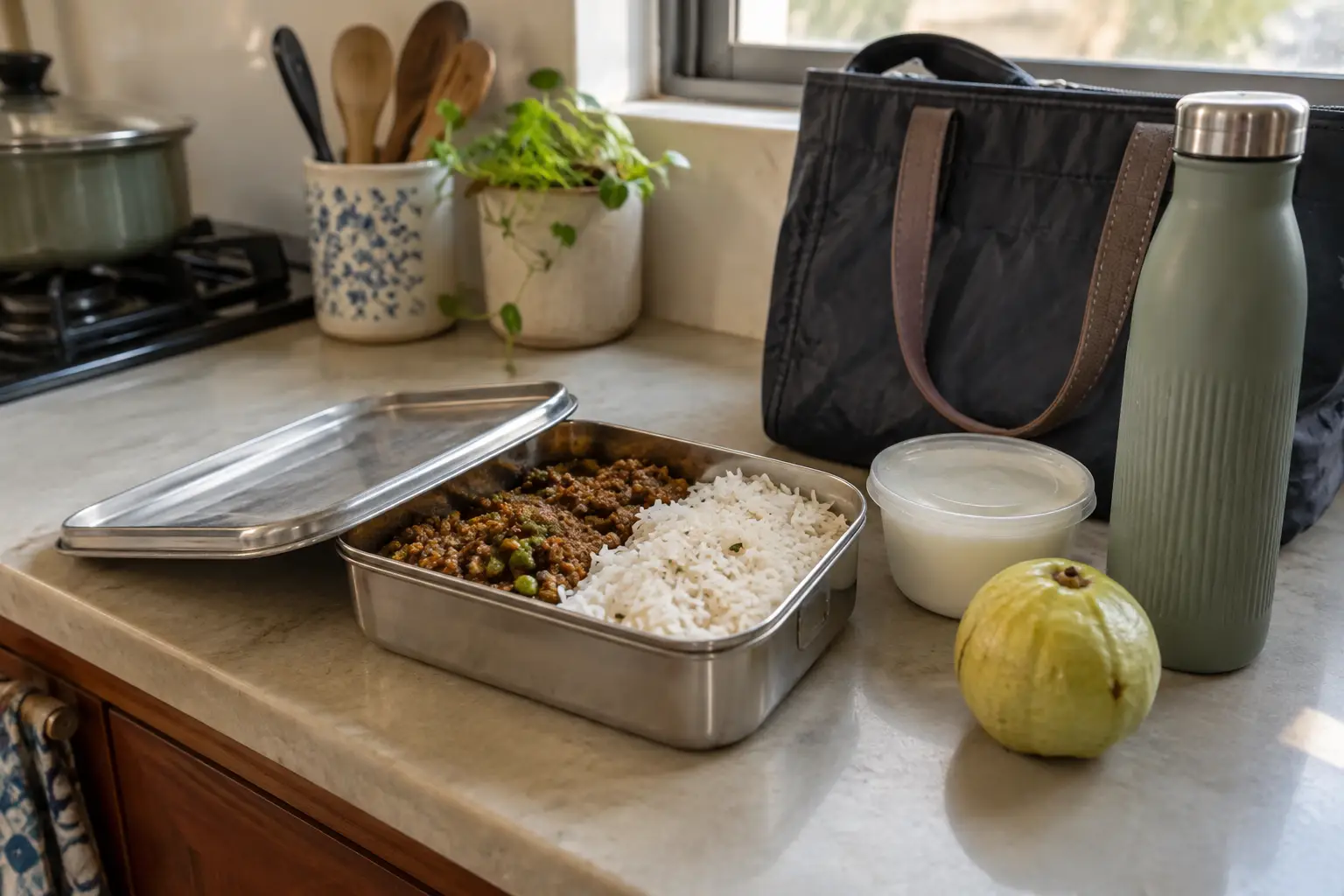
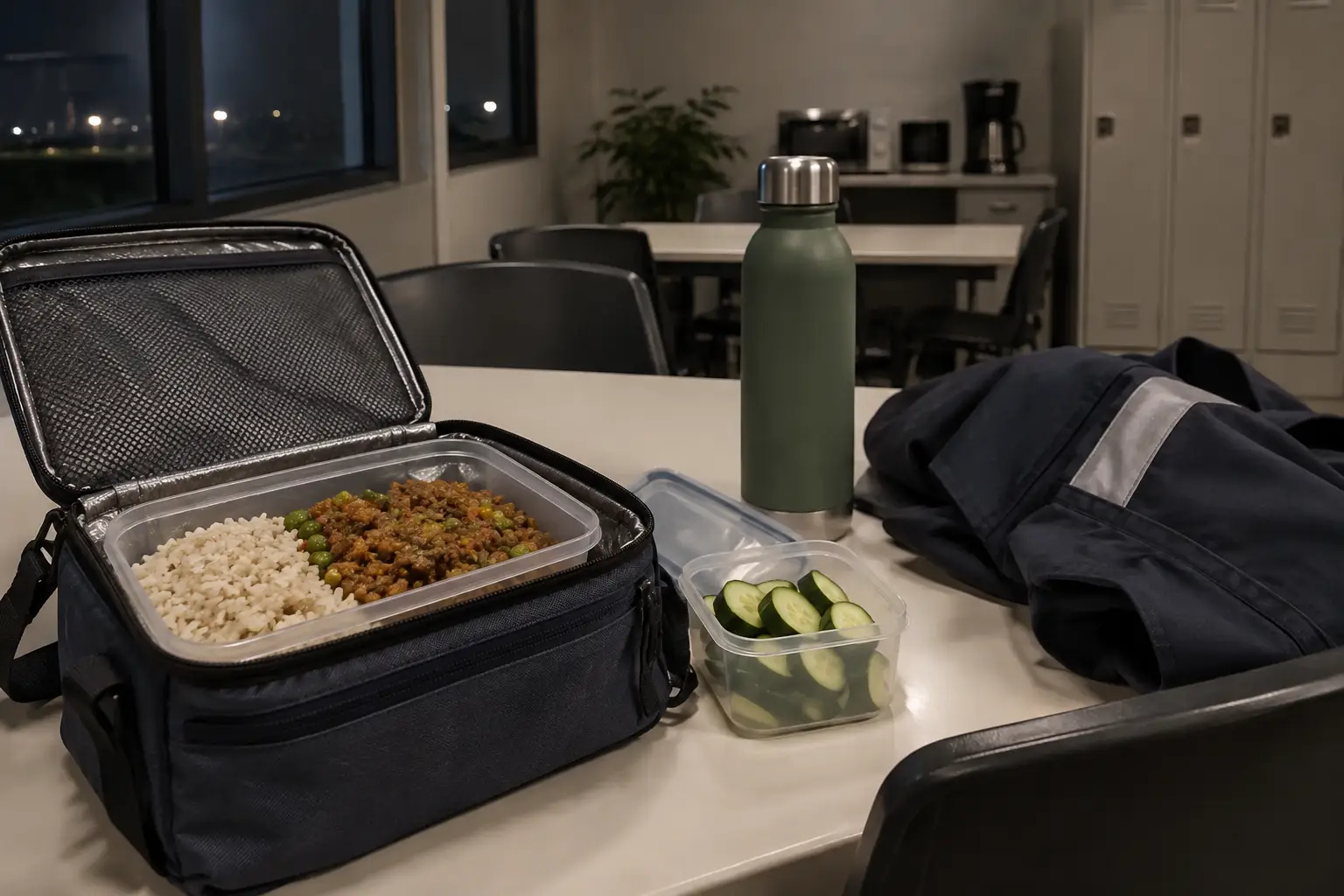
With refrigeration and reheating available, beef keema with peas, a portion of rice, and cucumber can make a useful shift meal. A lobia bowl with plain yogurt alongside is another familiar option. Keep oil and portions reasonably consistent so the same meal does not become much heavier from one shift to the next.
If breaks are brief, a homemade chicken tikka wrap may be easier to manage than several containers. Keep perishable food chilled using suitable workplace storage or an insulated bag with ice packs.
Pack a backup snack separately, such as fruit and a measured portion of roasted chickpeas. It is there for genuine hunger or a delayed break, not something you must finish because you brought it.
4. Separate your food break from every other break
Night work can make food the easiest way to interrupt boredom, stress, or a long stretch of concentration.
You deserve breaks. They just do not all need to become eating occasions.
Before buying something, check what you need. Are you hungry? Eat the meal or snack you planned. Do you need to leave the screen? Walk to a different area, refill your water, or stretch somewhere safe.
Coffee deserves a place in this check too. Sweetened coffees can contribute calories without feeling like food. And caffeine late in your shift may make daytime sleep harder. Consider when you intend to sleep, not just how much work remains.
Avoid turning this into a rule against eating at night. If you are hungry during a long shift, forcing yourself through it can leave you arriving home ready to eat everything available.
5. Decide your arrival-home meal before leaving
The doorway after work is an important decision point. You are tired, food may already be cooking, and sitting with family feels good.
Keep the family time. Decide separately whether you need a full meal.
If you ate your main work meal late in the shift, you might only want something small before bed. If your break was early and you are properly hungry, a planned meal makes sense. An egg bhurji sandwich with tomato can be a straightforward option without becoming a long cooking job.
You can also save your share of the household breakfast for after waking. Being present at the table does not mean you must eat the same amount as someone starting their day.
Avoid using hunger as a test of discipline. The aim is to stop an unplanned extra meal, not to make sleeping hungry part of the plan.
6. Protect recovery without adding more demands
A food routine becomes harder to follow when every shift ends with errands, housework, and a demanding workout before bed.
Where possible, agree on a protected sleep period with your household. Keep the room dark, quiet, and comfortably cool. Put non-urgent notifications on silent.
Place strength training where you usually have better energy, whether that is after waking or on a non-work day. You do not need to force a hard session after an exhausting shift to earn fat loss.
Movement during allowed breaks can help too, but it should fit your role and workplace safety. Keep it manageable rather than adding another exhausting target.
7. Review whole shift cycles, not isolated mornings
If you track weight, compare readings taken under similar conditions, ideally after your main sleep and using the bathroom, before eating. A reading after an overnight meal is not directly comparable with one taken after sleeping.
Look at the trend alongside hunger, meal portions, and how often extra food appears. Do not overhaul everything because of one reading.
On days off, keep the same principle: plan meals around your waking hours without automatically stacking your shift menu onto family meals. If progress stalls, check those transitions before cutting every portion.
Give your routine time to show a pattern. This approach to consistency over constant plan changes can help.
Start with your next shift: map the food, pack the work meal, and decide what happens when you get home.
This is general fitness information, not medical advice. Please talk to a doctor before changing your diet or exercise routine, especially if you have a health condition.
FAQ
Can I lose weight while working nights?
Yes. A calorie deficit over time still supports weight loss. Planning meals around your shift and protecting sleep can make it easier to follow.
Should I avoid eating after midnight?
Not automatically. Plan food around your hunger and work breaks rather than treating midnight as a cutoff.
Should I eat before sleeping after a shift?
If you are hungry, have a planned meal or snack. Consider what you already ate during work instead of automatically having another full meal.
When should night workers weigh themselves?
Use similar conditions each time, ideally after your main sleep and the bathroom, before food. Compare trends rather than individual readings.
Coach Usman, 12+ years of coaching experience
1:1 online coach for Pakistani men worldwide, building fat-loss plans around real jobs, shifts and desi food.
coachusman.comWant a coach who builds the plan around you?
Coach Usman builds your diet and training around your job, your schedule and the desi food you already eat.
Start with Coach UsmanComments (0)
No comments yet. Be the first.