
In this article
- When you wake up: choose a useful starting point
- At breakfast: reduce extras before removing the meal
- Midmorning: notice what comes with the break
- At lunch: make the order easier to repeat
- During the afternoon: protect yourself from the long gap
- After work: train without treating calories as a score
- At dinner: eat a meal, not the remaining minimum
- Before bed: review the pattern, not your worth
Want a plan built around your job and desi food? Try 1:1 online coaching with Coach Usman.
Before you cut breakfast in half, look at what happens between waking up and going to bed.
A calorie deficit means you take in less energy from food and drink than your body uses over time. That gap makes weight loss possible. Calories are simply a way of measuring that energy.
You do not need every meal to be tiny. You need an overall eating pattern that creates a manageable gap without leaving you constantly hungry and distracted.
Let’s walk through a normal working day. Whether you work in Lahore, commute in Dubai or do shifts in Manchester, follow the order rather than fixed clock times.
When you wake up: choose a useful starting point
Your first job is not to find the lowest calorie target online. It is to understand the day you actually have.
Ask yourself:
- Where will I eat my main meals?
- Which meal is likely to be delayed?
- What food can I bring or arrange beforehand?
- When can I move instead of sitting?
These questions matter because a plan based on an imaginary quiet day will be hard to follow during your real one.
If you use a calorie tracker, treat its suggested target as a starting estimate, not an exact measurement of your needs. If you do not track, start by keeping meals reasonably consistent and noticing the extras around them.
A useful deficit leaves enough room to live your day.
At breakfast: reduce extras before removing the meal
Suppose breakfast is an omelette in a bun with a sweetened coffee. You could skip everything and hope hunger stays quiet. Or you could keep a satisfying breakfast and look at what is easiest to adjust.
Perhaps the omelette needs less cooking oil. Perhaps you enjoy the coffee almost as much with less sugar. You do not have to change both immediately.
The point is not that buns or sugar prevent fat loss. It is that an enjoyable, lower-calorie version of your usual breakfast may be easier to repeat than an entirely different menu.
Keep some protein in the meal. Eggs or plain yogurt can help make breakfast more filling. If you are not hungry early, eating later can work too. Just arrange that meal rather than leaving it to chance.
Midmorning: notice what comes with the break
You leave your desk, buy a coffee and add a bakery item because it is beside the till. Nothing unusual has happened, but the break now includes food you had not really decided to eat.
Pause before buying. Are you hungry, or do you mainly need a change of scene?
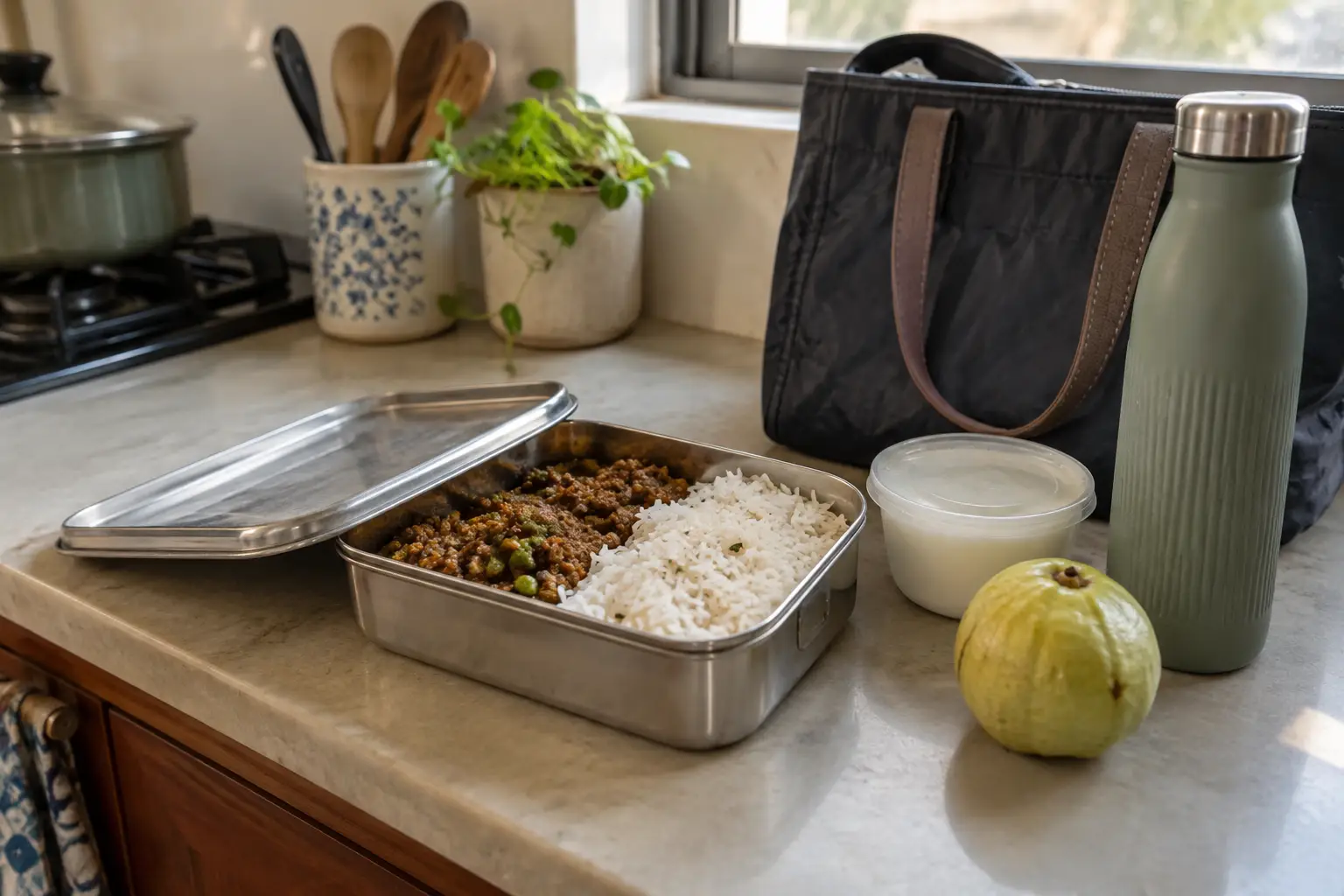
If you are hungry, have something satisfying, such as yogurt and a guava. If you need a break, take the break without automatically attaching a snack.
Neither choice is more disciplined. They answer different needs.
In my coaching, I encourage men to notice automatic additions before making their main meals smaller.
At lunch: make the order easier to repeat
Lunch is where a simple routine can save a lot of guesswork.
A takeaway beef kebab wrap can fit into a fat-loss plan. But the wrap, creamy sauce, chips and sweetened drink together are a different meal from the wrap alone.
Choose the parts you actually want. You might keep the wrap and sauce, skip the chips and drink water. That lowers the meal’s calories compared with the full order without turning lunch into a punishment.
For a packed lunch, keema with peas and a familiar portion of rice can work. Remember that cooking oil contributes calories too; homemade does not automatically mean low-calorie.
If lunch repeatedly leaves you hungry, check whether it contains a useful protein source. This guide to finding the meal that lacks protein can help you review it.
During the afternoon: protect yourself from the long gap
The meeting runs over. Dinner is still far away. This is a good time for a planned snack, not a test of how long you can ignore hunger.
Keep an option available: plain yogurt, fruit with roasted chana, or a small egg sandwich. Pick something you enjoy and can realistically store at work.
A snack does not create a deficit by itself. It may help you manage the whole day if it replaces scattered grazing or arriving home desperate for food.
Also get away from your chair when work allows. Walk to a colleague, use the stairs or head outside during a break. Everyday movement contributes to energy use without requiring another workout.
After work: train without treating calories as a score
If today includes a workout, follow your planned sets and reps. Strength training helps support muscle retention while you lose weight.
Avoid treating the calories displayed on a watch or treadmill as an exact food allowance. Those figures are estimates, and they can make the day feel like a running calculation of food earned and food owed.
Have your normal planned meal after training. You do not need to finish exhausted for the session to count.
If work regularly disrupts training, build a plan for your tired self rather than relying on an unusually energetic evening.
At dinner: eat a meal, not the remaining minimum
Dinner might be fish curry, rice and cooked vegetables. Keep it satisfying. Notice the fish, the rice portion and the oil-rich gravy rather than labelling the whole dish good or bad.
Eat seated, with enough attention to recognise when you feel comfortably satisfied. If you still feel hungry, pause and assess whether you need more food. A calorie deficit should not mean routinely going to bed ravenous.
Later, if you want something sweet, choose it deliberately. Having dessert from a bowl makes the decision clearer than repeatedly eating from the container.
Before bed: review the pattern, not your worth
Ask what worked and what needs arranging tomorrow. Then give sleep a reasonable place in the schedule; being tired can make hunger and food decisions harder to manage.
Assess progress across several weeks, not from tomorrow’s weight alone. Water, digestion and salty meals can move the scale independently of fat loss.
If your weight trend is not moving down despite a consistent routine, review portions and extras. Adjust something manageable rather than cutting every meal.
That is the practical version of a calorie deficit: eat enough to function, reduce what you can comfortably spare, and check whether the pattern is working.
This is general fitness information, not medical advice. Please talk to a doctor before changing your diet or exercise routine, especially if you have a health condition.
FAQ
Do I have to count calories to lose fat?
No. Consistent portions and manageable changes can create a deficit without tracking. Counting can be useful if you want more information, but it is not compulsory.
How do I know whether I am in a calorie deficit?
A downward weight trend over several weeks generally suggests a deficit. A single weigh-in cannot tell you because water and digestion also affect weight.
Should I skip breakfast to save calories?
Only if eating later suits your appetite and routine. Skipping breakfast is not necessary, and it may be unhelpful if it leaves you extremely hungry later.
Can I eat carbs at night and still lose weight?
Yes. Rice, bread and other carbs can fit at dinner. Your overall energy intake over time matters more than whether you eat carbs at night.
Coach Usman, 12+ years of coaching experience
1:1 online coach for Pakistani men worldwide, building fat-loss plans around real jobs, shifts and desi food.
coachusman.comWant a coach who builds the plan around you?
Coach Usman builds your diet and training around your job, your schedule and the desi food you already eat.
Start with Coach UsmanComments (0)
No comments yet. Be the first.