
In this article
- Your quick checklist for chicken biryani
- How to count calories in biryani with chicken bones
- 1. Weigh the serving before eating
- 2. Weigh the bones and leftovers afterwards
- 3. Choose a close match for the chicken
- 4. Estimate the rice and masala portion
- 5. Log the meal and move on
- Common calorie-counting mistakes to avoid
- Counting the bone as edible chicken
- Assuming every biryani recipe is the same
- Trying to make an everyday meal exact
- Skipping your next meal to compensate
- Make the checklist work on busy days
- Keep your estimate useful, not perfect
Want a plan built around your job and desi food? Try 1:1 online coaching with Coach Usman.
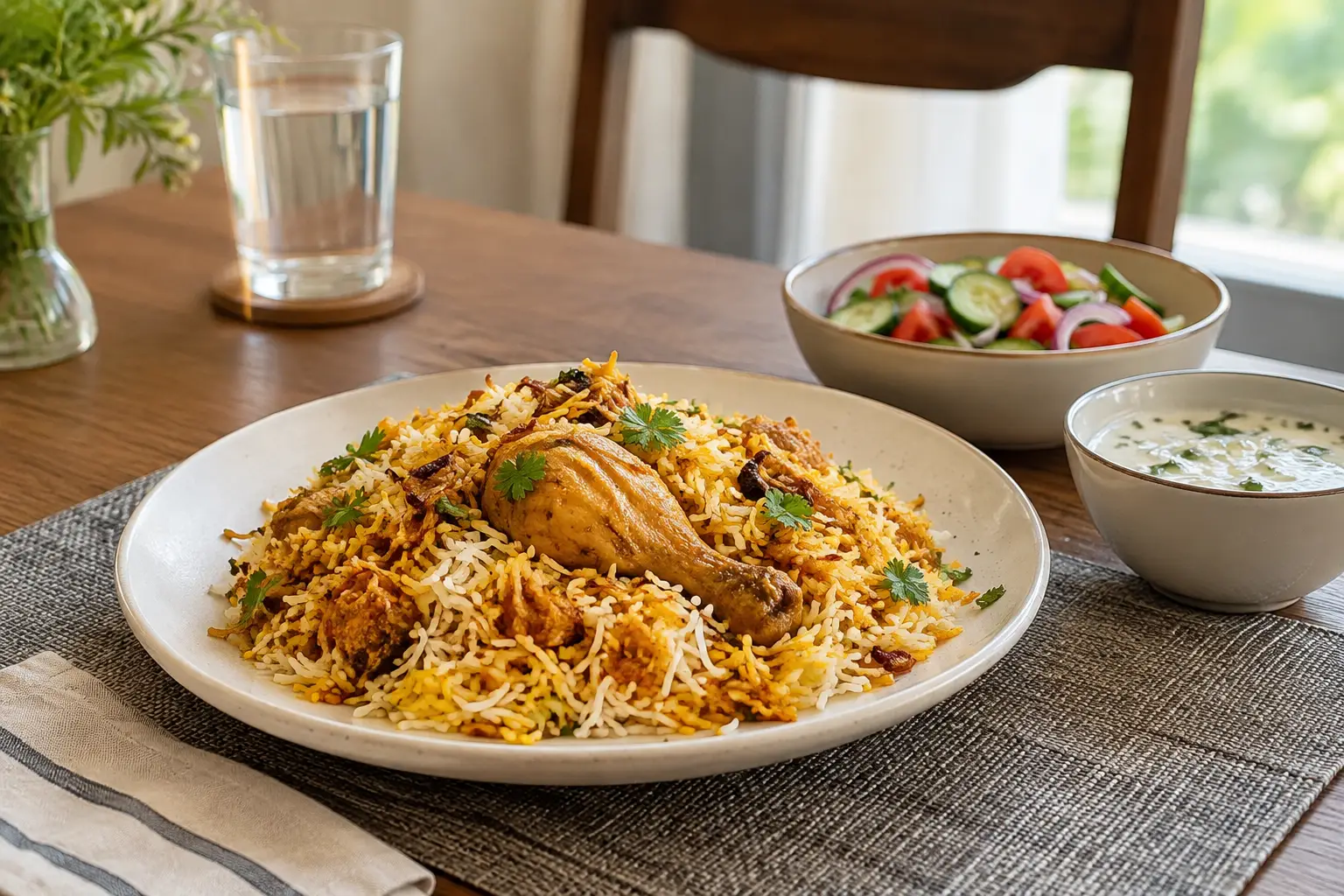
If you are working out how to count calories in biryani with chicken bones, separate the weight of the edible chicken from the bone, then estimate the rice and other ingredients as consistently as you can. You do not need to know the exact recipe behind every family handi to make tracking useful.
This checklist is for a normal meal at home, where you might serve yourself from a shared pot and the chicken pieces still have bones. The goal is a reasonable estimate you can repeat—not a perfect calorie figure.
Your quick checklist for chicken biryani
- Weigh your serving before you eat, if a kitchen scale is available.
- After the meal, weigh the bones and any chicken you did not eat.
- Subtract leftovers from the serving weight to estimate what you ate.
- Estimate rice, chicken and rich additions separately where practical.
- Log the same type of estimate consistently rather than switching entries each time.
- Look at your overall eating pattern and progress, not one meal in isolation.
A useful estimate you repeat is more valuable than a perfect number you can never get again.
How to count calories in biryani with chicken bones
1. Weigh the serving before eating
Put your plate on the scale and tare it to zero. Add the biryani and note the total weight. If the chicken piece is separate from the rice, you can weigh it separately too. This gives you a starting point, but remember: a bone-in piece includes the bone.
If you do not have a scale, use the same serving spoon or plate each time and record the portion as a household measure. For example, note that you had one level bowl or one particular serving spoon of biryani. It is less precise, but consistency makes your records more useful.
2. Weigh the bones and leftovers afterwards
Once you have finished, collect the bones and any uneaten chicken on a small plate. Weigh them together. Subtract this leftover weight from the starting weight of the bone-in chicken serving. The result is an estimate of the chicken you actually ate.
For example, if a bone-in piece weighs 180 grams before the meal and the leftover bones weigh 55 grams, the edible amount is roughly 125 grams. This is an example of the method, not a calorie value for every chicken piece. Pieces vary in size, meat content and cooking method.
If you started by weighing the whole biryani serving rather than the chicken alone, this subtraction will not tell you the chicken amount by itself. In that case, separate the chicken before eating and weigh it, or use a sensible portion estimate for the rice and chicken rather than pretending the whole plate is one exact ingredient.
3. Choose a close match for the chicken
Search your tracker for cooked chicken that matches the cut and preparation as closely as possible. A skin-on leg, a boneless breast and chicken cooked in oily masala will not have identical calorie values. Check whether the entry describes cooked or raw food, and whether it includes skin.
The app will not know the precise oil or marinade in your family’s recipe. If the entry is only a plain cooked chicken match, treat it as an estimate and account for the biryani’s cooking ingredients separately where possible. For more help choosing a sensible database entry, see how to check Pakistani food entries in a calorie app.
4. Estimate the rice and masala portion
Rice absorbs water as it cooks, so cooked rice weighs more than the uncooked rice used to make it. Use a cooked rice entry when you are estimating the rice on your plate. If you have a recipe and know the dry rice amount, you can instead calculate the whole recipe and divide it into portions—but do not mix raw and cooked weights in the same calculation.
Biryani also contains ingredients that can be difficult to separate once everything is mixed: oil or ghee, fried onions, yoghurt and masala. When you cannot measure these individually, use a biryani entry that seems close to your portion and recipe, or make a reasonable estimate based on the amount served. Avoid logging plain cooked rice as if it represents the whole biryani plate.
5. Log the meal and move on
Add your estimates together: edible chicken, cooked rice and any extra ingredients you can reasonably account for. If you are using a biryani entry for the full dish, do not add rice and chicken again unless that entry is clearly for one ingredient only. Double-counting can make your log less accurate than using a rough estimate.
A single meal does not decide whether you lose fat. Your overall intake over time matters more. If you are also building a routine around work and home meals, how to eat more slowly while trying to lose weight has practical ideas for making portions easier to notice.
Common calorie-counting mistakes to avoid
Counting the bone as edible chicken
The bone’s weight is not chicken you ate. If you weigh the piece before eating and subtract the bones afterwards, your estimate is more realistic. Do the same with uneaten skin or meat if you leave it on the plate.
Assuming every biryani recipe is the same
Oil, rice quantity, chicken cuts and serving sizes differ between homes and restaurants. A calorie estimate from one recipe will not perfectly describe another. Pick the closest match, note how you estimated it, and use the same approach next time.
Trying to make an everyday meal exact
You may not know how much oil went into a shared pot, and that is okay. Guessing every ingredient to the gram can turn dinner into a stressful task. Tracking is a tool for learning portions, not a test you pass or fail.
Skipping your next meal to compensate
If your estimate is higher than expected, return to your normal meal routine. Skipping food can leave you overly hungry later and make the plan harder to follow. For a broader approach to steady fat loss, explore weight loss coaching in Pakistan.
Make the checklist work on busy days
At home, you may have time to weigh the serving and bones. During a long shift, a family visit or a meal out, you might only be able to estimate. Choose a repeatable portion description—such as one medium plate—and record it honestly rather than leaving it out because it is not exact.
If calorie tracking feels too time-consuming, you can still focus on steady portions, include a useful protein source and keep your routine manageable. For help building consistency around your actual food, CU Fit offers a custom diet based on the food you already eat, daily workouts that unlock as you progress, weekly check-ins with photos, weight and waist, progress charts, Coach Usman Assistant chat, and a bad-day reset. Coach Usman personally reviews your progress after six check-ins.
CU Fit is an affordable coaching app, but it does not make every food estimate exact. You still get to use a practical method that fits shared meals and the cooking at home. The program also has a 7-day money-back option. See the CU Fit plan details before deciding whether it suits you.
Keep your estimate useful, not perfect
The simple method is: weigh the bone-in piece before eating, weigh the bones and leftovers afterwards, and subtract to estimate the chicken you consumed. Add a sensible estimate for cooked rice and the biryani ingredients you can identify. If you cannot weigh a meal, use a consistent portion estimate and get back to your usual routine at the next meal.
That is how to count calories in biryani with chicken bones without letting one family dinner take over your day. Want a plan built around your job and your food? Start with CU Fit at coachusman.fit for an affordable custom diet and workout plan. Want Coach Usman to coach you 1:1? Choose Premium coaching at coachusman.com. You can also learn about personal training options if you want a more direct coaching route.
Check with your doctor if you have a medical condition.
This is general fitness information, not medical advice. Please talk to a doctor before changing your diet or exercise routine, especially if you have a health condition.
FAQ
Do I subtract chicken bones when counting calories?
Yes. If you weigh the bone-in chicken before eating, weigh the bones and any uneaten food afterwards and subtract that leftover weight. The result is an estimate of the edible portion you ate.
How do I count calories in homemade chicken biryani?
Estimate the cooked rice, edible chicken and other ingredients as separately as practical. If you know the recipe, calculate the full pot and divide it into portions. Otherwise, use a close biryani entry and repeat your portion estimate consistently.
Can I track biryani without weighing every ingredient?
Yes. Use a consistent serving size, select a close meal entry and record it as an estimate. Tracking can still help you notice portions even when the exact recipe and oil amount are unknown.
Coach Usman, 12+ years of coaching experience
1:1 online coach for Pakistani men worldwide, building fat-loss plans around real jobs, shifts and desi food.
coachusman.comWant a coach who builds the plan around you?
Coach Usman builds your diet and training around your job, your schedule and the desi food you already eat.
Start with Coach UsmanComments (0)
No comments yet. Be the first.