In this article
- 1. Notice what makes you rush
- 2. Set up your plate before you start
- 3. Put your eating hand down between a few bites
- 4. Make the first few minutes less distracting
- 5. Use a halfway check, not a timer
- 6. Plan for the meals when you are most hungry
- 7. Practise without turning one fast meal into a failure
- How to eat more slowly when trying to lose weight: your next meal
Want a plan built around your job and desi food? Try 1:1 online coaching with Coach Usman.
A meal can be over before the family conversation has even started, especially when you arrive home tired and very hungry. If you want to learn how to eat more slowly when trying to lose weight, you do not need to count every chew or make dinner last an exact number of minutes. Instead, practise a few small actions that help you notice your food and give yourself time to decide whether you want more.
Eating slowly does not directly burn fat. Fat loss still depends on your overall eating pattern, activity and consistency over time. A calmer pace can make it easier to notice portions and satisfaction, but it is one useful habit—not a magic fix.
1. Notice what makes you rush
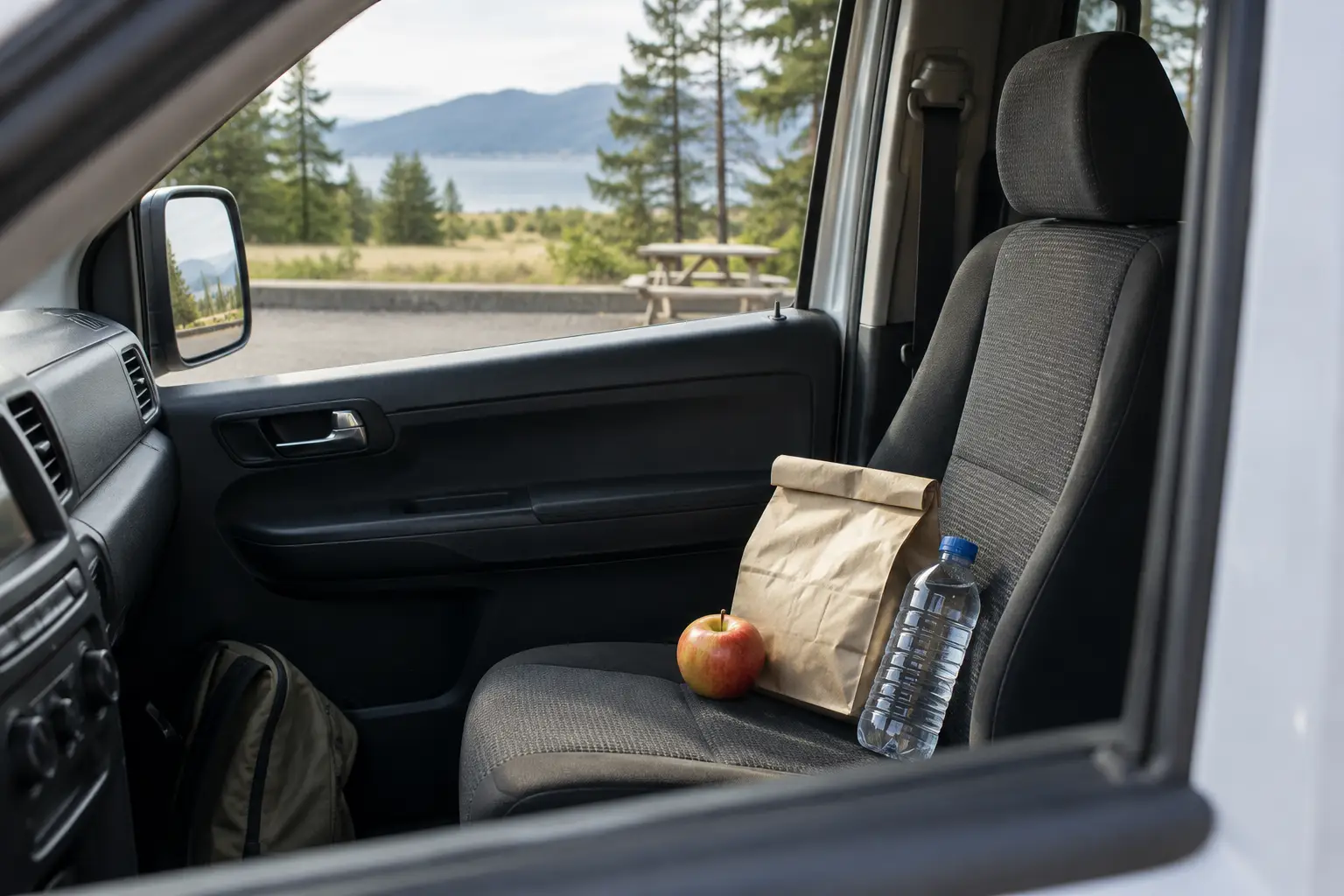
Before changing your meal, identify the reason you eat quickly. You might have a short work break, arrive home extremely hungry, eat while scrolling, or feel pressure to finish before heading back to a task. The useful solution depends on the cause.
For three meals, simply notice:
- Where you are eating.
- Whether you are distracted or in a hurry.
- How hungry you feel before the first bite.
- Whether you take another serving before checking how you feel.
Do not judge yourself or try to slow every meal at once. You are looking for one repeatable moment to change. If you often eat late after work, planning a suitable meal time or snack can make it easier to sit down less ravenous. Our guide to late dinners and weight loss has more practical ideas for that situation.
2. Set up your plate before you start
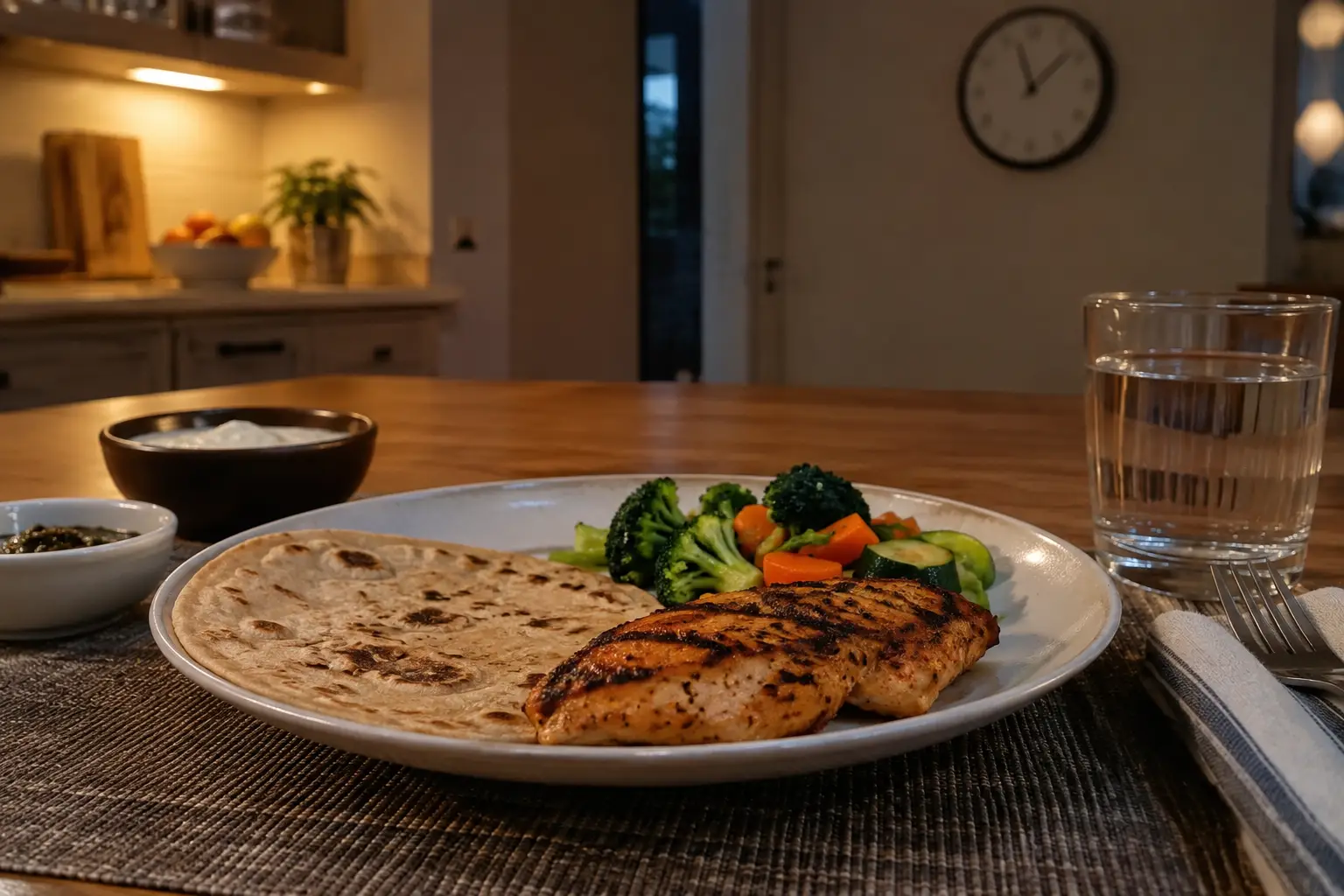
A plate that is easy to eat from can encourage a fast pace, especially if you keep serving from a large handi while talking or watching a screen. When possible, serve a reasonable first portion before sitting down. You can always take more after a short pause.
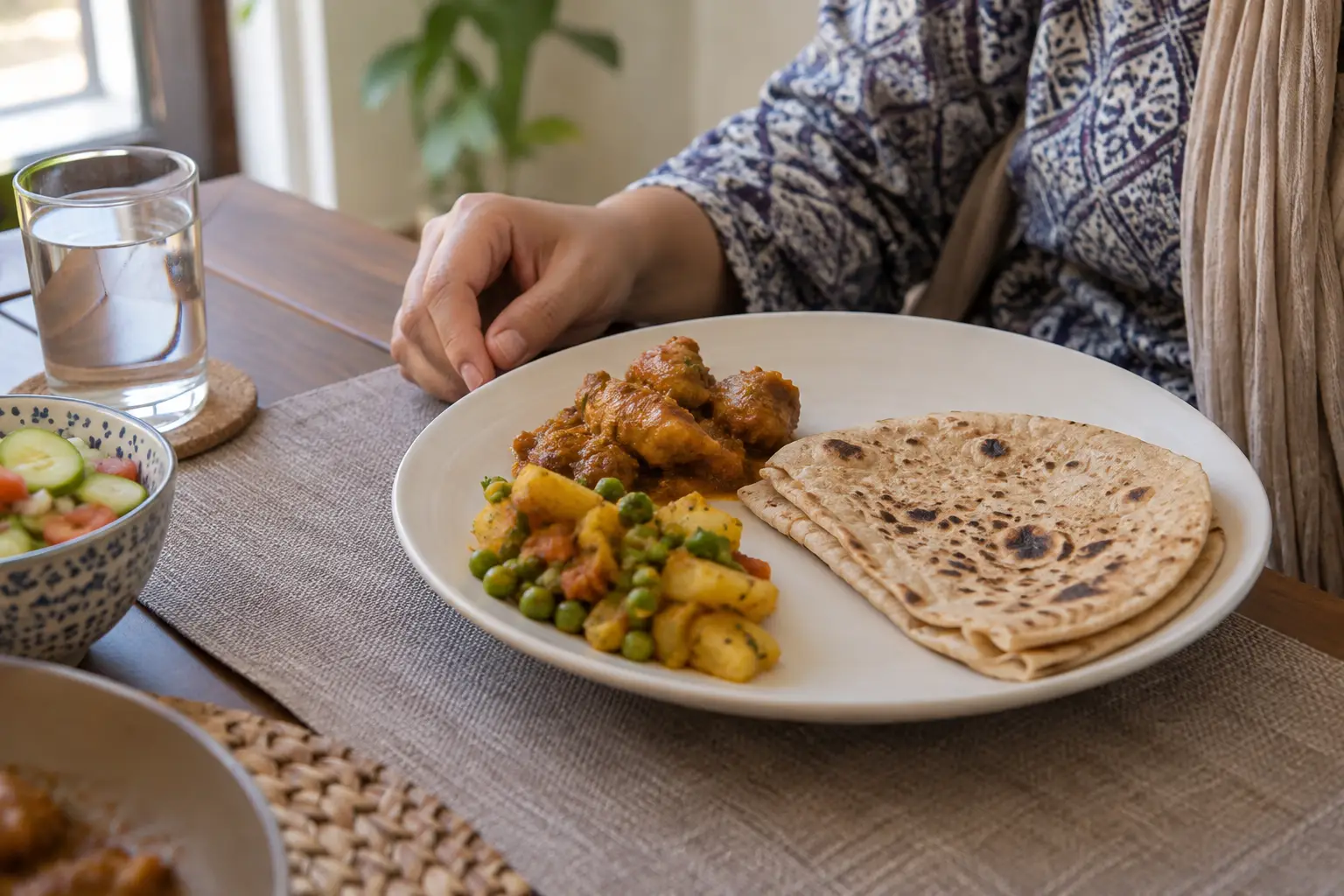
For example, a meal might include a serving of chicken or daal, roti or chawal, and vegetables or salad if available. The exact balance depends on your needs and what the family has cooked. You do not have to remove familiar foods; make a portion you can see and start with that.
For a rough nutrition reference, a medium roti may provide around 100–150 calories, while one cup of cooked rice is often around 200 calories. Recipes and portion sizes vary, so treat these as estimates rather than exact numbers. Oil, gravy and serving size can change a meal’s total considerably.
A slower meal starts with a moment to choose your portion—not with a rule to chew perfectly.
3. Put your eating hand down between a few bites
You do not need to pause after every mouthful. Start with an easy cue: after a few bites, put your spoon or roti down for a moment. Take a breath, listen to the conversation, or notice the taste before picking up the next bite.
If you are eating with your hands, rest them briefly on the table or lap. If you are using a spoon, set it down between mouthfuls now and then. These short pauses break the automatic rhythm without making the meal feel like a formal exercise.
Try this at one meal a day for a week. Once it feels ordinary, use it at other meals where you tend to rush. Small, repeatable pauses are more useful than trying to transform every meal overnight.
4. Make the first few minutes less distracting
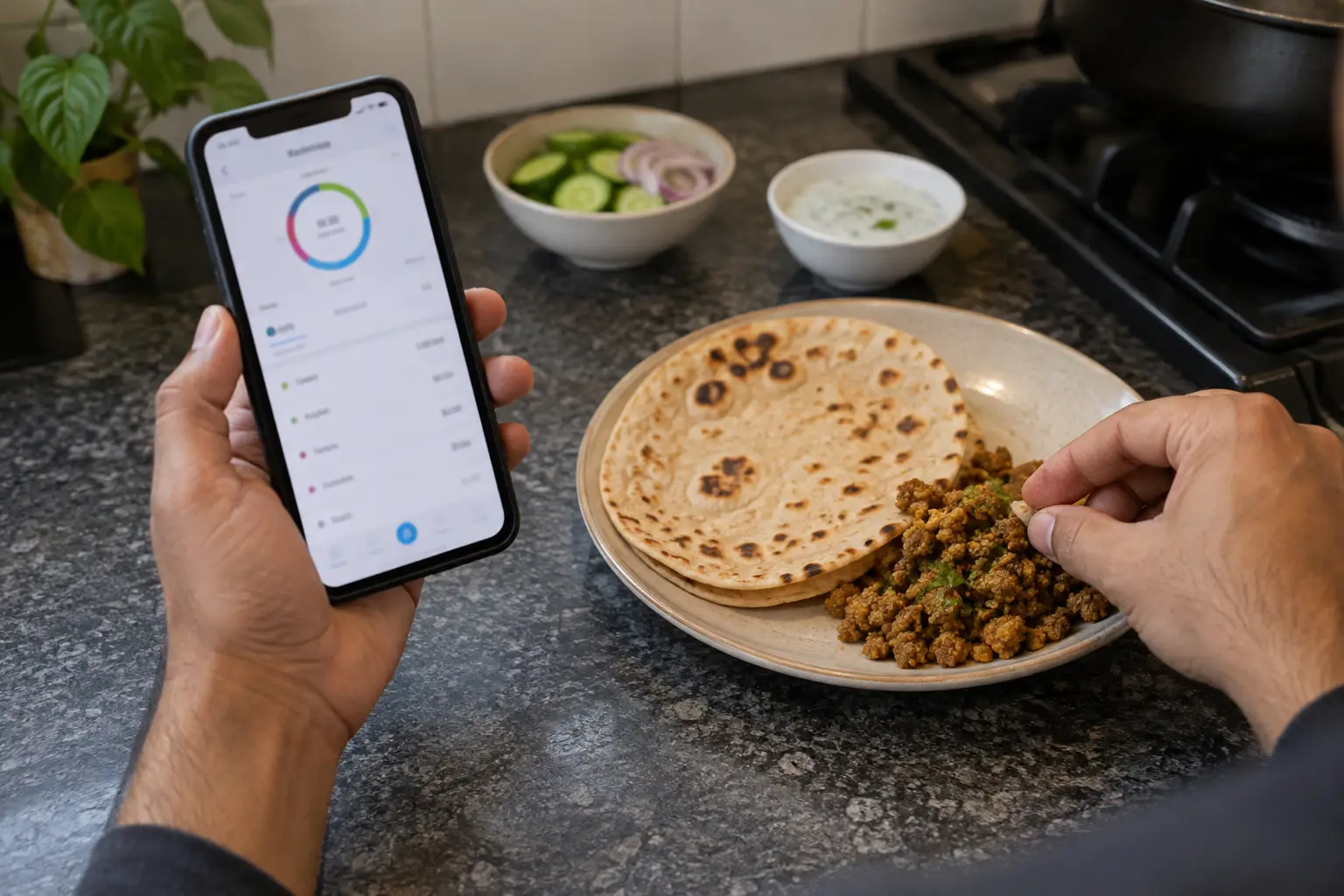
Phones, television and work messages can make it easy to eat without noticing how quickly food is disappearing. You do not need a silent room, and family conversation is fine. Instead, choose one small distraction to reduce.
You could keep your phone off the table for the first five minutes, sit down rather than eat while standing, or take a proper break from your desk. If you have a short lunch break, use the time you have: a few focused minutes are still better than expecting a perfect, lengthy meal.
5. Use a halfway check, not a timer
Halfway through your first serving, pause and ask yourself: “Am I still physically hungry, comfortably satisfied, or already full?” There is no correct answer you must reach. The point is to check in before automatically serving more.
If you are still hungry, continue eating or take another portion. If you feel comfortably satisfied, you can stop and see how you feel after a few minutes. This is not about ignoring hunger or forcing yourself to leave food behind; it is about making a choice rather than eating on autopilot.
A timer is optional, not necessary. Some meals naturally take longer than others, and work schedules or family routines can be unpredictable. If you want a broader look at meal structure, see high-protein Pakistani breakfast ideas without eggs for examples of building meals from familiar foods.
6. Plan for the meals when you are most hungry
Many people eat faster after skipping meals, dealing with a long shift or waiting until they are extremely hungry. If this happens often, consider whether a practical meal or snack earlier in the day fits your routine. It might be yoghurt, fruit, milk, or leftovers, depending on your preferences and access to food.
The aim is not to force extra meals or follow a fixed meal schedule. It is to notice whether a long gap regularly leaves you feeling out of control at dinner. If you work late, a planned option before your commute home may help you arrive ready to eat at a more comfortable pace.
For example, if dinner is chicken karahi with roti, you can decide on a first portion before sitting down, then use the halfway check before serving more. The recipe and portions determine the calories, not how quickly you eat the meal.
7. Practise without turning one fast meal into a failure
You will still have rushed meals. A short break, a busy family evening or a stressful day can take you back to old habits. That does not erase progress or mean the habit has failed. Use the next meal as another chance to practise one pause.
At the end of the week, ask yourself:
- Which meal was easiest to slow down?
- What usually made me rush?
- Did a pause help me decide whether I wanted more?
- What one cue will I repeat next week?
You can also use the Coach Usman Assistant chat and a “bad day” reset when you slip.
How to eat more slowly when trying to lose weight: your next meal
For your next meal, choose just three actions: serve a first portion, put your eating hand or utensil down for a few bites, and pause halfway through to check how you feel. Keep the foods familiar and avoid making speed another reason to criticise yourself.
Remember, slowing down can support awareness, but it does not replace an overall plan you can follow. Make gradual changes to portions and activity that work with your schedule. If you want individual support, you can learn about Premium 1:1 coaching and pricing or read about a weight loss coach in Pakistan. Coach Usman is a Level 3 Personal Trainer, specialized as a weight loss coach.
Want a plan built around your job and your food? Start 1:1 coaching at coachusman.com. Want Coach Usman to coach you 1:1? Choose Premium coaching at coachusman.com.
This is general fitness information, not medical advice. Please talk to a doctor before changing your diet or exercise routine, especially if you have a health condition.
FAQ
Does eating more slowly help you lose weight?
Eating slowly does not directly burn fat. It may help you notice your portions and satisfaction, while weight loss depends on your overall eating pattern and consistency over time.
How can I eat more slowly when I have a short lunch break?
Use a small pause rather than trying to make lunch last much longer. Sit down if possible, reduce one distraction, and pause halfway through to check whether you are still hungry.
Do I need to chew every bite a set number of times?
No. There is no need to count chews. Try setting your utensil down or resting your hand between a few bites, then continue at a comfortable pace.
Coach Usman, 12+ years of coaching experience
1:1 online coach for Pakistani men worldwide, building fat-loss plans around real jobs, shifts and desi food.
coachusman.comWant a coach who builds the plan around you?
Coach Usman builds your diet and training around your job, your schedule and the desi food you already eat.
Start with Coach UsmanComments (0)
No comments yet. Be the first.