In this article
- Mistake 1: Thinking biryani must be banned
- Mistake 2: Trying to count every ingredient in the pot
- Mistake 3: Serving straight from the handi while distracted
- Mistake 4: Adding several rich sides because the main dish feels hard to estimate
- Mistake 5: Skipping meals to “save calories” for dinner
- Mistake 6: Assuming one meal has to be perfect to support fat loss
- Mistake 7: Treating a heavier scale reading after dinner as fat gain
- Mistake 8: Having no next-meal plan
- How to include biryani in a weight loss diet without counting every ingredient
Want a plan built around your job and desi food? Try 1:1 online coaching with Coach Usman.
A shared pot of biryani can make a normal family dinner feel like a choice between eating freely and measuring every spoonful. If you are figuring out how to include biryani in a weight loss diet without counting every ingredient, you do not need to calculate the exact oil, rice, and meat in the whole pot. You need a simple portion approach that you can repeat.
Fat loss depends on your overall eating pattern over time, not one special meal. Biryani can fit when your usual portions and habits help you maintain a calorie deficit. Here are common mistakes to avoid, and a practical fix for each one.
Mistake 1: Thinking biryani must be banned
The mistake: You decide that biryani is off-limits until you reach your goal. That rule may feel easy for a few days, but it can make family meals feel like a test. If you eventually eat some, you might feel that the whole plan has failed.
The fix: Treat biryani as a meal you can plan for, not a food that cancels your progress. Enjoy a considered serving, then return to your usual routine at the next meal. One dinner does not determine your result; the pattern you repeat matters more.
If the meal is part of a family gathering, make your plan before you are very hungry. You might decide to take one serving, eat it at the table, and pause before deciding whether you want more. This gives you a clear choice without turning dinner into a rulebook.
Mistake 2: Trying to count every ingredient in the pot
The mistake: You try to work out how many teaspoons of oil, pieces of meat, and cups of rice went into a shared pot. In a family kitchen or at a gathering, you may not know the recipe or the number of servings. Guessing every ingredient can take a lot of effort without making the estimate exact.
The fix: Use a consistent serving estimate instead of chasing perfect precision. Serve your food on a plate rather than eating directly from the shared dish. Take a moderate amount, notice how it looks, and use a similar serving next time. If you track food, log a reasonable entry that reflects your serving and recipe style; keep using the same approach so your records are useful over time.
Oil and portion size can change the energy in a dish, so there is no single calorie number that describes every plate. When you do not know the recipe, use the same practical method rather than pretending you have an exact figure. For more on estimating homemade meals, see how to check a calorie app’s Pakistani food entries.
A repeatable estimate is more useful than a perfect calculation you cannot keep doing.
Mistake 3: Serving straight from the handi while distracted
The mistake: You keep eating as conversation carries on, so it is hard to notice how much you have had. With a shared dish in the middle of the table, another helping can happen automatically.
The fix: Put your first serving on a plate and sit down to eat it. When you finish, take a short pause before deciding about more. Ask yourself whether you are still physically hungry, or whether the food is simply in reach. You can enjoy the meal and still make a deliberate choice.
You do not have to eat slowly at every meal or count your bites. Just giving yourself a moment before seconds can help you notice what you want. Try the simple ideas in How to Eat More Slowly When Trying to Lose Weight: 7 Steps.
Mistake 4: Adding several rich sides because the main dish feels hard to estimate
The mistake: You cannot calculate the biryani, so you stop paying attention to the rest of the meal as well. Extra sides, drinks, and a second serving can add up even when each choice seems small.
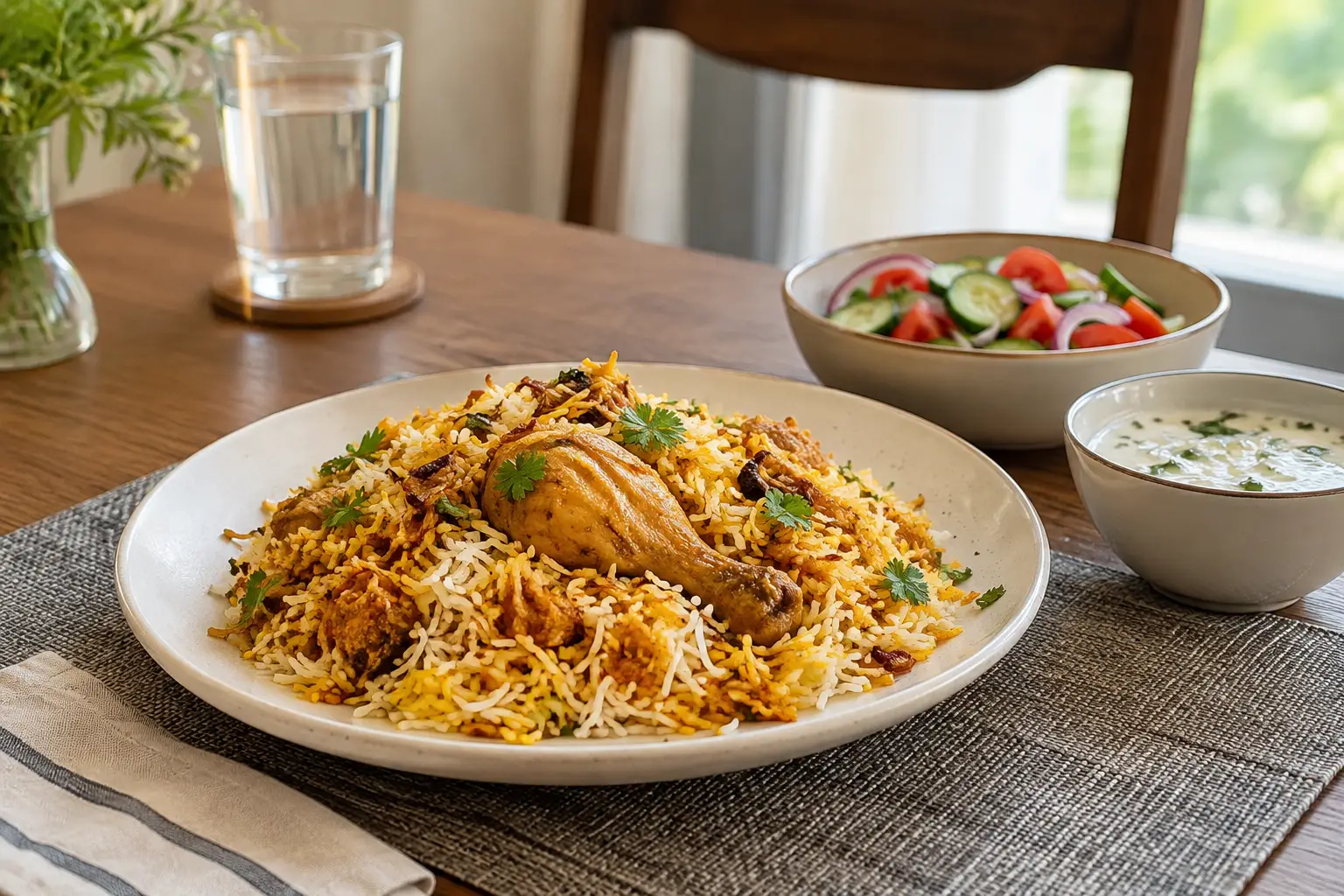
The fix: Keep the rest of the meal simple. Choose the biryani portion you planned, then add a side you enjoy, such as salad or plain yogurt, if it is available. These sides do not make biryani a “free” food, but they can make the plate feel more complete. Keep extra fried or creamy sides to a portion you actually want rather than taking them by habit.
For example, you might serve one moderate portion of biryani with a small bowl of plain yogurt and some salad. The exact calories depend on the recipe and serving size; the point is to avoid turning an uncertain main dish into several unplanned extras.
Mistake 5: Skipping meals to “save calories” for dinner
The mistake: You eat very little all day because biryani is planned for the evening. By dinner, you may be extremely hungry, making it harder to serve a comfortable portion and pause before taking more.
The fix: Eat your normal meals earlier in the day. Build them around familiar foods and include a source of protein where you can, such as chicken, eggs, dahi, fish, or daal. Keep portions sensible, but do not treat the rest of the day as a punishment for having dinner plans.
If your schedule is busy, plan a straightforward lunch and a snack if you need one. This can help you arrive at dinner ready to enjoy the meal without feeling that you have to make up for missed food.
Mistake 6: Assuming one meal has to be perfect to support fat loss
The mistake: You think your plate must be precisely balanced or logged to the gram. When that is not possible, you abandon the plan altogether. This all-or-nothing response can turn an ordinary meal into a reason to give up for the day.
The fix: Aim for a pattern you can follow in real life. On days when you have no recipe details, use your normal serving guide. On days when you do have reliable information, you can track more closely if you find it useful. Neither approach needs to be perfect to help you make more consistent choices.
A useful check is to look at your habits across the week: are your portions usually reasonable, are you eating meals that satisfy you, and are you keeping up movement or training that fits your life? If you want structured support, CU Fit offers a custom diet built around foods you already eat, with a new diet every 30 days. It is designed to give you a practical plan rather than demand that you calculate every ingredient at every meal.
Mistake 7: Treating a heavier scale reading after dinner as fat gain
The mistake: You see a higher number after a salty or larger meal and decide your effort has been undone. Scale weight can move from one day to another for reasons that do not tell you whether you gained body fat. A single weigh-in is not a reliable verdict on your progress.
The fix: Weigh under similar conditions when you do weigh yourself, and look at the trend rather than one reading. Keep your routine steady after the meal. There is no need to skip breakfast, add a punishing workout, or cut out foods the next day to compensate.
If you find it useful, pair scale readings with other consistent check-ins, such as waist measurements and photos. A weight loss coach in Pakistan can also help you think through a realistic approach that fits familiar foods and daily demands.
Mistake 8: Having no next-meal plan
The mistake: After enjoying a larger meal, you keep grazing because you feel the day is already “off plan.” Or you try to compensate by skipping your next meal. Neither response helps you build a routine you can repeat.
The fix: Make your next meal ordinary. Return to your usual breakfast, lunch, or dinner rather than trying to erase the previous meal. If you ate more than you intended, note what made it harder—perhaps you were very hungry, distracted, or unsure how much you had served—and choose one adjustment for next time.
That is a more useful response than judging yourself. If you want a quick way to restart after an off-plan meal, CU Fit includes a “bad day” reset. The app also has daily workouts that unlock as you progress, weekly check-ins with photos, weight, and waist, and progress charts. Coach Usman personally reviews your progress after six check-ins. Explore the CU Fit app if that kind of structure would help you stay consistent.
How to include biryani in a weight loss diet without counting every ingredient
Keep the plan simple: serve a considered portion onto a plate, enjoy it without rushing, and pause before taking more. Keep the rest of your meal straightforward, and return to your normal eating routine afterwards. You do not need to know the exact recipe to make a reasonable choice.
For the next family meal, choose your serving approach before you sit down. Use it consistently, then review your progress over time instead of reacting to one dinner or one scale reading. CU Fit gives you an affordable custom diet and workout plan, with weekly check-ins and a bad-day reset. For people who want direct coaching, Premium 1:1 coaching is available through Coach Usman’s personal training page, and you can see the program options.
Want a plan built around your job and your food? Start with CU Fit at coachusman.fit for an affordable custom diet and workout plan. Want Coach Usman to coach you 1:1? Choose Premium coaching at coachusman.com.
This is general fitness information, not medical advice. Please talk to a doctor before changing your diet or exercise routine, especially if you have a health condition.
FAQ
Can I eat biryani while trying to lose weight?
Yes. Biryani can fit into a weight-loss diet when your overall eating pattern supports a calorie deficit. Use a considered serving and return to your usual routine at the next meal.
How can I estimate biryani without counting every ingredient?
Serve a consistent portion onto a plate and use a reasonable food-tracking entry if you track. Recipes vary, so focus on a repeatable estimate rather than an exact number you cannot verify.
Can CU Fit support a diet that includes biryani?
CU Fit builds a custom diet around foods you already eat, with a new diet every 30 days. It also includes weekly check-ins and progress charts to help you review your routine.
Coach Usman, 12+ years of coaching experience
1:1 online coach for Pakistani men worldwide, building fat-loss plans around real jobs, shifts and desi food.
coachusman.comWant a coach who builds the plan around you?
Coach Usman builds your diet and training around your job, your schedule and the desi food you already eat.
Start with Coach UsmanComments (0)
No comments yet. Be the first.