In this article
- Does eating dinner late affect weight loss if calories are the same?
- Your late-dinner checklist
- 1. Check the whole day, not just the dinner time
- 2. Plan a bridge meal if the gap is long
- 3. Keep dinner familiar and build a reasonable plate
- 4. Serve once, then pause before taking more
- 5. Notice how the meal affects your evening
- 6. Keep the plan realistic for family life
- 7. Review your trend before changing the plan
- What matters more than the hour on the clock?
- Make late dinner work with your fat-loss plan
Want a plan built around your job and desi food? Try 1:1 online coaching with Coach Usman.
Your shift ends late, the family meal is waiting, and you wonder if eating now will cancel your weight-loss effort. The useful question is does eating dinner late affect weight loss if calories are the same? In general, if your overall calorie intake stays the same, the clock time of dinner is not what decides whether you lose body fat. But late meals can affect your routine, hunger, portions and sleep, so timing may matter in practical ways.
Does eating dinner late affect weight loss if calories are the same?
For fat loss, your overall calorie intake over time matters more than whether dinner happens at 7 p.m. or 10 p.m. If two otherwise similar routines provide the same calories, eating the last meal later does not automatically make one routine cause more fat loss.
The real-life difference is that late dinners can make it easier to eat more than planned. You may arrive home very hungry, snack while waiting for food, or serve yourself a larger portion. A late, heavy meal may also feel uncomfortable when you lie down soon afterward. Those effects can make a calorie target or sleep routine harder to maintain, even though the clock itself is not a fat-loss switch.
This is why it helps to separate the direct effect of meal timing from what timing changes in your day. A late meal does not erase a calorie deficit, but a routine that regularly leads to extra snacks or bigger portions can change your overall intake. The same timing may work easily for one person and feel difficult for someone with a different work schedule or appetite.
“A late dinner is not a failure. Look at the pattern around it.”
Your late-dinner checklist
Use this short checklist on workdays, long shifts or evenings when the family meal is served late. You do not need to follow every step perfectly. Start with the one that solves your biggest problem. Try the changes for several days and notice whether they help, rather than treating one meal as a test you pass or fail.
1. Check the whole day, not just the dinner time
Ask yourself whether late dinner is replacing an earlier meal or being added after a full day of eating. If you have eaten very little, arriving home ravenous can make it harder to choose a comfortable portion. If you have been snacking continuously, the issue may be unplanned extras rather than the dinner hour.
A simple note can help: write down when you ate, how hungry you felt before dinner, and whether you had extra snacks. Look for a pattern across several workdays instead of judging one evening. You do not need to record every detail; a brief note about the timing and what made the evening difficult may be enough to guide a small adjustment.
2. Plan a bridge meal if the gap is long
If your last meal was many hours ago and dinner will be late, plan a small, satisfying option during your shift. For example, plain yogurt with fruit, or a portion of chicken with a small roti, can help you avoid arriving home extremely hungry. Choose food that suits your preferences and schedule; there is no special late-night food required.
If you carry meals to work, these high-protein lunch ideas for work may help you plan ahead. A suitable lunch can reduce the long gap before dinner without forcing you to eat at a particular hour. Consider what you can realistically store and eat during your shift, rather than choosing a plan that is difficult to repeat.
3. Keep dinner familiar and build a reasonable plate
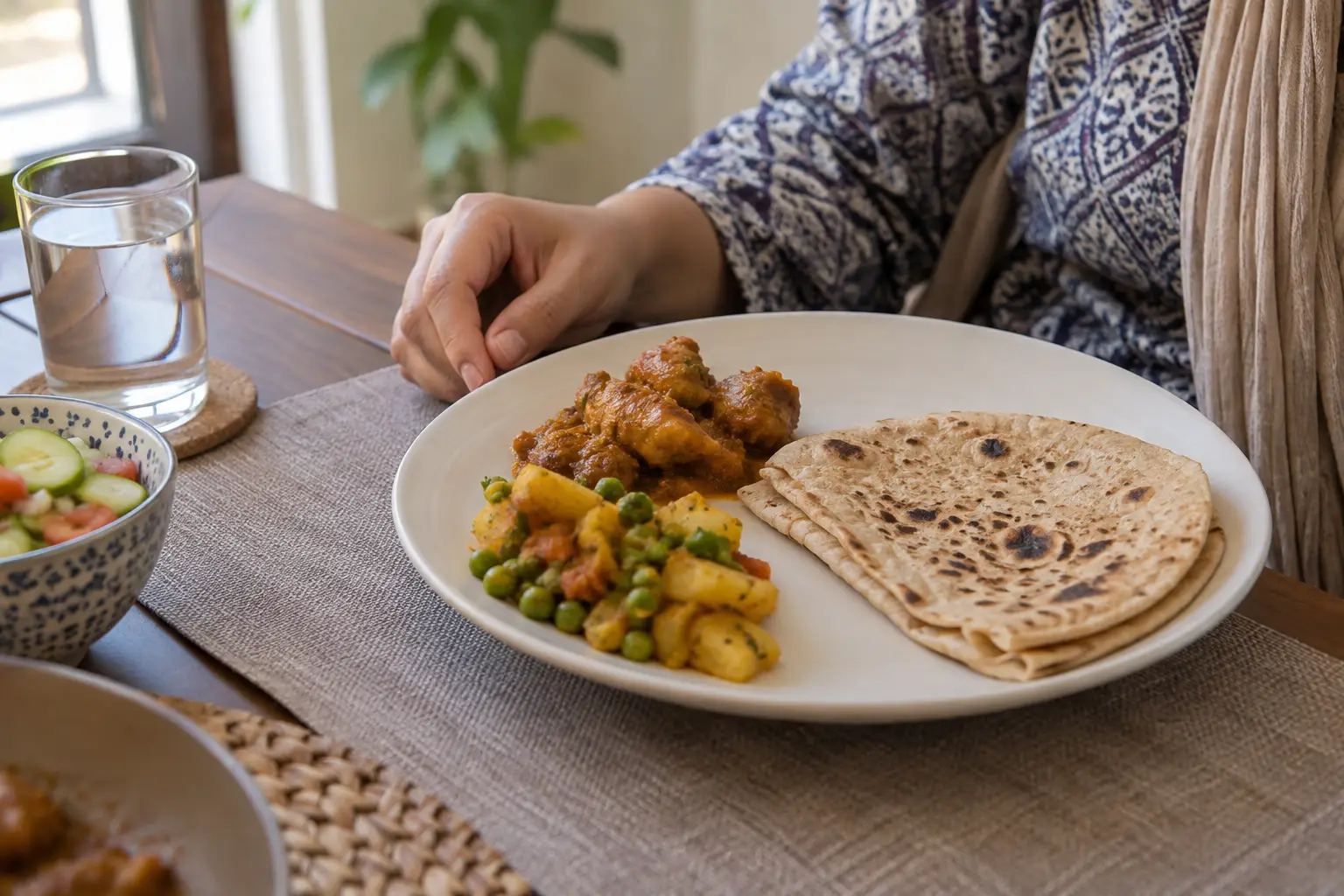
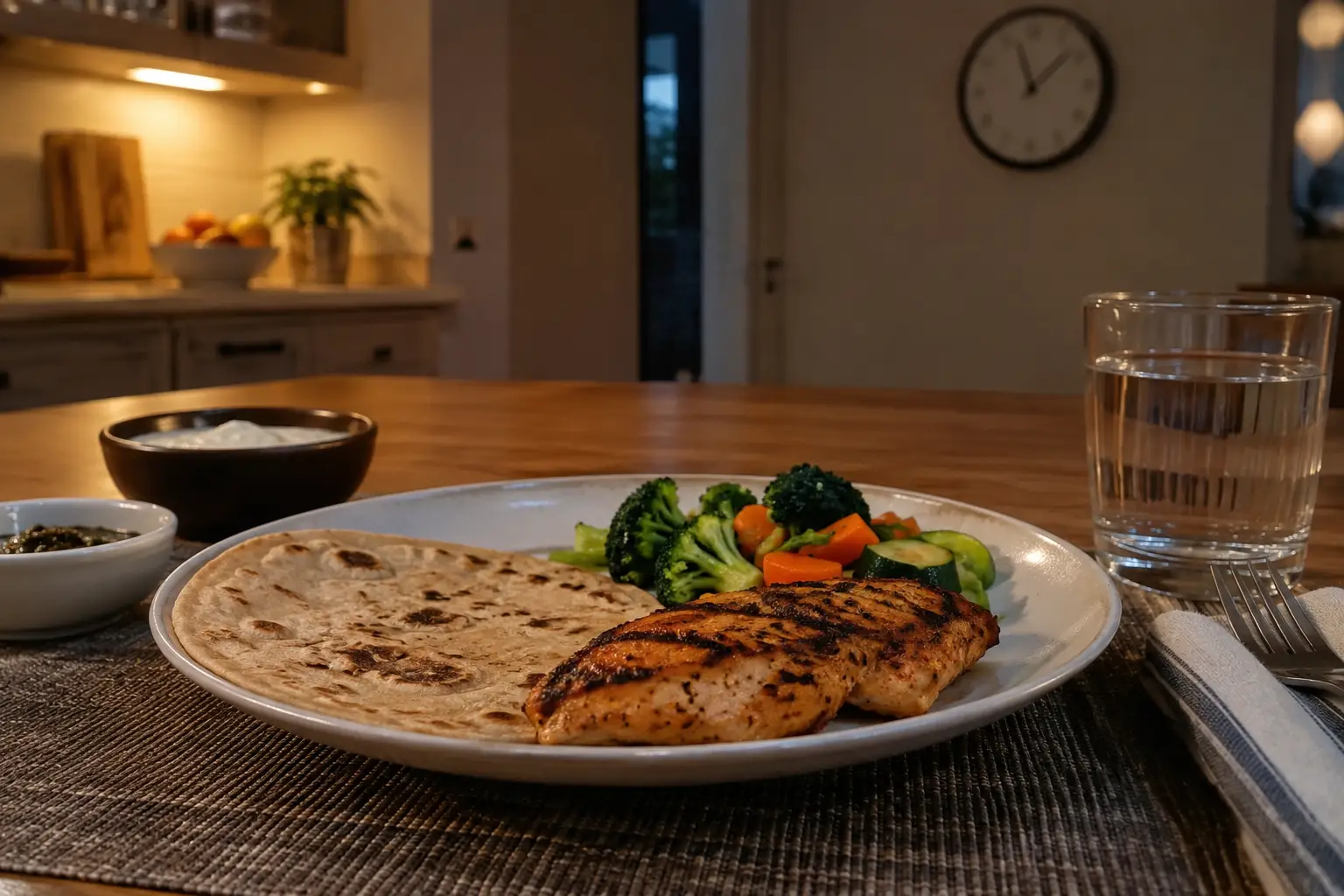
You do not need a separate “night diet.” Use familiar foods, and think about portions. A plate might include chicken or daal, a portion of roti or chawal, and vegetables or salad if available. The calorie content depends on the serving size and cooking method; oil, creamy sauces and large portions can add up.
For example, a cooked chicken serving of about 100 grams may provide roughly 25–30 grams of protein, while one medium roti may provide around 100–150 calories. These are estimates, not fixed values: recipe, size and ingredients change the numbers. If you want to include daal, its protein amount also depends on how large and thick the bowl is.
A reasonable plate does not need to look exactly the same every night. The aim is to have a satisfying meal that fits your overall day, rather than assuming that foods eaten late require special rules or must be avoided.
4. Serve once, then pause before taking more
When you get home tired, it is easy to eat quickly or take extra food before noticing whether you are satisfied. Serve a portion you expect to enjoy, sit down if possible, and take a short pause before deciding on seconds. There is no need to make dinner tiny; the aim is to choose an amount that fits your hunger and your overall day.
If eating quickly is part of the challenge, try putting your cutlery down briefly between bites or taking a moment before serving more. Small changes may help you notice the meal without turning dinner into a strict rule. You can also keep serving dishes off the table if seeing them makes it easy to take extra portions automatically.
5. Notice how the meal affects your evening
People have different schedules and preferences. Notice whether a very large meal close to bedtime leaves you uncomfortable or makes it harder to follow your usual sleep routine. If it does, try a slightly smaller dinner and move some food earlier in the day. If the timing works well for you, there is no need to shift dinner just because a general rule says you must eat earlier.
Pay attention to your own pattern rather than assuming that every late dinner will affect sleep or appetite in the same way. You might find that changing the size of dinner helps, or that eating a little earlier during your shift is more practical. Make one adjustment at a time so you can tell what is useful.
6. Keep the plan realistic for family life
A shared kitchen, family cooking schedule or shift job may mean dinner time changes from day to day. You can still make progress with flexible meal timing. Agreeing on a portion in advance, saving part of the meal for later, or keeping a practical snack at work can make the routine easier without asking everyone at home to change their habits.
If family meals are unpredictable, think through a flexible option rather than aiming for a perfect schedule. You might have a smaller planned snack on a late-shift day, then eat dinner with your family when you get home. The best routine is one you can manage repeatedly alongside work and home life.
7. Review your trend before changing the plan
One late dinner or one higher scale reading does not tell you whether you are gaining fat. Food volume, salt, hydration and other normal day-to-day changes can affect scale weight temporarily. Weigh under similar conditions when you can, and compare readings over time rather than reacting to the morning after a late meal.
If you track waist measurements too, use the same measuring spot and routine each time. The guide on measuring your waist for fat loss explains how to make comparisons more consistent. Use repeated measurements and weight readings as context, not as a reason to make a sudden change after one evening.
What matters more than the hour on the clock?
Focus on the habits that influence how much you eat and how consistently you can follow your plan:
- Your overall portions and calorie intake across the day.
- Whether long gaps leave you so hungry that you overeat later.
- How often snacks or seconds get added without much thought.
- Whether dinner timing fits your work, family and sleep routine.
- Whether your habits are repeatable from one week to the next.
If you are considering fasting because it seems like a way to control meal timing, remember that it is only one possible routine. This guide to intermittent fasting and weight loss explains why total intake still matters. There is no need to choose a particular meal schedule if another flexible routine fits your day better.
Make late dinner work with your fat-loss plan
The answer to does eating dinner late affect weight loss if calories are the same is usually no: the time alone does not cancel fat loss when overall intake is genuinely equal. The practical question is whether late eating changes your hunger, portions, sleep or consistency. Use the checklist for a week, notice what happens, and adjust one thing at a time.
You can explore Premium 1:1 coaching if you want direct coaching and weekly check-in reviews. The goal is to build a routine that suits your work and meals, not to force dinner into an arbitrary time window.
Want a plan built around your job and your food? Start 1:1 coaching through online coaching worldwide.
This is general fitness information, not medical advice.
FAQ
Does eating late at night cause weight gain?
Eating late does not automatically cause weight gain. Your overall calorie intake over time matters more, although late meals can make overeating or sticking to your routine harder for some people.
Does eating dinner late affect weight loss if calories are the same?
If overall calorie intake is genuinely the same over time, eating dinner later does not automatically prevent fat loss. Timing may still affect hunger, portions, sleep or how easy the plan is to follow.
Should I skip dinner if I get home late?
You do not have to skip dinner just because it is late. Choose a portion that suits your hunger and overall day, and consider planning a small meal earlier if the gap has left you extremely hungry.
Is it bad to go to bed after eating dinner?
It depends on your comfort and routine. If a large meal close to bedtime feels uncomfortable or disrupts your usual sleep routine, try eating some food earlier or having a smaller dinner.
Will eating dinner late make the scale go up the next morning?
The scale can be higher temporarily because of food and fluid still in your system, as well as normal day-to-day changes. One reading after a late meal does not tell you whether you gained body fat.
What should I eat if dinner will be late?
There is no special late-night food required. If you will have a long gap before dinner, a practical snack or small meal during your shift may help you avoid arriving home extremely hungry.
Coach Usman, 12+ years of coaching experience
1:1 online coach for Pakistani men worldwide, building fat-loss plans around real jobs, shifts and desi food.
coachusman.comWant a coach who builds the plan around you?
Coach Usman builds your diet and training around your job, your schedule and the desi food you already eat.
Start with Coach UsmanComments (0)
No comments yet. Be the first.