In this article
- Step 1: Does eating rice at night stop weight loss? Focus on the whole day
- Step 2: Choose a rice portion you can repeat
- Step 3: Build a balanced desi dinner
- Step 4: Notice what happens before and after dinner
- Step 5: Make the plan work with your schedule
- Step 6: Review your progress instead of judging one dinner
- Step 7: Decide what to do at your next rice dinner
Want a plan built around your job and desi food? Try 1:1 online coaching with Coach Usman.
Dinner is ready after a long day, and the rice on your plate may leave you wondering if eating it at night will stop your weight loss. If you are asking does eating rice at night stop weight loss, the short answer is no: rice eaten at a particular hour does not automatically prevent fat loss. Your overall eating pattern and portions across time matter more than the clock.
For many South Asian families, rice is a normal part of dinner. You do not need to avoid it just because you are trying to lose weight. Instead, learn how to build a meal that satisfies you without turning one serving into several unplanned portions.
Step 1: Does eating rice at night stop weight loss? Focus on the whole day
Weight loss generally requires you to take in less energy than your body uses over time. Rice contains calories, just like roti, daal, meat, cooking oil and snacks. Having rice for dinner can fit into a fat-loss plan if your overall portions support your goal.
The meal’s timing is not a magic switch. A large serving at lunch can also make it harder to stay within your needs, while a moderate rice dinner can fit well. What matters is the pattern you can repeat most days—not one food eaten after sunset.
It may help to check your whole routine before blaming rice. Are you having large portions at dinner because lunch was too small? Are extra servings, oily gravies or snacks adding more than you notice? These are useful questions because they point to changes you can actually make. If estimating portions feels difficult, this guide on how to track calories in homemade Pakistani food offers practical ways to pay attention to what goes into a meal.
Step 2: Choose a rice portion you can repeat
There is no single portion that suits every person. Your appetite, activity, body size and the rest of your meal all matter. Start by serving a measured amount once, then see whether it leaves you comfortably satisfied.
As a practical starting point, try about one cup of cooked rice alongside a clear protein source and vegetables. A cup of cooked white rice is roughly 200 calories and around 4 grams of protein, though the exact amount varies by rice and serving. A heaped plate can contain several cups, so serving straight from a shared pot makes it easy to lose track.
Try this simple serving routine:
- Put your rice on the plate before sitting down, rather than eating from the pot.
- Add a protein food such as chicken, fish, eggs, lean meat or daal.
- Include vegetables or salad for more volume and variety.
- Pause before taking more and check whether you are still physically hungry.
A smaller serving does not mean you must leave the table hungry. If the meal has little protein or vegetables, you may find yourself searching for more food soon after dinner. Building a more complete plate can help dinner feel satisfying.
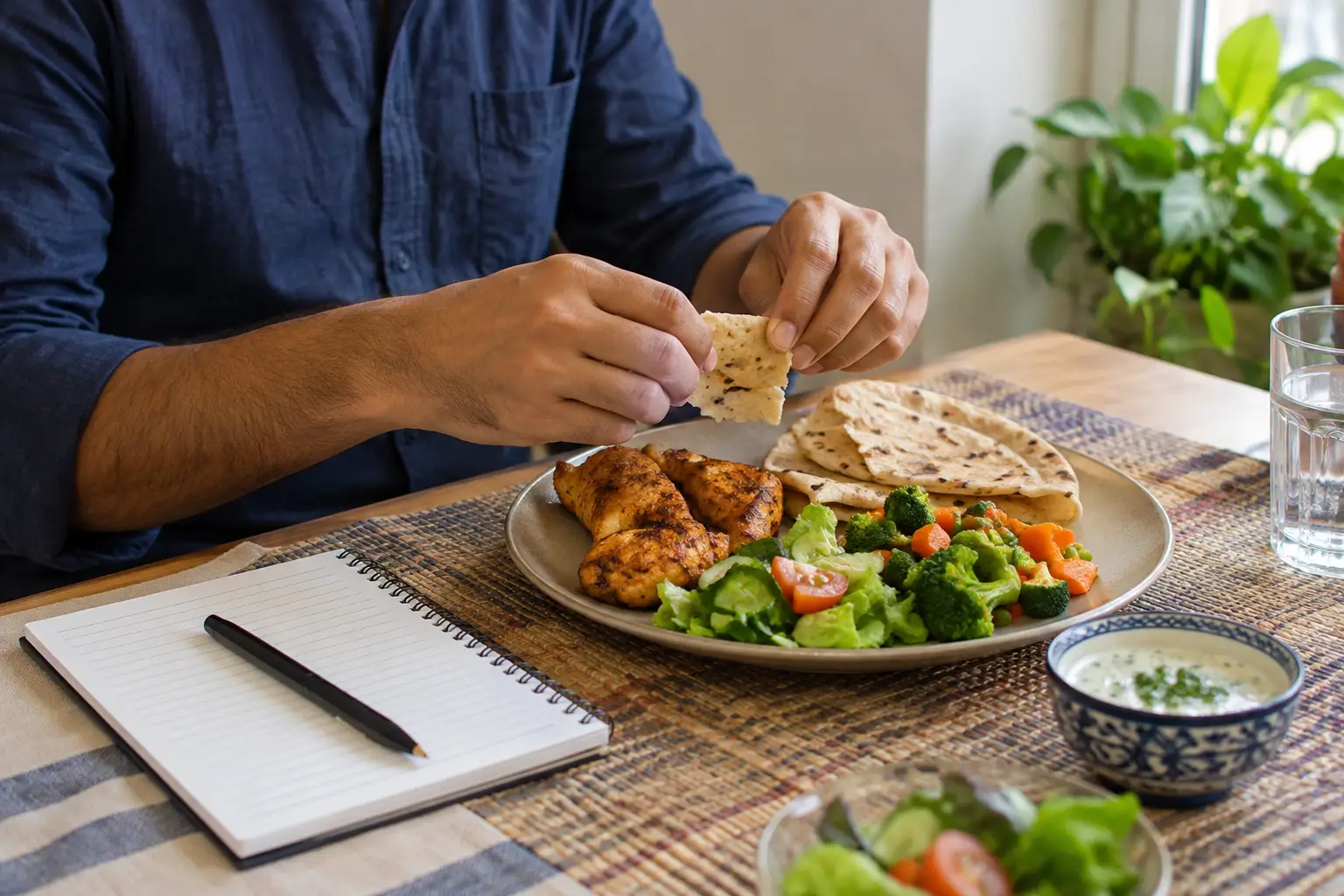
A plate is easier to manage when you decide its shape before you start eating.
Step 3: Build a balanced desi dinner
Rice is mostly a source of carbohydrate. For a more balanced meal, pair it with protein and vegetables rather than treating a large mound of rice as the whole dinner.
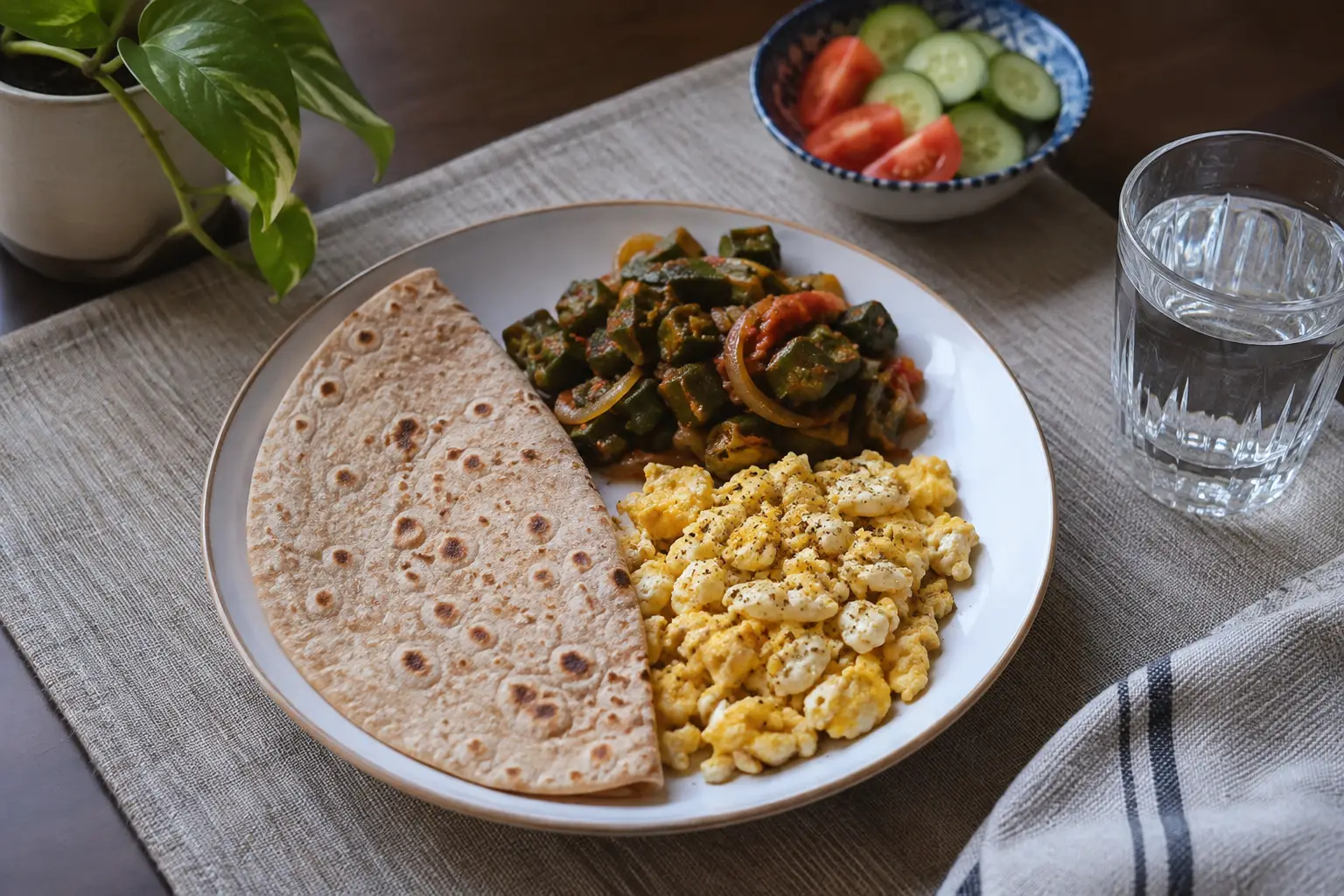
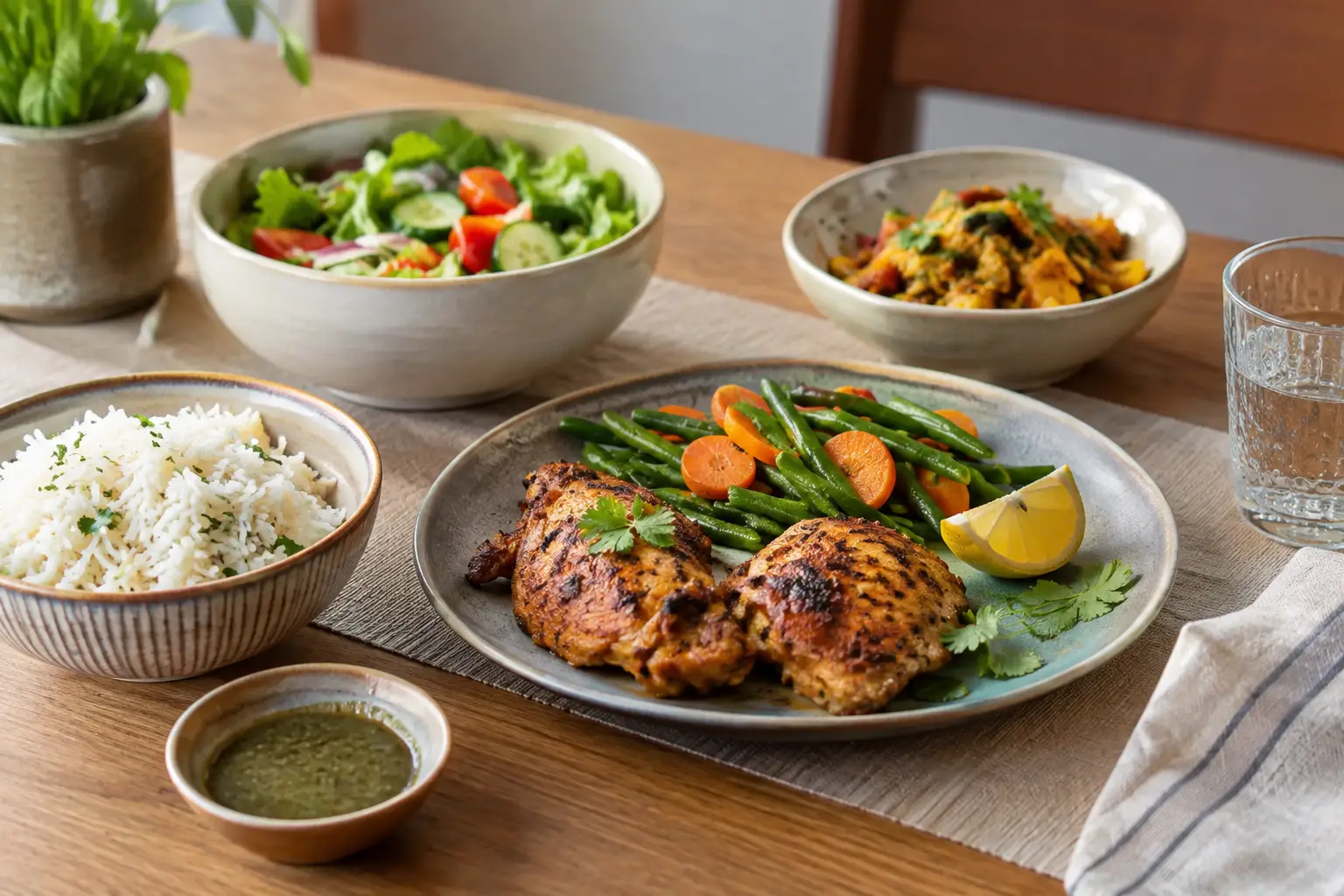
For example, you could serve a moderate bowl of rice with grilled chicken and mixed vegetables, or rice with daal, salad and a serving of yoghurt. One cooked egg has roughly 6 grams of protein, while a 100-gram serving of cooked chicken breast has about 30 grams. Portions and recipes vary, but these examples show why rice alone may not keep you full for long.
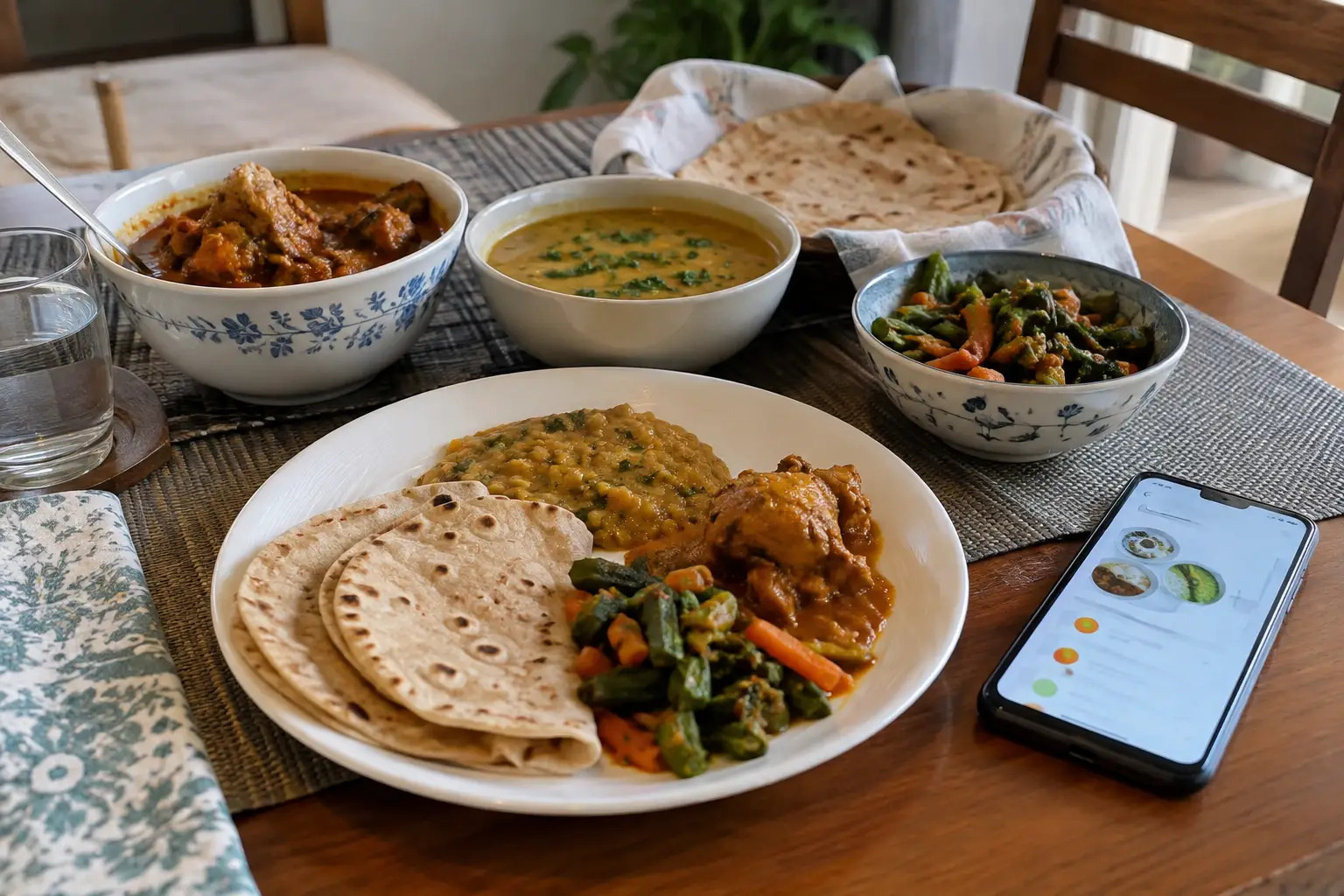
If the family meal is a curry, you can still work with it. Take a reasonable amount of rice, choose a useful portion of the meat or lentils, and be aware that oily gravy can add extra energy. You do not need a separate “diet meal” if the shared meal can be served in portions that suit you.
For more flexible meal ideas, see how to lose weight without counting calories every day. A few repeatable portion habits can make everyday meals easier without turning dinner into a maths exercise.
Step 4: Notice what happens before and after dinner
Sometimes rice gets blamed for a pattern that starts earlier. If you skip lunch during a long shift, arrive home very hungry and eat quickly, it can be tough to stop at a comfortable portion. Try making lunch more filling, or plan a snack if dinner is still several hours away.
Also look at the foods and drinks around the meal. Fried sides, extra oil, sweet drinks and second helpings all contribute to the overall meal. You do not have to remove every one of them. Pick the change that feels easiest to keep, such as having water with dinner or serving the rice once.
If late meals are part of your schedule, they can still fit. Read does eating dinner late cause weight gain if calories stay the same for more on meal timing and practical routines.
Step 5: Make the plan work with your schedule
A plan that expects you to cook a separate meal every evening may not last. If your work ends late, prepare a simple dinner option in advance or set aside a portion of the family meal before everyone serves themselves. You can use cooked rice from an earlier meal; just store and reheat it safely according to food-safety guidance.
When you travel for work or return home tired, keep the basic structure: a sensible rice portion, a protein choice and vegetables when available. In a hotel, that might mean rice with eggs or grilled meat and a vegetable side. At home, it could be leftover rice with daal and salad.
If you want a plan shaped around your own food and routine, CU Fit is an affordable coaching app with a custom diet based on foods you already eat, refreshed every 30 days. It also includes daily workouts that unlock as you progress and weekly check-ins with photos, weight and waist measurements.
Step 6: Review your progress instead of judging one dinner
A single dinner cannot tell you whether your approach is working. Look at your weight trend over several weeks, your waist measurements and how consistently you followed your routine. Weight can move up or down from day to day for reasons that do not reflect changes in body fat.
If your trend is not moving after a few consistent weeks, review your portions and routine before making a dramatic change. Are rice servings growing? Are there regular extras you have not accounted for? Is your plan too strict to follow on busy days? Small adjustments are usually more useful than banning a familiar food.
CU Fit includes progress charts and Coach Usman Assistant chat for questions as you follow your plan. After six check-ins, Coach Usman personally reviews your progress. You can learn about online coaching worldwide. For direct 1:1 support, Premium coaching is available at $99 per month or $545 for six months, with the same USD price worldwide.
Step 7: Decide what to do at your next rice dinner
At your next dinner, do not start by asking whether rice is forbidden. Serve a portion you can repeat, add protein and vegetables where practical, eat at a comfortable pace and notice how satisfied you feel. If you are still hungry, pause and decide whether you need more food rather than automatically filling your plate again.
The question does eating rice at night stop weight loss is best answered by looking at your overall habits, not the hour on the clock. Rice can be part of a fat-loss plan when your portions and the rest of your eating pattern work for you.
Want a plan built around your job and your food? Start with CU Fit for an affordable custom diet and workout plan. Want Coach Usman to coach you 1:1? Explore Premium coaching.
This is general fitness information. If you have a health condition or specific dietary concerns, seek guidance from a qualified healthcare professional.
FAQ
Does eating rice at night stop weight loss?
No. Eating rice at night does not automatically stop weight loss. Your overall food intake, portions and habits over time matter more than the time you eat.
How much rice should I eat for dinner when losing weight?
There is no portion that suits everyone. About one cup of cooked rice can be a practical starting point; pair it with protein and vegetables, then adjust based on your hunger and progress.
Can I eat rice every day and still lose weight?
Yes. Rice can fit into a weight-loss plan when your overall portions and eating pattern support your goal. You do not need to remove it if you enjoy it.
Is white rice worse than brown rice for weight loss?
Neither type automatically causes or prevents weight loss. Choose the rice you enjoy and can portion consistently, and consider the balance of the whole meal.
What should I eat with rice at dinner?
Pair rice with a protein food such as chicken, eggs, fish, meat or daal, and add vegetables or salad when practical. This makes dinner more balanced and may help it feel satisfying.
Should I avoid rice if my weight is not changing?
Not necessarily. Review your overall portions, routine and progress over several consistent weeks before making a major change. Rice may still fit in a plan that works for you.
Coach Usman, 12+ years of coaching experience
1:1 online coach for Pakistani men worldwide, building fat-loss plans around real jobs, shifts and desi food.
coachusman.comWant a coach who builds the plan around you?
Coach Usman builds your diet and training around your job, your schedule and the desi food you already eat.
Start with Coach UsmanComments (0)
No comments yet. Be the first.