In this article
- How to lose weight without counting calories every day: a short checklist
- 1. Build most meals around a clear plate pattern
- 2. Decide your portions before you are very hungry
- 3. Keep a few dependable meals in rotation
- 4. Notice the extras without tracking every bite
- 5. Make movement part of the week you actually have
- 6. Use a weekly check instead of daily food maths
- 7. Have a reset ready for the day that goes off plan
- A simple two-week trial
- Conclusion: how to lose weight without counting calories every day
Want a plan built around your job and desi food? Try 1:1 online coaching with Coach Usman.
The family meal is ready, your workday has run late, and opening a calorie app feels like one more task you do not have time for.
If you want to know how to lose weight without counting calories every day, you can start with a few repeatable habits instead of weighing every ingredient. You still need an overall eating pattern that supports fat loss, but that does not mean you must log every mouthful forever.
This short checklist is for busy men eating familiar food at home, at work, or on the road. Try it for two weeks, then use your weight and waist trend to decide whether it needs a small adjustment.
How to lose weight without counting calories every day: a short checklist
1. Build most meals around a clear plate pattern
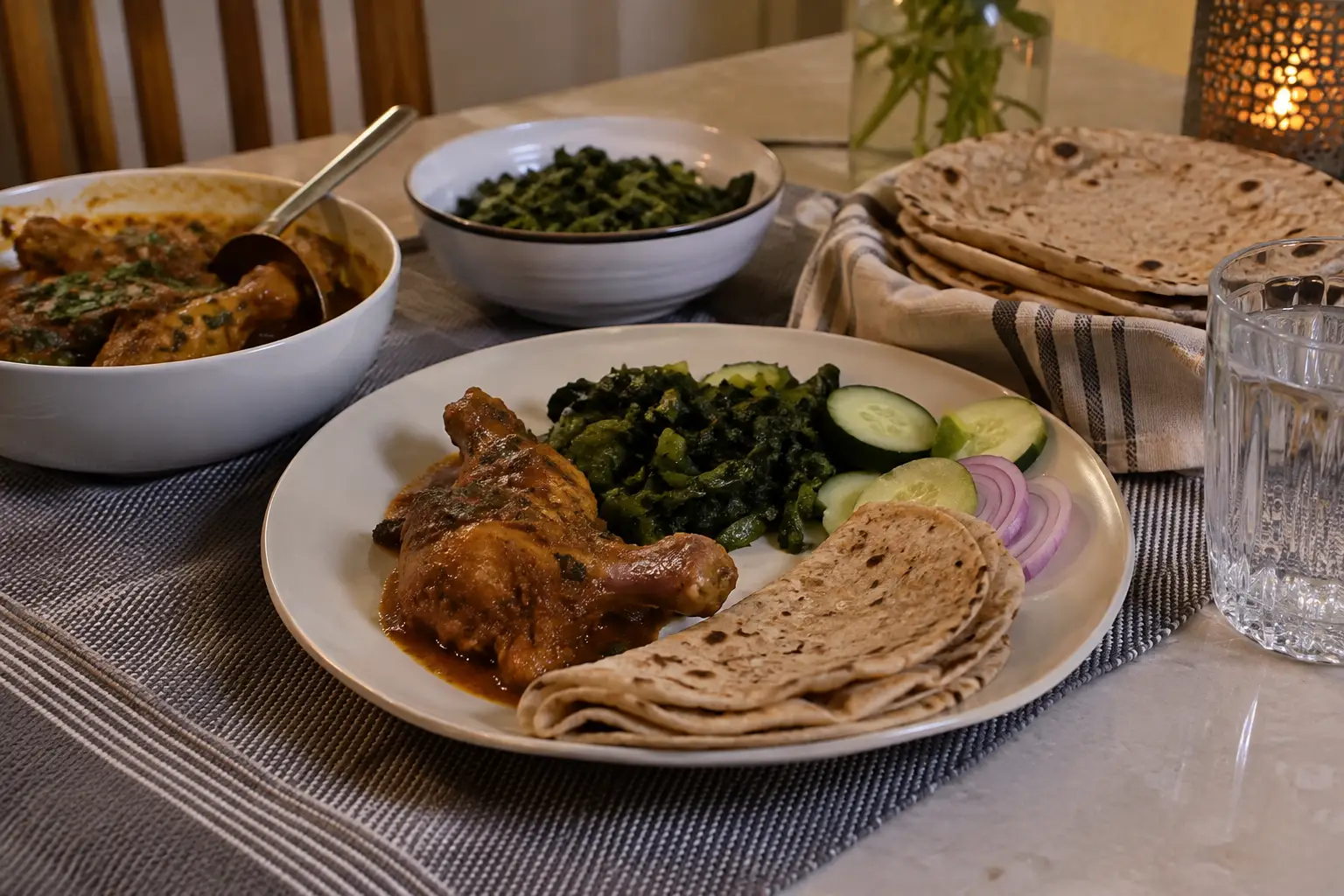
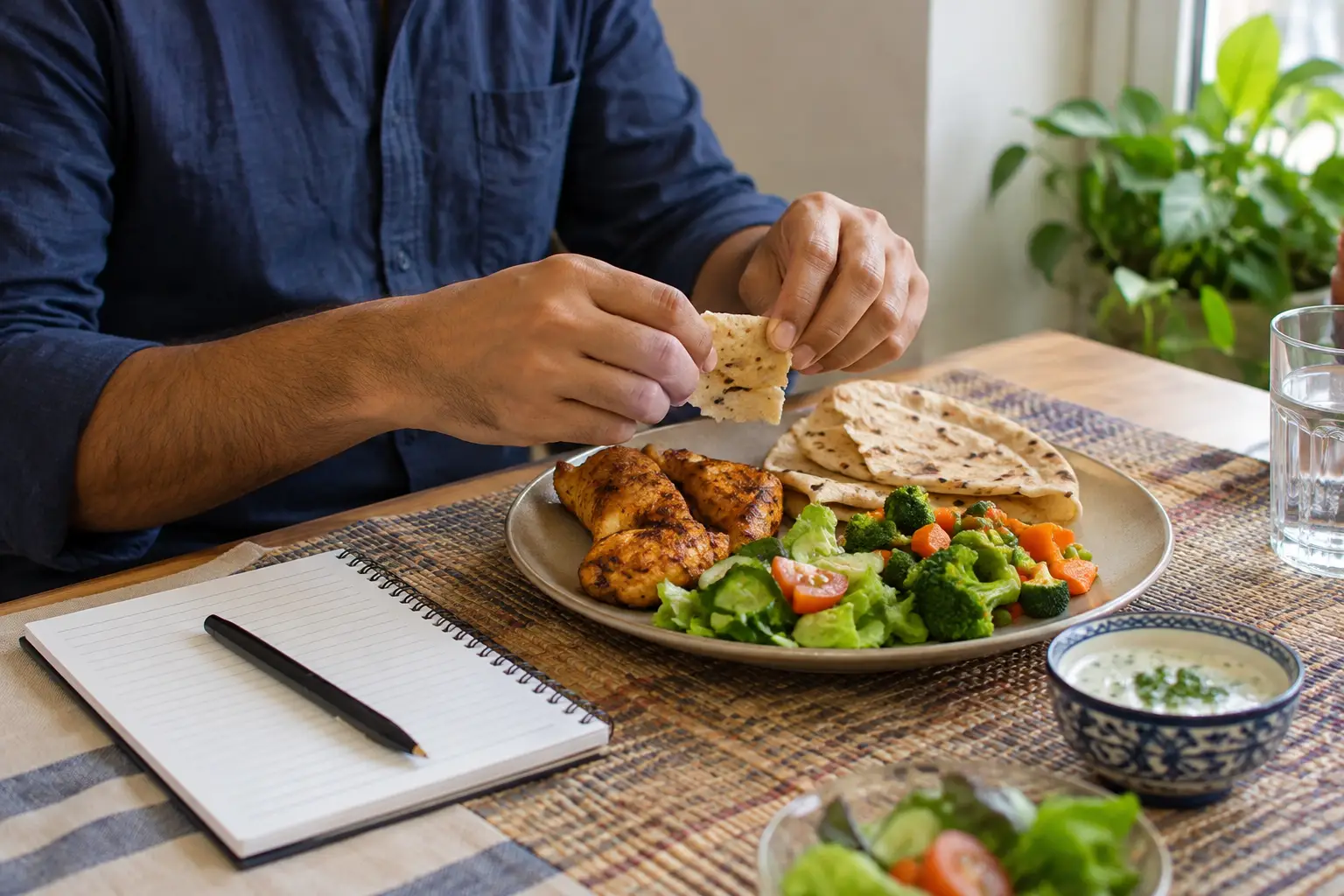
At lunch and dinner, start with a protein food, add vegetables or salad, and choose a sensible portion of roti or chawal. This is a practical structure, not a rule that every plate must look identical.
For example, a meal might include chicken karahi with less oily gravy, one or two rotis, and a generous serving of vegetables or salad. Another could be daal, a moderate serving of rice, and a side of plain yogurt. Keep the foods your family cooks; begin by adjusting portions and what you add around them.
Protein portions vary by recipe and serving size. As a rough guide, 100 g of cooked chicken breast has about 30 g of protein, while one large egg has around 6 g. Daal also contributes protein, though a bowl's amount depends on how much lentil it contains. These are estimates, not a reason to start weighing every meal.
2. Decide your portions before you are very hungry
When you arrive home starving after a long shift, it is easy to take seconds before you notice how much you have eaten. Make the first plate, sit down, and take a short pause before deciding whether you want more.
A simple starting point:
- Put your protein food on the plate first.
- Add vegetables or salad if they are available.
- Serve a moderate portion of roti, chawal, or another staple.
- Eat without rushing when you can, and notice whether you are still hungry before adding more.
You do not have to reject food offered by family. You can take a smaller first serving, enjoy the meal, and make your next choice based on hunger rather than pressure or habit.
3. Keep a few dependable meals in rotation
You do not need a new menu every day. Pick two or three breakfasts, lunches, and dinners you can repeat without much effort. A steady pattern makes it easier to spot where portions, snacks, or takeaways are adding more than you intended.
For example:
- Breakfast: eggs with roti and fruit.
- Lunch: chicken, daal, or beans with a measured serving of chawal and vegetables.
- Dinner: qeema or fish with roti and salad.
- Backup meal: plain yogurt with fruit, or a simple home meal rather than grazing while waiting for dinner.
The best choices depend on what you like, your budget, and what is available. For more ideas that use everyday ingredients, see this guide to affordable protein foods in Pakistan.
A repeatable meal is more useful than a perfect meal you only manage once.
4. Notice the extras without tracking every bite
Oil, sauces, sweet drinks, snacks, and frequent second servings can add up without making a meal feel much larger. You do not need to ban them. First, notice which extras appear most often, then choose one small change.
You could use a little less oil when cooking, pour a drink in a glass rather than refilling automatically, or keep snacks to a planned portion instead of eating from the packet. Choose one change you can repeat for a couple of weeks. Trying to change everything at once often makes the plan hard to live with.
If your dinner time shifts around your job, keep a simple routine rather than treating a late meal as a failure. This guide to eating dinner late and weight gain explains how to think about timing alongside the rest of your day.
5. Make movement part of the week you actually have
Food choices matter, but regular movement and strength training can support your overall fitness and help you build a routine. You do not need a long gym session every day to begin.
Try two or three manageable strength sessions each week. At home, you might do chair squats, incline push-ups against a stable surface, hip hinges, and rows with a backpack. Start with a few controlled sets, and make the movements harder gradually as they become comfortable. On other days, take a walk during a break or after dinner when your schedule allows.
If you are new to strength work, keep the first week easy enough to repeat. If you train in a hotel gym while travelling for work, choose a few basic movements and finish before the session becomes a reason to skip the next one.
6. Use a weekly check instead of daily food maths
Without calorie counting, a simple review helps you avoid guessing. Weigh yourself under similar conditions several mornings per week if that feels useful, and compare weekly averages rather than reacting to one reading. You can also measure your waist once a week, using the same place and technique each time.
Daily weight moves around because of food, water, and normal routine changes. Look for the trend across several weeks. If both your average weight and waist stay unchanged for about three weeks, check whether your portions, snacks, and movement have matched the plan. Then make one small adjustment, such as slightly reducing a regular extra portion or adding a short walk on a few days.
If you would rather follow a structure than invent one, CU Fit offers a custom diet based on foods you already eat, daily workouts that unlock as you progress, and weekly check-ins with photos, weight, and waist. Its progress charts help you see the trend without logging every ingredient. You can read more about support from a weight loss coach in Pakistan.
7. Have a reset ready for the day that goes off plan
A work dinner, family gathering, or tiring shift may change your usual routine. The next meal does not need to be punishment. Return to your normal portions, drink water as you usually would, and continue with your next planned workout or walk.
Avoid skipping meals to “make up for” a larger meal. That can leave you very hungry later and make the next decision harder. If you want a practical approach to getting back into a routine after a disruption, read how to restart a weight-loss plan after a holiday.
A simple two-week trial
For the next 14 days, choose three actions from the checklist. For example: include a protein food at lunch and dinner, serve one plate before deciding on seconds, and walk for 15 minutes after work on four days. Keep notes in your phone if that helps, but you do not need to record every calorie.
At the end of the two weeks, look at how often you followed the actions and review your weight and waist trend. If the routine felt realistic but the trend did not move over several weeks, adjust one portion or habit. If the plan was too difficult, simplify it before making it stricter.
Some men prefer more personal guidance and direct weekly feedback. Coach Usman is a Level 3 Personal Trainer, specialized as a weight loss coach. Premium 1:1 online coaching is an option if you want direct coaching, while program details and pricing can help you compare the available support.
Conclusion: how to lose weight without counting calories every day
The practical answer to how to lose weight without counting calories every day is to use portions, familiar meals, regular movement, and a weekly progress review. You do not need to remove roti or chawal, or turn family meals into a maths problem. Start with a few repeatable choices, check the trend over time, and adjust calmly if needed.
Want a plan built around your job and your food? Start with CU Fit at coachusman.fit for an affordable custom diet and workout plan. Want Coach Usman to coach you 1:1? Choose Premium coaching at coachusman.com.
This is general fitness information, not medical advice. Please talk to a doctor before changing your diet or exercise routine, especially if you have a health condition.
FAQ
Can you lose weight without counting calories every day?
Yes. You can use consistent portions, protein-centred meals, regular movement, and weekly weight or waist checks instead of logging every meal. Review your trend over several weeks and make small changes if needed.
How do I know if my portions are right without tracking calories?
Use a repeatable plate pattern and monitor your weight trend and waist measurement over time. If both stay unchanged for several weeks, review regular portions, snacks, and movement, then adjust one habit.
Can CU Fit help if I do not want to count calories every day?
CU Fit provides a custom diet based on foods you already eat, daily workouts, weekly check-ins, and progress charts. It also includes a bad-day reset and Coach Usman personally reviews your progress after six check-ins.
Coach Usman, 12+ years of coaching experience
1:1 online coach for Pakistani men worldwide, building fat-loss plans around real jobs, shifts and desi food.
coachusman.comWant a coach who builds the plan around you?
Coach Usman builds your diet and training around your job, your schedule and the desi food you already eat.
Start with Coach UsmanComments (0)
No comments yet. Be the first.