In this article
- Mistake 1: Arriving Starving — Keep Your Earlier Meals
- Mistake 2: Treating Every Course as a Separate Meal — Plan the Whole Evening
- Mistake 3: Guessing Calories Too Precisely — Use a Sensible Range
- Mistake 4: Letting Shared Orders Decide Your Portion — Order With a Role
- Mistake 5: Explaining Your Diet at Every Refill — Use a Warm, Short Reply
- Mistake 6: Forgetting Drinks and Dessert — Choose Them Deliberately
- Mistake 7: Reacting to Tomorrow’s Scale — Review the Pattern Instead
- Your next dawat: a quick checklist
Want a plan built around your job and desi food? Try 1:1 online coaching with Coach Usman.
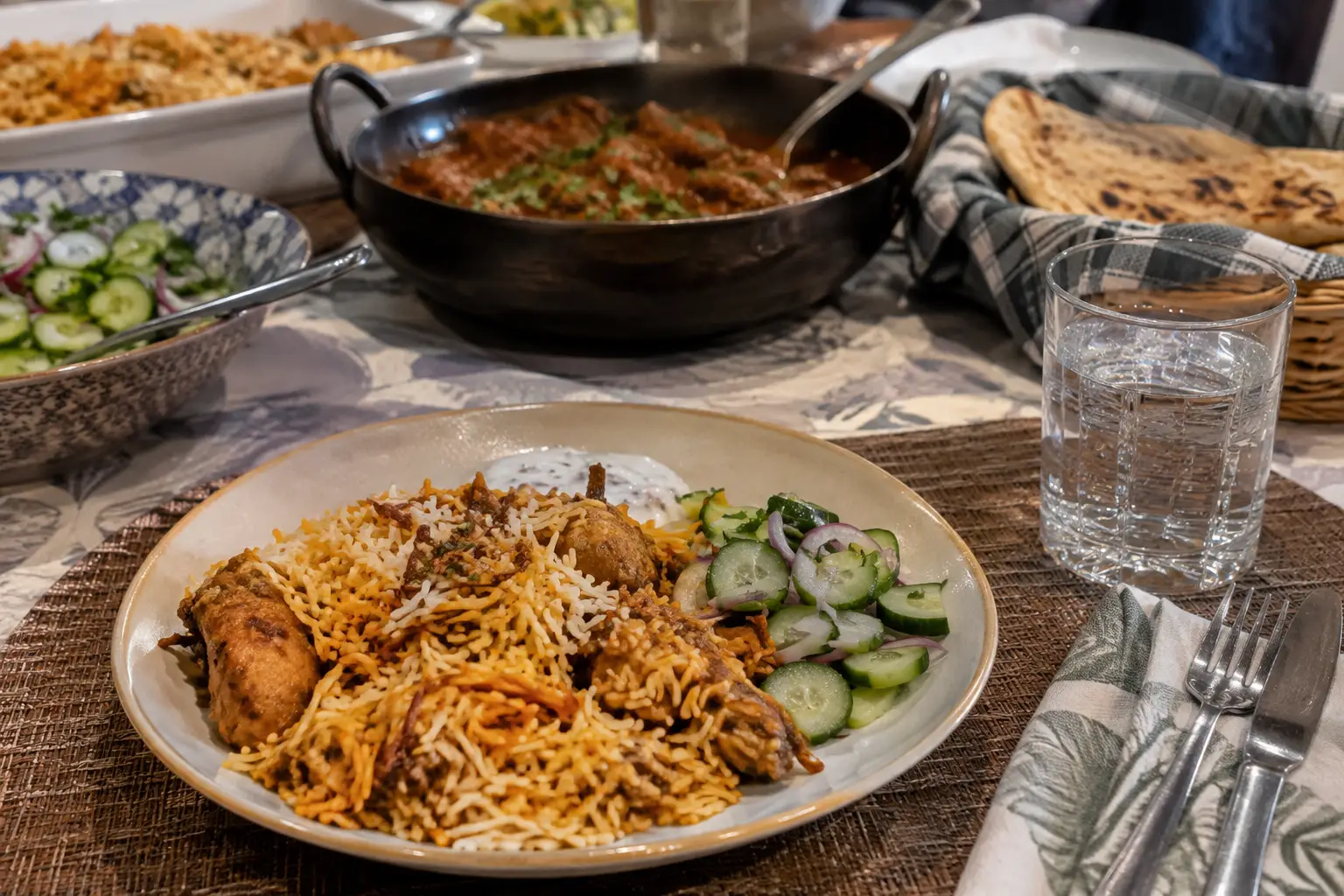
You have finished your biryani when someone brings out the karahi and says, “That was only the first round.”
At a Pakistani dawat, the food does not always arrive together. Starters appear while you talk. Dinner comes later than expected. Someone tops up your plate before you have answered.
Eating out for weight loss becomes easier when you plan for how the meal will unfold, not just which food you will choose.
You do not need a special diet container at your cousin’s house. You need a few decisions that work when the food is generous and saying no feels awkward.
These seven mistakes are worth fixing, whether you are visiting family in Pakistan or heading to a weekend dawat in the UK.
Think of eating out and dawat survival as a plan for enjoying the evening, not a test of how many foods you can avoid. Keep the dishes you like. Pay attention to the extras you barely notice.
Mistake 1: Arriving Starving — Keep Your Earlier Meals
Skipping lunch to “save everything for tonight” sounds sensible. But dinner might be advertised for seven and served at nine. By then, the first tray of pakoras can feel impossible to leave alone.
The fix: arrive hungry enough to enjoy dinner, not desperate for anything available.
Eat your usual earlier meals, including a useful source of protein. You can keep them simple without turning the day into a fast.
For example, lunch could be chicken and vegetable leftovers with a small roti. If there will be a long gap before dinner, have a planned snack rather than hoping your appetite will cooperate.
A 170–200 g pot of plain high-protein yoghurt often provides roughly 15–20 g of protein and 100–160 calories. Check the label, because products vary. Fruit alongside it can make a practical snack before leaving work.
You are not trying to eat an extra meal before a meal. You are preventing a delayed dinner from deciding everything for you.
If shift timing makes this difficult, use the meal-planning ideas in fat loss on 12-hour shifts to protect an earlier eating opportunity.
Before leaving, check when food is likely to be served, not just when guests should arrive. That one question can help you decide whether you need a snack or can comfortably wait.
Mistake 2: Treating Every Course as a Separate Meal — Plan the Whole Evening
A few starters seem harmless. Then you have a full dinner. Then dessert arrives, and it feels separate again.
Your appetite may treat each new dish as a fresh invitation, but all those courses still contribute to your total intake.
The fix: find out what is coming before committing to the first round.
At someone’s home, casually ask, “What have you made for dinner?” At a restaurant, look at the full menu before ordering starters.
Then choose what matters most to you:
- If biryani is the main attraction, keep starters modest.
- If you really want grilled kebabs, include them as part of dinner rather than an extra meal beforehand.
- If a favourite dessert is coming, leave some room instead of eating until uncomfortable first.
This is not a rule that you can only enjoy one food. It is a reminder that you do not need a full portion at every stage.
A generous invitation does not require an unlimited appetite.
Eat your starter slowly and pause before accepting another. That small gap gives you time to remember that dinner has not arrived yet.
If starters keep circulating, put your chosen portion on a plate where possible. Repeated bites from a passing tray are easier to lose track of than food you can see together.
Mistake 3: Guessing Calories Too Precisely — Use a Sensible Range
You search for “one plate biryani calories” and log the first result. The number looks precise, but your plate may be twice the size of the example.
Restaurant and dawat recipes vary. Oil, meat cuts, rice quantity, and serving size all change the total.
The fix: use estimates to guide decisions, not to pretend you know the recipe.
Here are rough reference points, not promises about a particular kitchen:
| Food and approximate serving | Calories | Protein |
|---|---|---|
| Small plain roti, made with about 30 g flour | 100–120 | 3–4 g |
| Chicken biryani, roughly 300–350 g | 500–750 | 20–30 g |
| Chicken tikka, about 150 g cooked boneless meat | 250–350 | 35–45 g |
| One medium gulab jamun | 150–220 | 2–4 g |
A large restaurant biryani serving can exceed that range. Butter on roti, oily marinades, and rich sauces also add calories.
If you track food, pick a reasonable matching entry and accept the uncertainty. Do not spend the evening searching for a number accurate to the last calorie.
Where a restaurant publishes nutrition information, use it as a starting point for the portion you actually eat. For an unknown recipe, avoid choosing the lowest entry simply because it makes your log look better. Include drinks, sauces, and second helpings in your estimate too.
If you do not track, use the same information practically: include a clear protein source, choose portions deliberately, and notice calorie-dense extras. You can build a useful meal without needing a perfect food database.
Mistake 4: Letting Shared Orders Decide Your Portion — Order With a Role
At a restaurant, someone orders two karahis, a basket of naan, rice, and mixed starters “for everyone.” You keep eating because food keeps moving around the table.
Shared dishes are not the problem. Having no idea what you intend to eat makes them harder to manage.
The fix: decide what your part of the shared meal will look like.
One workable restaurant dinner could include:
- A serving of chicken from the shared karahi, with some sauce.
- One small roti to begin with.
- Salad or cooked vegetables where available.
- Water or a low-calorie drink.
If you prefer rice, choose rice. If you want both rice and bread, take smaller amounts of each rather than automatically having full portions of both.
At a buffet, look along the whole counter first. Otherwise, your plate can be full before you reach the food you actually wanted.
You can also ask the waiter to bring fewer breads initially and order more if needed. At a restaurant, packing suitable leftovers is another option; finishing the table’s food is not your responsibility.
Serve yourself a starting portion, eat it, and then check whether you are still hungry. Taking more is an option, not a requirement. The aim is to stop shared serving dishes from becoming automatic refills.
Mistake 5: Explaining Your Diet at Every Refill — Use a Warm, Short Reply
A long explanation about calories can turn a simple refusal into a family discussion.
Someone says you hardly ate. Someone else tells you that one evening will not matter. Now you feel you must either defend your plan or accept more food.
The fix: appreciate the host without negotiating your appetite.
Try a short response:
- “It was excellent, thank you. I’m full now.”
- “I really enjoyed it. No more for me, please.”
- “I’ll wait a little before deciding.”
You do not have to announce that you are losing weight. You also do not need to describe the food as unhealthy to justify stopping.
If someone reaches for your plate, respond before they serve: “Thank you, that’s enough for me.” Keep your tone friendly and repeat the same message if needed.
Move the conversation towards the person, not the food. Ask about their work, their children, or something they mentioned earlier.
Hospitality is about connection as well as feeding people. You can stay involved, compliment the cooking, and enjoy the evening without another helping.
If food lands on your plate before you can respond, you still do not have to finish it beyond comfortable fullness. A polite refusal does not become less valid because someone has already served you.
Mistake 6: Forgetting Drinks and Dessert — Choose Them Deliberately
You have thought carefully about dinner, but the drinks keep getting refilled. Later, you taste three desserts because each serving looks small.
Liquid calories and repeated dessert portions can make a substantial difference without feeling like another meal.
The fix: make a clear choice instead of accepting automatic top-ups.
A regular 330 ml soft drink often contains around 130–150 calories. Two cans contribute roughly 260–300 calories before considering the food. Water or a sugar-free option can be an easy swap if you would rather spend those calories on dinner.
Dessert does not have to disappear. Choose the one you genuinely want and start with a small serving. Share a restaurant portion if that suits you, or have one piece of mithai rather than sampling everything because the tray is passing.
You might decide that a small bowl of kheer is more enjoyable than a sweet drink. Another evening, you might not want dessert at all.
Neither choice makes you more disciplined or less social. The useful change is deciding for yourself.
Give yourself a moment after dinner, too. You do not need to answer “yes” to dessert while still finishing the main course.
Remember the tea that comes afterwards. Sugar, biscuits, and sweets served with it still belong to the same evening. Enjoy them if you want them, but do not treat them as invisible because dinner is technically over.
Mistake 7: Reacting to Tomorrow’s Scale — Review the Pattern Instead
After a rich restaurant meal, the scale may be higher the next morning. That does not tell you how much body fat you gained.
More food still being digested, extra carbohydrates, and a salty meal can temporarily affect scale weight. One reading cannot separate those changes from fat gain.
The fix: return to your normal routine and judge the longer-term pattern.
Have your regular meals. Drink normally. Keep your usual movement and planned training rather than adding a punishment workout.
Fat loss depends on maintaining a calorie deficit over time. An occasional larger dinner can fit within that. Several large restaurant meals every week may need more deliberate adjustments.
If you weigh yourself, compare readings taken under similar conditions and look at the trend across several weeks. Do not rewrite your whole plan because of the morning after a dawat.
After your next invitation, review three practical questions:
- Did I arrive too hungry because dinner was late?
- Which extras did I eat without particularly enjoying them?
- What one decision would make the next invitation easier?
That gives you something useful to change, rather than a reason to avoid family events.
Your next dawat: a quick checklist
Before you leave, keep these decisions simple:
- Earlier meals: eat normally rather than arriving starving.
- First round: find out what else is coming before filling up.
- Main meal: choose your favourites and serve a deliberate starting portion.
- Refills: pause and use a warm, short reply when you have had enough.
- Drinks and dessert: choose them rather than accepting every offer.
- Next morning: return to your routine without trying to punish the meal away.
You do not need to get every decision right. Start with the mistake that most often catches you out and practise a different response at your next invitation.
For Pakistani men balancing work and family invitations in Britain, online personal training in the UK can help make these decisions part of a realistic weekly plan.
Coach Usman is a Level 3 Personal Trainer and Certified Weight Loss Coach by NSFT, based in Gujranwala, Pakistan, and provides 1-on-1 online coaching through the My Coach app. You can explore online coaching options if you want support fitting food and training around your actual schedule.
Coaching is Rs 25,000/month or Rs 125,000 for 6 months, paid by card through Stripe. It is available to Pakistani men in Pakistan and overseas.
Want a plan built around your job and your food? Start online coaching with Coach Usman at coachusman.com. For questions, email support@coachusman.com.
This is general fitness information, not medical advice. Please talk to a doctor before changing your diet or exercise routine, especially if you have a health condition.
FAQ
Can I eat biryani at a dawat and still lose weight?
Yes. Biryani can fit into a calorie deficit. Choose a portion that fits your meal, include some chicken or another protein source, and be deliberate about starters, drinks, and refills. Your overall eating pattern matters more than avoiding one dish.
Should I skip meals before eating out?
You do not need to. Keeping regular earlier meals often makes it easier to manage hunger, especially when dinner is served late. Avoid arriving so hungry that you eat whatever appears first. A planned snack can help if there is a long gap before dinner.
How do I track a home-cooked dawat meal?
Use a reasonable estimate based on the food and approximate serving size. Recipes vary, so exact tracking is rarely possible. Include drinks, sauces, dessert, and second helpings. Consistent, sensible estimates are more useful than pretending an unknown recipe has a precise calorie total.
What if I have a medical condition or a prescribed diet?
Check with your doctor if you have a medical condition. Follow any individual dietary advice you have been given rather than replacing it with general eating-out tips.
How can I refuse extra food without offending the host?
Compliment the food and keep your reply short: “It was excellent, thank you. I’m full now.” Repeat it warmly if needed. You do not have to explain your weight-loss plan or criticise the cooking to decline another helping.
Why is my weight higher the morning after a dawat?
A salty meal, extra carbohydrates, and food still being digested can temporarily increase scale weight. One reading does not show how much body fat you gained. Return to your usual routine and assess your weight trend over several weeks.
Can I have both naan and rice when eating out?
Yes. If you want both, start with smaller amounts of each rather than full portions of both by default. Include a protein source and vegetables where available, then pause before deciding whether you need more.
What if I have several dawats in the same week?
Use the same basic plan at each event: keep earlier meals regular, choose a deliberate starting portion, and avoid automatic refills. Pay particular attention to repeated starters, sweet drinks, and desserts. If frequent invitations are affecting your progress, adjust those recurring choices rather than skipping meals between events.
Coach Usman, 12+ years of coaching experience
1:1 online coach for Pakistani men worldwide, building fat-loss plans around real jobs, shifts and desi food.
coachusman.comWant a coach who builds the plan around you?
Coach Usman builds your diet and training around your job, your schedule and the desi food you already eat.
Start with Coach UsmanComments (0)
No comments yet. Be the first.