In this article
- Myth: Every day needs the same fat-loss routine
- Myth: A long shift means I should eat as little as possible
- Myth: Working for 12 hours means I have earned unlimited food
- Myth: Days off should make up for everything I missed
- Myth: A workout only counts if I do it after work
- Myth: I need a quieter job before fat loss can work
Want a plan built around your job and desi food? Try 1:1 online coaching with Coach Usman.
Myth: Every day needs the same fat-loss routine
Fact: Your routine can change with your roster while the basics stay steady.
A 12-hour shift takes up more than 12 hours of your life. Add the commute, getting ready and family responsibilities, and there may be very little usable time left.
That is why copying a routine built around a short office day can leave you feeling behind before work even starts.
Fat loss still needs a calorie deficit: eating less energy than you use over time. But that does not require identical meals, workout times or activity on every day.
In my coaching... I build the routine around the roster rather than asking someone to live like an office worker.
Start by marking your upcoming days as workdays, recovery days or days with more free time. A day off immediately after a demanding run of shifts may belong in the recovery category.
Give each type a realistic job. Workdays need manageable meals. Recovery days need room for sleep and basic tasks. Freer days can hold more training and preparation.
Different days can follow the same plan without looking the same.
Myth: A long shift means I should eat as little as possible
Fact: A manageable deficit matters more than getting through work on very little food.
It can feel efficient to leave home with tea, delay eating and save most of your food for later. But if that regularly leaves you distracted by hunger and eating everything within reach after work, the approach needs changing.
Do not confuse being busy enough to ignore hunger with having a useful meal routine.
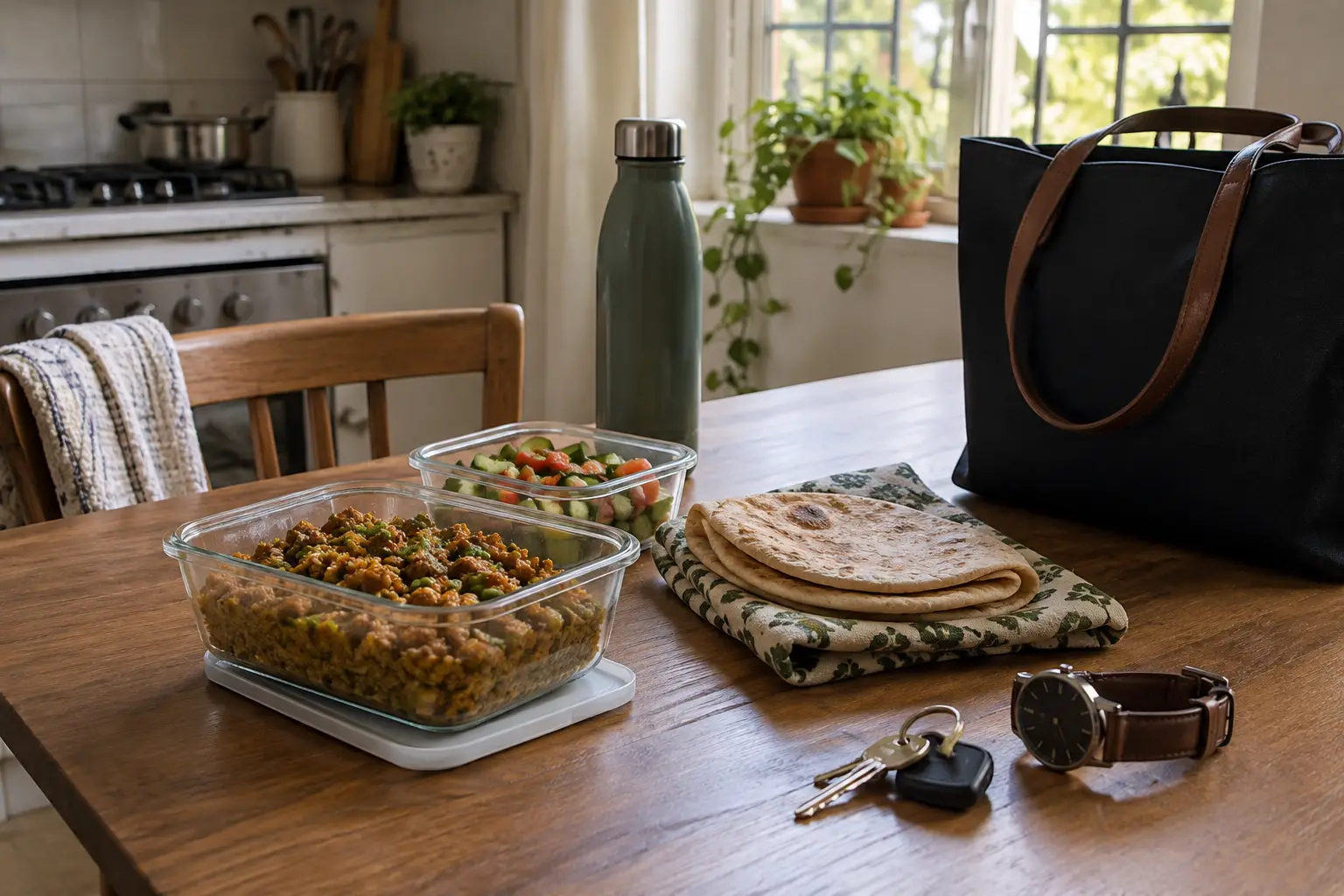
Think about how your food will carry you through the shift. A meal of chicken keema with peas and chapati can fit. So can lobia with rice and plain yogurt. The portions, cooking oil and everything else you eat still count.
Use this simple check:
- Does the meal include a clear protein source?
- Is there enough food to make it a meal rather than a token snack?
- Have rich sauces, oil and drinks been included in your thinking?
- Does the amount suit your hunger and the physical demands of your work?
For help putting meals together, use these practical nutrition basics. You do not need a separate diet menu for shift days.
Myth: Working for 12 hours means I have earned unlimited food
Fact: Shift length and physical activity are not the same thing.
A security worker watching monitors and a warehouse worker moving stock may both finish exhausted. Their movement during the shift can be very different.
Mental fatigue is real, but it does not tell you how much energy you used. Neither does the feeling that you deserve something nice after a difficult day.
Look at what your job actually involves. Are you mostly seated, standing in one place, walking between departments or doing physical work? Use that information when setting food portions and extra activity.
If you spend most of the shift seated, a little walking during permitted breaks may help. If your work is already physically demanding, adding a punishing walk after every shift may simply make recovery harder.
You can enjoy food after work without treating the whole evening as compensation. Put your meal on a plate, sit down when possible and notice whether you want more food or just a break from demands.
Myth: Days off should make up for everything I missed
Fact: Days off need a plan, not a pile of unfinished fitness tasks.
After several long shifts, it is tempting to schedule a hard workout, a long walk, shopping and a full afternoon of cooking on your first free day.
Then normal life arrives. There is laundry, a family visit or a school pickup. By evening, the day feels like another shift.
Choose the tasks that make the next work block easier. That might mean buying groceries and cooking a pot of masoor dal, rather than preparing a different meal for every day. Freeze suitable portions for later shifts instead of expecting everything to stay fresh in the fridge.
Keep food reasonably structured on days off too. You do not need to eat less just because you are away from work, or turn every free day into unrestricted eating. A family lunch of fish curry and rice can stay part of the plan.
Myth: A workout only counts if I do it after work
Fact: Training belongs where you can perform it and recover from it.
There is nothing special about lifting weights after a long shift. If that slot regularly cuts into sleep or leaves you rushing through every set, move it.
Look across your roster rather than forcing a standard gym week onto it. Put your more demanding sessions on days when you have enough time and energy. If a workday session fits comfortably, keep it short and focused.
A simple session might include a squat or leg press, a pulling movement and a press. Record your sets and reps so the session has a purpose beyond making you sweat.
Avoid adding extra exercises because you feel guilty about the next shift block. Strength training supports muscle retention during fat loss; it is not repayment for food.
If training keeps pushing bedtime back, work on protecting the end of your day before adding more gym time.
Myth: I need a quieter job before fat loss can work
Fact: You need a workable starting point, not an empty calendar.
You may not control the rota, break times or overtime. Be honest about those limits without assuming every useful action is out of reach.
Before your next work block, write down what is predictable: food access, commuting time, available storage and the days when training is realistic. Build around those facts.
Then choose a small improvement. Bring a filling meal instead of relying on whatever appears in the staff room. Arrange groceries before the fridge is empty. Move a workout away from your most draining shift.
Judge the plan across workdays and days off together. If progress stalls, review that whole pattern before making food cuts. Look for a repeated problem you can actually change.
A useful shift-work plan should leave you saying, “I know what to do next,” not wondering how to squeeze another obligation into an already full day.
This is general fitness information, not medical advice. Please talk to a doctor before changing your diet or exercise routine, especially if you have a health condition.
FAQ
Can I lose fat while working 12-hour shifts?
Yes. A manageable calorie deficit can fit shift work. Plan food, activity and training around your actual roster rather than copying a standard office-day routine.
Should I eat less on my days off?
Not automatically. Consider your activity, hunger and overall eating pattern. Keep meals structured rather than making large changes simply because you are off work.
Do I need to train after every shift?
No. Put training where you have enough time and energy to do it well without regularly sacrificing sleep.
What if my job is mostly seated?
Do not assume a long shift means high activity. Use permitted opportunities to move, and base food portions on your actual routine rather than how exhausting work feels.
Coach Usman, 12+ years of coaching experience
1:1 online coach for Pakistani men worldwide, building fat-loss plans around real jobs, shifts and desi food.
coachusman.comWant a coach who builds the plan around you?
Coach Usman builds your diet and training around your job, your schedule and the desi food you already eat.
Start with Coach UsmanComments (0)
No comments yet. Be the first.