In this article
- 1. Find Your Training Space Before Choosing Exercises
- 2. Give the Workout the Right Job
- 3. Build Your Session Around Four Movements
- 4. Make Progress Without Adding Noise
- 5. Agree on a Workout Window With Your Household
- 6. Keep Movement and Meals in the Plan
- 7. Review Whether the Plan Works in Your Actual Home
Want a plan built around your job and desi food? Try 1:1 online coaching with Coach Usman.
Your downstairs neighbour should not have to hear your fat-loss plan.
Home workout videos often make training look like a choice between jumping around the lounge and buying enough equipment to fill it. Neither is necessary.
Maybe you share a flat, your children are asleep, or the only clear floor space sits between the sofa and the dining table. You can still do useful training there.
This guide builds a quiet home routine around controlled strength exercises. The workout supports muscle and fitness. Your food intake and overall activity help create the calorie deficit needed for fat loss.
1. Find Your Training Space Before Choosing Exercises
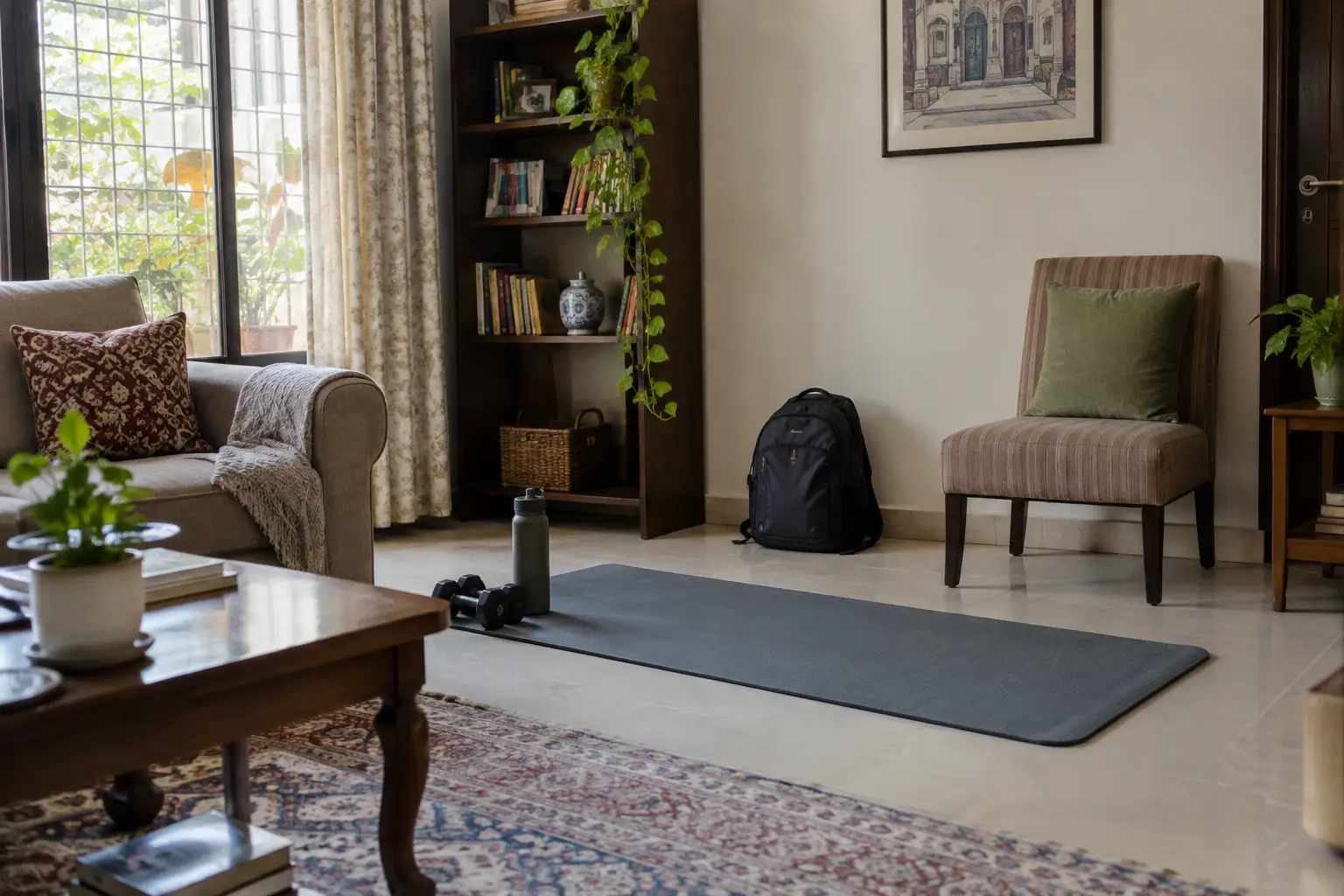
Clear enough space to stand, reach, and lie down without hitting furniture. Check the floor for loose rugs, cables, and toys. A slippery surface is not a training challenge worth accepting.
You do not need a dedicated room. You need a usable patch of floor and a time when nobody needs to keep walking through it.
Choose equipment that is already safe and practical:
- A solid chair without wheels, placed against a wall.
- A wall or fixed counter for easier push-ups.
- A sturdy backpack with secure straps and a working zip.
- Books or other non-breakable items that can be packed tightly inside.
Avoid hanging from doors, pulling on handles, or balancing between chairs. If a setup feels doubtful, choose another exercise.
2. Give the Workout the Right Job
A home workout does not need to leave you breathless to count. Strength exercises can challenge your muscles without constant jumping, rapid transitions, or a puddle of sweat.
During fat loss, resistance training helps you retain muscle. It also gives you something useful to improve while body weight changes slowly.
It cannot choose where fat comes off. Extra crunches will not specifically remove belly fat, and a sweaty session does not prove you burned more fat.
A quiet workout can still be a serious workout.
In my coaching... I want home training to fit the room, not take over the household.
Treat your session as practice at getting stronger. Treat food portions and daily movement as separate parts of the plan, rather than asking one workout to do everything.
3. Build Your Session Around Four Movements
Start with a few minutes of easy marching, arm movements, and unloaded practice reps. Then use the following routine as a starting point, not a test you must pass.
| Exercise | Starting target | Key cue |
|---|---|---|
| Chair squat | 2 sets of 8–12 reps | Touch down gently, then stand tall. |
| Wall or fixed-counter push-up | 2 sets of 6–10 reps | Keep your body moving as one unit. |
| Backpack bent-over row | 2 sets of 8–12 reps | Hinge at the hips and pull without swinging. |
| Floor glute bridge | 2 sets of 10–15 reps | Lift with control without arching your lower back. |
For the row, use a light, securely packed bag and a firm grip. Keep your back steady. If the movement is unfamiliar, practise the hip hinge without weight first.
Finish each set while you could still do a couple of clean reps. Rest until your breathing settles enough to repeat the movement well. You do not need to race the clock.
If an exercise hurts, stop rather than pushing through it. Change the movement or get help checking your technique.
The same beginner strength principles apply at home: learn the movement before making it harder.
4. Make Progress Without Adding Noise
Repeat the routine instead of searching for a new video every session. Familiar exercises make improvement easier to notice.
Record the exercise version, reps, and what was in the backpack. “Rows with books” is less useful than knowing which books you used.
Once you can comfortably reach the top of the rep range with control, change one thing:
- Add a small amount of securely packed weight.
- Use a slightly harder push-up angle on another stable surface.
- Lower yourself more slowly while keeping the movement smooth.
Do not increase everything together. More weight is not progress if you have to swing it.
Eventually, your available load may become too light. That is a reason to consider suitable equipment or a gym, not a reason to turn every exercise into a jump.
5. Agree on a Workout Window With Your Household
Start with two strength sessions on non-consecutive days. Pick times when the space is usually available, rather than times that only work if everyone else changes their evening.
Tell your family or flatmates when you need the room. Keep the agreement simple: you train, put everything away, and leave the space usable.
If you are interrupted, you can resume later. You do not have to restart the workout because you answered the door.
On a squeezed day, do one set of each exercise. That is a shorter session, not the same training dose, but it keeps useful work in the week.
Avoid borrowing time from sleep just to complete extra sets. Your plan needs room for recovery too.
6. Keep Movement and Meals in the Plan
Training at home removes the journey to the gym. It can also remove the walking that came with that journey.
Keep ordinary movement around your session: walk to a nearby errand, take a break from the laptop, or walk indoors when the weather makes going outside impractical. Use walking for fat loss as regular activity, not a way to earn dinner.
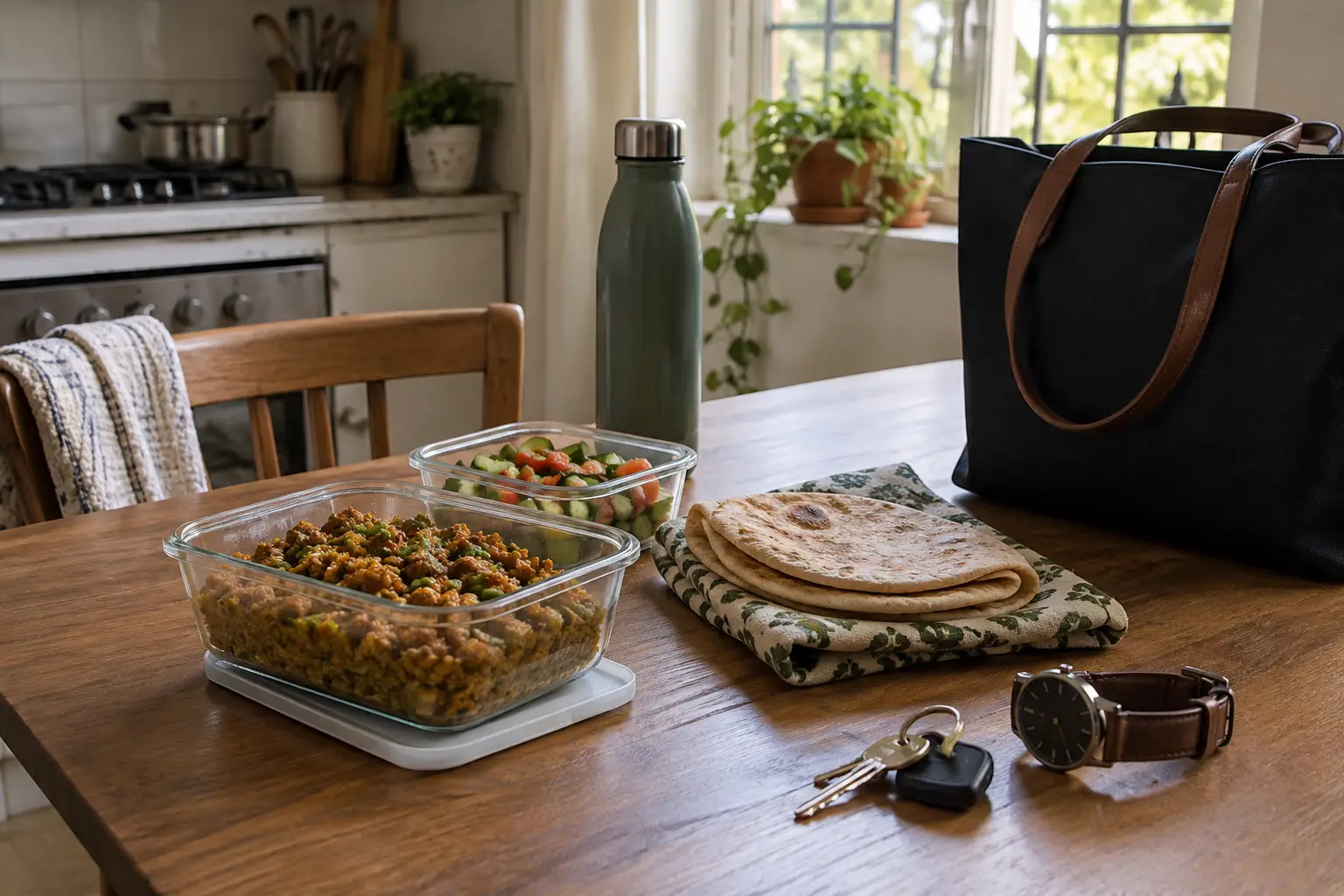
You also do not need a special post-workout menu. A normal meal can work: fish curry with rice and vegetables, or chicken keema with peas and chapati.
Include protein, pay attention to portions, and remember that cooking oil and repeated servings contribute calories too.
If dinner is soon, eat dinner. A homemade banana, date, and milk drink still adds calories; it is not automatically needed because you trained.
7. Review Whether the Plan Works in Your Actual Home
Look beyond how tired you feel afterwards. Are you completing sessions? Are your reps becoming steadier? Is the setup easy to clear away? Are weight and waist trends moving over time?
If training is improving but fat loss is not, review meals and overall activity before adding punishing circuits.
If sessions keep getting skipped, check the space and timing first. The exercise list may not be the problem.
For help fitting training and desi meals around your household and work, Coach Usman’s online coaching can help you build an individual plan.
Start with a clear floor, safe equipment, and a routine you can repeat quietly.
This is general fitness information, not medical advice. Please talk to a doctor before changing your diet or exercise routine, especially if you have a health condition.
FAQ
Can home workouts help me lose fat?
Yes. They support activity, fitness, and muscle retention. Fat loss still depends on maintaining a calorie deficit over time.
Do I need jumping exercises for weight loss?
No. Controlled strength exercises and regular walking can support your plan without jumping or disturbing your neighbours.
How often should I do this home workout?
Start with two sessions on non-consecutive days. Adjust the amount of training as your ability, recovery, and schedule allow.
What if my backpack becomes too light?
You can make some movements harder through exercise variations or slower lowering. Eventually, suitable resistance equipment or gym access may help you progress further.
Coach Usman, 12+ years of coaching experience
1:1 online coach for Pakistani men worldwide, building fat-loss plans around real jobs, shifts and desi food.
coachusman.comWant a coach who builds the plan around you?
Coach Usman builds your diet and training around your job, your schedule and the desi food you already eat.
Start with Coach UsmanComments (0)
No comments yet. Be the first.