In this article
Want a plan built around your job and desi food? Try 1:1 online coaching with Coach Usman.
A cheap meal upgrade can turn a quick food stop into more food than you wanted.
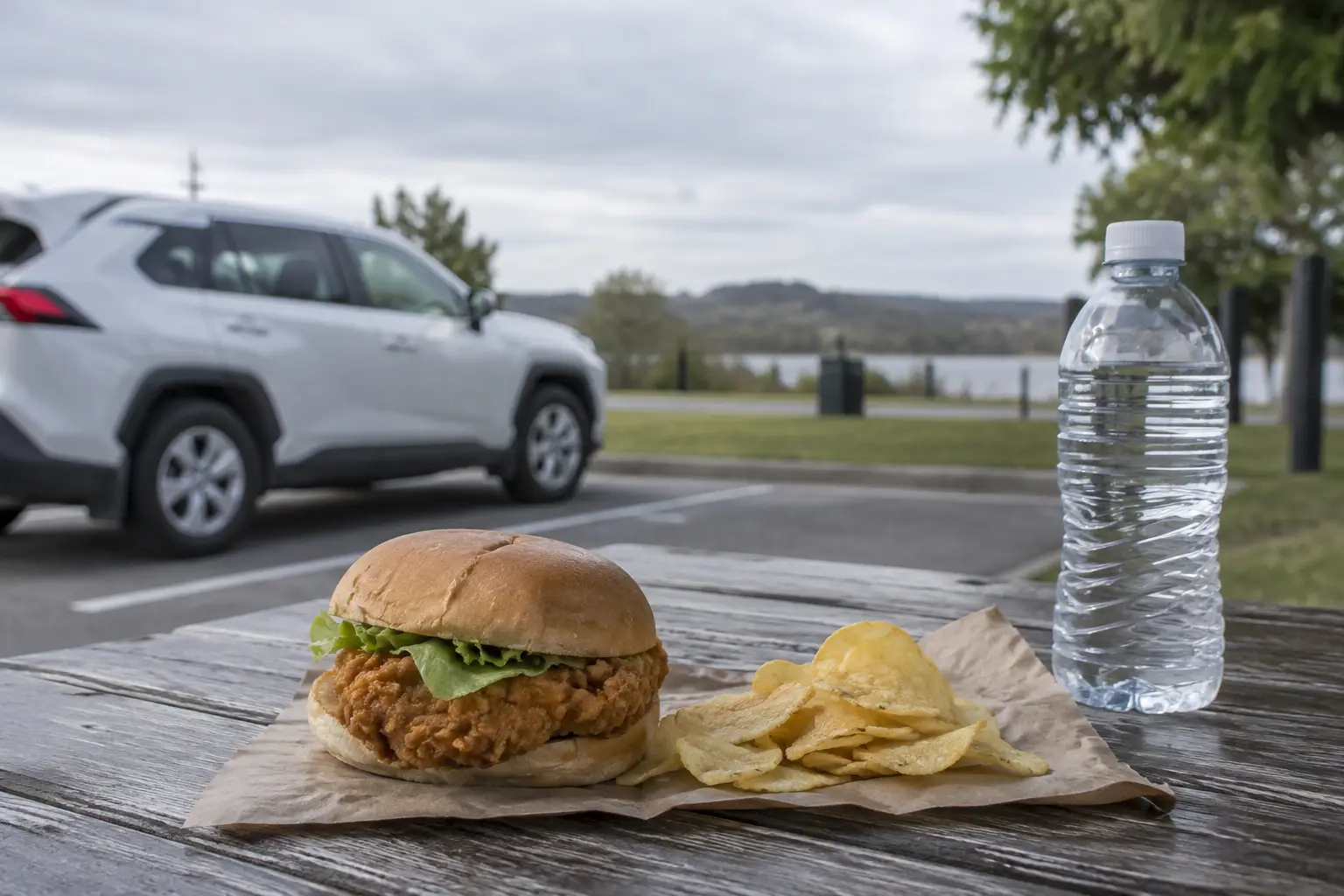
You pull in for a burger between deliveries. The combo looks better value. Then there is a drink, a side, and something sweet sitting beside you for the next part of the route.
None of those foods automatically stops fat loss. But when driving is your job, the same ordering habits can repeat across your working week.
Whether you drive between sales visits in Karachi, make deliveries in Dubai, or work a private-hire shift in Birmingham, you need something more useful than “only eat homemade food.”
You need a food-stop checklist that works when time and choice are limited.
Your quick food-stop checklist
Save this somewhere you can check it before setting off or while safely parked:
- Choose a realistic stopping place before hunger gets urgent.
- Pick the main meal before looking at deals.
- Make each extra a separate decision.
- Park safely and give the meal your attention.
- Carry a backup for delays, not a running snack supply.
- Adjust the order you repeat most often.
Fat loss still depends on eating fewer calories than you use over time. This checklist helps you manage that without demanding a perfect menu. If that part feels confusing, start with this simple guide to a calorie deficit.
□ Choose the stop before hunger chooses it
You cannot control traffic, a customer running late, or a delivery address changing. But you can often identify a food option along your usual route.
Look for somewhere with safe parking, a usable toilet, and a meal you actually enjoy. An excellent menu is not much help if stopping there means missing your break entirely.
Have a fallback too. That could be a supermarket sandwich counter, a petrol station with chilled food, or a familiar takeaway near your next work area.
The point is not to plan every bite. It is to avoid reaching the stage where you are hungry, irritated, and willing to order anything.
Check menus only before leaving or while safely parked. Saving a little time on food is never worth dividing your attention on the road.
□ Pick the main meal before the deal
Start with the food that will make this a proper meal. Look for a clear protein source, then choose the bread, rice, potatoes, or other food you want alongside it.
Practical options might include:
- A chicken burger with some salad.
- A chicken tikka wrap with vegetables and sauce you can control.
- A seekh kebab sandwich with cucumber and tomato.
- A supermarket egg sandwich with fruit.
These are options, not a ranking of “clean” foods. A wrap can be large and heavily dressed. A grilled sandwich can still come with plenty of cheese and mayonnaise. The label alone does not tell you the whole meal.
If calories are displayed, compare the actual items and portions. You do not need to find the lowest number on the menu. Choose something satisfying that fits your overall eating plan.
In my coaching... I focus on an order a man can repeat on a busy route, not an ideal lunch he cannot access.
□ Make every extra earn its place
Once the main meal is chosen, pause before accepting the combo.
Do you want the chips, or are they included? Do you want a sweet drink, or does the cashier always offer it? Would the larger portion still appeal if it were not called a bargain?
You can choose an extra you enjoy. The useful change is making that choice deliberately rather than letting the offer decide everything.
Better value at the till is not always a better meal for your goal.
Water or a sugar-free drink can make the order easier to manage. Sauce on the side gives you more control where that option exists. Neither choice makes calories disappear, but both can reduce extras you barely notice.
If you genuinely want chips, include them. You do not have to add dessert and a sweet drink just because you already chose a side.
□ Park, eat, then get back to work
Food should not compete with steering, navigation, or checking for your next turn. Stop somewhere safe and legal before eating.
That also gives the meal a clearer beginning and end. Eating from an open bag throughout the route makes it easier to lose track of what you have had.
Take the food out, see the portion, and eat without rushing straight into another task. You do not have to finish everything simply because it came in the box.
If you feel tired, treat that as a reason for a safe break, not automatically a reason to buy more food. A snack is not a replacement for rest.
□ Pack a backup, not a dashboard buffet
A backup helps when the planned stop falls through. Constant access to snacks can create a different problem.
Bring something with a clear purpose: food for a delayed meal or a hungry gap. Fruit and a portion of roasted chana are practical options that do not need assembling at the roadside.
For chilled foods such as yogurt or a chicken sandwich, use suitable insulated storage with ice packs. Do not leave them warming in the car through a long shift.
Keep the backup packed until you need it. If lunch happens as planned and you are not hungry later, there is no requirement to eat it.
□ Fix the order you buy most often
Do not spend all your effort worrying about an occasional motorway meal. Look at the order that appears repeatedly during normal work.
While parked after eating, note the main item, sides, drinks, and whether the meal kept you satisfied. Keep it factual rather than calling the day good or bad.
Then choose a useful adjustment. Perhaps the regular burger is enough instead of the larger combo. Perhaps your small snack lunch needs a proper protein-containing meal so you are not buying food again soon afterwards.
For more meal-building ideas, use this guide to putting protein into the meal that lacks it.
You do not need to stop using takeaways to take fat loss seriously. Start with your next safely parked food stop: choose the meal, question the extras, and eat before you drive.
This is general fitness information, not medical advice. Please talk to a doctor before changing your diet or exercise routine, especially if you have a health condition.
FAQ
Can I lose weight while eating fast food?
Yes. Fat loss depends on your overall calorie intake over time, not whether every meal is homemade. Portions, drinks, sides, and how often you order all matter.
Is a wrap always better than a burger?
No. Size, fillings, sauces, and cooking methods vary. Compare the actual meals rather than assuming a wrap has fewer calories.
What can I keep in the car for delayed breaks?
Fruit and portioned roasted chana can be useful backups. Foods that need refrigeration require suitable cold storage, not a warm glove compartment.
Should I skip my next meal after a large takeaway?
You do not need to skip it as punishment. Let hunger guide the timing and portion, then return to your usual meal routine.
Coach Usman, 12+ years of coaching experience
1:1 online coach for Pakistani men worldwide, building fat-loss plans around real jobs, shifts and desi food.
coachusman.comWant a coach who builds the plan around you?
Coach Usman builds your diet and training around your job, your schedule and the desi food you already eat.
Start with Coach UsmanComments (0)
No comments yet. Be the first.