In this article
- Mistake: Copying a full routine before learning the equipment
- Mistake: Thinking free weights are the only proper training
- Mistake: Choosing a weight by looking at the next man
- Mistake: Rushing between sets to make lifting feel like cardio
- Mistake: Replacing exercises whenever the gym gets busy
- Mistake: Adding weight before you can repeat the movement
- Mistake: Planning more gym days than you can recover from
Want a plan built around your job and desi food? Try 1:1 online coaching with Coach Usman.
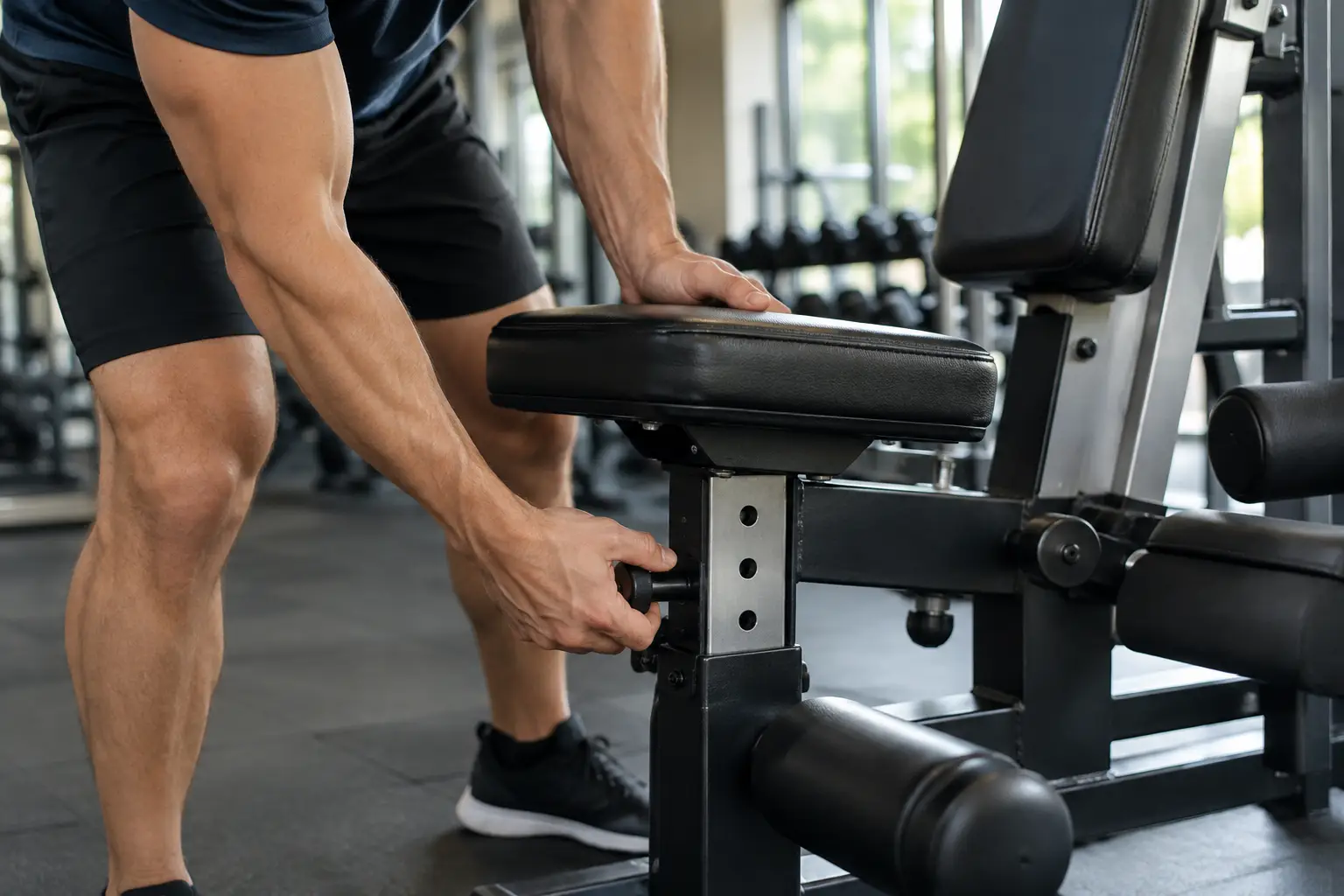
The hardest part of your first gym session may be working out where the seat adjustment is. You have watched the exercise online, but the machine in front of you looks different. Someone is waiting nearby, so you rush and hope you have set it up correctly.
For Pakistani men starting strength training, whether in Lahore or a gym overseas, this uncertainty can make a simple workout feel complicated. The answer is not to pretend you know everything. It is to treat the early sessions as practice.
Mistake: Copying a full routine before learning the equipment
A saved workout tells you which exercises to do. It may not tell you how to adjust the backrest, reach the handles, or safely finish a set on your gym's equipment.
Before loading anything, ask a gym staff member to show you the adjustments and safety features. Then practise with a light weight. Check that you can start and finish without twisting, stretching awkwardly, or dropping the load.
Save useful setup details in your phone: the seat position, handle choice, and anything you need to remember. Different machines have different settings, so those notes belong to that particular machine.
In my coaching, I treat learning the setup as part of the workout.
That small bit of preparation makes the next visit much less of a guessing game.
Mistake: Thinking free weights are the only proper training
You do not have to earn your place in the gym by starting with a barbell. Machines, dumbbells, cables, and bodyweight exercises can all be useful.
Choose exercises you can control and repeat. A machine chest press may be easier to learn than a dumbbell press. A supported row can let you practise pulling without also figuring out how to hold your torso still.
A simple full-body session could include:
- Leg press for a knee-bending movement.
- Glute bridge for hip extension.
- Machine chest press for pushing.
- Seated cable row for pulling.
- A short, controlled plank for trunk work.
This is an example, not a compulsory list. Ask for help choosing versions that suit your current ability and available equipment. You do not need every exercise variation in your first programme.
Mistake: Choosing a weight by looking at the next man
The man beside you may have years of practice. His dumbbells tell you nothing about where you should start. Even the numbers on different machines are not directly comparable.
Start light enough to learn the movement. For a simple starting approach, try two working sets of eight to twelve controlled reps per exercise, after any lighter practice sets you need. A working set is the part where the resistance feels challenging rather than just a rehearsal.
Finish each set feeling that you could still do another two or three clean reps. That estimate takes practice; it does not need to be perfect.
If you start swinging, shortening every rep, or losing your position, stop the set or reduce the weight.
Your starting weight is a learning tool, not a ranking.
Mistake: Rushing between sets to make lifting feel like cardio
Heavy breathing is not the main target of a strength session. If you rush straight into the next set, you may struggle because you have not recovered, rather than because the weight is right for you.
Rest roughly two minutes between working sets as a starting point. Take longer when you need it, especially after demanding leg exercises. Aim to begin the next set able to focus and repeat the movement with control.
You can keep walking as a separate part of your week. This guide to walking without chasing calorie burn explains how it fits alongside lifting.
Mistake: Replacing exercises whenever the gym gets busy
You arrive after work and the cable row is occupied. You try an unfamiliar exercise instead, then change the next movement too. Soon, every visit becomes a different workout.
Keep a small list of alternatives. A supported machine row could replace a cable row. A machine chest press could replace a dumbbell press you already know how to perform. Choose the alternative in advance, not while scrolling beside the equipment.
Keep the main routine stable enough to practise it. You can change the order when necessary without replacing the whole session.
If you often feel tempted to rewrite everything, read about keeping a plan long enough to use it.
Familiar exercises make it easier to notice whether your control and strength are improving.
Mistake: Adding weight before you can repeat the movement
One strong set does not automatically mean you need a heavier weight next time. First, check whether your reps looked similar from start to finish.
Use a comfortable, controlled range of motion. Avoid bouncing through the difficult part or cutting the movement shorter just to reach your target. Do not push through sharp pain.
When you can reach the top of your chosen rep range across your working sets, with control and some effort left, try the smallest available weight increase. Your reps may drop towards the lower end of the range. That is fine.
If the next jump is too large, stay where you are and practise. Write down the exercise, weight, and reps so the next decision comes from what you actually did, not what you vaguely remember.
Mistake: Planning more gym days than you can recover from
Daily attendance is not a beginner requirement. Two full-body sessions on non-consecutive days can be a practical starting point. Choose days you can usually protect, and leave room for sleep, family, and ordinary life.
Support training with regular meals rather than a sudden bodybuilding menu. Fish tikka with rice and kachumber, or chicken keema with chapati and vegetables, can fit perfectly well. Include a clear protein source instead of assuming a larger meal automatically provides enough.
For help building everyday meals, use these simple nutrition basics.
Do not use soreness as your scorecard. A useful beginner session leaves you with something you can practise again. Before your next visit, know your exercises, your starting weights, and the setup questions you still need answered. That is a solid way to begin.
This is general fitness information, not medical advice. Please talk to a doctor before changing your diet or exercise routine, especially if you have a health condition.
FAQ
How often should a beginner lift weights?
Two full-body sessions on non-consecutive days can be a manageable starting point. Build a repeatable routine before adding more sessions.
Are machines suitable for beginners?
Yes. Machines can help you learn controlled movements without managing as much balance. Learn the adjustments and safety features first.
When should I increase the weight?
When you reach the top of your chosen rep range across your working sets with controlled technique and some effort left, try a small increase.
Does a workout count if I am not sore?
Yes. Soreness is not required for progress. Look for improving control, repeatable sessions, and gradually stronger performance.
Coach Usman, 12+ years of coaching experience
1:1 online coach for Pakistani men worldwide, building fat-loss plans around real jobs, shifts and desi food.
coachusman.comWant a coach who builds the plan around you?
Coach Usman builds your diet and training around your job, your schedule and the desi food you already eat.
Start with Coach UsmanComments (0)
No comments yet. Be the first.