In this article
Want a plan built around your job and desi food? Try 1:1 online coaching with Coach Usman.
I want a new client to need fewer reminders, not more willpower.
A food plan can look straightforward until the kitchen is busy, your work call runs late, and your training clothes are still in the wash. Those small obstacles matter. I want to deal with them before asking you to try harder.
In my coaching... I start by making the basics easier to repeat.
These are the small habits I introduce to new clients. The details change around their work, family and living arrangements. The idea stays the same: make the next useful action easier to start.
Your starting checklist
- Give training essentials a permanent home.
- Reserve part of a cooked meal for later.
- Put food on a plate before eating it.
- Attach a short walk to an existing event.
- Check your next commitment before saying yes.
- Describe obstacles without judging yourself.
I do not ask you to master the whole list immediately. Start with the item that removes the most trouble from your normal day. Then build from there.
A useful habit removes a decision you keep struggling with.
□ Give training essentials a permanent home
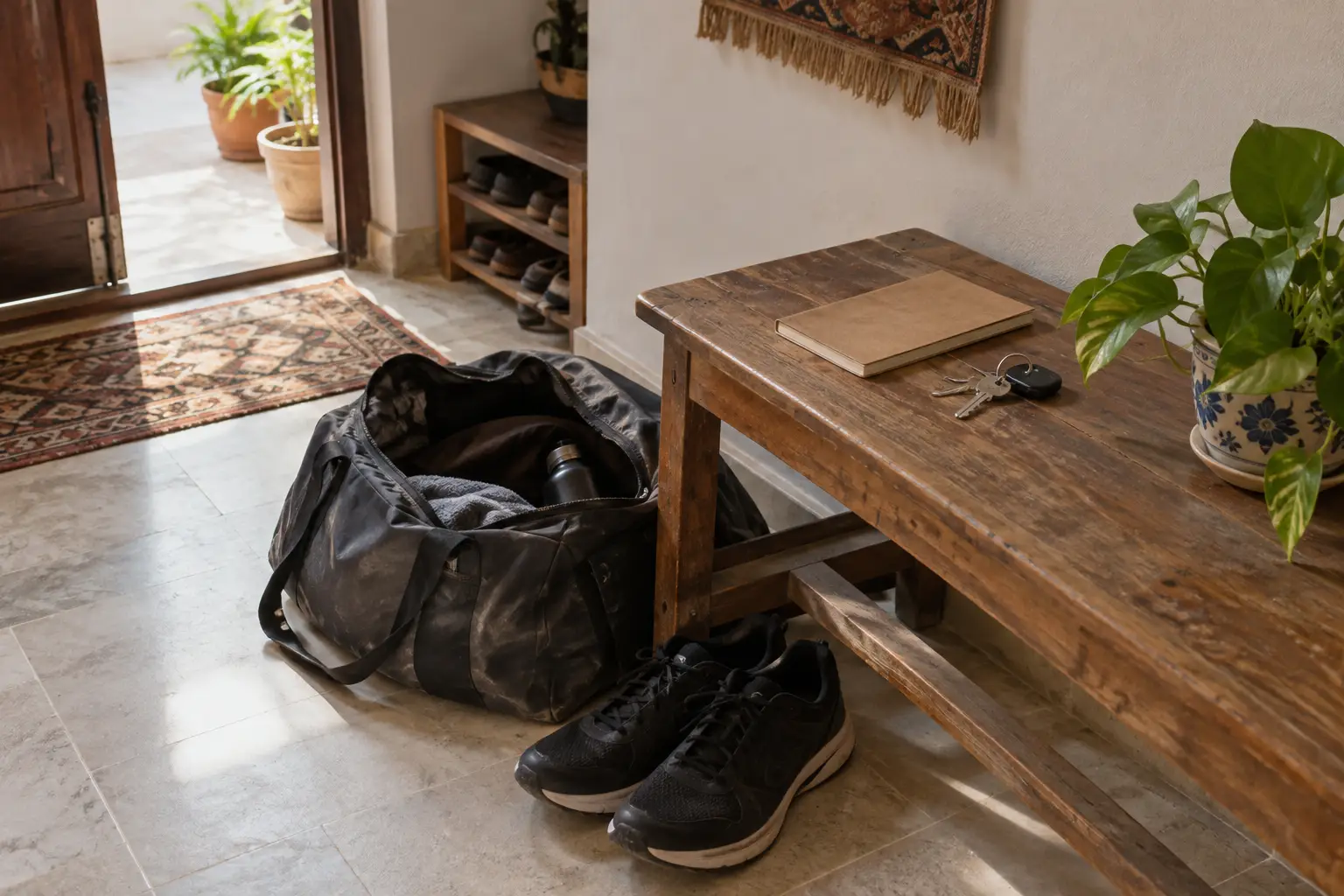
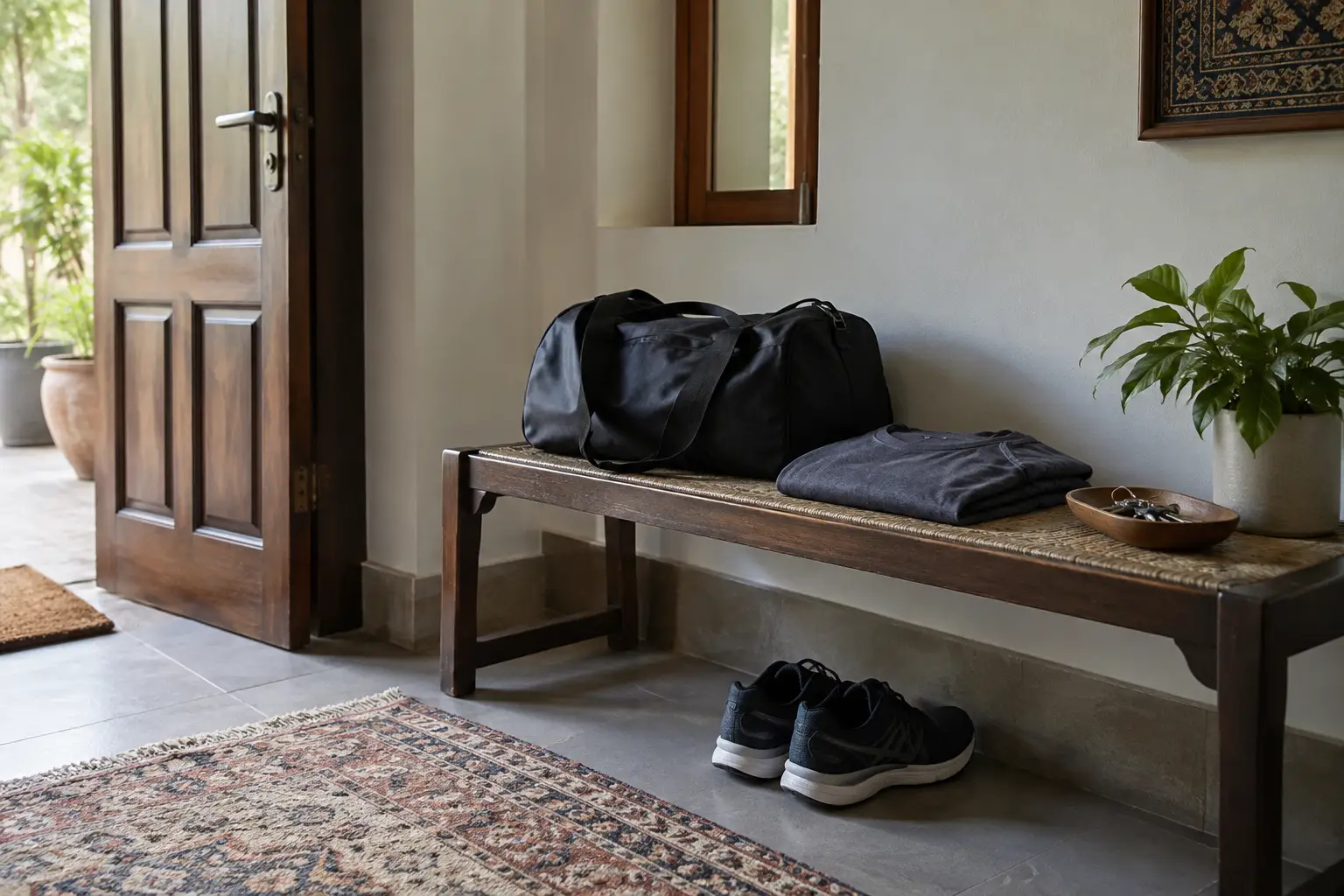
I ask my clients to choose somewhere their training things belong. Not somewhere they might leave them. A proper home for shoes, clothes, a towel and whatever else their workout needs.
This sounds almost too simple. But searching for a clean shirt while deciding whether to train gives you another reason to postpone it.
If you train at home, the same rule applies. Keep your exercise space usable rather than turning it into temporary storage. You should not need to clear delivery boxes before you can begin.
The habit is putting things back after using them. That includes returning washed clothes to the same place rather than leaving them in a laundry pile.
Tick this off when: you can get ready without searching the house or asking someone where your things are.
□ Reserve part of a cooked meal for later
I would rather help you use food already being cooked than give you another kitchen project.
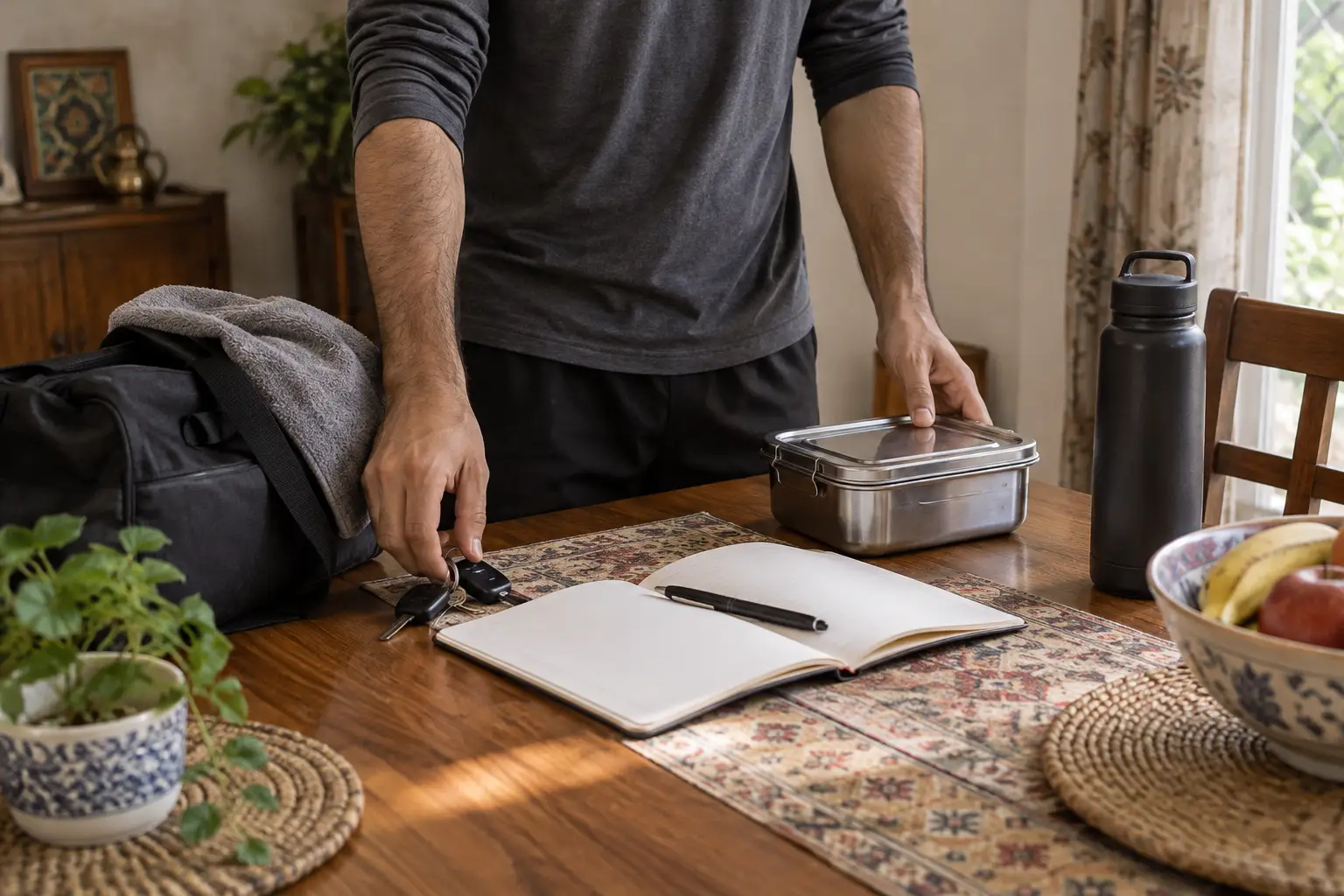
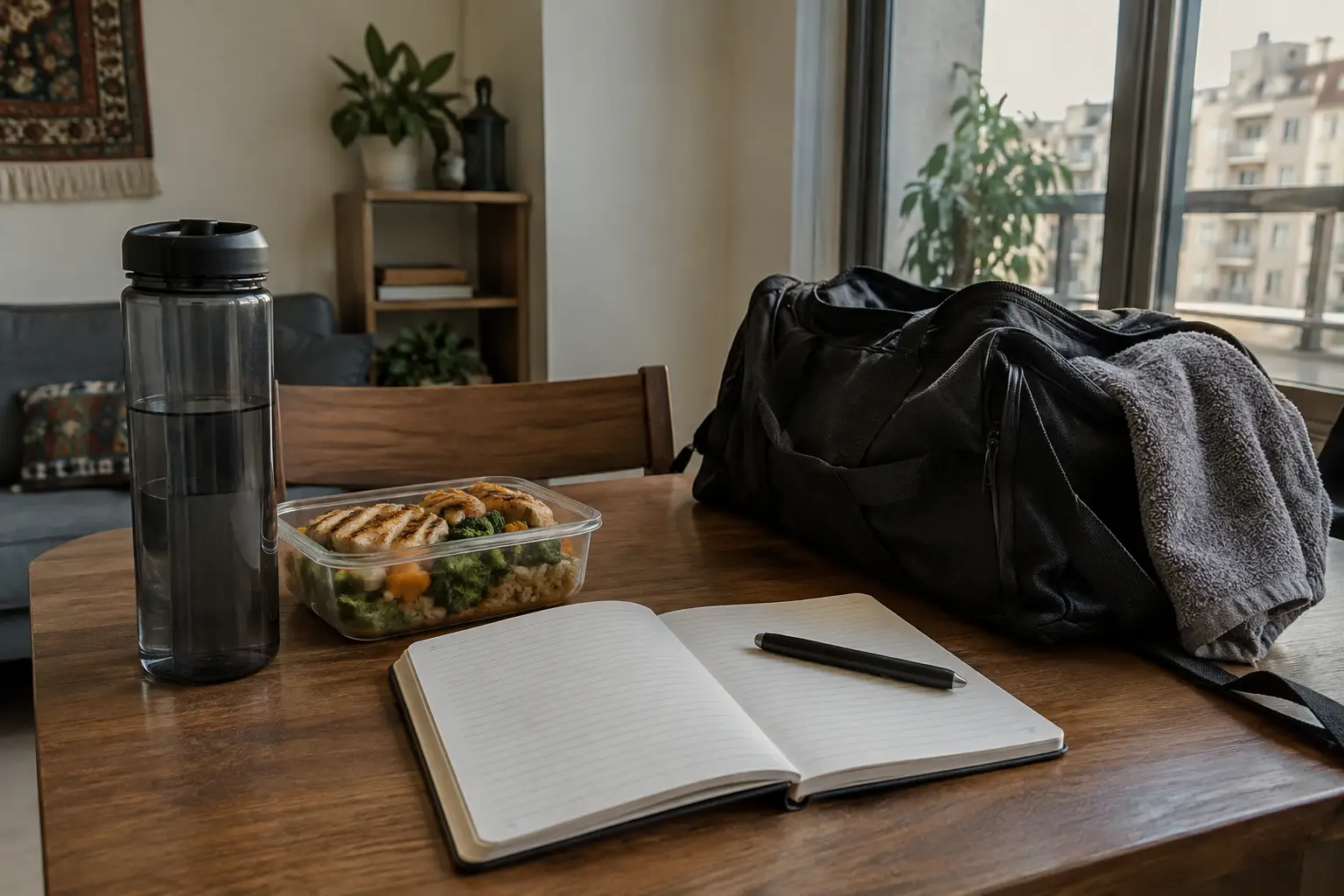
When a meal suits your plan, put some aside while you are serving it. Do this before everyone finishes eating and the useful leftovers disappear. Store it safely for the meal you have in mind.
Perhaps there is keema with peas for dinner. A portion can become tomorrow's lunch with roti and sliced cucumber. If there is lobia, you might keep some with rice and plain yogurt, then check whether the overall meal meets your protein needs.
This is not about claiming every leftover makes a balanced meal. It is about giving yourself a starting point. My guide to building everyday meals explains what else to look for.
If someone else cooks, ask before setting food aside. Make the habit work with the household, not against it.
Tick this off when: the reserved food has a clear meal attached to it, rather than becoming another forgotten container.
□ Put food on a plate before eating it
I ask clients to make eating visible. That means putting food on a plate or in a bowl instead of repeatedly taking it from a packet, serving dish or kitchen counter.
Think about tasting potato filling while making sandwiches, taking pieces of naan while dinner is being served, or reaching into the nimco packet during a cricket match. None of these foods needs a dramatic rule. But scattered bites are easy to overlook.
Serve what you intend to eat, sit down when you can, and let it be an actual eating occasion.
This does not make calories disappear or guarantee that your portion fits your goal. It simply gives you something clear to notice and adjust.
Tick this off when: your food has a visible beginning rather than arriving through repeated handfuls.
□ Attach a short walk to an existing event
“Walk more” leaves too much undecided. I prefer attaching movement to something that already happens.
You could walk after taking your child to tuition, before entering the house after work, or after finishing a regular call. Choose an event that happens often enough to be useful.
The route should be simple. You do not need to turn every walk into a workout, change clothes or wait for company. In hot weather, an indoor corridor or another suitable indoor space may be more practical.
I also want the walk to have a manageable ending. If it regularly makes you late, you will soon start avoiding it.
My approach to walking for fat loss focuses on repeatable movement rather than chasing a calorie reading.
Tick this off when: you know which event starts the walk and where you will go.
□ Check your next commitment before saying yes
A small pause can protect a plan better than a strong speech about discipline.
Before agreeing to an extra errand, late gaming session or another episode, I ask clients to check what comes next. Will this squeeze the time they had left for training? Will it push sleep back again?
You can still say yes. Family plans and social time belong in a normal life. I just want the choice to be clear rather than accidental.
Sometimes the answer is to move your workout. Sometimes it is to leave the gathering earlier. Sometimes you accept that tonight will be different and carry on tomorrow.
Tick this off when: you have considered the next commitment before adding another one.
□ Describe obstacles without judging yourself
I want my clients to practise describing what got in the way, not turning it into a verdict about themselves.
An unavailable lunch break is a scheduling problem. Training shoes left elsewhere are a preparation problem. Neither needs a speech about being lazy.
Write down the obstacle plainly, then choose the smallest useful fix. That might mean arranging food storage at work or moving your training kit somewhere accessible.
Keep this brief. You are not writing a daily confession. You are collecting information that makes tomorrow easier.
Tick this off when: you can name something to change without insulting yourself.
That is where I want you to begin: not with a perfect week, but with fewer avoidable obstacles. Choose a box, make the action clear, and practise it in the life you already have.
This is general fitness information, not medical advice. Please talk to a doctor before changing your diet or exercise routine, especially if you have a health condition.
FAQ
Should I start all these habits together?
No. Start with the habit that solves your most frequent obstacle. Add another when the first feels manageable.
Can small habits replace a training or food plan?
No. They support your plan by making it easier to follow. Your food intake and training still need to suit your goal.
What if my family handles the cooking?
Work with the meals already being prepared. Ask about saving a portion and agree on practical changes without expecting a separate menu.
What should I do when I miss a habit?
Notice what got in the way and return to it at the next opportunity. If the same obstacle keeps appearing, adjust the setup.
Coach Usman, 12+ years of coaching experience
1:1 online coach for Pakistani men worldwide, building fat-loss plans around real jobs, shifts and desi food.
coachusman.comWant a coach who builds the plan around you?
Coach Usman builds your diet and training around your job, your schedule and the desi food you already eat.
Start with Coach UsmanComments (0)
No comments yet. Be the first.