In this article
- Mistake 1: Eating straight from the packet
- Mistake 2: Letting the biscuit packet set your portion
- Mistake 3: Treating tea and biscuits as “just a drink”
- Mistake 4: Choosing a portion when you’re already very hungry
- Mistake 5: Assuming one biscuit type is automatically “safe”
- Mistake 6: Making a strict rule, then feeling you’ve failed
- Mistake 7: Changing the snack but ignoring the whole day
- Mistake 8: Trying to fix the habit with motivation alone
- How to manage biscuit portions with tea for weight loss: a simple routine
Want a plan built around your job and desi food? Try 1:1 online coaching with Coach Usman.
If you’re working out how to manage biscuit portions with tea for weight loss, you don’t have to give up a familiar tea break. The useful skill is deciding how much you’ll have before you start eating, then making that choice easy to repeat.
I coach men with busy shifts, desk jobs and family routines, and I often see snacks become hard to manage when people eat straight from a large packet. Here are common mistakes I’d help you fix, one at a time.
Mistake 1: Eating straight from the packet
When the packet is beside your cup, it’s easy to keep reaching for another biscuit without noticing how many you’ve had. That can add more to your day than you intended, even if each biscuit seems small.
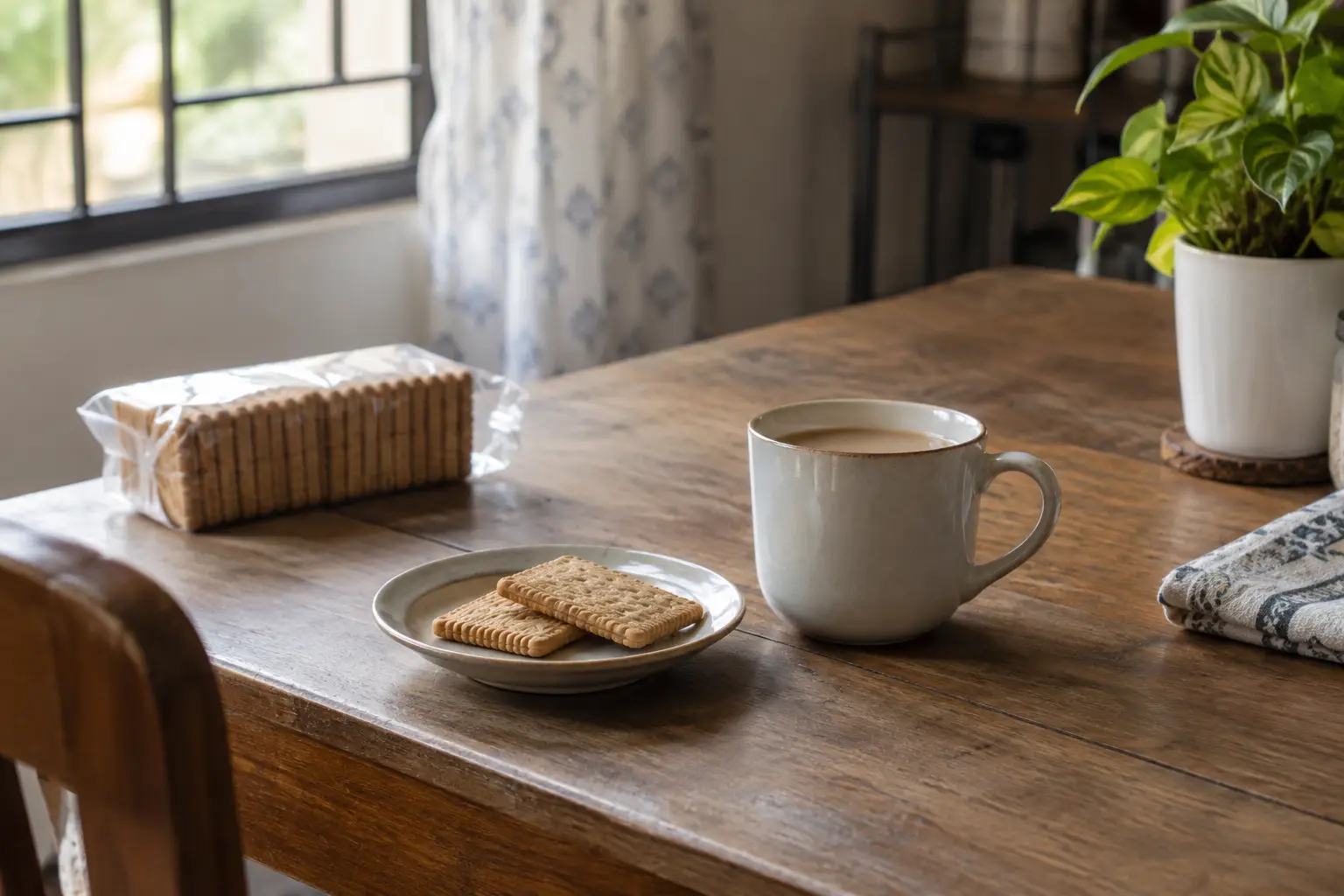
Fix: Put the amount you plan to eat on a plate or napkin, then close the packet and move it away. Start with a portion that feels realistic for you, such as two biscuits, rather than assuming you must eat none. The goal is a planned serving, not a perfect number. If two doesn’t suit your appetite, choose another amount deliberately and see how it fits your routine.
If you’re not sure how to build a flexible routine around familiar food, my guide on losing weight without calorie counting offers simple portion habits you can use at home.
Mistake 2: Letting the biscuit packet set your portion
Packets come in different sizes, and the serving information may describe a portion that’s smaller than the amount you usually eat. A biscuit’s calories also vary by brand, size and recipe, so there isn’t one reliable number for every type.
Fix: Check the packet label once to understand the serving size and energy content. Then choose a portion that suits your day and your overall eating pattern. You don’t need to memorise the label or weigh every biscuit.
If you’re tracking food, use the label and the amount you actually ate as a reasonable estimate. If you’re not tracking, use the same plate or count each time so your portion is more consistent. Either way, aim for a practical estimate rather than precision that makes your routine difficult to maintain.
Mistake 3: Treating tea and biscuits as “just a drink”
Tea is a drink, but biscuits still count as food. If you have them regularly, pretending they don’t matter can make it harder to understand your overall routine and why progress may be slower than expected.
Fix: Include the snack honestly in your day. You don’t need to cut a meal or skip food later to compensate. Instead, look at your usual pattern across the week and make a small adjustment if your progress has stalled.
For some people, the tea itself also includes sugar or milk. You don’t have to change everything at once; first notice what you currently add, then decide whether a gradual change feels manageable. If you want to understand the sugar in your cup, read how much sugar in chai adds to daily calories.
A planned snack is easier to manage than a packet you keep picking from.
Mistake 4: Choosing a portion when you’re already very hungry
If you’ve gone hours without eating during a long shift, a small biscuit portion may not feel satisfying. You might take more, not because you lack discipline, but because you’re trying to solve strong hunger with a light snack.
Fix: Check whether the tea break is standing in for a meal. If it is, plan a more filling meal or snack for that time. For example, you could have plain yogurt with fruit, or an egg with a piece of roti, depending on what you enjoy and can access. Keep biscuits as part of the break if you want them, rather than expecting them to replace a meal.
In a shared kitchen or office, plan ahead for what you can actually bring or buy. A simple option you can repeat is more useful than an ideal snack you can’t get on a busy day. If hunger between meals is a regular challenge, see how to manage hunger while losing weight on a Pakistani diet.
Mistake 5: Assuming one biscuit type is automatically “safe”
Labels such as “light,” “digestive” or “wholegrain” don’t automatically make a biscuit the best choice for your goals. They may still be easy to overeat, and the portion and ingredients vary between products.
Fix: Choose biscuits you genuinely enjoy, check their serving information if useful, and serve a portion you can stick to. You can also compare labels when buying, but don’t let a health-sounding name replace a practical serving plan.
If you want a different snack sometimes, try fruit, yogurt or a small portion of roasted chana. You don’t have to swap biscuits every day. The point is to have options that suit your appetite and routine. You can keep biscuits in the rotation while also having other choices available for days when you want something more filling.
Mistake 6: Making a strict rule, then feeling you’ve failed
Some people tell themselves biscuits are completely forbidden. That can make a normal tea break feel like a test. If they have more than planned once, they may decide the day is ruined and keep eating without a plan.
Fix: Treat one unplanned portion as information, not a reason to give up. Ask what made it difficult: were you very hungry, was the packet left open, or was the portion decided too late? Make one small change for next time and return to your usual meals.
A flexible approach means you can enjoy a food without turning one snack into a judgment about your whole day. Plan what you can, then carry on with your normal routine if the amount changes occasionally.
Mistake 7: Changing the snack but ignoring the whole day
A biscuit portion is only one part of your overall eating pattern. Swapping it for another snack may not help if your meals are irregular, portions are much larger than you intend, or your workday makes planning difficult.
Fix: Look at the whole routine over several weeks. Are your meals filling? Do you have a plan for long shifts? Are you choosing portions consistently? Make one practical adjustment, then give it time before changing everything again.
A simple check-in on your weight trend, waist measurement and habits can show whether your approach is working better than judging a single snack or weigh-in. I built the CU Fit app to help you follow a custom diet based on foods you already eat, with weekly check-ins and progress charts. Your plan is updated every 30 days, and I personally review your progress after six check-ins.
Mistake 8: Trying to fix the habit with motivation alone
You may start the week with good intentions, but an open packet on your desk or an unpredictable shift can make the old routine easy to repeat. Relying only on willpower leaves you making the same decision again and again.
Fix: Change the setup. Keep a small portion ready, store the packet out of sight, or buy smaller packs if that works for your budget and household. If family members share snacks, put your serving on a plate and leave the rest for everyone else.
For readers in Pakistan and overseas, tea breaks can happen at home, at an office desk or during a long work shift. A routine that fits where you actually drink tea is more useful than one that only works in ideal conditions. If you prefer personal guidance, you can explore weight-loss coaching in Pakistan.
How to manage biscuit portions with tea for weight loss: a simple routine
Try this the next time you make tea:
- Decide whether you’re having biscuits before opening the packet.
- Choose a portion that feels manageable and put it on a plate.
- Close the packet and move it out of reach.
- Eat at a relaxed pace and enjoy your tea.
- Continue with your usual next meal; don’t skip it to compensate.
- Notice what helped or made the portion difficult to manage.
This routine doesn’t require you to label biscuits as good or bad. It helps you make a deliberate choice and keep the rest of your day steady. If the same portion feels different on different days, consider whether hunger, meal timing or the length of your shift has changed.
If you prefer structured support, CU Fit includes daily workouts that unlock as you progress, a Coach Usman Assistant chat, a bad-day reset and weekly check-ins with photos, weight and waist. There’s a 7-day money-back option. You can view CU Fit pricing. For direct 1:1 coaching and weekly check-in reviews, learn about Premium coaching.
Want a plan built around your job and your food? Start with CU Fit at coachusman.fit for an affordable custom diet and workout plan. Want Coach Usman to coach you 1:1? Choose Premium coaching at coachusman.com.
Check with your doctor if you have a medical condition.
This is general fitness information, not medical advice. Please talk to a doctor before changing your diet or exercise routine, especially if you have a health condition.
FAQ
Can I eat biscuits with tea and still lose weight?
Yes. Biscuits can fit into a weight-loss routine. Choose a portion you can manage and consider your overall eating pattern rather than treating one snack as a pass or fail.
How many biscuits should I have with tea?
There isn’t one portion that suits everyone because biscuit sizes, brands and daily routines differ. Check the serving information if helpful, choose an amount deliberately, and see whether it fits your overall plan.
Should I skip a meal if I eat more biscuits than planned?
No need to skip your next meal to compensate. Return to your usual routine and consider what made the portion hard to manage so you can plan differently next time.
Are digestive or wholegrain biscuits better for weight loss?
Those labels don’t automatically make a biscuit the best choice for your goals. Compare serving information if useful, choose a portion you can manage, and focus on your overall eating pattern.
What can I do if I keep eating biscuits from the packet?
Decide on a serving before you start, put it on a plate, close the packet and move it away. If hunger is the main issue, plan a more filling meal or snack for your tea break.
Do I have to stop adding sugar to tea as well?
Not necessarily. Start by noticing how much sugar or milk you add, then decide whether a gradual change feels manageable. You don’t have to change every part of your routine at once.
Coach Usman, 12+ years of coaching experience
1:1 online coach for Pakistani men worldwide, building fat-loss plans around real jobs, shifts and desi food.
coachusman.comWant a coach who builds the plan around you?
Coach Usman builds your diet and training around your job, your schedule and the desi food you already eat.
Start with Coach UsmanComments (0)
No comments yet. Be the first.