In this article
- Why am I hungry again so soon after eating?
- How to manage hunger while losing weight on a Pakistani diet without banning roti?
- What should I change at lunch if dinner is my danger time?
- What is a bridge snack, and do I really need one?
- Can I make meals bigger without adding lots of calories?
- What if I want something sweet even though I have eaten?
- When does hunger mean my calorie deficit is too aggressive?
- What should I try this week before changing my whole diet?
Want a plan built around your job and desi food? Try 1:1 online coaching with Coach Usman.
You open the fridge after work and eat yesterday’s kebab cold before your dinner has even reached the microwave.
Lunch was hours ago. You tried to “be good” by eating less, but now you could finish whatever is available.
If you are wondering how to manage hunger while losing weight on a Pakistani diet, start with the hours before that fridge visit. The answer is not always more discipline at dinner. Often, it is a better lunch and something planned between work and home.
You can keep roti, rice, dal and salan. The goal is to make your meals filling enough that a calorie deficit feels manageable—not like a daily test of patience.
You do not need to replace familiar meals with a separate diet menu. Start by checking what is on your plate, how much you are eating, and where the longest gaps fall in your day.
Why am I hungry again so soon after eating?
Hunger can have several causes. Your meal may have been too small, low in protein, or missing fibre-rich foods. You might also have left too long between meals.
A plate of rice with a little gravy can provide plenty of calories without much protein. A tiny salad may have the opposite problem: plenty of crunch, but not enough food to carry you through a working afternoon.
Before blaming yourself, ask:
- Did I eat a proper meal, or just grab something?
- Was there a clear protein source?
- Did I include vegetables, fruit, beans or lentils?
- How many hours have passed since I ate?
- Have I been sleeping poorly or working unusually long hours?
Mild hunger before a meal can be normal during fat loss. Being distracted by food all afternoon, every day, is a reason to review the plan.
Notice the difference between occasionally feeling ready for dinner and regularly feeling desperate to eat anything available. The second pattern deserves a practical adjustment, not another promise to be stricter tomorrow.
A useful fat-loss plan leaves room for hunger—not a whole day ruled by it.
How to manage hunger while losing weight on a Pakistani diet without banning roti?
Build a meal rather than cutting every part of it in half.
Start with a protein source, keep a sensible portion of your usual carbohydrate, then add vegetables or another fibre-rich food. This gives your plate more staying power than simply removing roti.
For example, instead of one roti with a few spoonfuls of gravy, try:
- One medium roti.
- A proper serving of chicken, fish, lean qeema or lentils.
- A generous serving of cooked vegetables or salad.
- Some plain yogurt if it fits your meal and appetite.
You may need more than one roti depending on your size, activity and overall intake. One is an example, not a rule for every man.
Rice can work in the same way. Keep a portion that fits your needs, then make sure the rest of the meal contains more than sauce. Rice with dal, vegetables and yogurt is a different meal from a large plate of rice with a little gravy.
Here are rough food estimates to help you build meals:
| Food and serving | Approximate calories | Approximate protein |
|---|---|---|
| Medium roti made with 40 g whole-wheat flour, no added fat | 135–145 | 5 g |
| Two large eggs, before cooking oil | 140–160 | 12–14 g |
| Cooked skinless chicken breast, 100 g | 160–170 | 30–31 g |
| Cooked lentils, 150 g, before added oil | 170–180 | 13–14 g |
| Plain low-fat yogurt, 200 g | 110–140 | 9–12 g |
| Cooked chickpeas, 100 g | 160–170 | 8–9 g |
Recipes, brands and portions vary. Dal with a heavy oil finish will contain more calories than plain cooked lentils.
These figures are guides, not instructions to weigh every bite. If you do track food, use a consistent method. This guide to weighing food raw or cooked explains how to avoid mixing up entries.
What should I change at lunch if dinner is my danger time?
Check whether lunch is actually doing its job.
For a busy desk worker, lunch might be two rotis with chicken salan and vegetables. For someone with a smaller appetite, it could be one roti, dal, yogurt and salad. Neither needs a separate “diet food” menu.
The useful change is often more actual protein and vegetables, not more gravy.
If the family pot contains chicken, serve yourself some chicken rather than mostly sauce. If lunch is dal, add yogurt or an egg when practical. If vegetables are missing, pack a cucumber, carrots or leftover cooked vegetables alongside the meal.
You do not need to take over the household kitchen. If meals are shared, these ideas for losing weight when your family cooks can help you adjust your own plate.
Then look at timing. A noon lunch followed by an eight o’clock dinner is a long gap. A planned snack may work better than trying to push through it.
Also check whether you are rushing lunch while answering messages or working. When possible, sit down and give the meal your attention. Eating a little more slowly gives you a chance to notice whether you are comfortably fed before returning to work.
If breakfast was only chai, lunch may be trying to make up for a very lightly fed morning too. Look at the whole working day rather than treating dinner as an isolated problem.
What is a bridge snack, and do I really need one?
A bridge snack is a small, planned meal between lunch and dinner. Its job is to stop you arriving home extremely hungry.
You do not need one if your meals already keep you comfortable. But if you regularly eat while cooking dinner, raid the fridge, or order food on the journey home, it is worth testing.
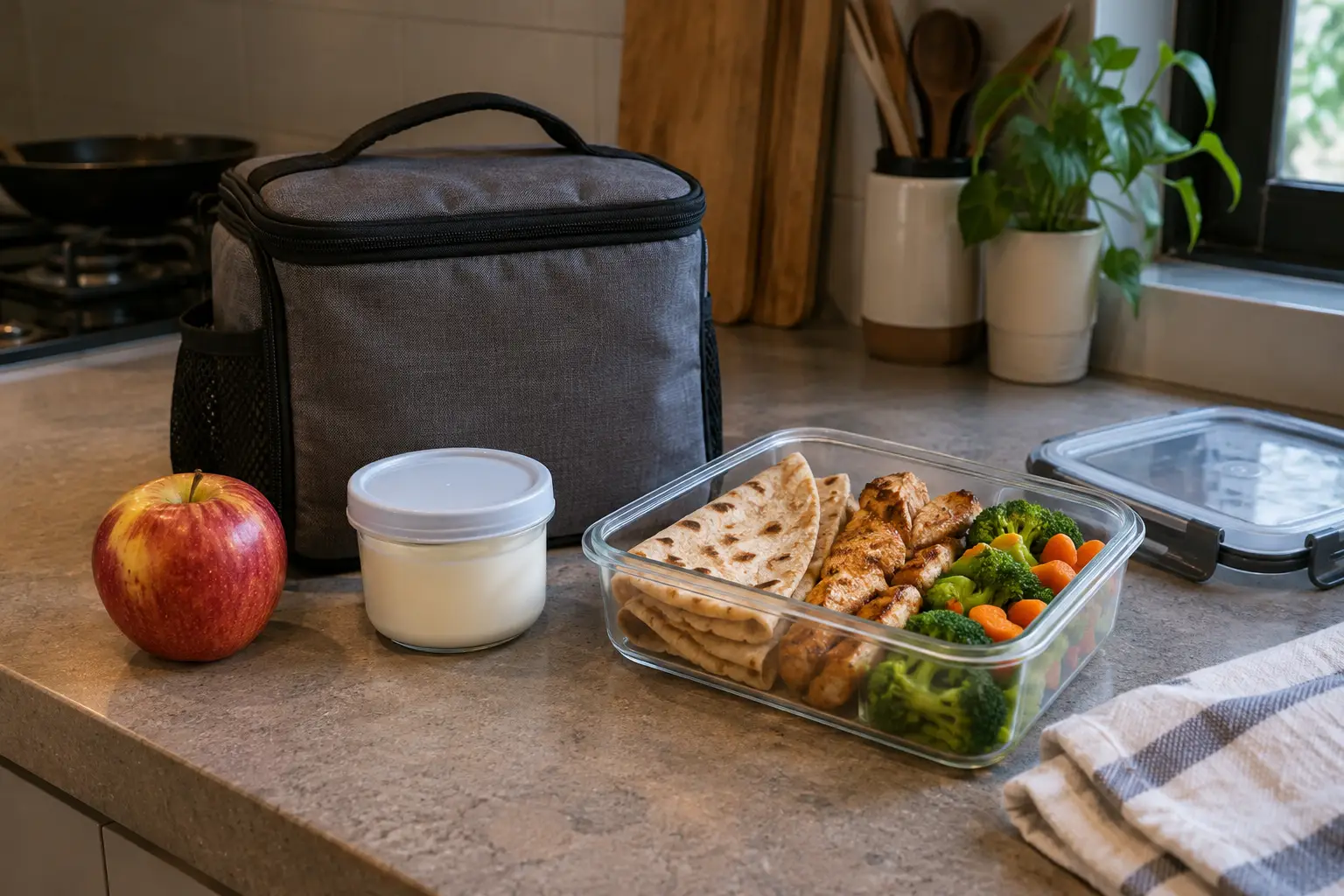
Choose something easy to pack:
- 200 g plain yogurt and an apple: roughly 190–240 calories and 9–12 g protein.
- Two boiled eggs and a small orange: roughly 185–225 calories and 12–14 g protein.
- 100 g cooked chickpeas with cucumber, tomato and lemon: roughly 180–210 calories and 8–10 g protein, without added oil.
Put the snack where the problem starts. If your shift ends at six, eating it during your last break may help more than saving it until you get home.
Include it in your day's food rather than automatically adding it on top. You might move your usual fruit and yogurt from after dinner to late afternoon.
A bridge snack does not need to become a second full lunch. Start with a planned portion, then see whether it makes the journey home and dinner easier to manage. If you are still extremely hungry, review lunch as well rather than endlessly increasing the snack.
For Gulf commutes or shared accommodation, use an insulated bag and ice pack for eggs, yogurt and other perishable foods. Do not leave them in a hot car.
If chilled storage is not available, whole fruit and a measured portion of dry roasted chana can be a practical alternative. Check the portion and preparation rather than eating straight from a large packet.
Can I make meals bigger without adding lots of calories?
Yes, but think about how the food is prepared.
Vegetables such as cabbage, cauliflower, spinach, courgette and green beans can add volume. Fruit, lentils and beans also provide fibre, although beans and lentils contribute more calories than most vegetables.
Try one practical addition:
- Mix extra vegetables into your usual qeema.
- Serve cooked spinach beside chicken and roti.
- Add a large chopped salad to a rice-and-dal meal.
- Choose whole fruit alongside yogurt rather than eating yogurt alone.
Do not turn this into a competition to eat the biggest salad. You still need enough protein, carbohydrates and some dietary fat.
Preparation matters too. A vegetable dish cooked in generous oil can be calorie-dense. One teaspoon of oil contains roughly 40 calories, so several extra spoonfuls can change the meal quickly.
Keep the distinction clear: adding vegetables can make a meal more filling, but it does not cancel out the oil already in the dish. You can keep some oil for cooking and flavour while being consistent about how much goes into the family pot.
Increase fibre gradually if your current diet contains very little, and drink fluids regularly. A sudden jump in beans and vegetables may leave you uncomfortable.
Water belongs alongside a balanced eating plan, not in place of lunch. If you are genuinely hungry because you have barely eaten, another glass of water is not a complete answer.
What if I want something sweet even though I have eaten?
You do not have to prove whether it is “real hunger” before deciding what to do.
Pause and check the situation. Are you comfortably fed but wanting a particular taste? Are you tired and looking for a break? Or was dinner genuinely too small?
If you are hungry, eat something useful. Yogurt and fruit, an egg with roti, or a small portion of leftovers may fit better than trying to ignore it.
If you want mithai, you can plan a modest portion and enjoy it. Plate it, sit down, and eat it rather than repeatedly taking pieces from the box.
Try not to make favourite foods completely forbidden. For some people, strict bans make those foods harder to manage later.
You can also change the setting: leave the kitchen, take a short walk, or start your evening routine. That is not a replacement for food when you need it; it is a way to interrupt automatic grazing.
Chai deserves the same practical approach. You can keep it, but notice what comes with it. Sugar and several biscuits can add calories without doing much to address a long gap since lunch. If you need food, choose a planned snack rather than expecting chai alone to carry you through.
When does hunger mean my calorie deficit is too aggressive?
Look for a pattern, not one hungry evening.
Review your intake if you are frequently skipping meals, thinking about food throughout the day, struggling to concentrate, or repeatedly overeating after very restrictive days.
Start by restoring regular meals and checking their composition. If that does not help, your calorie target may need to increase. Slower progress can be easier to maintain than a plan you abandon every weekend.
Do not respond to an evening of overeating by skipping the next day's meals. That can recreate the same long gap and leave you struggling again at dinner. Return to your usual meals and use the experience to identify what needs changing.
Keep training sensible too. Two or three manageable strength sessions and ordinary walking can fit a fat-loss plan. You do not need to add punishing workouts to compensate for eating.
Poor sleep can also make appetite harder to manage. Protect a realistic sleep window where possible, especially around changing shifts.
If hunger changes suddenly, feels unusually intense, or comes with other worrying symptoms, speak with a doctor rather than assuming your meal plan is the only cause.
What should I try this week before changing my whole diet?
Run a seven-day hunger check. Note when hunger becomes difficult, what you ate beforehand, and how long the gap between meals was.
Keep the notes simple. You do not need a detailed diary of every thought about food. A few useful details are enough:
- The time hunger became difficult.
- What your previous meal contained.
- Whether you had a planned snack available.
- How well you slept the night before.
- Whether you arrived at dinner comfortable or extremely hungry.
Choose just two changes:
- Give lunch a clear protein source and some vegetables.
- Move a planned snack into the gap before dinner.
Review your evening eating, concentration and ability to follow the plan—not only your weight after a few days.
If evenings become easier, keep those changes. If they do not, check whether lunch is still too small, the snack comes too late, or your overall intake needs reviewing. Change one thing at a time so you can see what helps.
That is the practical starting point for how to manage hunger while losing weight on a Pakistani diet: build a better-fed working day, rather than demanding more willpower at night.
If you want support, explore online coaching options with Coach Usman, a Level 3 Personal Trainer and weight loss coach based in Gujranwala. His 1:1 online coaching supports Pakistani men in Pakistan and overseas, with coaching delivered through the My Coach app.
Coaching costs Rs 25,000/month or Rs 125,000 for 6 months, payable by card through Stripe. For questions, email support@coachusman.com.
Want a plan built around your job and your food? Start online coaching with Coach Usman at coachusman.com.
This is general fitness information, not medical advice. Please talk to a doctor before changing your diet or exercise routine, especially if you have a health condition.
FAQ
Do I have to feel hungry all day to lose weight?
No. Some hunger before meals can be normal, but persistent, distracting hunger is a reason to review meal size, protein, fibre, timing and your calorie target. Check with your doctor if you have a health condition or your hunger changes suddenly.
Can I eat roti at dinner and still lose fat?
Yes. Fat loss depends on your overall calorie intake over time, not whether dinner contains roti. Pair a portion that suits your needs with protein and vegetables rather than eating mostly roti and gravy. One roti is not a fixed limit for every man.
Will an afternoon snack slow down weight loss?
Not necessarily. A planned snack can fit your calorie intake and help you manage dinner portions. Try moving food you already eat into the afternoon rather than adding a snack automatically. Yogurt and fruit, eggs, or chickpeas are practical options.
What should I add to dal and roti to make lunch more filling?
Try plain yogurt, an egg, and a serving of vegetables or salad, depending on your preferences and overall intake. Dal already provides protein and fibre, but a very small serving may not be enough to carry you through a long afternoon.
How can I manage hunger when my family cooks all the meals?
Start with your own plate. Take a clear serving of chicken, fish, qeema or dal rather than mostly gravy, keep a suitable portion of roti or rice, and add vegetables or yogurt when available. You do not need a completely separate menu.
Should I drink water instead of eating when I feel hungry?
Drink fluids regularly, but do not use water to replace a meal you need. If you have gone many hours without eating or your last meal was too small, a balanced meal or planned snack is more useful than trying to suppress hunger.
What should I do if I am still hungry after dinner?
Check whether dinner included enough food, a clear protein source and some fibre-rich foods. If you are genuinely hungry, a planned portion of yogurt and fruit or leftovers may fit. If this happens most nights, review your daytime meals and calorie target rather than relying on willpower.
Can I keep chai and something sweet while losing weight?
Yes, if they fit your overall intake. Be aware of sugar in chai and the portions of biscuits or mithai alongside it. Plate a planned portion instead of repeatedly taking pieces, and do not rely on chai alone when you need a proper meal or snack.
Coach Usman, 12+ years of coaching experience
1:1 online coach for Pakistani men worldwide, building fat-loss plans around real jobs, shifts and desi food.
coachusman.comWant a coach who builds the plan around you?
Coach Usman builds your diet and training around your job, your schedule and the desi food you already eat.
Start with Coach UsmanComments (0)
No comments yet. Be the first.