In this article
- Start with the gap, not a bulking menu
- Give each part of the plate a job
- Protein supports muscle repair and growth
- Carbohydrates help fuel the work
- Fats contribute energy, but can add up quietly
- Add food where it solves a problem
- Make training the reason for the extra food
- Build around shifts, family dinners, and dawat
- Review the pattern before adding again
Want a plan built around your job and desi food? Try 1:1 online coaching with Coach Usman.
Trying to build muscle should not make every dinner feel like a food challenge.
Yet “eat more” often becomes exactly that. Extra roti, a bigger rice plate, another helping of curry, then a heavy stomach and no clear idea whether the extra food is helping.
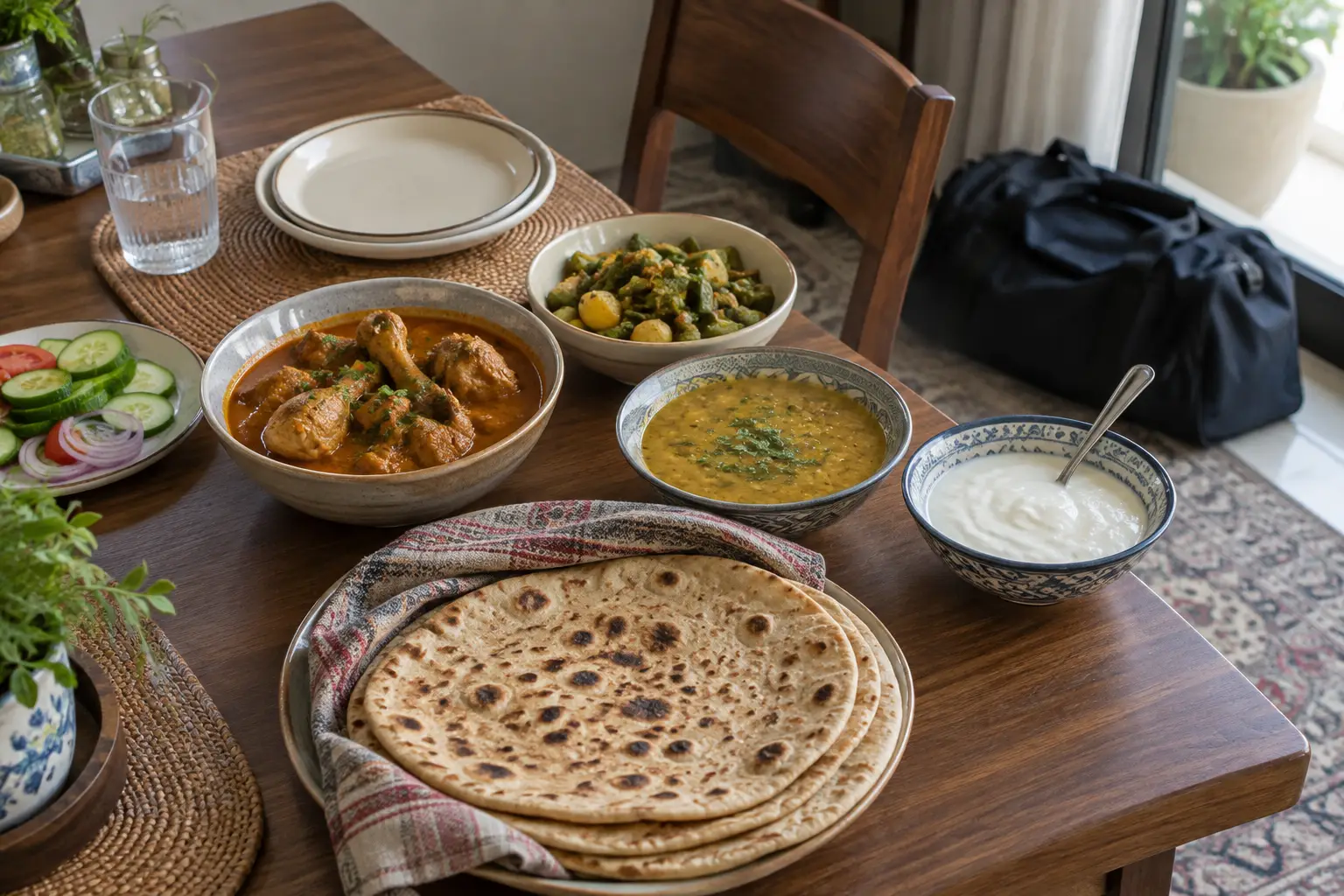
A desi diet can support muscle gain. You do not need to replace family meals with plain chicken and broccoli. But you do need to separate eating enough to support training from eating more simply because you have started lifting.
The useful question is not, “How much can I eat?” It is, “What does my current routine need?”
Start with the gap, not a bulking menu
Picture a Pakistani man who trains after work. Breakfast is chai and toast, lunch gets delayed, and dinner becomes the biggest meal because he is finally home and hungry.
Telling him to make dinner even bigger misses the problem. His day already has a long stretch with very little food, followed by an uncomfortable evening catch-up.
Another man might eat regular meals but add bakery snacks, sweet chai, and takeaway because he thinks muscle gain requires constant eating.
These situations need different changes. Before adding food, look at a few ordinary days, including a workday and a day off.
Notice:
- Which meals regularly disappear when work gets busy?
- Where do you get protein across the day?
- Are you arriving at training hungry or uncomfortably full?
- Is extra food coming from planned meals or whatever is nearby?
- Can you repeat this routine without feeling stuffed?
You are looking for the weak point, not judging your food.
Give each part of the plate a job
Muscle gain needs resistance training, enough protein, enough overall food, and recovery. A bigger dinner cannot replace any of those pieces.
Instead of labelling foods “bulking foods,” think about what they contribute.
Protein supports muscle repair and growth
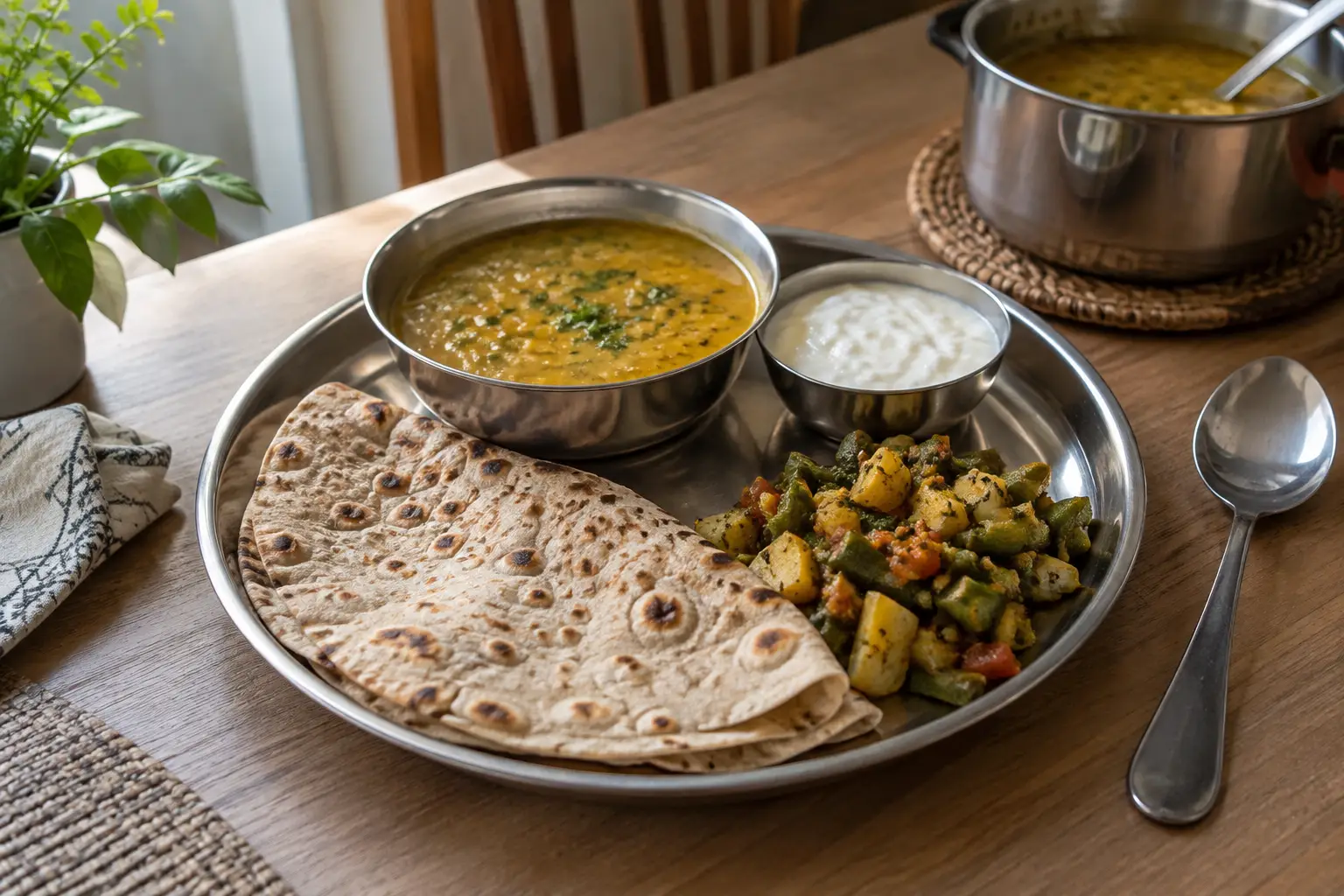
Chicken, fish, eggs, meat, milk, yoghurt, daal, and beans can all contribute protein. They are not interchangeable in identical portions, so pay attention to what is actually on your plate.
A bowl of chicken curry with mostly gravy is different from a serving containing a meaningful amount of chicken. Daal contributes protein, but a small watery bowl should not automatically be treated as the whole meal's protein plan.
For a meat-free meal, combine foods such as daal, chana, yoghurt, and roti rather than relying on a token spoonful of lentils.
Carbohydrates help fuel the work
Roti, rice, potatoes, oats, and fruit can help you meet your energy needs and fuel training. Cutting them aggressively while expecting strong gym sessions can make the process harder.
Keep familiar carbohydrates in your meals. Adjust their amounts according to your appetite, training, and progress rather than treating rice as either forbidden or unlimited.
Fats contribute energy, but can add up quietly
Oil, ghee, nuts, and other fat sources can fit. However, adding more ghee to every meal is not a complete muscle-building strategy.
It increases energy without necessarily fixing a missing protein source or an inconsistent lunch. Make the useful change first.
Add food where it solves a problem
If you genuinely need more food, start with a manageable addition to an existing meal. There is no need to transform your entire diet overnight.
| Current situation | Practical adjustment |
|---|---|
| Chai and toast leave you hungry all morning | Add eggs or yoghurt alongside breakfast |
| Lunch is mostly roti and sabzi | Include chicken, beans, or a substantial daal serving |
| Training follows a long gap without food | Plan a familiar snack that sits comfortably |
| Dinner feels too large to finish | Move some food into breakfast or lunch |
| Meals are balanced but consistently too small | Increase a familiar portion without rebuilding the menu |
The point is to choose deliberately. If lunch lacks protein, extra rice alone does not solve that gap. If you already have protein but lack energy for training, another protein food is not necessarily the only answer.
For shared dishes, portion control starts with the serving spoon. Consistent serving habits help you understand what changed, even when you are trying to gain rather than lose.
Make training the reason for the extra food
Eating more can increase body weight. It does not guarantee that the increase is muscle.
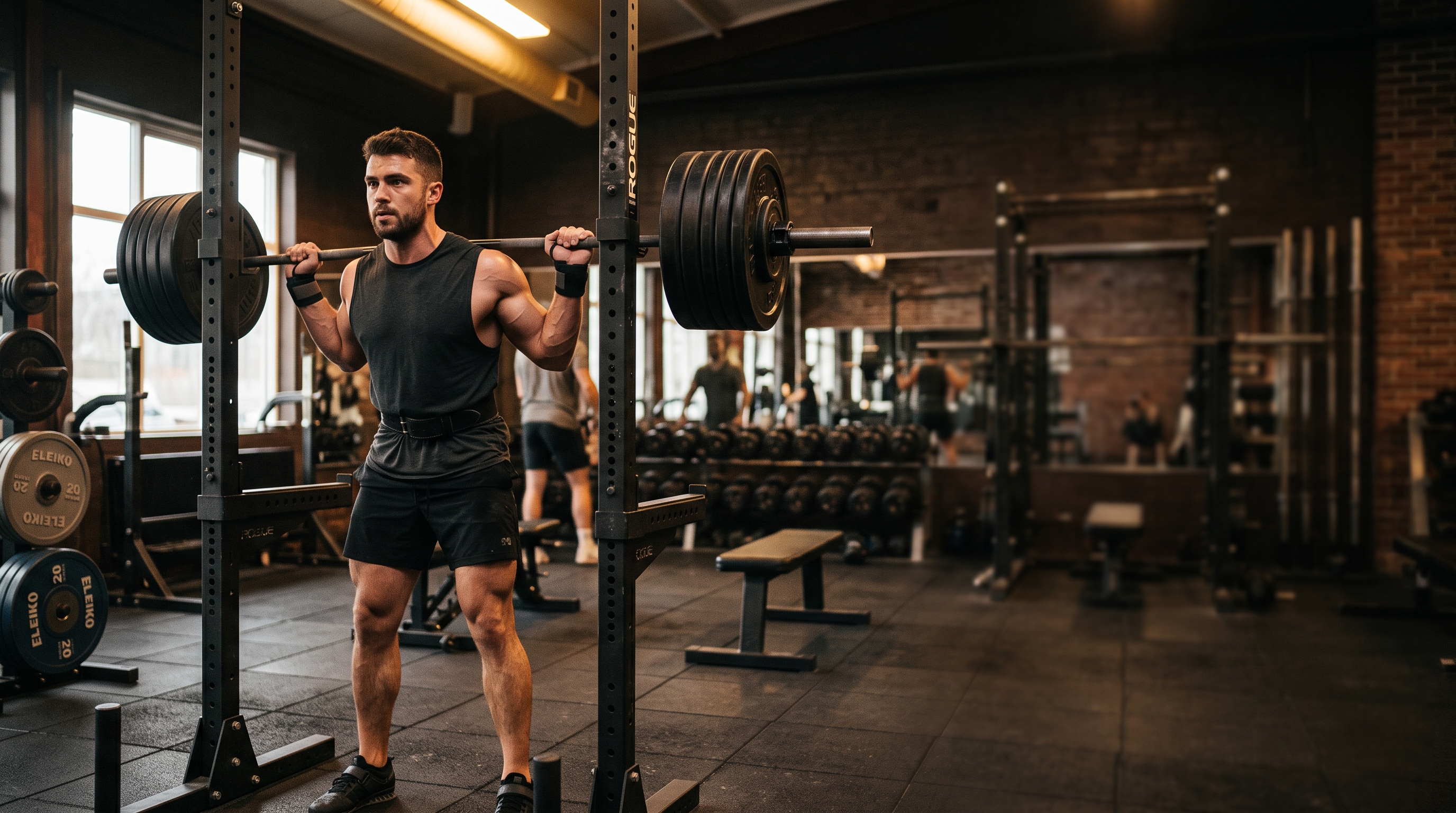
Your training needs to give your body a reason to adapt. That means a repeatable resistance-training plan, controlled technique, and an appropriate challenge over time—not just leaving the gym exhausted.
Keep a simple record of your exercises and how your sets went. Are you gradually doing more useful work with good form? Are sessions consistent enough to compare?
If this part is unclear, understand how progressive overload supports muscle growth before making your meals much larger.
You do not need a personal best every session. You need a training process that can progress.
Build around shifts, family dinners, and dawat
A plan that only works on quiet days will struggle in real life.
If you work shifts in the Gulf, organise meals around waking, working, and training rather than copying someone else's breakfast clock. If you commute in the UK or Canada, decide what lunch will be before you leave home.
Keep a workable fallback available: leftover chicken with roti, chana with yoghurt, or an egg sandwich and fruit. The best backup is something you can actually prepare, store safely, and enjoy.
At a dawat, enjoy biryani and the company. You do not need to turn the occasion into a deliberate overeating session because you are “on a bulk.” Return to your usual meals afterwards.
And protect sleep where possible. More food cannot fully compensate for repeatedly sacrificing recovery. A realistic routine should work for your tired self too; that is the idea behind building a plan that survives low motivation.
Review the pattern before adding again
Look at training performance, body-weight trends, how clothes fit, appetite, and recovery together. A heavier scale reading after a salty meal does not tell you how much muscle you have built.
If training is progressing and eating feels manageable, you may not need to change anything. If progress stalls, check consistency, training, and recovery before automatically doubling portions.
In my 12+ years of coaching experience, the practical priority is making the plan repeatable. Keep your roti, daal, sabzi, and family dinners. Make the adjustment that supports the work—not the biggest adjustment you can tolerate.
This is general fitness information, not medical advice. Please talk to a doctor before changing your diet or exercise routine, especially if you have a health condition.
FAQ
Can I build muscle while eating roti and rice?
Yes. Both can help fuel training. Include adequate protein, enough overall food, and a consistent resistance-training routine.
Do I have to force myself to eat more?
No. Start by checking whether you actually need more food. If large meals feel uncomfortable, distribute food more evenly across your day.
Can a vegetarian desi diet support muscle gain?
Yes. Plan substantial protein sources such as daal, beans, chana, dairy, and soy foods rather than relying mainly on roti and sabzi.
Does gaining weight mean I am gaining muscle?
Not necessarily. Body weight also reflects fat, water, and food in your digestive system. Review longer-term trends alongside your training progress.
Coach Usman, 12+ years of coaching experience
1:1 online coach for Pakistani men worldwide, building fat-loss plans around real jobs, shifts and desi food.
coachusman.comWant a coach who builds the plan around you?
Coach Usman builds your diet and training around your job, your schedule and the desi food you already eat.
Start with Coach UsmanComments (0)
No comments yet. Be the first.