In this article
- Morning: Turn “I’ll manage” into an arrangement
- Breakfast: Make the meal description useful
- Before lunch: Check what “available” really means
- Mid-afternoon: Send the question while it still helps
- At the gym: Record the work, not just attendance
- Dinner: Say what happened without grading yourself
- Before sleep: Give tomorrow a clearer starting point
Want a plan built around your job and desi food? Try 1:1 online coaching with Coach Usman.
When a client tells me his day was “mostly good,” I still need to know what actually happened.
Not because I am looking for mistakes. Because “mostly good” does not tell me what to keep, what to adjust, or where he needs help.
The sticking point I want to talk about is vagueness. A meal that sounds sorted but has not been arranged. A workout completed without recording the weights. A difficult week explained only as “busy.”
In my coaching... I want useful details, not a polished report.
Here is how I would take you through a normal day, from waking up to your evening check-in. The goal is not to track your whole life. It is to stop leaving important decisions unfinished.
Morning: Turn “I’ll manage” into an arrangement
Before the day gets moving, I want you to look at anything your plan depends on someone else doing.
Perhaps you expect lunch to be ready at home. Perhaps you share the car and assume you can get to the gym. Perhaps dinner depends on when your wife finishes work.
None of these arrangements is wrong. But an assumption is not an arrangement.
Ask the practical question early: is lunch actually available to take? Is the car free? Who is handling dinner?
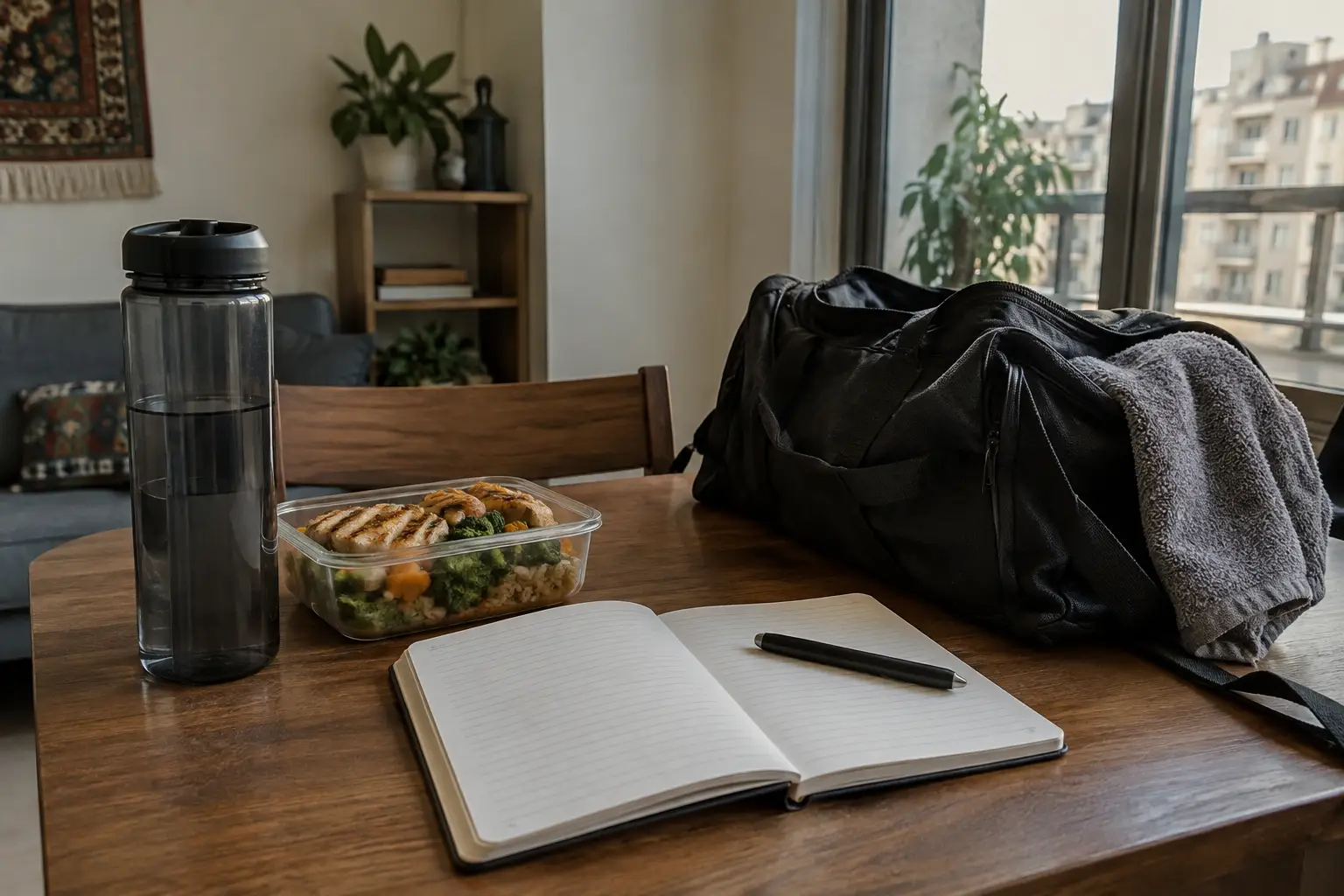
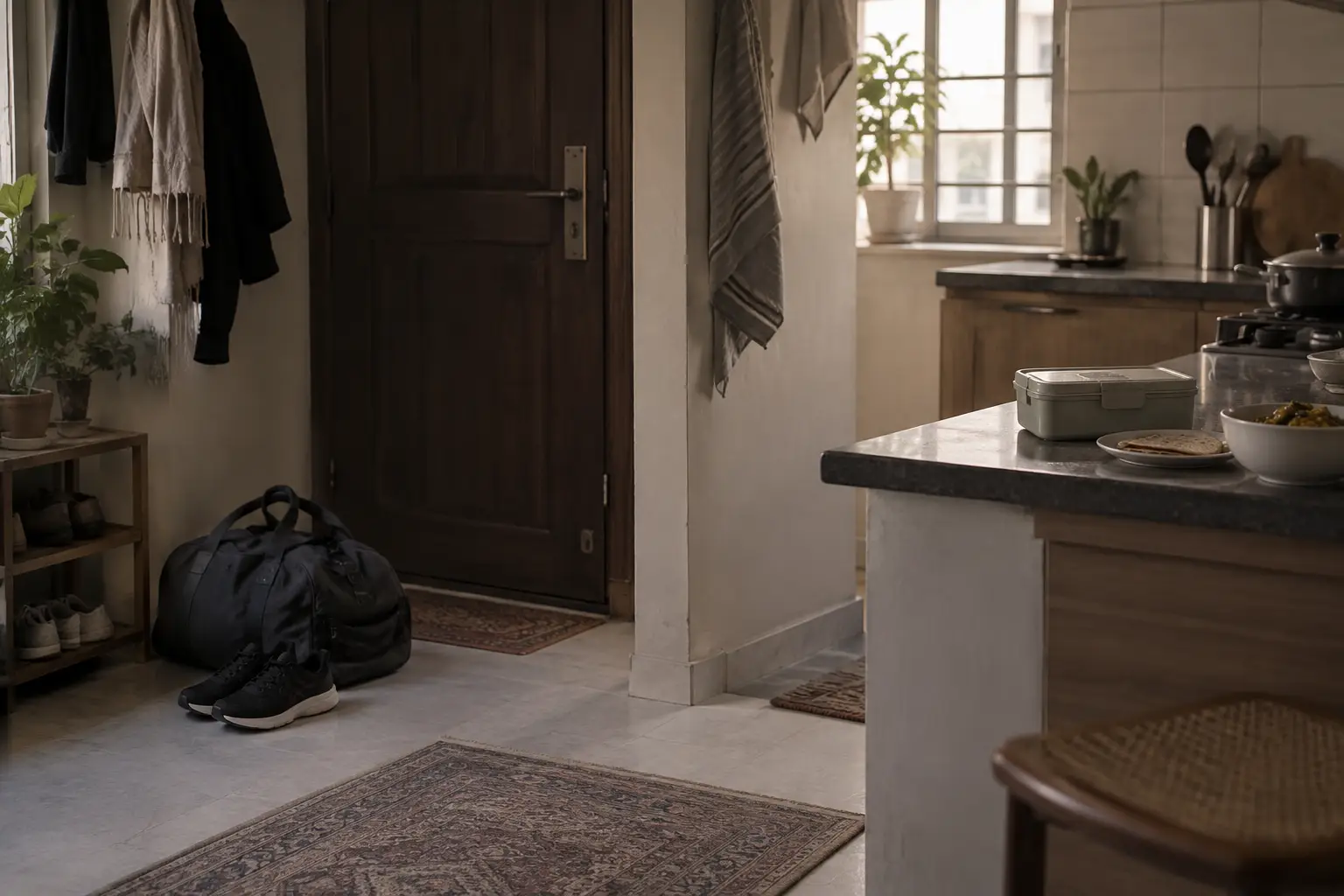
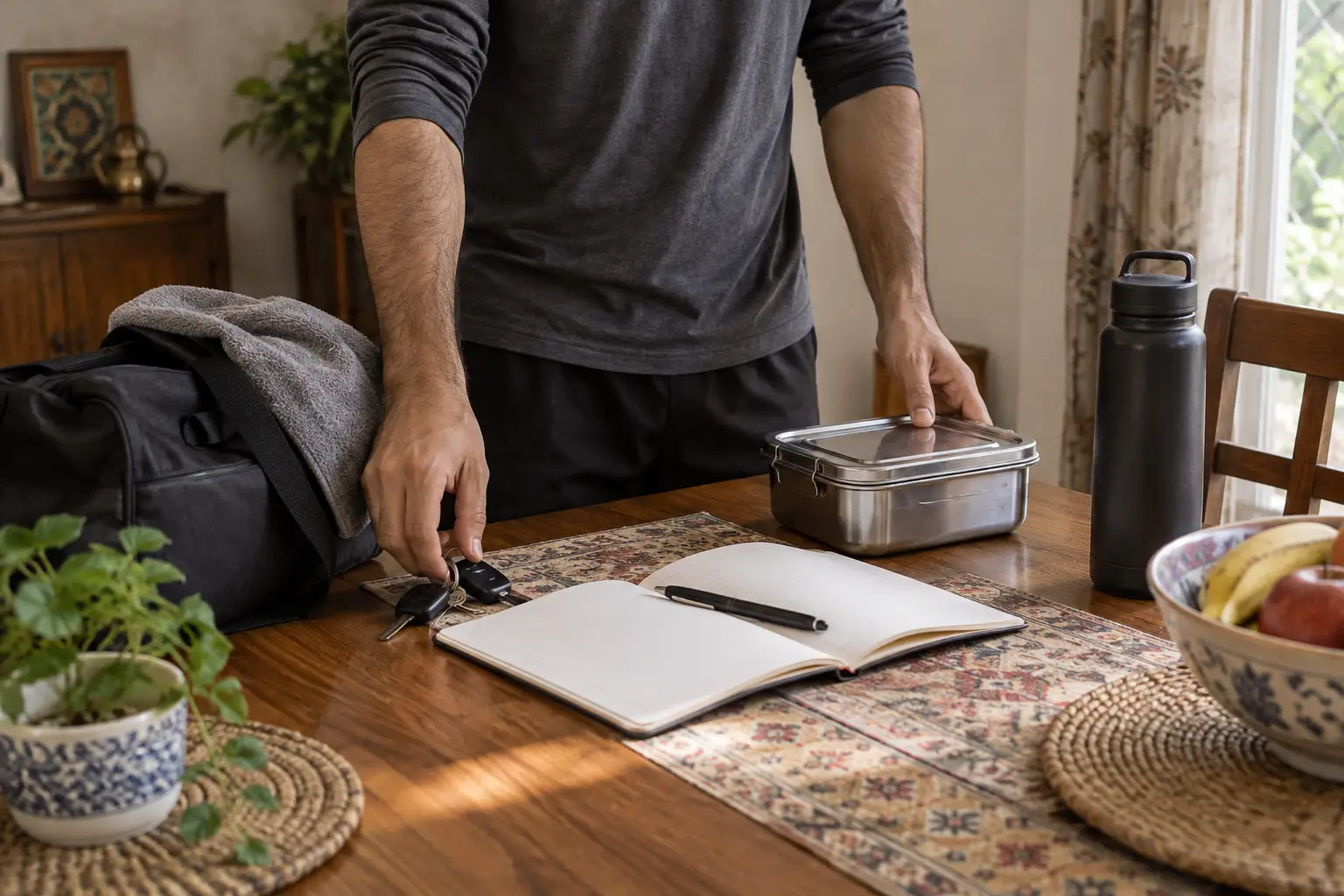
Then make your part clear. Put the food container beside your work bag. Agree on the car. Offer to collect the ingredients.
I do not want your fitness routine to become extra work silently handed to your family. If your plan needs their help, discuss it rather than discovering the gap when everyone is already busy.
Breakfast: Make the meal description useful
At breakfast, I want enough detail to understand the meal, without turning eating into paperwork.
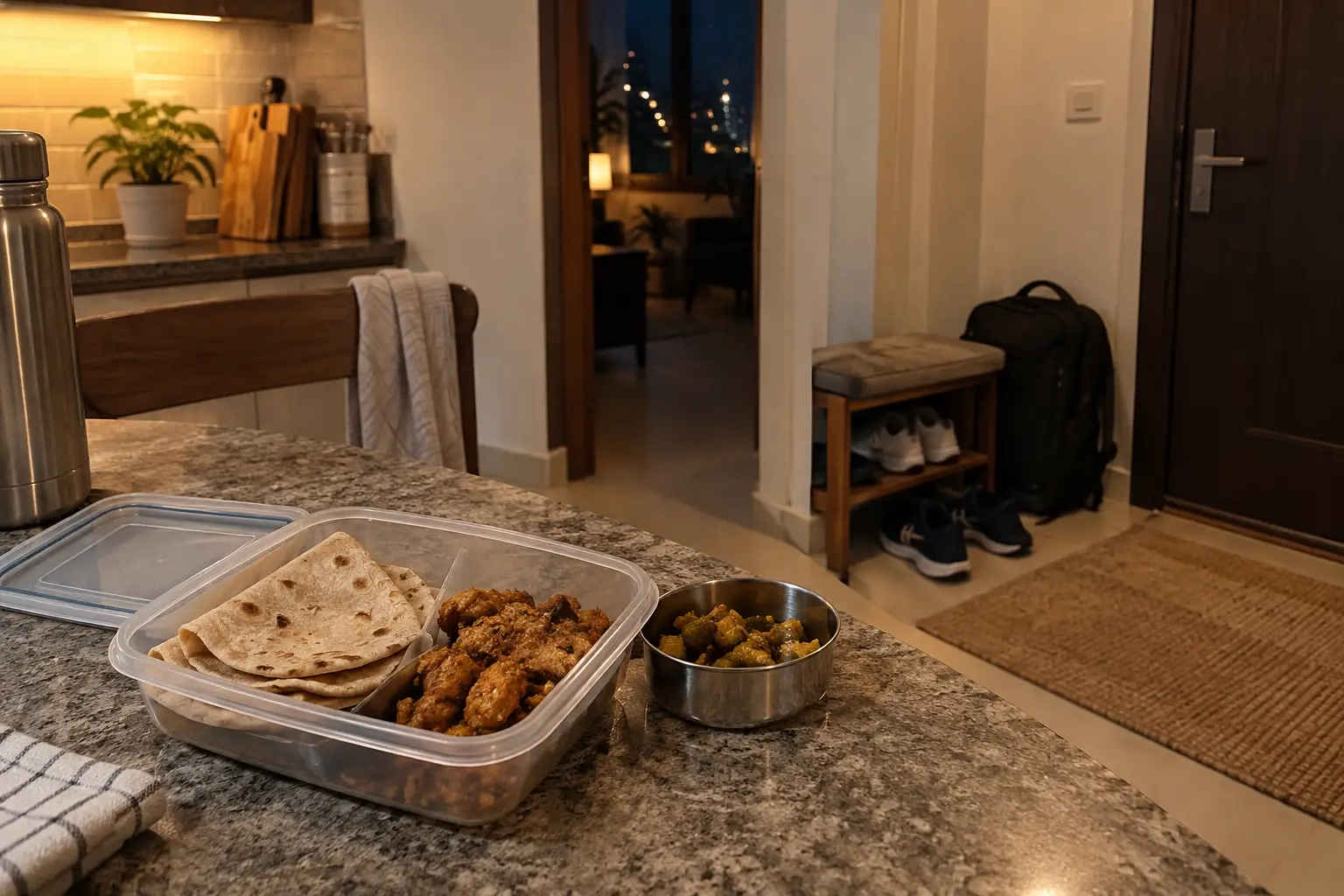
“Had a healthy breakfast” is a judgement. “Had leftover keema with bread and water” describes something I can work with.
If we are reviewing portions, a quick photo can help. If we are tracking calories, record the actual serving as closely as practical, including cooking oil where you know it. Homemade food will not always come with exact information.
The useful distinction is between an estimate you recognise and a guess you treat as certain.
You do not need to weigh everything forever. You do need a consistent way to describe food when we are trying to understand it. Otherwise, I could suggest changing a meal that was never the issue.
Before lunch: Check what “available” really means
A saved restaurant menu is not lunch. Neither is a container still sitting in your fridge at home.
Before your break, check what you can actually access. This matters whether you work in Lahore, a Gulf office, or a workshop in the UK.
If you are ordering, choose the meal before the group order becomes a rushed decision. Fish tikka with chapati and kachumber could work. So could lobia with rice and plain yogurt, depending on your portions and the rest of your food.
I would rather help you build a workable order from an ordinary menu than give you an ideal meal you cannot buy.
For the bigger food picture, my guide to keeping familiar desi meals in your plan explains why a separate diet menu is not required.
Mid-afternoon: Send the question while it still helps
This is a good time to notice whether something has become unclear.
Maybe your usual lunch was unavailable. Maybe tonight’s training slot has changed. Maybe an exercise on your programme does not make sense to you.
Do not spend the rest of the day trying to guess what your coach meant. Ask a question that can get a useful answer.
- Instead of “My food is messed up,” explain what you ate and what is available next.
- Instead of “Can’t train,” explain whether the problem is travel, equipment, or time.
- Instead of “This exercise feels wrong,” describe the movement and ask for a technique review.
I cannot always reply immediately, so we also need agreed alternatives. The point is to raise the issue early, not make every decision depend on a message back.
A useful detail gives us something to change.
At the gym: Record the work, not just attendance
Getting through the gym door matters. But “workout done” cannot tell me whether your training is moving forward.
Write down the exercise, weight, sets, and reps. Add a brief note when something affects the session: a different machine, a rushed rest period, or uncertainty about technique.
Keep it factual. “Used a different cable station” is useful. “Terrible workout” gives me much less to work with.
I also want to know when a load was harder than expected. You do not need to force extra reps to make the record look better. The record should describe your training, not advertise it.
Dinner: Say what happened without grading yourself
At dinner, carry the same approach into your food notes.
Suppose you have beef stew with potatoes and bread. You take another serving because you are still hungry. Record that plainly if food logging is part of our plan.
Do not quietly leave it out, and do not label the evening a failure. Hunger, serving size, and the gap since lunch are all useful context. Shame is not.
I would ask what led to the extra serving before deciding anything needs cutting back. Was the first plate small? Did lunch leave you unsatisfied? Did you simply enjoy the meal?
Those are different situations. They do not automatically need the same response.
Before sleep: Give tomorrow a clearer starting point
Finish with a short review, not a verdict on your discipline.
Write what you planned, what actually happened, and what made the difference. Then choose the unresolved detail that needs attention tomorrow.
Maybe you need to confirm lunch. Maybe you need an alternative exercise. Maybe nothing needs changing, and you simply need to give the current plan time.
This is where I want my clients to put their effort: making the day understandable enough that we can coach it properly.
You do not owe me a perfect report. Tell me what happened, including the awkward bits. That gives us a much better starting point than “mostly good.”
This is general fitness information, not medical advice. Please talk to a doctor before changing your diet or exercise routine, especially if you have a health condition.
FAQ
Do I need to track every meal?
Not necessarily. Use the level of detail your plan needs. Simple meal notes or photos may be enough to identify a problem.
What should I include in a coaching check-in?
Explain what you planned, what happened, and what got in the way. Include any question you need help answering.
What if I cannot measure homemade food exactly?
Use a reasonable, consistent estimate and make the uncertainty clear. Avoid treating a rough guess as an exact calorie count.
Should I report meals or workouts that went badly?
Yes. Describe them without judging yourself. Those details can help your coach suggest a more workable approach.
Coach Usman, 12+ years of coaching experience
1:1 online coach for Pakistani men worldwide, building fat-loss plans around real jobs, shifts and desi food.
coachusman.comWant a coach who builds the plan around you?
Coach Usman builds your diet and training around your job, your schedule and the desi food you already eat.
Start with Coach UsmanComments (0)
No comments yet. Be the first.