In this article
Want a plan built around your job and desi food? Try 1:1 online coaching with Coach Usman.
The part of a bad day I care about most is what you do after the first thing goes wrong.
You miss training because work runs late. Then dinner becomes whatever is easiest. Then you stay up scrolling because the day already feels wasted.
By bedtime, a missed workout has become a reason to abandon everything else.
When I coach Pakistani men online, I want to separate those decisions. Work may have taken your training slot. It does not automatically get to take your dinner, your sleep, and tomorrow as well.
That is my approach to discipline on bad days: stop the disruption from spreading.
A bad day is not one single decision
It is easy to describe a whole day as good or bad. But that label hides the choices still available.
Imagine you planned to train after work, then a family responsibility came up. Missing that session may have been unavoidable. Eating straight from snack packets all evening is a separate decision. Staying awake to punish yourself with an extra workout is another.
These choices are connected, but they are not compulsory consequences of each other.
In my 12+ years of coaching experience, I have learned to look beyond whether the original plan happened. I also want to know what remained possible when it did not.
That gives my clients something useful to work with instead of a verdict on their character.
Separate the problem from the story
The problem might be: you missed lunch and arrived home very hungry.
The story might be: you have no discipline and always ruin your progress.
Only the first statement helps us plan dinner.
I ask my clients to describe what happened without insulting themselves. A late shift, an unplanned dawat, or a long commute is information. Calling yourself lazy adds nothing useful.
Try this quick review:
- What actually happened? Describe the event, not your personality.
- What is still in my control? Look at the next meal, your remaining time, or bedtime.
- What would make tomorrow easier? Choose something you can finish today.
You do not need a motivational speech before answering. You need an honest description of the situation.
Make the next choice ordinary
After a messy meal, the next useful choice usually looks boring.
Not a fast. Not a punishment workout. Not a promise to eat perfectly tomorrow.
Just your next normal meal.
If lunch was biryani at work, dinner can still be roti, daal, sabzi, and some plain yoghurt. You can respond to your hunger without treating dinner as either a reward or a penalty.
If breakfast was only chai and biscuits, look for a practical protein source at your next meal, such as eggs, chicken, fish, beans, or daal. My guide to fixing the meal that has no protein explains how to spot that gap without rebuilding your whole diet.
I want ordinary meals to remain available after imperfect ones. That is much more useful than dividing food into perfect eating and complete failure.
Keep training separate from punishment
A missed workout creates a scheduling problem. It does not create a debt you must repay with exhaustion.
Suppose you reach home late after a shift in Dubai or a long commute in Lahore. The full session no longer fits comfortably.
You have options:
- Do a shorter version of your planned session if time and energy allow.
- Take an easy walk if you want some movement without a demanding workout.
- Move the session to a realistic slot and prepare for it.
- Rest when you are exhausted instead of forcing a late session to prove a point.
A walk is not the same training stimulus as lifting. I do not pretend otherwise. It can still be a useful choice on a disrupted evening.
The important part is making a deliberate decision. If you reschedule, identify the actual slot. “Tomorrow sometime” is easy to lose to tomorrow’s responsibilities.
At a dawat, drop the all-or-nothing label
Family meals test more than food choices. There is hospitality, conversation, food being offered again, and the feeling that refusing anything looks rude.
I do not want my clients sitting at a dawat feeling guilty about every bite.
Choose food you enjoy. Serve yourself deliberately. Eat, talk, and notice whether you want more before accepting another helping.
If you eat more than intended, leave the judgement there. You do not have to continue eating because the evening is now supposedly ruined.
For practical serving habits, I explain how portion control starts with the serving spoon. The aim is to make choices easier, not turn a family gathering into an exam.
You can enjoy the occasion and return to your usual routine afterwards. Both can be true.
Finish the day with a small repair
Before bed, I like a repair action: something practical that reduces tomorrow’s friction.
This is not about rescuing your calorie total or earning back a missed session. It is about leaving yourself a slightly easier starting point.
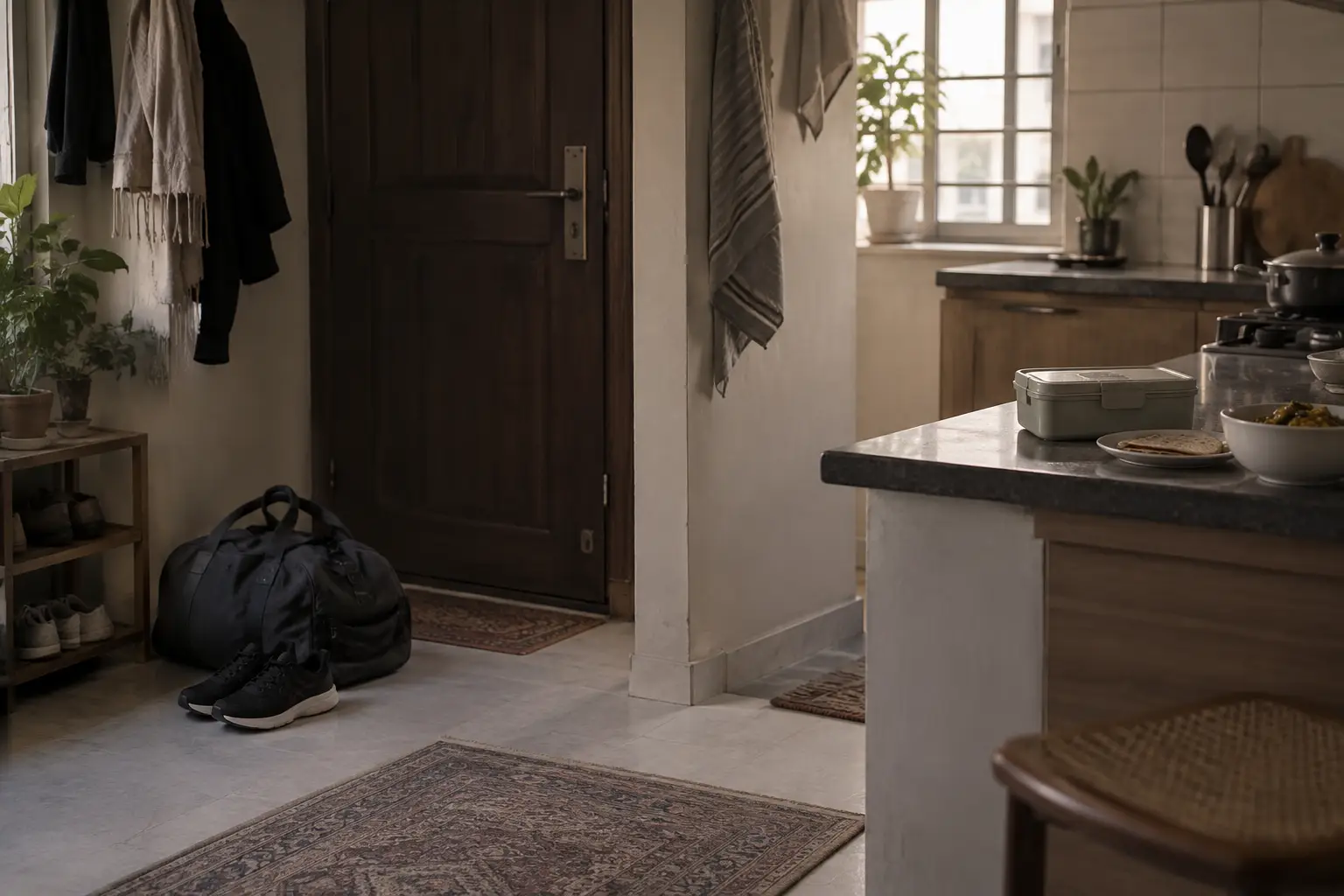
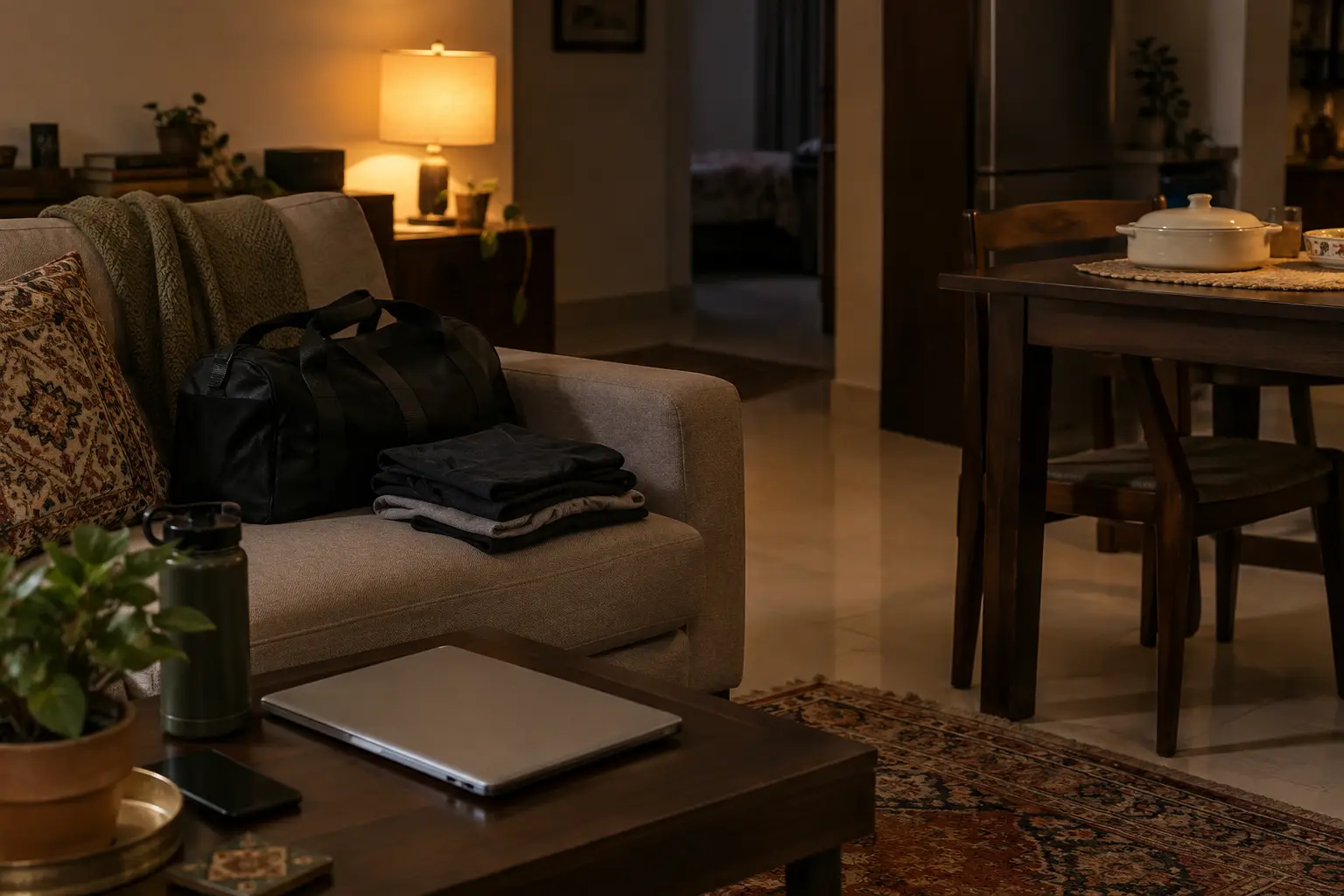
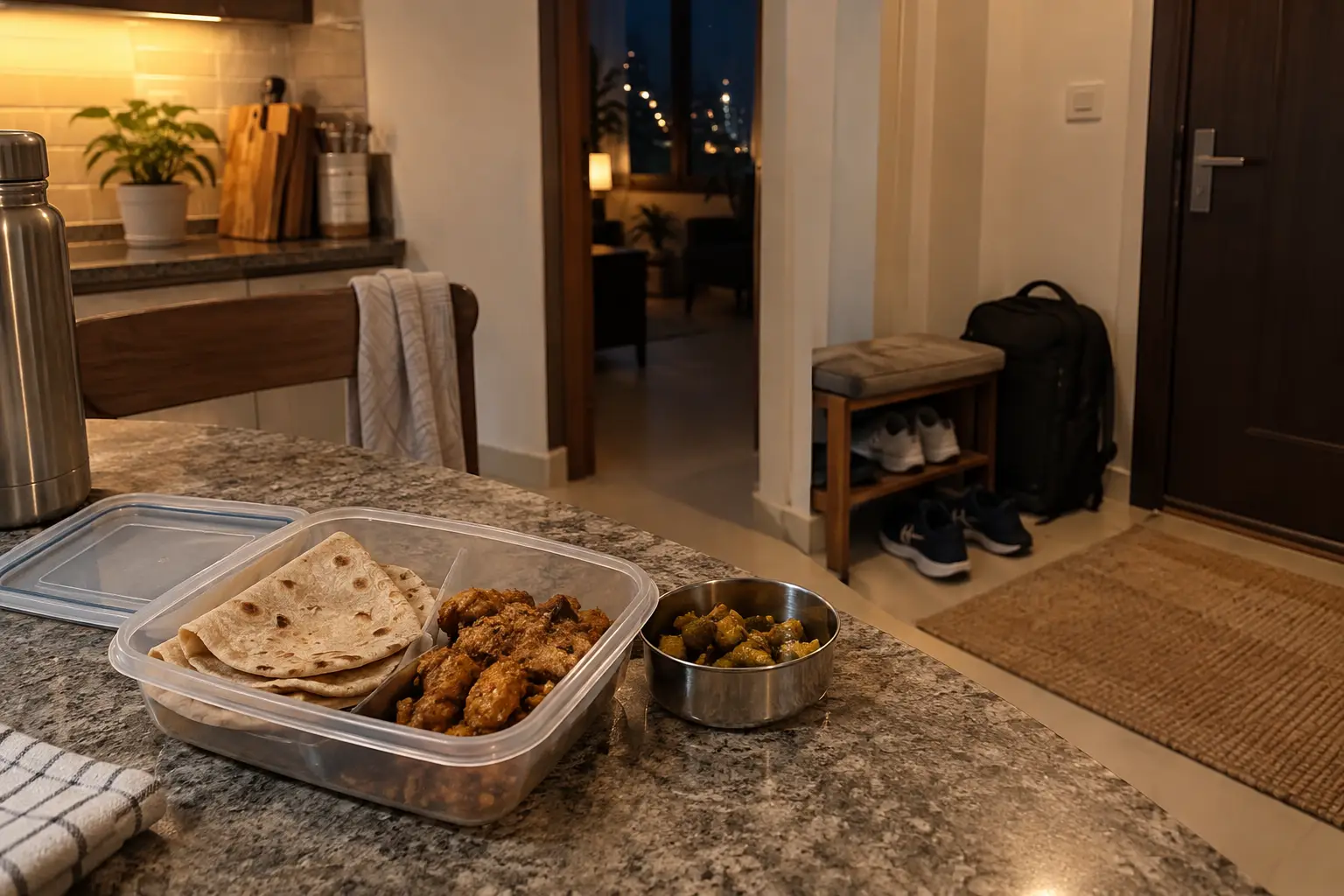
Put your training clothes where you will see them. Pack leftover chicken and roti for work. Check when your shift ends before choosing a gym slot. Put your phone aside rather than continuing an evening of frustrated scrolling.
Pick the action that matches the actual problem.
If lunch keeps getting missed, laying out gym shoes will not solve it. You need accessible food. If training keeps clashing with family duties, you need a better time slot, not harsher self-talk.
Judge the return, not just the slip
In a check-in, I want to discuss more than what went wrong. I want to know how you returned.
Did one unplanned meal stay one meal? Did you reschedule training without cramming sessions together? Did you prepare lunch even though the rest of the day felt untidy?
Those actions deserve attention. They show you can respond to difficulty without abandoning your direction.
And if the same bad day keeps repeating, we should adjust the plan. Discipline cannot make an impossible schedule sensible.
My standard is not that my clients never slip. It is that we practise returning without drama, punishment, or waiting for Monday.
You do not have to fix the whole day. Make the next useful choice.
This is general fitness information, not medical advice. Please talk to a doctor before changing your diet or exercise routine, especially if you have a health condition.
FAQ
What does discipline look like on a bad day?
It means making a useful choice within your actual circumstances, such as eating a normal dinner, rescheduling training, or preparing tomorrow’s lunch.
Should I make up for an unplanned meal?
I do not recommend punishment workouts or skipping meals to compensate. Return to your usual eating routine and notice what made the meal difficult to manage.
Does a shorter workout still count?
A shorter session can still provide useful training. It will not always replace everything planned, but it can fit a disrupted day better than forcing a full session.
What if bad days keep happening?
Look for a repeated obstacle. Your meal preparation, training schedule, or expectations may need adjusting rather than another promise to try harder.
Coach Usman, 12+ years of coaching experience
1:1 online coach for Pakistani men worldwide, building fat-loss plans around real jobs, shifts and desi food.
coachusman.comWant a coach who builds the plan around you?
Coach Usman builds your diet and training around your job, your schedule and the desi food you already eat.
Start with Coach UsmanComments (0)
No comments yet. Be the first.