In this article
- Diet Plan for Weight Loss: The Six-Point Order Checklist
- Check 1: Decide Before the Menu Starts Selling
- Check 2: Find the Protein, Not Just the Dish Name
- Check 3: Build One Complete Plate
- Three orders to adapt
- What if you want biryani, a burger, or pizza?
- Check 4: Audit the Basket Before Paying
- Check 5: Portion Before You Start Eating
- Check 6: Save Your Orders and Keep Training Normal
- Make Your Next Delivery Order Part of the Plan
Want a plan built around your job and desi food? Try 1:1 online coaching with Coach Usman.
The delivery app says you need just one more side to unlock a discount, and suddenly your dinner order has doubled.
You wanted something convenient after work, not a feast. But between meal deals, minimum orders, and tempting photos, ordering dinner becomes another decision you have to manage.
If you are wondering how to plan weight loss meals when ordering from food delivery apps in Pakistan, start with a repeatable checklist—not a ban on takeaway. A useful diet plan for weight loss should work when you are tired and the kitchen is closed.
You do not need to become an expert in every restaurant menu. You need a few sensible defaults, a way to judge portions, and a plan for the extras that delivery apps keep putting in front of you.
Diet Plan for Weight Loss: The Six-Point Order Checklist
Before you pay, run through these six checks:
- Choose: Decide what kind of meal you need before browsing.
- Anchor: Pick a clear protein source.
- Complete: Add one main starch and some vegetables.
- Edit: Remove extras you did not actually want.
- Portion: Decide how much you will eat before opening everything.
- Repeat: Save a few reliable orders and review your progress.
You do not need the lowest-calorie item on the menu. You need a satisfying meal that helps you eat slightly less energy than you use over time.
Order the meal you planned, not the meal the discount designed.
Check 1: Decide Before the Menu Starts Selling
Open the app with a simple brief: “Dinner for one, with protein, one starch, and vegetables.” That is more useful than scrolling until something looks irresistible.
First, ask whether this is your main meal or a smaller meal between shifts. A late dinner does not automatically need fewer calories, but it should not become a second dinner after you have already eaten at home.
Then choose two or three restaurant options that usually offer meals you can portion easily. Look for clear descriptions, familiar dishes, and separate sides rather than a mystery loaded box.
Useful starting points include:
- Chicken tikka with plain roti and cucumber salad.
- Grilled fish with rice and vegetables.
- Daal with plain roti, plain yogurt, and salad.
- Chicken karahi shared between people, with individual roti portions.
A “healthy” label is not enough. A salad covered in creamy dressing, fried toppings, and cheese can be more energy-dense than a simple cooked meal.
Set a spending limit before browsing, too. Check the total with delivery charges and other fees included. If a minimum order pushes you towards buying more food, decide whether the extra item has a genuine place in tomorrow's meals. If not, another restaurant may be the simpler choice.
Your check: Can you describe the meal in one sentence before browsing deals?
Check 2: Find the Protein, Not Just the Dish Name
Protein helps make meals satisfying and supports muscle alongside resistance training. Start by identifying what will provide it.
Chicken, fish, eggs, lentils, beans, and yogurt can all contribute. But a chicken-flavoured rice dish may contain much less chicken than its photograph suggests.
For restaurant meals, ask about the amount of meat if the description is unclear. Bone-in portions also include weight you will not eat.
These rough examples can help you judge the order:
| Food and portion | Approximate calories | Approximate protein |
|---|---|---|
| Cooked skinless chicken breast, 150 g | 250 kcal | 45–47 g |
| Plain roti made with 30 g flour, no added fat | 100–110 kcal | 3–4 g |
| Cooked plain rice, 150 g | 190–210 kcal | 4 g |
| Cooked lentils, 180 g, before added oil | 200–220 kcal | 15–16 g |
| Plain unsweetened yogurt, 150 g | 90–120 kcal | 5–8 g |
These are reference estimates, not verified restaurant nutrition. Oil, marinades, portion size, and cooking methods can change the numbers substantially.
For a vegetarian order, daal plus yogurt gives you more protein than roti and vegetables alone. For more options, use this guide to getting enough protein on a Pakistani vegetarian diet.
When your order arrives, compare the actual food with what you expected. If the meal is mostly rice or gravy with very little protein, note that before saving it as a regular choice. A familiar dish name is useful, but the portion you receive matters more.
Your check: Is there a visible, useful protein portion—not just a few pieces hidden in sauce?
Check 3: Build One Complete Plate
Once you have your protein, choose one main starch: roti, rice, potatoes, or another option you enjoy. You do not need to remove carbohydrates to lose weight.
The problem is often stacking them without noticing: rice in the main dish, bread on the side, and fries in the deal.
Add vegetables or salad where available. Request dressing separately, and choose freshly prepared food from a restaurant you trust.
Three orders to adapt
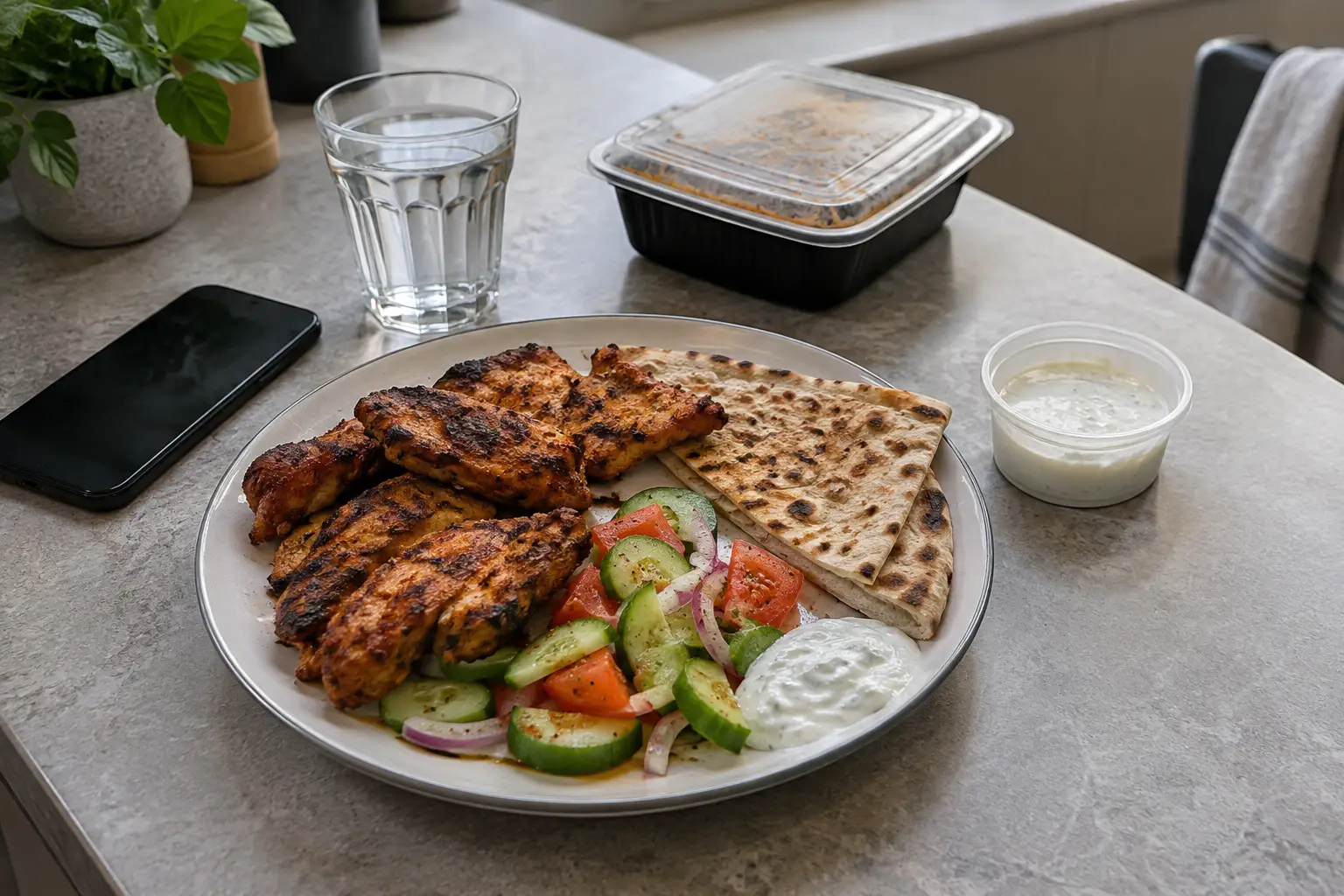
Grilled chicken dinner: Around 150 g cooked chicken, one plain roti, and salad. Using the reference portions above, that is roughly 350–400 calories before sauces or extra cooking fat, with about 50 g protein.
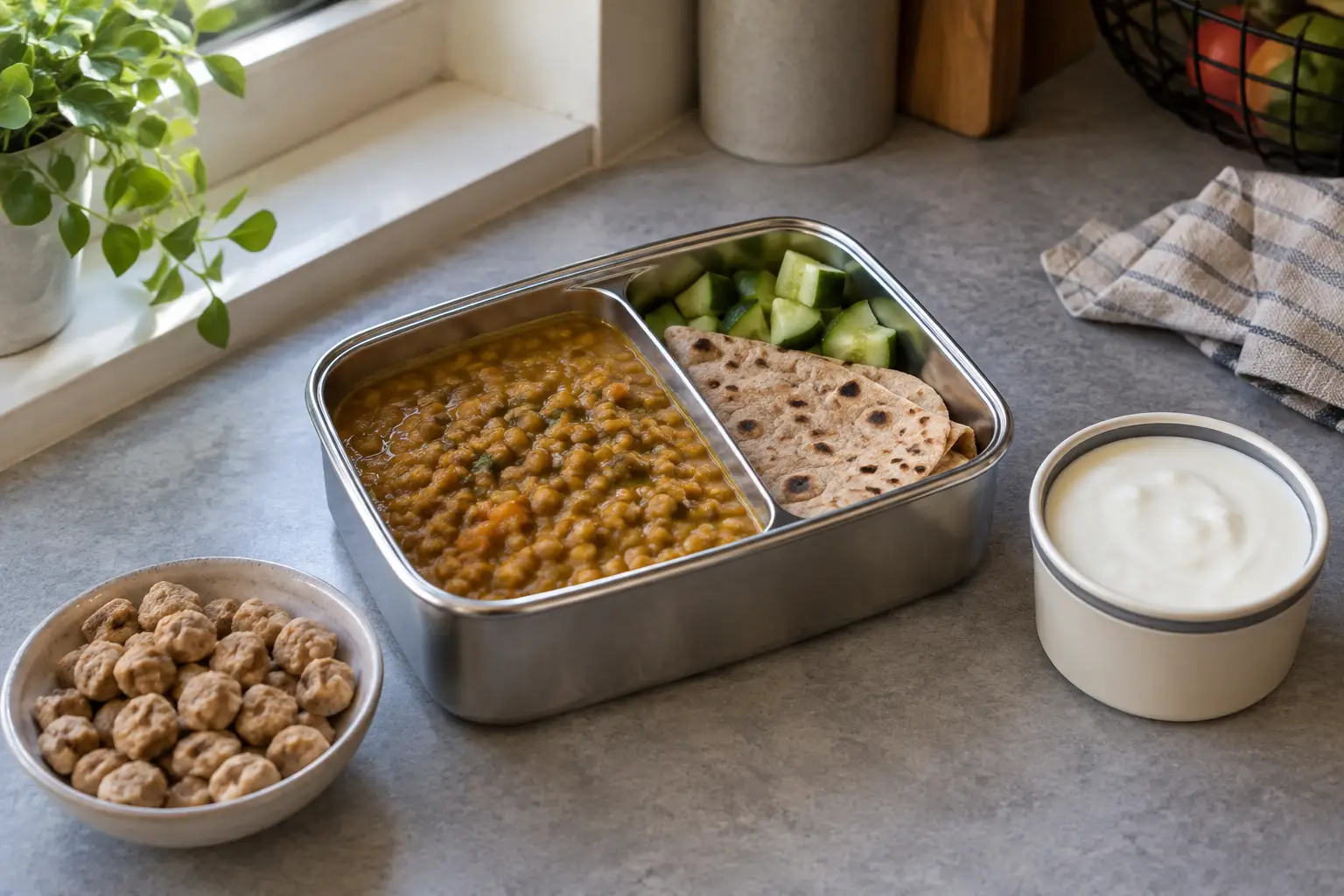
Vegetarian dinner: Around 180 g cooked lentils, one plain roti, 150 g plain yogurt, and vegetables. That may provide roughly 400–500 calories and 24–28 g protein before substantial added oil.
Shared karahi dinner: Put your chicken portion on a plate, add one plain roti and vegetables, then decide whether you need more. Calories are harder to estimate because recipes vary; avoid treating a generic app entry as an exact measurement.
These are starting examples, not a complete daily prescription. Larger men, active jobs, and demanding training may require bigger portions.
What if you want biryani, a burger, or pizza?
You can still use the same checklist. With biryani, portion the rice and check how much meat you actually received. Add plain yogurt or vegetables if available rather than automatically adding another main dish.
For a burger, decide whether you want the burger alone or a meal with sides. Fries and a drink are separate choices, even when the app bundles them together. With pizza, put your intended serving on a plate and set aside the rest before eating from the box.
These meals do not need a special rule or a punishment workout. They need deliberate portions and a place in your overall eating pattern.
If you want help fitting familiar meals into your week, the CU Fit app at coachusman.fit provides a custom diet built around food you already eat, with a new diet every 30 days. That gives your delivery choices a plan to fit into rather than leaving every dinner to guesswork.
Your check: Have you ordered a complete meal rather than several competing main meals?
Check 4: Audit the Basket Before Paying
The basket screen is where a sensible order often grows.
Check for:
- A sugary drink added automatically to a combo.
- Fries included because upgrading looked inexpensive.
- Extra bread ordered “just in case.”
- Creamy sauces that could come separately.
- Dessert added only to meet a discount threshold.
None of these foods is forbidden. The point is to choose them deliberately rather than accidentally.
For context, a tablespoon of oil contains roughly 120 calories. A 330 ml regular soft drink often provides around 130–150 calories. Those additions can meaningfully change a meal without adding much fullness.
Asking for less oil or sauce separately may help, but a restaurant cannot always change a batch-cooked dish. Do not assume your request produces a specific calorie reduction.
Keep order notes short and practical: “Sauce separately, please” or “No extra butter on the roti, please.” Check the food when it arrives rather than assuming every request was followed.
If you genuinely want dessert, choose it intentionally and consider sharing or saving a portion. The useful question is not “Am I allowed this?” It is “Does this amount fit the meal and day I planned?”
Your check: Would you still choose every item if there were no offer?
Check 5: Portion Before You Start Eating
Delivery containers are packaging, not personal serving targets. A box that looks like one meal may comfortably cover two.
Before eating:
- Put your planned portion on a plate.
- Separate anything intended for another meal.
- Put sauces beside the plate so you can choose the amount.
- Sit down rather than picking from several open containers.
If you are still hungry after finishing, reassess. More protein, vegetables, or another modest starch portion may be reasonable. Portion control should not mean ignoring genuine hunger.
If you save leftovers, refrigerate them promptly—generally within two hours, or within one hour in temperatures above 32°C. Use shallow containers and reheat thoroughly. Pakistan's hot weather makes leaving takeaway on the counter a poor habit.
That timing includes the time food spends out during transport and serving, not just time after you finish eating. Avoid saving food if you are unsure it has been handled safely.
Keep your normal meals earlier in the day. Skipping lunch to “save calories” can make an oversized evening order harder to manage.
If delivery is delayed and you are genuinely hungry, a small planned snack such as plain yogurt can help you avoid arriving at dinner ravenous. Count it as part of your day's food rather than treating it as invisible because you ate it while waiting.
Your check: Did you choose your serving, or did the container choose it?
Check 6: Save Your Orders and Keep Training Normal
Save three dependable meal choices in your phone notes. Record the restaurant, dish, usual portion, and any useful request. You can also note the price so convenience stays affordable.
A useful saved-order note might include:
- Meal: Chicken tikka, plain roti, and salad.
- Request: Sauce separately.
- Portion plan: Plate the meal first; save any extra bread.
- Review: Was the protein portion adequate, and did the meal keep you satisfied?
Repeatable orders make estimates more consistent, even when restaurant calories remain uncertain. Judge the overall plan through trends rather than expecting one meal to predict tomorrow's scale reading. Here is how to track weight loss without scale obsession.
A salty restaurant meal can temporarily increase scale weight through water retention. A higher reading the next morning is not, by itself, evidence that your plan has failed. Look at several weeks of consistent measurements and your usual portions before making changes.
Do not add punishment cardio after delivery. Keep your planned training. A simple home session could include two sets each of chair squats, incline push-ups, backpack rows, and glute bridges, using controlled repetitions and stopping before technique breaks down.
Choose a stable chair, a secure backpack, and an incline surface that will not move. Adapt the movements to your ability rather than forcing a difficult variation just because dinner was larger than planned.
If you want structured support, Coach Usman is a Level 3 Personal Trainer and weight loss coach based in Gujranwala. His coaching approach helps you fit food choices and training into ordinary working weeks rather than treating takeaway as a failure. You can explore Premium coaching when you want individual guidance rather than managing every adjustment alone.
Your check: Can you repeat this order next week without needing extra willpower or compensating exercise?
Make Your Next Delivery Order Part of the Plan
A diet plan for weight loss becomes useful when it survives an ordinary working evening. Choose the protein, complete the plate, edit the basket, and portion the food. Then get on with your day.
For your next order, try one practical change rather than rewriting your whole diet. Remove an unwanted combo drink, put the meal on a plate, or save a reliable order. Repeat that change until it becomes your normal way of ordering.
CU Fit starts from $14.99/month worldwide or Rs 1,499 in Pakistan, with a 7-day money-back policy. It includes daily workouts that unlock as you progress, weekly check-ins with photos, weight and waist, progress charts, Coach Usman Assistant chat, and a “bad day” reset when you slip. Coach Usman personally reviews your progress after six check-ins.
Want a plan built around your job and your food? Start with CU Fit at coachusman.fit for an affordable custom diet and workout plan. Want Coach Usman to coach you 1:1? Choose Premium 1:1 coaching for Pakistani men in Pakistan and overseas. Premium costs $99/month or $545 per 6 months, with the same USD price worldwide, paid by card through Stripe.
This is general fitness information, not medical advice. Please talk to a doctor before changing your diet or exercise routine, especially if you have a health condition.
FAQ
Can I lose weight while regularly ordering food delivery?
Yes, delivery meals can fit a weight loss plan if your overall intake supports a calorie deficit. Choose a clear protein source, manage starch and sauce portions, and avoid automatically adding drinks or sides. No single order determines your progress.
How do I estimate takeaway calories when the restaurant has no nutrition information?
Use comparable food entries and realistic portion estimates, allowing for cooking oil and sauces. Treat the result as an estimate, not an exact count. Repeating similar orders and monitoring your longer-term weight and waist trends can help you judge whether your portions fit your needs.
Should I follow these meal examples as my complete diet?
No. They are examples of individual meals, not a complete daily diet. Your needs depend on your size, activity, preferences, and circumstances. Check with your doctor if you have a medical condition.
What should I order from food delivery apps in Pakistan for weight loss?
Start with a meal you can portion easily: chicken tikka with plain roti and salad, grilled fish with rice and vegetables, or daal with yogurt and roti. Check the actual protein portion, choose one main starch, and request sauces separately where possible. Restaurant preparation matters more than a healthy label.
Can I still order biryani, burgers, or pizza?
Yes. Choose your serving before eating and treat drinks, fries, sauces, and extra bread as separate decisions. With biryani, check the meat portion as well as the rice. With pizza, plate your intended serving and put the rest away. These foods can fit without skipping your next meal or adding punishment exercise.
Should I skip lunch if I plan to order dinner?
You do not need to skip lunch to make room for takeaway. Keeping regular, satisfying meals can make evening portions easier to manage. Plan dinner within your usual day instead of arriving extremely hungry and relying on willpower at the basket screen.
How should I handle delivery deals and minimum orders?
Compare the final cost, including fees, rather than the advertised discount. Remove extras you would not choose without the offer. If you buy additional food, give it a clear purpose as a safely stored future meal; otherwise, consider another restaurant.
Why did my weight go up after a takeaway meal?
Salt, carbohydrate intake, and food still being digested can temporarily affect scale weight. One higher reading does not tell you how much body fat has changed. Return to your normal meals and training, and assess your trend across several weeks rather than reacting to one morning.
Coach Usman, 12+ years of coaching experience
1:1 online coach for Pakistani men worldwide, building fat-loss plans around real jobs, shifts and desi food.
coachusman.comWant a coach who builds the plan around you?
Coach Usman builds your diet and training around your job, your schedule and the desi food you already eat.
Start with Coach UsmanComments (0)
No comments yet. Be the first.