In this article
- Step 1: Set a High Protein Diet Target You Can Manage
- Step 2: Separate Shelf-Stable Food From Food That Needs Cooling
- Step 3: Choose Two Reliable Work-Bag Protein Options
- Match the food to the job
- Step 4: Assemble a Meal, Not a Collection of Snacks
- Fish-based work meal
- Meat-free work meal
- Step 5: Use Home Meals to Reduce the Pressure at Work
- Step 6: Create a Backup for the Shift That Runs Late
- Step 7: Test the Plan Across One Working Week
Want a plan built around your job and desi food? Try 1:1 online coaching with Coach Usman.
Your work bag has room for roti and a water bottle, but there is nowhere to keep lunch cold during your shift.
You want to lose weight, yet the easiest food near work is usually a pastry, crisps, or another large sandwich. Learning how to eat enough protein when working long shifts without a fridge starts with separating foods that can sit on a shelf from foods that need proper cooling.
A high-protein diet does not have to mean carrying warm chicken around all day. You can build a useful plan around unopened shelf-stable foods, meals eaten at home, and a few sensible purchases. The aim is not to make every shift perfect. It is to have a safe, realistic option ready before hunger and a busy roster make the decision for you.
Step 1: Set a High Protein Diet Target You Can Manage
For many healthy adults doing resistance training while losing weight, around 1.2–1.6 grams of protein per kilogram of body weight daily is a practical starting range. Your needs may differ, so treat this as a guide rather than a compulsory score.
For an 80 kg man, that is roughly 96–128 grams daily. Starting near 100 grams may feel more manageable than immediately chasing the top end.
If you have a lot of weight to lose, multiplying your current weight can produce an unnecessarily demanding target. A suitable goal weight can be a more useful reference with individual guidance.
Divide the target across your actual eating opportunities:
- Before work: around 25–30 grams.
- Main work meal: around 25–30 grams.
- Second break: around 15–20 grams.
- After work: around 25–30 grams.
These are planning ranges, not rules about what your body can absorb. If your shift only gives you one proper break, do not treat the schedule above as a pass-or-fail checklist. Use the meals you can control before and after work, then make the break meal count.
Protein helps support muscle retention, particularly alongside strength training. But weight loss still requires eating fewer calories than you use over time. Adding protein on top of everything you already eat can push calories up instead of helping. For more on building meals around familiar foods, see this guide to getting enough protein on a Pakistani vegetarian diet.
Step 2: Separate Shelf-Stable Food From Food That Needs Cooling
“No fridge” does not mean every food is safe in your bag.
Shelf-stable means the unopened product is designed for storage without refrigeration. Check the label, expiry date, packaging condition, and storage instructions. A product that is safe at room temperature while sealed may need refrigeration after opening.
Useful options include:
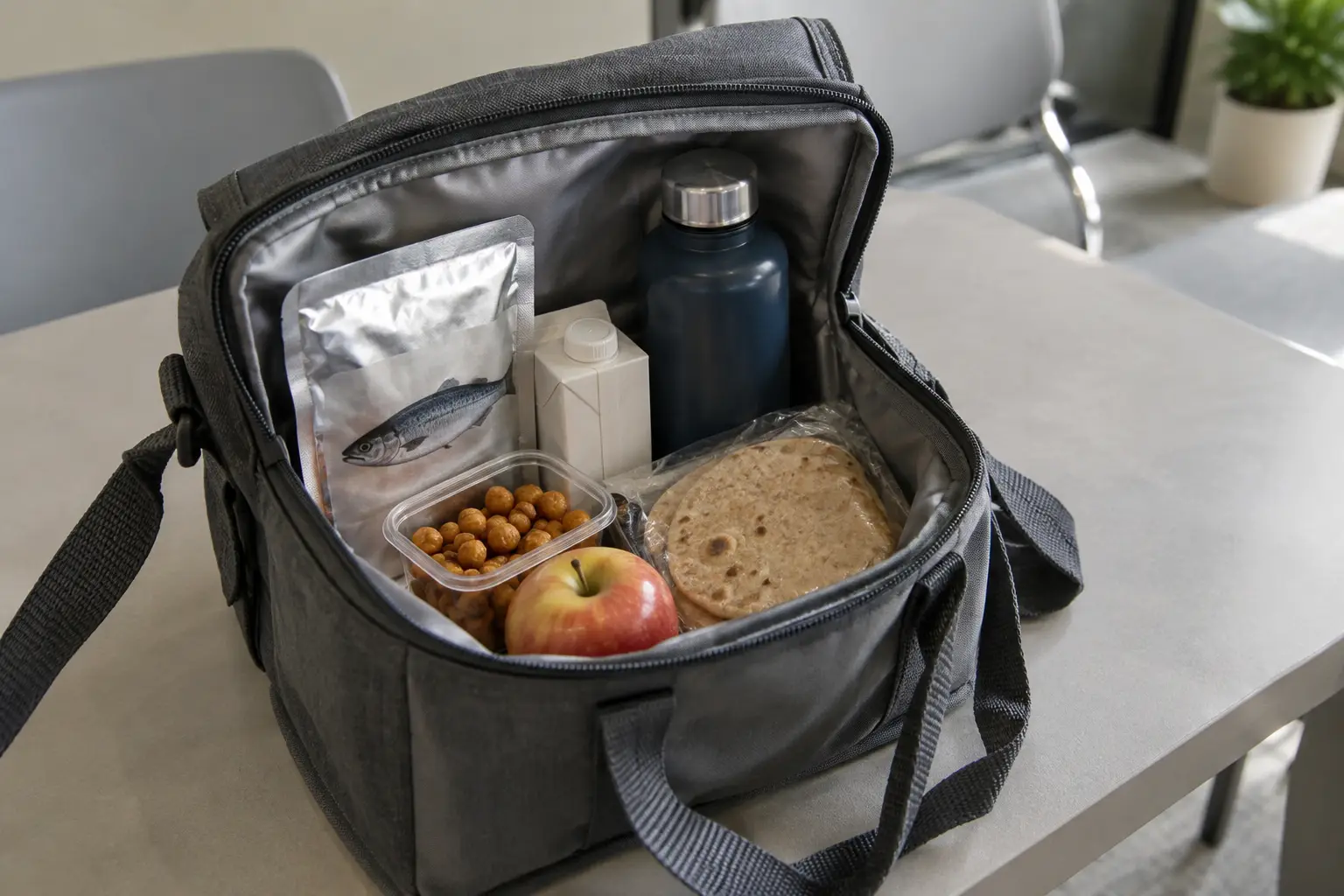
- Unopened tuna or salmon tins and pouches labelled shelf-stable.
- Small unopened cartons of shelf-stable UHT milk.
- Roasted chana in a sealed packet.
- Unopened ready-to-eat bean or lentil pouches that permit room-temperature storage.
- Whole fruit and dry crackers to complete the meal.
Regular milk, yoghurt, cooked eggs, cooked meat, and homemade cooked daal need temperature control. Cooked rice also needs safe handling. A container with a tight lid does not make these foods shelf-stable.
For perishable food, use an insulated bag with enough frozen ice packs to keep it at 4°C or below. If you cannot maintain that temperature, choose another option.
As a general food-safety rule, do not leave perishable food unrefrigerated for more than two hours, or one hour when temperatures are above 32°C. Time during preparation and travel counts too. If you are unsure how long food has been warm, do not rely on smell or appearance to decide that it is safe.
In Gulf heat, a parked vehicle is not a storage cupboard. Keep even shelf-stable products within their labelled storage conditions, away from direct sun and excessive heat.
A protein plan only works if the food is safe to eat.
Step 3: Choose Two Reliable Work-Bag Protein Options
You do not need ten different products. Pick two you enjoy, can afford, and can open easily during a break. Having a couple of dependable choices also makes shopping simpler and reduces the chance of carrying food you never actually eat.
These figures are approximate. Brands, drained weights, and recipes vary, so use the label where available.
| Food and portion | Approximate protein | Approximate calories |
|---|---|---|
| Tuna in water, 120 g drained | 27–30 g | 130–160 |
| Shelf-stable UHT milk, 250 ml | 8–9 g | 90–160 |
| Roasted chana, 50 g | 9–11 g | 180–210 |
| Ready-to-eat lentils, 200 g | 12–16 g | 180–260 |
| Peanuts, 30 g | 7–8 g | 170–180 |
| Medium plain roti, no added oil | 3–4 g | 100–130 |
Match the food to the job
Tuna offers a substantial amount of protein for relatively few calories. Rotate it with other options rather than relying on tuna every day, and follow local fish-consumption guidance.
Roasted chana is portable and familiar, but it takes a larger calorie allowance to provide the same protein as fish. It works well as part of a meal rather than your only protein source.
Peanuts contain protein, but they are calorie-dense. A measured portion can fit; repeated handfuls can quietly become several hundred calories. If you pack them, portion them at home rather than taking the whole bag.
Milk contributes useful protein, but one small carton is not a complete high-protein meal. Once opened, drink it promptly and follow the label’s refrigeration instructions for any remainder.
Choose single-serving packs when you cannot refrigerate leftovers. Open them at your break, not before leaving home. Also check that you have a spoon or another way to eat the food; a suitable meal is no use if you cannot open or serve it at work.
Step 4: Assemble a Meal, Not a Collection of Snacks
Start with your protein source. Then add a sensible carbohydrate portion and fruit or vegetables that you can handle safely. A complete, planned meal is usually easier to manage than grazing on several snacks and trying to work out later what you have eaten.
Here are two practical combinations.
Fish-based work meal
- One shelf-stable tuna pouch, approximately 120 g.
- Two medium plain rotis, packed clean and dry, without a perishable filling.
- One whole apple.
Approximate total: 425–515 calories and 33–38 grams of protein. Roti size can change that considerably.
Open the fish when you eat. Do not prepare a tuna-filled wrap at home and leave it warm until your afternoon break.
Meat-free work meal
- One 200 g ready-to-eat lentil pouch labelled safe to eat without heating.
- One 250 ml shelf-stable milk carton.
- One medium plain roti.
Approximate total: 370–550 calories and 23–29 grams of protein.
Check that the pouch is genuinely ready to eat. Some products require cooking, even if their packaging looks similar.
If you avoid dairy too, combining beans or lentils with roasted chana can help, though you may need more calories to reach the same protein amount. Our Pakistani vegetarian protein guide explains how to balance the rest of your day.
If fitting these meals around your roster feels complicated, the CU Fit app provides a custom diet built around food you already eat, with a new diet every 30 days. Tell it about your work breaks and storage limits so your plan reflects real life.
Step 5: Use Home Meals to Reduce the Pressure at Work
You do not have to get most of your protein during your shift.
Before leaving, you have access to a kitchen and refrigeration. After returning, you can eat freshly prepared food or safely stored leftovers. Use those opportunities. A decent meal at home before or after work can take pressure off the one meal you need to carry.
A simple before-work meal could include:
- Two eggs: approximately 12–14 grams of protein and 140–160 calories before cooking fat.
- 200 g plain strained yoghurt: often around 16–20 grams of protein, depending on the label.
- A measured serving of oats or bread for energy.
Eat this meal at home rather than carrying the eggs and yoghurt unrefrigerated.
After work, 120 g cooked skinless chicken typically provides around 35–37 grams of protein. Add vegetables and a portion of roti or rice that fits your calorie needs. Oil and sauce can substantially increase the meal’s calories.
This arrangement means your work bag only needs to cover the middle of your day—not rescue an entire day with very little protein. It also gives you a chance to eat familiar food at home rather than trying to make every meal fit into a small bag.
Step 6: Create a Backup for the Shift That Runs Late
Your break may move. The shop may close. You may get asked to stay longer.
Keep one unopened, in-date backup in a suitable storage place. For example:
- A single-serving fish pouch and dry crackers.
- A measured roasted chana packet and a small UHT milk carton.
- A shelf-stable ready-to-eat bean pouch with a spoon.
Check workplace rules around food, allergens, and eating areas. A fish pouch is not useful if you cannot open it anywhere suitable. Keep your backup in the conditions stated on the packaging and replace it before it expires.
If buying food is your only option, choose something freshly prepared and eat it promptly. Look for a clear protein portion rather than assuming a large bread roll contains much meat. If takeaway becomes your backup, use this food delivery checklist for weight loss to keep the order focused.
One lower-protein shift is not a failure. Return to your normal arrangement at the next meal instead of doubling dinner or skipping carbohydrates as punishment. The goal is a plan you can repeat, not a perfect score every day.
Step 7: Test the Plan Across One Working Week
Before shopping, write down:
- Your realistic daily protein target.
- Your before-work and after-work meals.
- Two safe work-bag combinations.
- One backup for delays.
- Where you will store food within its labelled temperature limits.
During the week, check whether you actually ate the meals, whether portions kept you satisfied, and whether your weight trend is moving in the direction you want. Adjust one thing at a time. If you keep missing a meal because you cannot eat it at work, change the food or timing rather than blaming yourself for having a difficult roster.
Keep strength training manageable too. Twice a week, try two sets each of chair squats, incline push-ups, backpack rows, and glute bridges. Use controlled repetitions and stop before your technique breaks down. Protein supports the plan; it does not replace training.
Coach Usman is a Level 3 Personal Trainer and weight loss coach. You can read about personal training support in Pakistan or explore a plan that fits your routine.
A high-protein diet for long shifts should make your day easier: safe food, predictable portions, and fewer last-minute decisions.
Want a plan built around your job and your food? Start with CU Fit at coachusman.fit for an affordable custom diet and workout plan. Want Coach Usman to coach you 1:1? Explore Premium coaching.
This is general fitness information, not medical advice. Please talk to a doctor before changing your diet or exercise routine, especially if you have a health condition.
FAQ
Which protein foods can I take to work without a fridge?
Choose unopened products specifically labelled shelf-stable, such as fish tins or pouches, UHT milk, roasted chana, and ready-to-eat bean or lentil pouches. Follow storage instructions and use single servings when you cannot refrigerate leftovers. Shelf-stable does not mean safe in extreme heat.
Can I keep cooked chicken or eggs in my bag all day?
Not without reliable temperature control. Use an insulated bag with sufficient frozen ice packs to maintain 4°C or below. Generally, perishable food should not remain unrefrigerated for more than two hours, or one hour above 32°C. If you cannot keep it cold, choose a shelf-stable alternative.
How much protein should I eat while losing weight?
For many healthy adults doing resistance training, around 1.2–1.6 grams per kilogram of body weight daily is a practical starting range. Individual needs vary, and a suitable goal weight may be a better reference if you have a lot of weight to lose. Treat the range as a guide, not a compulsory target.
Are roasted chana and peanuts good work-shift protein choices?
They can be convenient options, but they provide less protein per calorie than some fish products. Roasted chana can be part of a meal, while peanuts are calorie-dense, so measure a portion instead of eating from a large bag.
Can I open a shelf-stable food pouch at work and save the rest?
Only if you can store the opened food as the label directs, usually with refrigeration. If there is no fridge available, choose a single-serving pack and eat it promptly after opening.
What should I do if my break is delayed or I miss a meal?
Keep one unopened, in-date shelf-stable backup in an appropriate place, such as a fish pouch, roasted chana, or a ready-to-eat bean pouch. If you miss a planned meal, return to your usual routine at the next opportunity rather than trying to compensate by overeating or skipping other foods.
Coach Usman, 12+ years of coaching experience
1:1 online coach for Pakistani men worldwide, building fat-loss plans around real jobs, shifts and desi food.
coachusman.comWant a coach who builds the plan around you?
Coach Usman builds your diet and training around your job, your schedule and the desi food you already eat.
Start with Coach UsmanComments (0)
No comments yet. Be the first.