
In this article
- How to Track Weight Loss: Your Five-Point Checklist
- Check 1: Give Weigh-Ins an Appointment
- Read the pattern, not the latest number
- Check 2: Measure Your Waist Without Chasing Millimetres
- Check 3: Make Photos Comparable, Then Leave Them Alone
- Check 4: Record Actions That Explain the Results
- Keep food records useful, not perfect
- Keep one training record too
- Check 5: Make One Decision at the Weekly Review
- Save This Ten-Minute Review for Next Week
Want a plan built around your job and desi food? Try 1:1 online coaching with Coach Usman.
You step on the bathroom scale before getting dressed for work, then spend breakfast wondering whether you should skip your usual roti.
Yesterday, you followed your plan. Today, the number is higher. Suddenly, one reading feels more important than a whole week of effort.
Learning how to track weight loss means collecting useful information without letting every measurement decide what you eat next. You need a short checklist, a regular review time, and a rule against panic changes.
For busy men balancing shifts, family meals, and desk work, that is more useful than checking the scale whenever you pass the bathroom.
Tracking progress without a scale obsession does not mean ignoring your results. It means giving measurements a clear job: helping you review your plan, not deciding whether you deserve breakfast.
How to Track Weight Loss: Your Five-Point Checklist
Keep this checklist in your phone notes:
- Weight: Record it on a planned schedule, under similar conditions.
- Waist: Measure once a week using the same method.
- Photos: Compare occasional pictures taken in the same setup.
- Actions: Check meals, movement, and training you actually completed.
- Decision: Keep the plan or make one small change after reviewing the trend.
The weekly review should take about ten minutes. Photos do not need to happen every week unless your coaching check-in requires them.
Your first review establishes a starting point. It does not prove whether the plan works. Give yourself several weeks of reasonably consistent actions before expecting a clear pattern.
Choose a review day that fits your routine. If Sunday is full of family commitments, use another day. A checklist you actually complete is more useful than a perfect schedule you keep missing.
The scale is one piece of evidence, not a verdict on your effort.
Check 1: Give Weigh-Ins an Appointment
Choose your weighing schedule before you see the number. This stops you weighing repeatedly until you get a reading you like.
There are two practical options:
- One scheduled weigh-in each week: Simple and low effort, but a single reading can hide the underlying trend.
- Several scheduled morning readings: Useful for calculating a weekly average, provided more weighing does not increase your stress.
Neither option is compulsory. If weighing makes you anxious or changes how you eat that day, reduce the frequency or pause it and use other measures.
For comparable readings, use the same scale on a firm, level surface. Weigh after using the toilet, before eating or drinking, and in similar clothing.
If you work nights, use the equivalent point after your main sleep rather than forcing a morning appointment that does not fit your life.
Keep the schedule similar from week to week. Do not add extra readings after a large meal or skip the planned check-in because you expect a higher number. If you miss one, simply resume your usual schedule rather than trying to make up for it with repeated checks.
Read the pattern, not the latest number
Body weight includes more than body fat. Water, food still being digested, and changes in stored carbohydrate can all affect a reading. A demanding workout can also cause temporary water retention.
As an illustration, three readings of 88.4, 88.0, and 88.2 kg average 88.2 kg. The following week's average is more informative than comparing its highest reading with the previous week's lowest.
To calculate your average, add your scheduled readings and divide by the number of readings. Compare averages collected using a similar schedule; avoid treating one isolated reading as equivalent to a full week's average.
A salty dawat meal, a later dinner, or a change in your usual routine can make a reading harder to interpret. Note the context if useful, but do not start subtracting guessed amounts of water weight from the result.
Do not weigh after dinner to check whether your meal was “allowed.” You are mostly measuring the immediate weight of food and drink, not what happened to your body fat.
Check 2: Measure Your Waist Without Chasing Millimetres
A waist measurement gives you another way to assess change around your middle. It is especially useful when scale weight moves slowly, but it still has measurement error.
Use this method once a week:
- Stand upright with your abdomen relaxed.
- Place the tape around the same point each time; the level of your belly button is a practical tracking choice.
- Keep the tape level, snug, and not digging into your skin.
- Breathe out normally without sucking your stomach in.
- Take two readings. If they differ noticeably, check the tape position and repeat.
Record the result in centimetres. Measure before a meal and under similar conditions each week.
Write down where you place the tape so you do not change methods halfway through. Measuring at your belly button one week and the narrowest part of your waist the next makes the comparison less useful.
A difference of a few millimetres can come from tape placement or how tightly you pull. Look for a repeated change across several weeks, not an exciting result from one attempt.
You can also note how the same pair of work trousers fits. Treat that as supporting evidence, not a precise measurement: fabric stretch and washing can change the fit.
Check 3: Make Photos Comparable, Then Leave Them Alone
Mirror checks throughout the day rarely give you clearer information. Lighting, posture, and a full stomach can change what you see.
Instead, take front and side photos every four weeks, or follow your coaching programme's check-in schedule.
Keep these details consistent:
- The same room and lighting.
- The same camera distance and height.
- Similar clothing.
- A relaxed posture without flexing or pulling your stomach in.
- A similar time relative to sleep and meals.
Store photos privately. You do not need to post them or send them to friends for opinions.
Compare pictures several weeks apart rather than yesterday against today. Visible change often takes longer to judge than people expect, and photos alone cannot tell you exactly how much fat you have lost.
Label each set with the date, then leave it until the next planned comparison. Reopening the same pictures every evening does not create new information.
If taking body photos makes you feel worse, leave them out of your personal checklist. Waist, clothing fit, and repeatable habits still provide useful information.
Once you have a measurement routine, the CU Fit app at coachusman.fit can keep your weekly photo, weight, and waist check-ins alongside progress charts. Coach Usman personally reviews your progress after 6 check-ins, so the records support a review rather than becoming disconnected numbers.
Check 4: Record Actions That Explain the Results
Measurements tell you what changed. Your habits help explain why, and show what you can realistically improve.
Track only three actions for the week:
- Meals: How often did you follow your planned portions?
- Movement: Did you complete your planned walks or maintain your usual activity?
- Training: How many planned strength sessions did you finish?
Use simple counts rather than grading yourself as good or bad. “Completed two of three sessions” gives you something to work with. “Failed this week” does not.
Keep the targets realistic for your actual week. If your shifts change, record what you planned and what you completed rather than comparing yourself with an imaginary week where work never runs late.
Keep food records useful, not perfect
You do not need to photograph every bite. Start with a repeatable meal you can recognise and portion consistently.
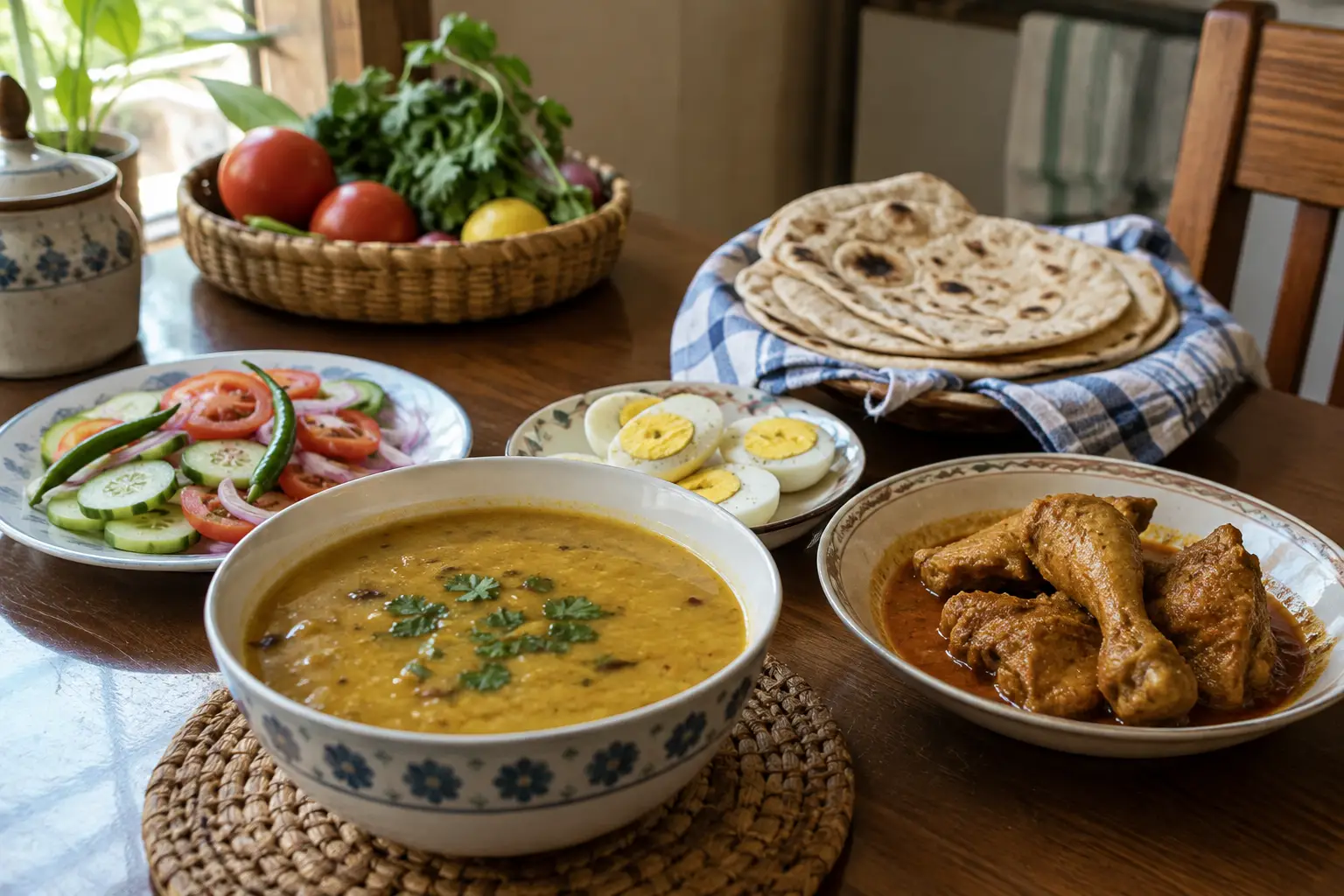
For example, a meal of 120 g cooked skinless chicken breast, one medium plain roti, and a serving of vegetables might provide roughly 400–500 calories and 40–45 g protein, depending on the roti size and cooking oil.
These are estimates, not a promise about every homemade plate. The useful habit is serving a similar amount and noticing extras such as oil, sauces, and second helpings.
A brief note such as “usual lunch portions, extra roti at dinner” is more useful than pretending the day never happened. You are looking for repeatable patterns, not building a record that looks perfect.
If your portions are consistent but hunger is making the plan difficult, read this guide to managing hunger while losing weight before making meals smaller.
Keep one training record too
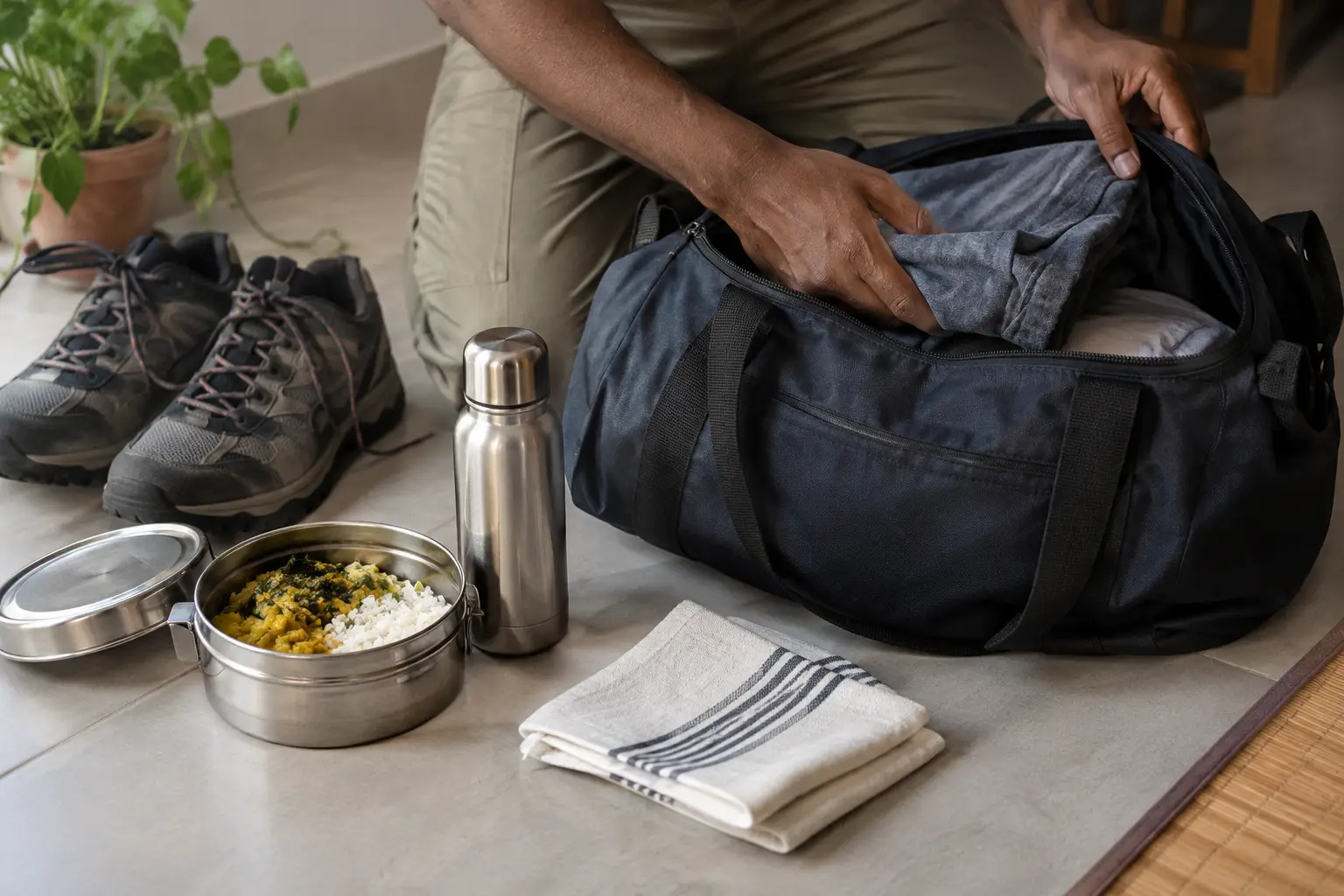
A short hotel-gym session can include:
- Goblet squat: 2 sets of 8–12 repetitions.
- Dumbbell floor press: 2 sets of 8–12 repetitions.
- One-arm dumbbell row: 2 sets of 8–12 repetitions per side.
Use controlled repetitions and finish with a couple of good repetitions still possible. Record the weights and repetitions so you can compare similar sessions.
Strength performance is not a direct fat-loss measurement, but it helps you see whether your eating and training routine remains manageable. This guide explains how to keep strength while losing weight.
Do not judge the whole plan by one tired session. Compare similar exercises over time and note obvious changes in sleep, equipment, or workload that affect the comparison.
Check 5: Make One Decision at the Weekly Review
Do not redesign your diet immediately after a weigh-in. Finish the checklist first.
Use these three possible decisions:
- Keep going: Weight is trending down, waist is gradually reducing, or several measures suggest progress while your routine feels manageable.
- Improve consistency: Your records show frequent unplanned portions or missed activity. Make the current plan easier to follow before tightening it.
- Consider one adjustment: Weight and waist have shown no clear downward trend for roughly three to four weeks despite reasonably consistent habits and comparable measurements.
For the third option, choose a small change: reduce an extra serving you eat regularly, measure cooking oil more consistently, or add a manageable walk. Avoid cutting several meals and adding daily workouts at once.
Write down the adjustment and keep the other parts of your routine reasonably steady. Changing everything together makes it harder to understand what helped and what became difficult to maintain.
If weight is stable but your waist is repeatedly getting smaller, you may not need a change yet. Keep watching the pattern rather than forcing the scale down.
If the measurements disagree for one week, check the conditions first. A different tape position or an unusually late meal is a reason to collect better comparisons, not automatically a reason to eat less.
For men working overseas, online coaching worldwide can help connect these decisions to changing shifts and limited facilities. Someone exploring personal training support in Pakistan should likewise look for regular reviews, not just a target weight.
Save This Ten-Minute Review for Next Week
Copy these five lines:
- My planned weight reading or weekly average: ___
- My waist measurement: ___
- My photo comparison, if due: ___
- Meals, walks, and workouts completed: ___
- My decision until the next review: ___
If you are not using a scale or photos, write “not using this measure” rather than treating the blank as a missed task. Your checklist should support you, not pressure you into tracking methods that make your day harder.
Then close the note. No extra weigh-in that afternoon, no punishment workout, and no skipping dinner because you dislike one number.
That is how to track weight loss without making tracking your whole day: collect comparable information, review it at a set time, and return to the actions that matter.
The aim of tracking progress without a scale obsession is a calmer decision process. You know when you will review, what information matters, and what you will do next. The rest of the week is for following your plan and living your life.
CU Fit offers a custom diet built around food you already eat, updated every 30 days, plus daily workouts that unlock as you progress. Its bad day reset gives you a way to restart after a slip. Plans start from $14.99/month worldwide or Rs 1,499 in Pakistan, with a 7-day money-back policy. You can also compare coaching prices on the Coach Usman website.
Want a plan built around your job and your food? Start with CU Fit at coachusman.fit for an affordable custom diet and workout plan. Want Coach Usman to coach you 1:1? Choose Premium coaching at coachusman.com. Premium 1:1 costs $99/month or $545 per 6 months, with the same USD price worldwide, paid by card through Stripe.
This is general fitness information, not medical advice. Please talk to a doctor before changing your diet or exercise routine, especially if you have a health condition.
FAQ
How often should I weigh myself when trying to lose weight?
Choose a schedule you can follow without stress. One weekly reading is simple; several comparable readings can provide a weekly average. If weighing increases anxiety or prompts restrictive eating, reduce the frequency or pause it and use other progress measures. Avoid adding extra weigh-ins in response to a number you dislike.
Can I track fat loss without using a scale?
Yes. Consistent waist measurements, occasional comparable photos, clothing fit, and records of your habits can help you assess progress without weighing yourself. None measures body fat precisely, so look for patterns across several weeks rather than relying on one sign.
How long should I wait before changing my weight-loss plan?
Usually, review roughly three to four weeks of comparable measurements and reasonably consistent habits before making a small adjustment. Avoid changing your plan because of one higher reading. Check measurement conditions and how consistently you followed the plan first. Check with your doctor if you have a medical condition.
Why does my weight go up even when I follow my plan?
Water retention, food still being digested, stored carbohydrate, and demanding workouts can affect scale weight. A higher reading does not automatically mean you gained body fat. Keep your planned measurement schedule and review the trend alongside your waist and habit records.
How often should I measure my waist and take progress photos?
Measure your waist once a week at the same point and under similar conditions. Take comparable front and side photos about every four weeks, unless your coaching check-in uses another schedule. Photos are optional if they make you uncomfortable or encourage repeated body checking.
What if my weight stays the same but my waist gets smaller?
A repeated reduction in waist size can suggest progress even when scale weight is stable. Check that your tape position and measuring conditions are consistent, then review several weeks together. If your routine remains manageable, you may not need to change it yet.
What does tracking progress without a scale obsession look like?
It means checking measurements on a planned schedule, reviewing them briefly, and making decisions from trends rather than emotions about one reading. You do not repeatedly weigh yourself, skip meals to compensate, or use exercise as punishment. If tracking causes persistent distress or disrupts your eating, pause the upsetting measures and seek support from a qualified healthcare professional.
Coach Usman, 12+ years of coaching experience
1:1 online coach for Pakistani men worldwide, building fat-loss plans around real jobs, shifts and desi food.
coachusman.comWant a coach who builds the plan around you?
Coach Usman builds your diet and training around your job, your schedule and the desi food you already eat.
Start with Coach UsmanComments (0)
No comments yet. Be the first.