In this article
- 6:30 AM: Your Fitness Coach Pakistan Workday Plan
- 7:00 AM: Eat Something You Can Repeat
- 7:45 AM: Leave With a Backup, Not Just Good Intentions
- 10:30 AM: Break Up the Chair Time
- 1:00 PM: Build Lunch for the Afternoon Ahead
- 4:30 PM: Check the Gap Before You Travel
- 6:30 PM: Train Where the Journey Makes It Easiest
- 8:00 PM: Eat the Family Dinner Without a Second Menu
- 10:00 PM: Make Tomorrow Easier, Then Finish
Want a plan built around your job and desi food? Try 1:1 online coaching with Coach Usman.
Your lunch container is still in the fridge when the carpool driver calls to say he is outside. You leave in a rush, spend the morning at your desk, and reach home hours later wanting whatever food is ready first.
If your search for “fitness coach pakistan” started after another week like this, you may not need a stricter diet. You need a plan that accounts for the hours between your front door and your workplace.
For Pakistani men working at home or overseas, commuting creates a particular problem: you have less control over food and less time to train. This morning-to-night routine helps you work around both.
The times are examples. Move them to fit your working hours.
6:30 AM: Your Fitness Coach Pakistan Workday Plan
Before leaving, check three things: when you can eat lunch, when you will reach home, and whether today includes training. These answers matter more than building a perfect breakfast.
Fat loss requires a calorie deficit: eating less energy than your body uses over time. But a commute-friendly plan should help you do that without leaving you desperately hungry every evening.
Choose a manageable starting structure:
- Three main meals, with a planned snack if the gap to dinner is long.
- A protein source at each main meal.
- Two or three strength sessions across the week.
- Short movement opportunities that do not delay your journey home.
You cannot choose where fat comes off first. A smaller waist comes from reducing overall body fat, not from adding stomach exercises to an already crowded morning.
Your commute belongs in your fat-loss plan, not outside it.
7:00 AM: Eat Something You Can Repeat
Breakfast does not have to be large, and eating early is not compulsory for fat loss. However, if leaving without food regularly leads to several pastries at work, prepare a more useful option.
Try plain high-protein yoghurt, oats and a banana. For example:
- 200 g plain low-fat Greek yoghurt: roughly 120–160 calories and 18–22 g protein.
- 40 g dry oats: roughly 150 calories and 5 g protein.
- One medium banana: roughly 100–110 calories.
Together, that is around 370–420 calories and 24–28 g protein. Check the yoghurt label because ordinary yoghurt can contain considerably less protein.
Prefer a savoury breakfast? Have eggs with a small roti and cucumber. Two large eggs provide roughly 140–160 calories and 12–14 g protein before cooking oil. A small roti made with about 30 g flour adds around 100–110 calories without added fat.
These are examples, not a calorie prescription. Your portions should suit your size, activity and progress.
7:45 AM: Leave With a Backup, Not Just Good Intentions
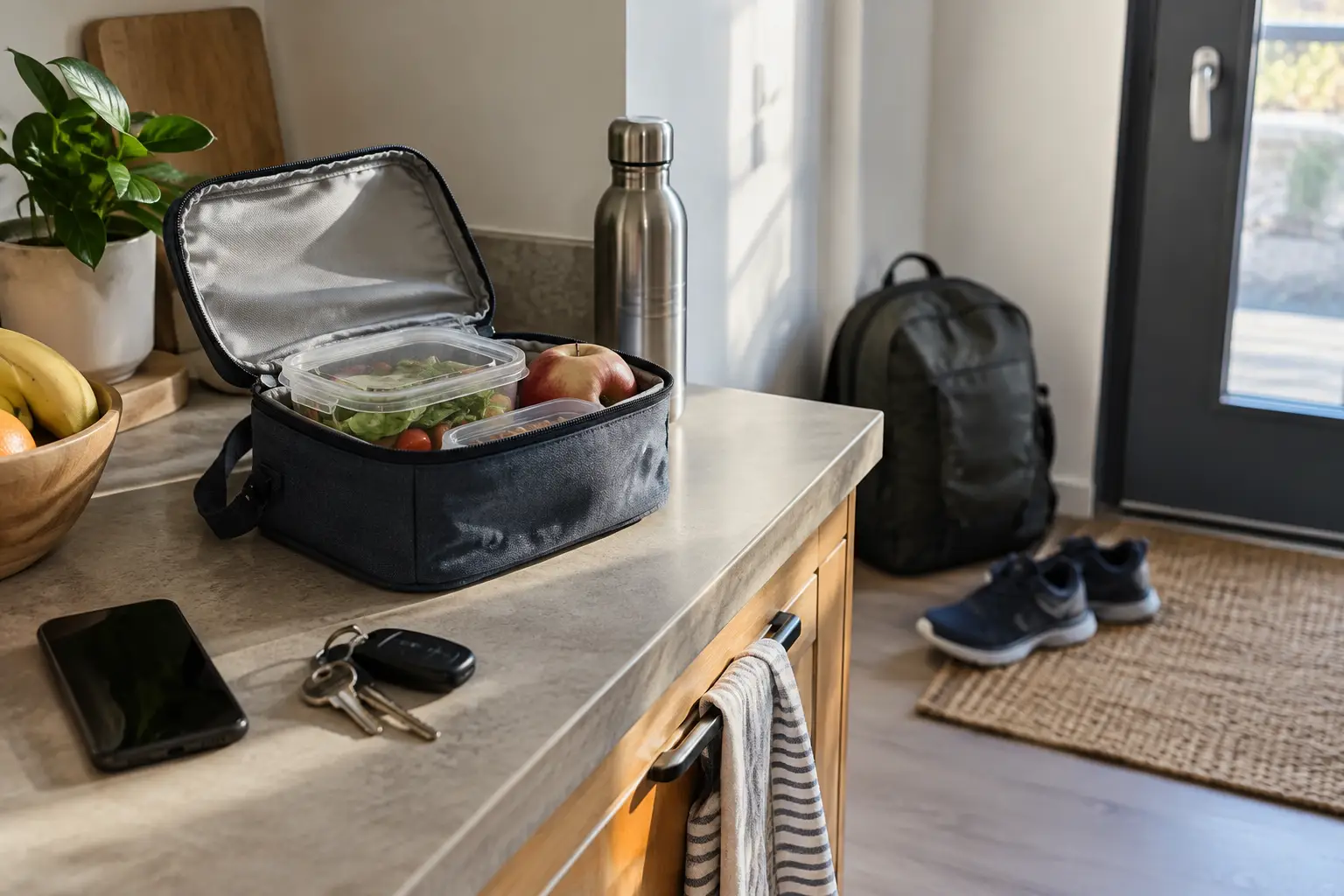
A packed lunch only helps if it leaves the house with you. Put a reminder beside your keys, or set a phone alert for your departure time.
For a long commute, separate your food into two jobs:
- Lunch: the main meal you expect to eat at work.
- Backup: something for a delayed lunch or unexpectedly late journey home.
Useful backups include a piece of fruit, a measured portion of roasted chana, or an unopened shelf-stable milk carton. About 30 g roasted chana provides roughly 110–120 calories and 5–6 g protein. It is handy, but it is not a full lunch.
Carry chilled foods in an insulated bag with ice packs and refrigerate them when you arrive. Do not leave yoghurt, eggs or cooked meat in a hot car, especially during a Gulf summer.
10:30 AM: Break Up the Chair Time
After the drive or train ride, it is easy to stay seated until lunch. Use a natural break to stand up and move for a few minutes.
Walk to refill your water, take a short corridor loop, or use the stairs if they are comfortable for you. You do not need to turn your office into a workout space.
If you drive for work, move only when safely parked and taking an appropriate break. Do not add walking targets that compete with safe driving or required rest.
In hot weather, use indoor routes rather than forcing an outdoor walk at midday. In a Canadian winter, a few indoor laps are more practical than another trip through snow.
These minutes contribute to daily activity. They are not a way to cancel out food. If you are deciding where to put limited exercise time, read how to balance steps and gym sessions.
1:00 PM: Build Lunch for the Afternoon Ahead
Lunch needs to carry you through work, not simply look small enough to count as dieting.
A practical packed meal could include:
- 120–150 g cooked chicken, with visible bones excluded from the portion.
- One cup cooked rice.
- A generous serving of vegetables or salad.
- A measured amount of sauce or cooking oil.
A cup of plain cooked rice provides roughly 200–210 calories and 4 g protein. Cooked skinless chicken breast provides about 35–45 g protein in the portion above. The final meal calories depend heavily on the cut, cooking method and added oil.
For a meat-free option, combine daal, plain yoghurt, vegetables and a roti. One cup of cooked daal may provide around 180–300 calories and 10–18 g protein, depending on its thickness and recipe; a generous oily tempering can increase that total.
Buying lunch? Look for a recognisable protein serving, a rice or bread portion you can judge, and vegetables. You do not need an exact calorie count to make a repeatable choice.
4:30 PM: Check the Gap Before You Travel
Ask one question: How long until I realistically eat dinner?
If dinner is close and you are comfortable, you may not need a snack. If you still have work to finish followed by a 90-minute commute, eating something now can make the evening easier.
Options include:
- Plain high-protein yoghurt and fruit, kept chilled.
- A small egg sandwich, stored safely.
- Milk and a measured portion of roasted chana.
Plan the snack as part of your day, rather than adding it automatically on top of everything else.
Keep eating separate from driving. Have your food before departure or during a safe stop. Arriving home slightly later is better than trying to unwrap a sandwich in traffic.
6:30 PM: Train Where the Journey Makes It Easiest
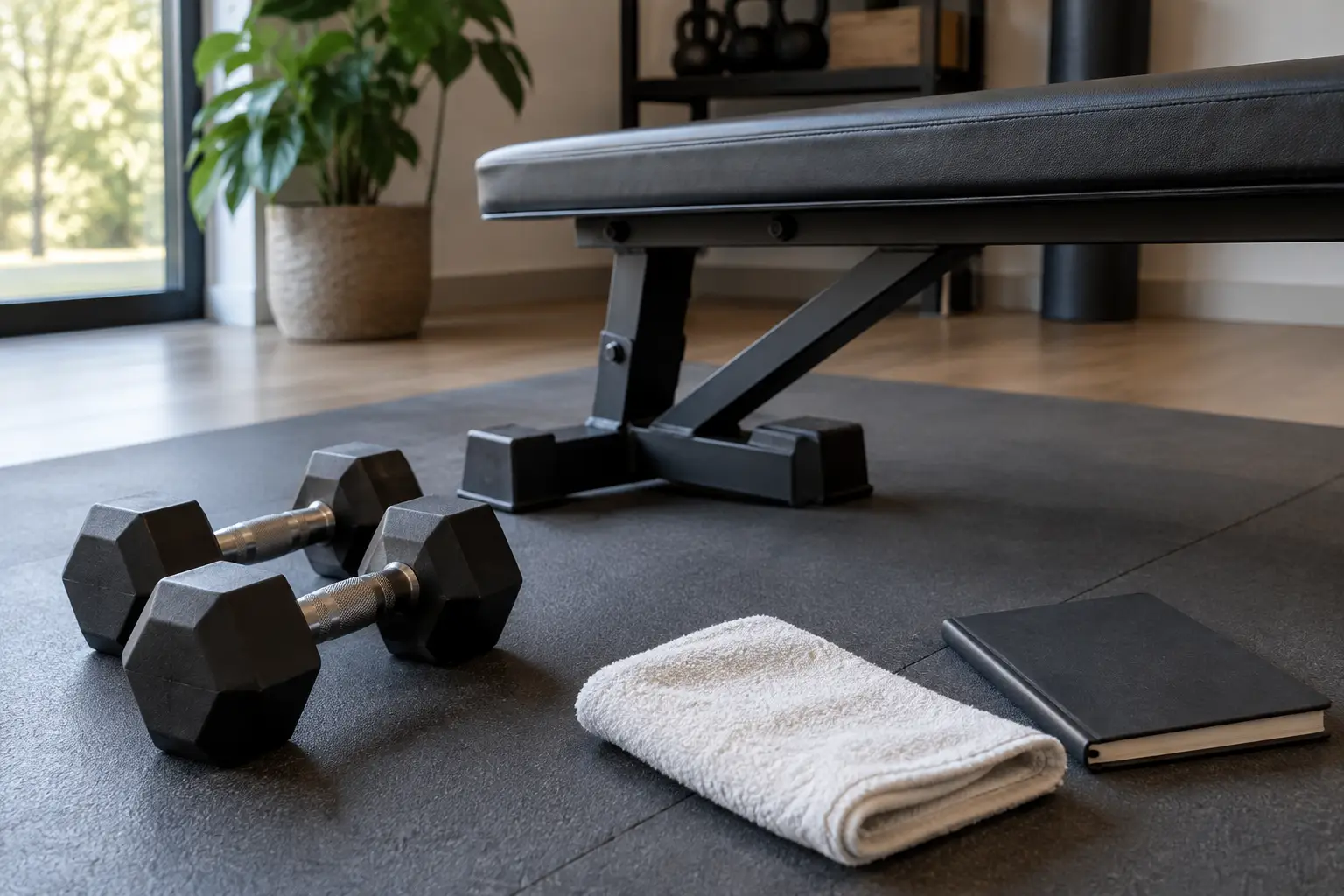
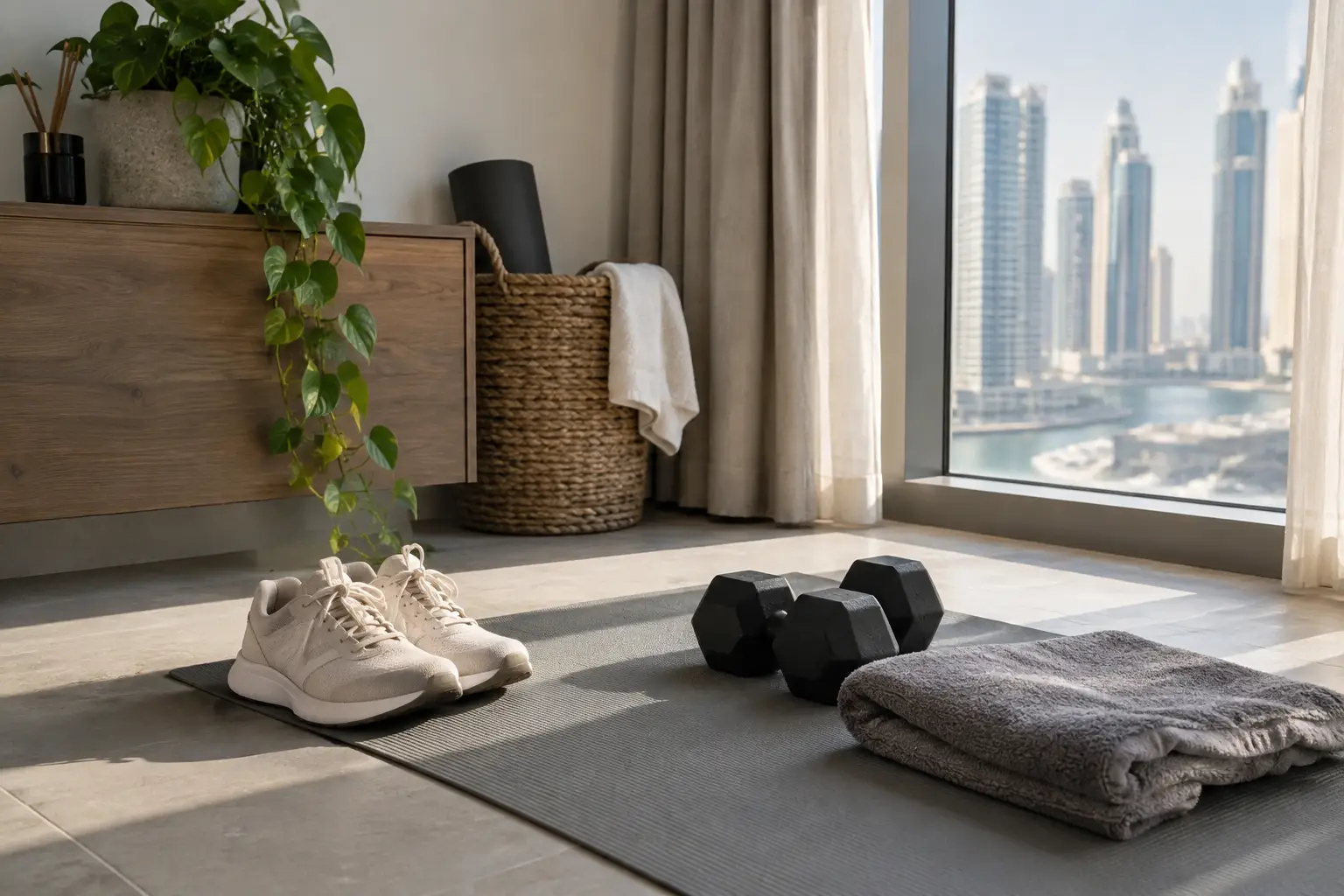
On two or three days each week, place strength training where it creates the least extra travel. That might mean a workplace gym before leaving, a hotel gym during business travel, or equipment at home.
Here is a simple dumbbell session:
- Warm up with easy movement and light practice sets for five minutes.
- Goblet squat: two sets of 8–12 repetitions.
- Dumbbell floor press: two sets of 8–12 repetitions.
- Supported one-arm row: two sets of 8–12 repetitions per side.
- Dumbbell Romanian deadlift: two sets of 8–12 repetitions.
Rest around 60–120 seconds between sets. Choose weights that leave roughly two comfortable repetitions available with controlled technique. Stop if an exercise causes pain.
When the upper end of the range feels controlled across both sets, consider a small weight increase. If these movements are unfamiliar, start with strength-training basics.
Allow around 30 minutes rather than racing through the session. On non-training days, go home without inventing a punishment workout for sitting at work.
8:00 PM: Eat the Family Dinner Without a Second Menu
You can eat the same dinner as your household. The useful adjustment is usually the balance and amount on your plate, not asking someone to cook special diet food.
If dinner is chicken karahi, roti and vegetables, take a clear serving of chicken, a manageable roti portion, and vegetables. Oil and gravy still count, so avoid assuming that every chicken dish has the same calories as plain grilled chicken.
Eat seated, then check your hunger before taking more. If you remain hungry regularly, review whether lunch and the afternoon snack are substantial enough rather than simply demanding more evening willpower.
A ten-minute family walk afterwards can add movement and time together. It is optional, not repayment for dinner.
10:00 PM: Make Tomorrow Easier, Then Finish
Spend five minutes checking tomorrow's food, departure time and training slot. Then stop planning. Most adults should aim for seven to nine hours of sleep, so avoid making preparation another reason to stay up late.
Review progress across several weeks using weight trends, waist measurements and how consistently the routine fits your life. A single heavier morning is not a reason to skip meals.
If you want support, Coach Usman is a Level 3 Personal Trainer, weight loss coach. Explore the personal trainer Pakistan service, or see how an online fitness coach pakistan can help organise your meals and training through the My Coach app.
Want a plan built around your job and your food? Start online coaching with Coach Usman at coachusman.com. View the coaching options and pricing when you are ready.
This is general fitness information, not medical advice. Please talk to a doctor before changing your diet or exercise routine, especially if you have a health condition.
FAQ
Can I lose weight if I spend two hours commuting?
Yes. A long commute reduces available time, but fat loss still depends on your overall calorie balance. Plan food for the journey, use short movement breaks and place strength sessions where they require the least extra travel.
Do I need to eat at these exact times?
No. Move the timeline to fit your schedule. The aim is to avoid unplanned long food gaps and make room for training and sleep, not to follow special fat-loss eating hours.
Should I skip dinner when I miss a workout?
No. Missing one session does not mean you need to remove a meal. Eat your planned dinner and return to your normal training schedule.
What if I have a medical condition?
Check with your doctor if you have a medical condition. Ask whether changes to food intake or exercise need any individual adjustments before starting.
Coach Usman, 12+ years of coaching experience
1:1 online coach for Pakistani men worldwide, building fat-loss plans around real jobs, shifts and desi food.
coachusman.comWant a coach who builds the plan around you?
Coach Usman builds your diet and training around your job, your schedule and the desi food you already eat.
Start with Coach UsmanComments (0)
No comments yet. Be the first.