In this article
- Your Ramadan Fat Loss Checklist
- 1. Decide What Iftar Is Before You Sit Down
- 2. Choose the Extras Instead of Collecting Them
- 3. Make Dinner and Sehri Substantial Enough
- 4. Give Water Several Opportunities
- 5. Use Two Short Strength Sessions
- 6. Protect Sleep Before Adding More Activity
- 7. Review the Week, Not Your Driest Weigh-In
- Keep the Checklist Useful, Not Perfect
Want a plan built around your job and desi food? Try 1:1 online coaching with Coach Usman.
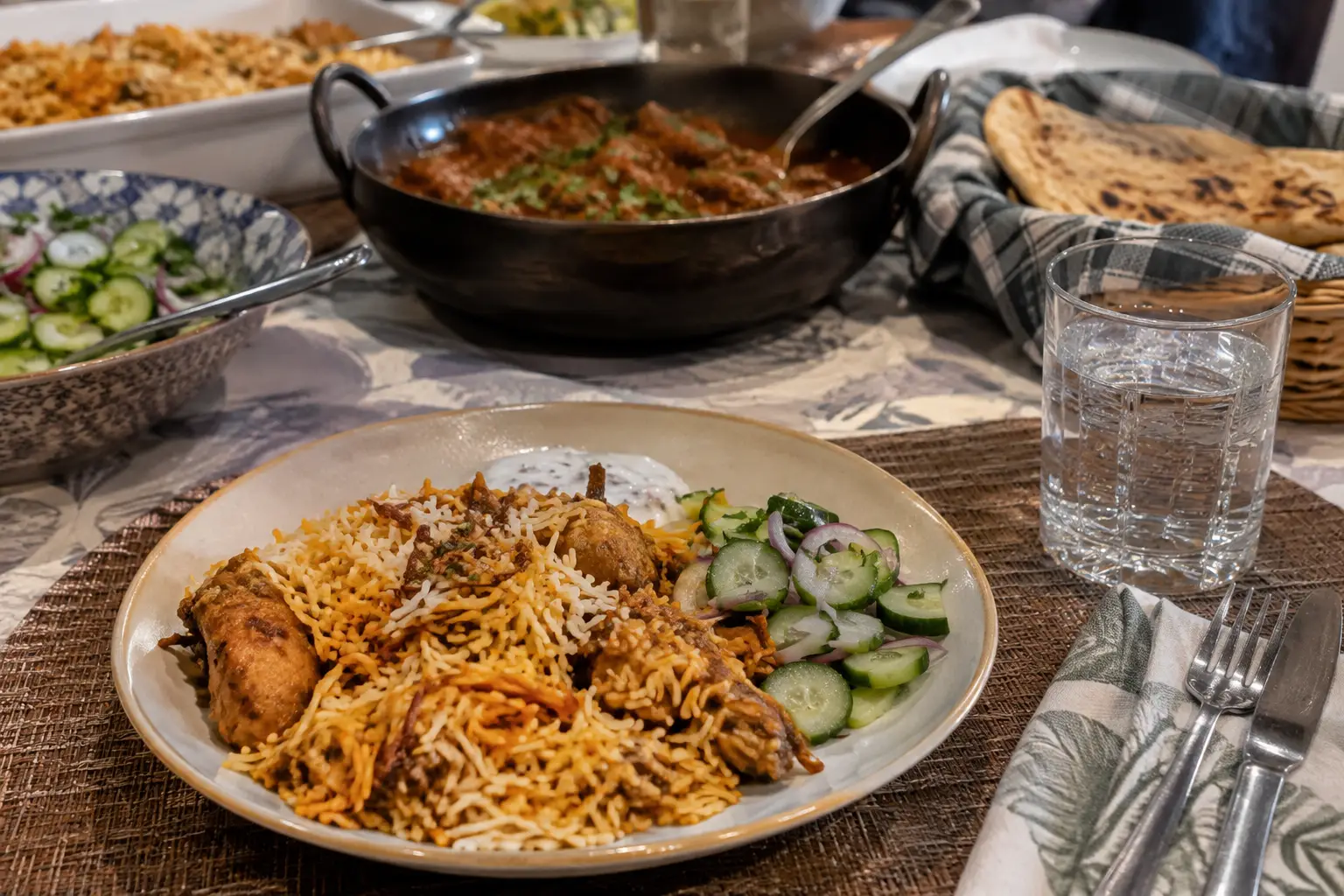
The pakoras are still on the table when someone asks what you want for dinner.
You have broken your fast, but the evening’s eating has barely started. There is dinner after prayers, something sweet later, and sehri before another working day.
For Pakistani men balancing work, family and worship, Ramadan fat loss works better when you organise the hours between iftar and sehri, rather than simply trying to eat less at every opportunity.
Fasting does not automatically create a calorie deficit. You can still eat more energy than you use during the shorter eating window. Equally, you do not need to remove roti, avoid family meals or train hard while thirsty.
Use this checklist to give your Ramadan routine some structure. It is a planning tool, not another obligation during an already busy month.
Your Ramadan Fat Loss Checklist
- Decide whether iftar is your main meal or a small starter.
- Choose fried food, sweet drinks and dessert deliberately.
- Include a clear protein source at dinner and sehri.
- Spread water through the non-fasting hours.
- Place two short strength sessions where you can recover.
- Protect sleep before adding extra exercise.
- Compare progress under similar conditions.
A shorter eating window still needs a plan.
1. Decide What Iftar Is Before You Sit Down
The first useful decision is simple: will iftar be dinner, or will dinner come later?
Both can work. The problem is having a full meal at iftar while treating it as a starter, then eating another full dinner because that is the household routine.
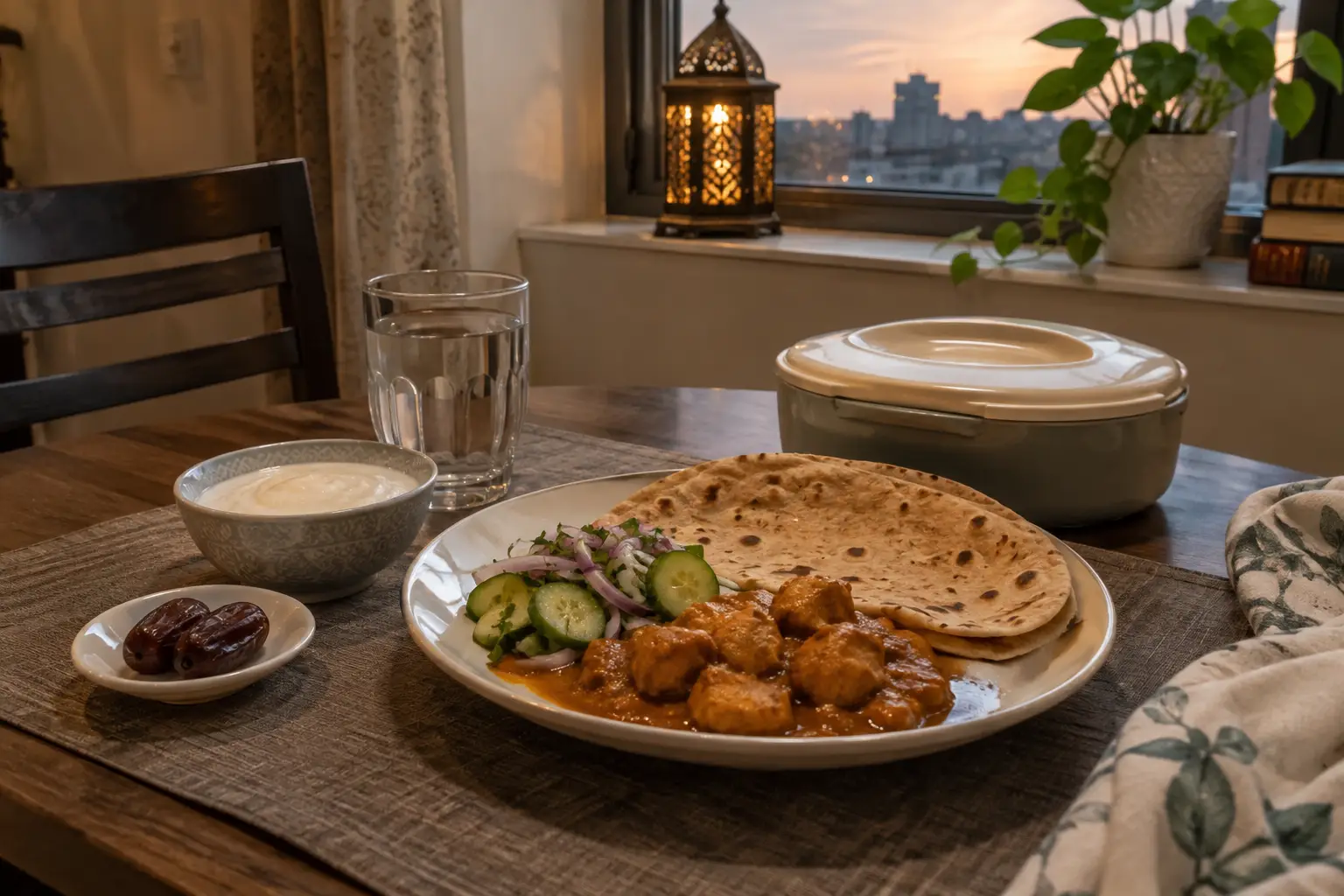
If you eat your main meal soon after breaking the fast, start with water and dates if you enjoy them, then move to a balanced dinner. You do not need a separate large spread first.
If dinner is later, keep the opening meal smaller. For example:
- Water and one or two small dates.
- Plain yogurt with a little fruit.
- One favourite savoury item, if you want it.
That is an example, not a rule about which foods belong at iftar. Adjust it to your hunger and how long you will wait for dinner.
In shared accommodation in the UAE, you may have little control over when food arrives. You can still decide which sitting is your main meal. Ask what is coming before you start, rather than discovering dinner after you have already eaten a dinner-sized iftar.
Tick this off when: you know whether another substantial meal is coming later.
2. Choose the Extras Instead of Collecting Them
Dates, pakoras, fruit chaat, a sweet drink and dessert can each fit into your month. But having all of them every evening can make a calorie deficit difficult.
You do not have to label traditional foods as bad. Look at the combination and portion instead.
These rough estimates show why the details matter:
| Food or drink | Approximate calories | Approximate protein |
|---|---|---|
| Two small dates | 40–50 | Less than 1 g |
| One medium vegetable samosa | 150–250 | 3–5 g |
| Three small pakoras | 120–240 | 3–6 g |
| 250 ml sweetened rose drink made with water | 80–150 | About 0 g |
| 200 g plain low-fat yogurt | 110–150 | 8–12 g |
Recipes, size and frying oil change these numbers. Large Medjool dates also contain considerably more calories than small dates. Use packaging or a consistent recipe when you need a closer estimate.
A practical starting point is to choose the extra you most want. Perhaps that means two pakoras with water rather than pakoras, a samosa and a sweet drink automatically.
You can have dessert another evening, or include a small serving in place of another extra. This is about making room, not earning food.
Tick this off when: your extras are a choice, not simply everything within reach.
3. Make Dinner and Sehri Substantial Enough
Eating very little at dinner can leave you searching the kitchen later. Skipping a useful sehri to save calories can also make an already demanding workday harder.
Build both meals around a clear protein source, then add carbohydrates, fruit or vegetables, and an appropriate amount of fat.
A simple dinner could be:
- About 150 g cooked skinless chicken.
- One or two medium rotis, depending on your needs.
- Cucumber and tomato salad.
- A portion of cooked vegetables.
For reference, 150 g cooked chicken breast provides roughly 240–260 calories and 45–47 g protein before added oil or sauce. A medium roti made with around 30 g flour provides roughly 100–120 calories and 3–4 g protein before ghee.
You do not need plain chicken every night. Chicken salan, fish or lean keema can work; cooking oil and serving size affect the total.
For sehri, try two eggs, 200 g plain strained yogurt, one roti and fruit. Depending on the yogurt and cooking method, this can provide around 30–40 g protein. Check the label because ordinary and strained yogurts differ.
A meat-free option is daal with yogurt and roti. One cup of cooked daal may provide roughly 14–18 g protein, with calories varying considerably according to thickness and tarka.
These are building blocks, not a fixed daily calorie prescription. Your size, activity and current intake matter. For more help assembling meals, use this guide to nutrition basics for everyday food choices.
Tick this off when: both main meals contain more than bread, rice or snack foods alone.
4. Give Water Several Opportunities
Do not leave all your drinking until the final minutes of sehri.
Keep water available across the non-fasting hours: at iftar, through the evening, around training and with sehri. Drink gradually rather than forcing a large amount at once.
A simple setup is to keep a refillable bottle where you spend the evening. If you attend prayers or travel between work and home, take it with you for use after the fast ends.
There is no single water target that suits every man. Your body size, weather, sweating and work conditions change your needs.
If you work outdoors in Gulf heat, avoid adding a sweaty pre-iftar workout just to burn more calories. Choose a cooler time after breaking your fast, when you can drink. Stop exercising if you feel dizzy or unwell.
Tick this off when: drinking is spread across your available hours rather than rushed at the end.
5. Use Two Short Strength Sessions
Ramadan does not require a new high-intensity fitness challenge. Strength training can help you maintain muscle while losing fat, but the sessions need to fit your food, fluid and sleep schedule.
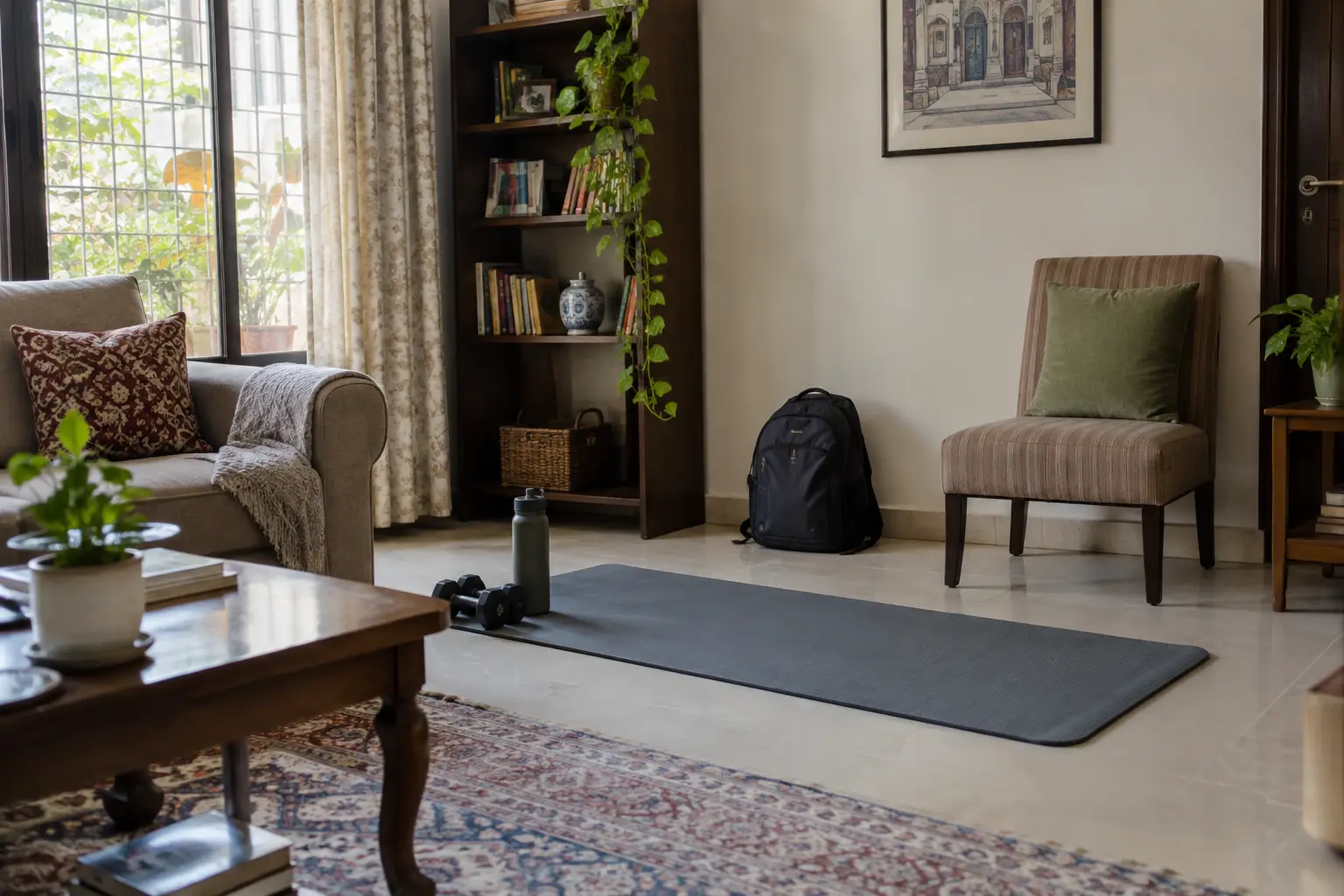
Start with two sessions on non-consecutive days. Choose a time after iftar when you have had some water and your meal feels comfortably settled.
Here is a simple hotel-gym session:
- Leg press: 2 sets of 8–12 repetitions.
- Dumbbell bench press: 2 sets of 8–12.
- Seated cable row: 2 sets of 8–12.
- Dumbbell Romanian deadlift: 2 sets of 8–10, if you know the movement.
Warm up first. Rest around 60–120 seconds between sets, or longer when needed. Finish each set feeling you could complete another two or three controlled repetitions.
Use familiar exercises rather than spending this month testing maximum weights. If time or energy is limited, shorten the session instead of rushing it.
Easy walking after iftar is another option when it fits. It does not need to become a daily step competition.
Tick this off when: you have two realistic training slots, not seven hopeful ones.
6. Protect Sleep Before Adding More Activity
A late workout, a long social evening and an early sehri can squeeze sleep from both ends.
Before adding exercise, write down when you can actually sleep. Aim for roughly seven to nine hours across the day where possible. Some men will need a main sleep period plus a planned nap during Ramadan.
Prepare sehri ingredients earlier so that cooking does not take up more of the night. If late training repeatedly delays bedtime, move it earlier or reduce its length.
For shift workers, your days may not look identical. These ideas for planning fat loss around a long-shift roster can help you work with changing hours.
Tick this off when: exercise is not routinely taking time away from already short sleep.
7. Review the Week, Not Your Driest Weigh-In
A lower weight just before iftar does not necessarily mean you have lost that amount of fat. Fluid levels, food in your digestive system and meal timing can all move the scale.
If you weigh yourself, choose a repeatable point in your routine, such as after your main sleep and using the toilet. Keep its timing relative to sehri as similar as possible.
Compare several readings across weeks rather than a pre-iftar reading with a post-dinner reading. You can also measure your waist weekly under similar conditions.
If progress is not moving after a couple of consistent weeks, review one detail: fried-food portions, sweet drinks, cooking oil or unplanned late-night eating. Make a small adjustment rather than cutting every meal.
Tick this off when: you are comparing similar conditions and changing only what needs changing.
Keep the Checklist Useful, Not Perfect
You do not need seven ticks every evening. Start with the two points that would remove the most confusion from your routine.
Coach Usman is a Certified Weight Loss Coach by NSFT and offers 1-on-1 online coaching through the My Coach app. If you are balancing Ramadan with Gulf working hours, explore online fitness coaching in the UAE, or view coaching options and pricing.
Want a plan built around your job and your food? Start online coaching with Coach Usman at coachusman.com.
This is general fitness information, not medical advice. Please talk to a doctor before changing your diet or exercise routine, especially if you have a health condition.
FAQ
Can I lose belly fat during Ramadan?
You can lose overall body fat if your average intake creates a calorie deficit. You cannot choose where fat comes off first. Ramadan fasting alone does not guarantee weight loss.
Do I need to stop eating dates and pakoras?
No. Keep portions deliberate and consider the whole evening’s intake. Date size and the amount of oil in fried foods can make a substantial difference to calories.
Is it better to train before or after iftar?
For many busy men, training after iftar is more practical because they can drink and have eaten. Allow your meal to settle, use a manageable workload and avoid sacrificing sleep for late sessions.
Should I follow this checklist if I have a health condition?
Check with your doctor if you have a medical condition. Ask whether fasting, changes to meal timing and exercise are appropriate for you before following a Ramadan fat-loss plan.
Coach Usman, 12+ years of coaching experience
1:1 online coach for Pakistani men worldwide, building fat-loss plans around real jobs, shifts and desi food.
coachusman.comWant a coach who builds the plan around you?
Coach Usman builds your diet and training around your job, your schedule and the desi food you already eat.
Start with Coach UsmanComments (0)
No comments yet. Be the first.