
In this article
- How to keep strength while losing weight for men: six checks
- 1. Keep the deficit small enough to train well
- Your check
- 2. Give protein a regular place on your plate
- Familiar foods you can build around
- 3. Keep lifting—not just sweating
- A compact home or hotel-gym session
- 4. Stop treating carbohydrates as the enemy
- A simple training-day arrangement
- 5. Keep cardio and recovery within your budget
- Your recovery check
- 6. Compare like with like before changing the plan
- Take the checklist into your next week
Want a plan built around your job and desi food? Try 1:1 online coaching with Coach Usman.
You tighten your belt another notch, then struggle with a weight you lifted comfortably before you started dieting.
Lunch was just cucumber and a small portion of leftover salan because you wanted the scale to move faster. Now you are wondering whether losing your belly means losing your strength too.
If you are searching for how to keep strength while losing weight for men, start by checking what your diet has removed—not just what your workout needs added.
You cannot promise that every lift will stay unchanged. But a sensible calorie deficit, enough protein and repeatable training give you a better chance of keeping useful strength as your waist comes down.
How to keep strength while losing weight for men: six checks
Use this checklist before making your fat-loss plan harder:
- My weight is dropping gradually, not as quickly as possible.
- I have protein in three or four meals.
- I still practise my main lifts with meaningful resistance.
- I have enough food around training to perform reasonably well.
- My walking, cardio and sleep fit my working week.
- I judge strength from several comparable sessions.
The aim is not to collect six perfect ticks every day. It is to spot the weak point before you respond by eating less and exercising more.
A smaller waist does not require a weaker training plan.
1. Keep the deficit small enough to train well
Fat loss requires eating fewer calories than you use over time. That does not mean choosing the lowest intake you can tolerate.
A starting deficit of roughly 300–500 calories a day works for many men, although your needs depend on your size, activity and current intake.
For strength retention, a useful starting pace is around 0.25–0.75% of body weight per week, favouring the slower end if you are already fairly lean or an experienced lifter.
For a 90 kg man, that is approximately 0.2–0.7 kg weekly. Treat this as a guide, not a weekly demand. Early changes can include water weight.
Your check
Compare weekly weight averages over two or three weeks. Also look at hunger, sleep and training performance.
If weight is dropping quickly and several lifts are slipping, consider adding a little food rather than another workout. An extra 150–200 calories may be enough for an initial adjustment.
At home, create the deficit by measuring cooking oil or reducing an oversized rice serving—not by deleting the chicken, eggs or other protein from your meal.
Make one adjustment at a time. If you change your food, cardio and training programme together, it becomes harder to see which change helped. Keep a short record and give the adjustment time to show up in your weekly trends.
2. Give protein a regular place on your plate
Resistance training tells your body that muscle is still needed. Protein supplies the building material to support it.
For many healthy adults who lift while losing fat, around 1.6–2.2 grams of protein per kilogram of body weight daily is a useful range. At 80 kg, that means roughly 130–175 grams.
If you carry a lot of excess weight, using current body weight can produce an unnecessarily high target. A coach or registered dietitian can help set a more practical amount.
You do not need special products. Use food you can buy and prepare consistently.
Familiar foods you can build around
These are approximate values; recipes, brands and portions vary:
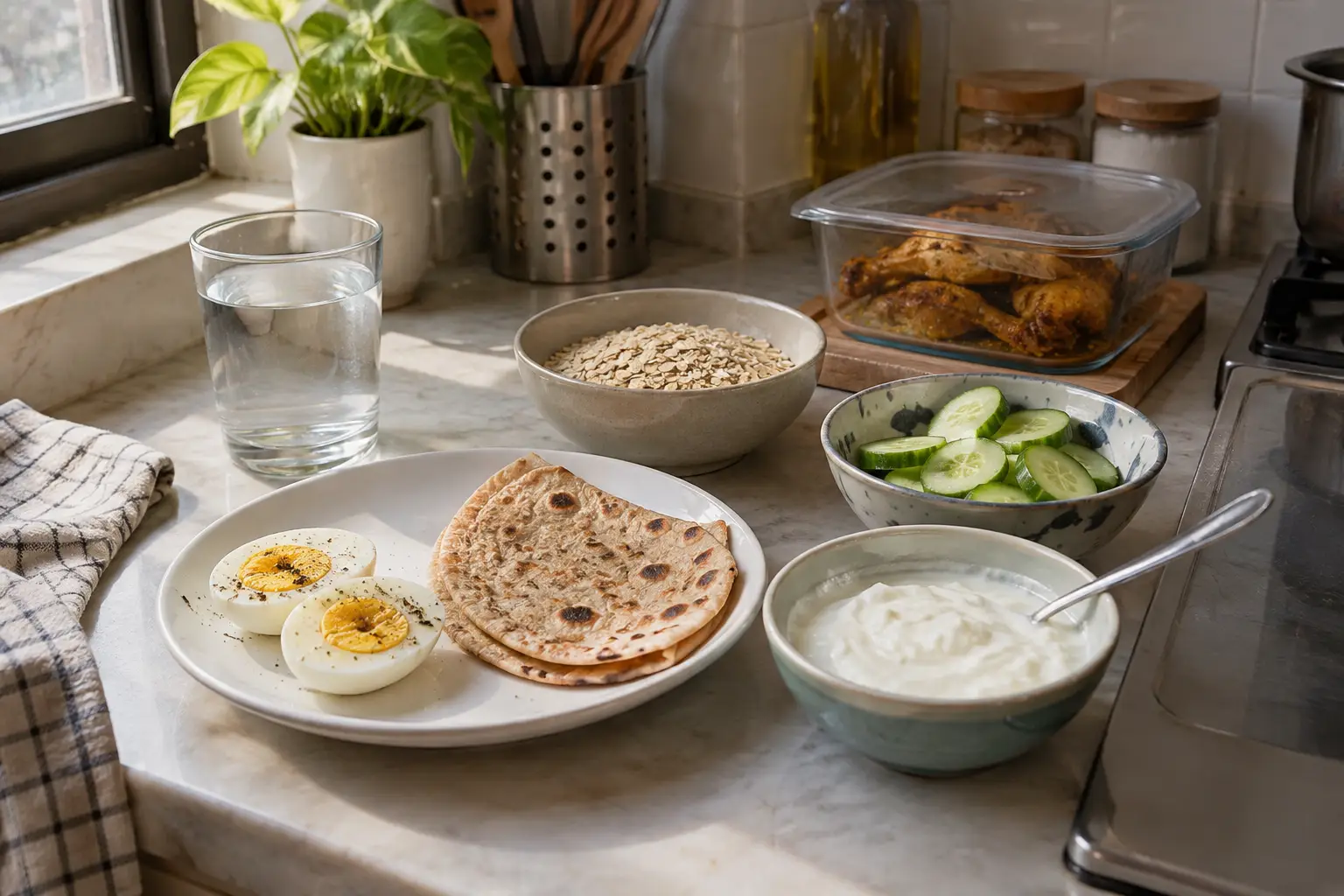
- Two large eggs: about 140–160 calories and 12–14 g protein, before cooking fat.
- 150 g cooked skinless chicken breast: about 240–260 calories and 45–47 g protein, before sauce or oil.
- 200 g plain strained yoghurt: often 120–200 calories and 16–22 g protein; check the label.
- One cup cooked lentils: about 230 calories and 18 g protein, before added oil.
- One medium roti made with 35 g atta: about 120 calories and 4 g protein, without added fat.
Make breakfast eggs with yoghurt, lunch chicken salan with roti, and dinner lentils with fish or another protein source. Keep vegetables alongside them.
You can keep Pakistani meals. The useful change is making the protein portion deliberate instead of hoping the gravy contains enough meat.
Check the whole day rather than assuming one protein-rich dinner covers everything. Two eggs are a useful start, but they do not provide the same amount of protein as a substantial chicken portion. Use portions and food labels to check whether your usual meals add up to your target.
3. Keep lifting—not just sweating
When dieting, some men replace their normal weights with very light circuits because they want every session to burn more calories.
That changes the job of the workout. To retain strength, keep practising the movements you want to stay strong at.
Choose weights that make the final repetitions challenging while allowing controlled technique. Most working sets can finish with roughly one to three good repetitions left, rather than requiring an all-out effort every time.
If that is hard to judge, read this guide to choosing how close to failure to train.
A compact home or hotel-gym session
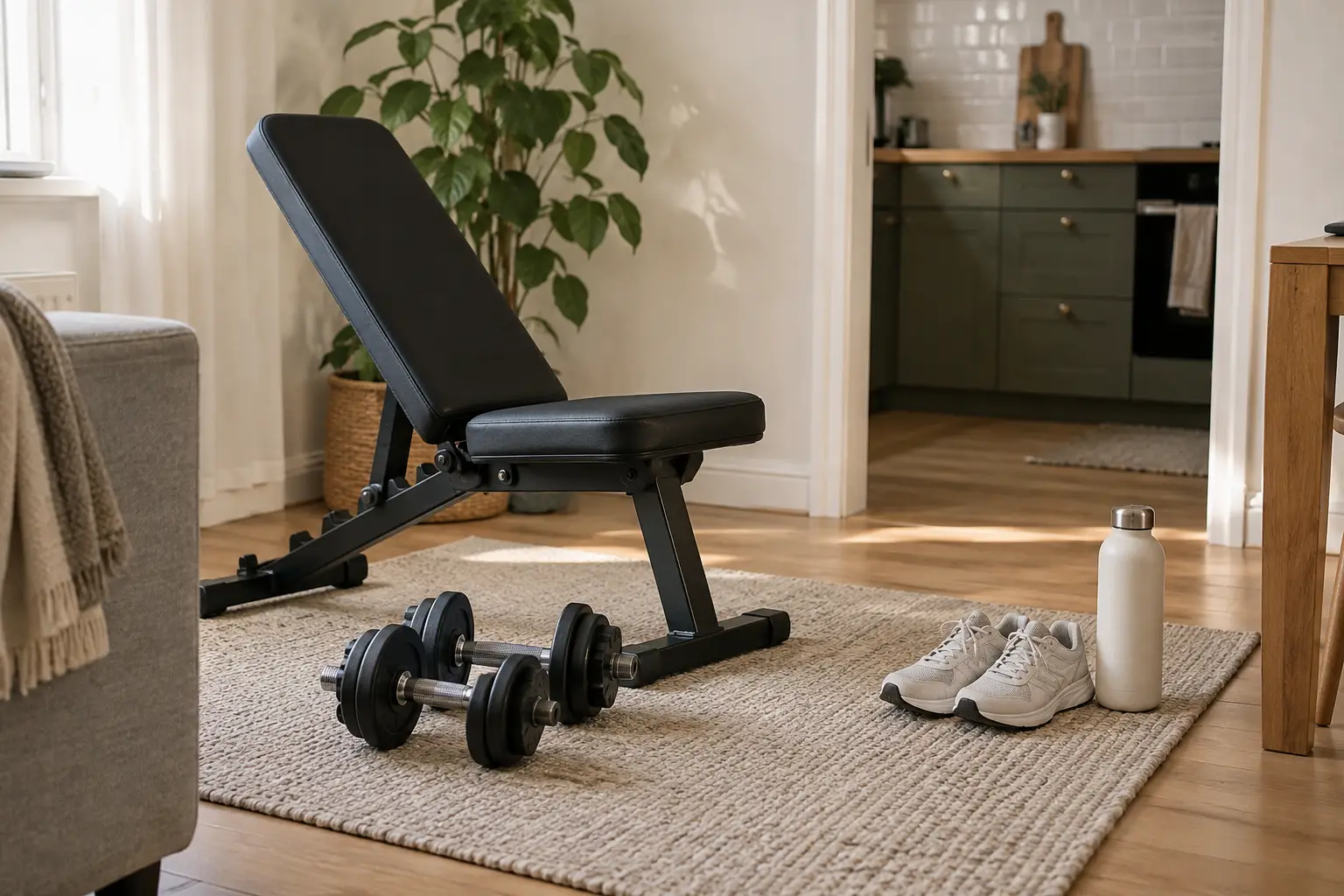
Try two or three sessions per week, with a recovery day between them where possible:
- Goblet squat: 2–3 sets of 6–10 repetitions.
- Dumbbell floor press: 2–3 sets of 6–10 repetitions.
- One-arm dumbbell row: 2–3 sets of 8–12 repetitions per side.
- Dumbbell Romanian deadlift: 2 sets of 8–10 repetitions.
Warm up first and rest about two minutes between demanding sets. Use exercises you can perform comfortably and safely.
If you already follow a productive programme, keep it rather than switching to this example automatically. When recovery gets tight, removing a few accessory sets may be better than making every exercise lighter.
Keeping strength does not mean forcing the same weight on every day. If your technique starts breaking down, reduce the load enough to complete controlled repetitions. That is a sensible session adjustment, not a reason to abandon your programme.
4. Stop treating carbohydrates as the enemy
Protein matters, but it cannot do every job. Carbohydrates help fuel demanding training, and cutting them sharply can make sessions feel harder.
You do not have to remove roti, chawal, potatoes or fruit to lose fat. Their portions need to fit your overall intake.
If you train after work, check the gap since your last proper meal. Going from a small breakfast to an evening workout with almost no food is not a strong setup.
A simple training-day arrangement
One to three hours before training, try:
- One medium roti with a modest portion of chicken salan.
- Plain yoghurt with a banana if you need something easier.
- A measured rice portion with fish if you are eating a full meal.
Afterwards, eat your normal planned dinner with protein and carbohydrate. You do not need an urgent extra meal if dinner is already coming soon.
Use these as meal options, not extra food to add automatically. Moving part of your usual daily intake closer to training can be more useful than adding calories without checking the total. Choose a portion that feels comfortable in your stomach during exercise.
If food tracking helps, be consistent about how you record portions. This guide explains whether to weigh food raw or cooked.
5. Keep cardio and recovery within your budget
Walking supports fat loss without requiring another demanding gym session. But stacking hard cardio onto heavy lifting and long shifts can leave little room to recover.
Start with your normal activity level. Add manageable walks rather than chasing a huge step target immediately.
For a desk worker, two ten-minute walks may fit better than an hour of evening cardio. For someone doing physical work in Saudi Arabia or the UAE, extra exercise needs to account for the workload already happening on shift.
Avoid making outdoor walks a test of toughness in Gulf heat. Choose cooler hours or an indoor option, drink regularly and follow workplace heat-safety guidance.
Your recovery check
- Can you usually allow seven to nine hours for sleep?
- Are demanding workouts separated where possible?
- Do your legs recover before the next lower-body session?
- Has extra cardio made your lifting noticeably worse?
A disrupted week may call for less training volume. A deload week—a planned, temporary reduction in training demands—can be useful when fatigue is building. It does not need to mean stopping all movement.
If you work changing shifts, put your hardest sessions after your better sleep opportunities where possible. A shorter workout you can recover from is often a better choice than squeezing a long session into an already exhausting day.
6. Compare like with like before changing the plan
One weak workout does not prove you have lost muscle. Poor sleep, shorter rest periods, different equipment and less food beforehand can all affect performance.
Record three things for your main exercises:
- Weight used.
- Repetitions completed.
- Roughly how many good repetitions remained.
Suppose you normally press two 20 kg dumbbells for eight controlled repetitions. During fat loss, you still manage eight with similar effort. That is useful evidence of retained performance—even without a new personal best.
If several lifts decline across two or three comparable sessions, review the checklist in order: weight-loss speed, protein, food around training, extra exercise and sleep.
Also remember that strength and muscle size are related, but they are not identical. A lighter body can make pull-ups easier while some other lifts become more challenging. Use waist measurements, weight trends and your training log together.
Keep your technique comparable too. A deeper squat, slower repetition or stricter row may produce fewer repetitions without meaning you have become weaker. Note meaningful changes in your log so you are not comparing two different versions of an exercise.
Take the checklist into your next week
The practical answer to how to keep strength while losing weight for men is to protect the basics before pushing the deficit harder.
Choose your training days, plan protein at meals and keep enough carbohydrate to support your sessions. Review trends weekly rather than reacting to every difficult set.
Before your next workout, write down one thing you will protect this week: a proper lunch, your regular lifting sessions or an earlier bedtime. Fixing the weakest part of the plan is more useful than making every part stricter.
Coach Usman is a Level 3 Personal Trainer, weight loss coach, based in Gujranwala, Pakistan. For structured support, explore premium coaching for Pakistani men in Pakistan and overseas, with a plan built around your job, food and training setup.
Want a plan built around your job and your food? Start 1:1 online coaching with Coach Usman at coachusman.com, with support through the My Coach app. Coaching costs Rs 25,000/month or Rs 125,000 for 6 months, paid by card through Stripe. For questions, email support@coachusman.com.
This is general fitness information, not medical advice. Please talk to a doctor before changing your diet or exercise routine, especially if you have a health condition.
FAQ
Can I keep all my strength while losing weight?
Some men maintain most of their strength, and beginners may improve while losing fat. Not every lift will stay unchanged. Your training experience, deficit size, recovery and the exercise itself affect performance. Judge several comparable sessions rather than one difficult workout.
Should I lift lighter weights during fat loss?
Not automatically. Keep challenging, controlled resistance training in your plan. If recovery suffers, reducing a few sets may help more than making everything lighter. Adjust the weight when needed to maintain safe technique.
Can I keep eating roti and rice while protecting strength?
Yes. Roti and rice can fit a calorie deficit and help fuel training. Pair sensible portions with protein and vegetables, and account for cooking oil. Check with your doctor if you have a medical condition that affects your dietary needs.
How much protein should I eat while losing weight?
For many healthy adults who lift, around 1.6–2.2 grams per kilogram of body weight daily is a useful range. At 80 kg, that is roughly 130–175 grams. If you carry a lot of excess weight, a target based on your current weight may be unnecessarily high; get help setting a practical amount.
How quickly should I lose weight if I want to keep strength?
A useful starting pace is around 0.25–0.75% of body weight per week, with the slower end often more suitable for leaner or experienced lifters. Compare weekly averages over two or three weeks alongside training performance, hunger and sleep. Early scale changes can include water weight.
What should I do if my lifts start getting weaker?
First check whether the sessions are comparable: the same exercise, technique, rest periods and similar effort. If several lifts decline across two or three sessions, review weight-loss speed, protein, meals around training, cardio and sleep. Make one manageable adjustment rather than cutting food further.
How often should I lift weights while losing fat?
Two or three well-planned full-body sessions per week can be a practical starting point for busy men. If you already have a productive programme, you do not need to replace it automatically. Keep regular practice of your main movements and adjust extra sets to match your recovery.
Coach Usman, 12+ years of coaching experience
1:1 online coach for Pakistani men worldwide, building fat-loss plans around real jobs, shifts and desi food.
coachusman.comWant a coach who builds the plan around you?
Coach Usman builds your diet and training around your job, your schedule and the desi food you already eat.
Start with Coach UsmanComments (0)
No comments yet. Be the first.