In this article
- 1. Make Your Return Support Fat Loss, Not Exhaustion
- 2. Plan How to Get Back to Weight Training After a Long Break
- 3. Choose Starting Weights With a Repetition Check
- 4. Repeat One Simple Full-Body Workout
- Working With Limited Equipment
- 5. Let Recovery Decide Your Week-Three Progression
- 6. Eat for a Smaller Waist Without Undereating
- 7. Protect Movement and Check the Right Results
- 8. Finish the Month With a Plan You Can Repeat
Want a plan built around your job and desi food? Try 1:1 online coaching with Coach Usman.
You carry the atta bag into the kitchen, feel your arms working harder than expected, and realise how long it has been since you lifted regularly.
Between work, family and moving countries, training disappeared. Now your waist feels tighter, and you want the weights to help you lose fat again.
If you are wondering how to get back to weight training after a long break, focus on your first four weeks of manageable training, not your old personal best. The aim is to rebuild strength without leaving you too sore to move normally or too hungry to manage your meals.
1. Make Your Return Support Fat Loss, Not Exhaustion
Weight training and food have different jobs. A manageable calorie deficit drives fat loss: over time, you eat less energy than you use. Strength training helps you retain or build muscle while working towards a smaller waist.
Neither job requires you to crawl out of the gym.
The common comeback mistake is combining heavy lifting, extra cardio and very small meals. By Thursday, your legs hurt, your energy is low and you are looking for any excuse to stop.
For your first month, use three priorities:
- Complete two manageable full-body sessions each week.
- Keep meals filling, with a clear protein source.
- Maintain ordinary movement between sessions.
You cannot choose where fat comes off first. Ab exercises can strengthen your middle, but they do not specifically burn belly fat.
Your first workout should leave room for your second one.
2. Plan How to Get Back to Weight Training After a Long Break
Choose two training days with at least one non-lifting day between them. Tuesday and Friday could work, but your actual work pattern matters more than the calendar.
Reserve around 35–45 minutes per session. Pick times when you can realistically arrive, train and get home without regularly cutting sleep short.
Before the first session, write down:
- Roughly how long you have been away.
- Whether you stayed active or became mostly sedentary.
- Which exercises you can perform comfortably now.
- Whether pain, illness or an injury caused the break.
A break caused by a busy office job is different from a return after surgery. If injury or illness stopped your training, get appropriate clearance and individual guidance before using a general plan.
If a shift later disrupts your schedule, use this guide to adjusting your workout after a missed session. You do not need to squeeze two workouts into one evening.
3. Choose Starting Weights With a Repetition Check
Do not calculate your starting weights from what you lifted years ago. Your movement confidence may return faster than your ability to recover from demanding sessions.
Start with five minutes of easy walking or cycling. Then rehearse your first exercise with no weight or a very light load. Add one or two light practice sets before working sets as needed.
For most exercises, try eight controlled repetitions with a conservative weight. At the end, ask:
Could I do another four good repetitions without changing my technique?
If the answer is comfortably yes, that is a sensible starting point. If the eighth repetition becomes a struggle, lower the weight. If you could easily do another fifteen, increase slightly and reassess without turning this into a strength test.
Use smooth repetitions through a comfortable range. You do not need slow-motion lifting, forced repetitions or maximum-effort sets.
4. Repeat One Simple Full-Body Workout
For the first two weeks, repeat the same basic session. Familiar movements make it easier to judge your starting point and notice improvement.
The sets below are working sets, after your warm-up:
| Exercise | Week 1 | Week 2, if recovering well |
|---|---|---|
| Goblet squat to a bench | 1 × 8–10 | 2 × 8–10 |
| Dumbbell bench press | 1 × 8–10 | 2 × 8–10 |
| Supported one-arm dumbbell row | 1 × 8–10 each side | 2 × 8–10 each side |
| Dumbbell Romanian deadlift | 1 × 8–10 | 2 × 8–10 |
| Dead bug | 1 × 6–8 each side | 2 × 6–8 each side |
Rest around 90–120 seconds between sets, or longer if needed to feel ready. For the dead bug, a shorter rest may be enough.
If these movements are unfamiliar, get technique guidance rather than guessing. A leg press can replace the squat, and a seated leg curl can provide a simpler alternative while you learn the hip hinge.
Working With Limited Equipment
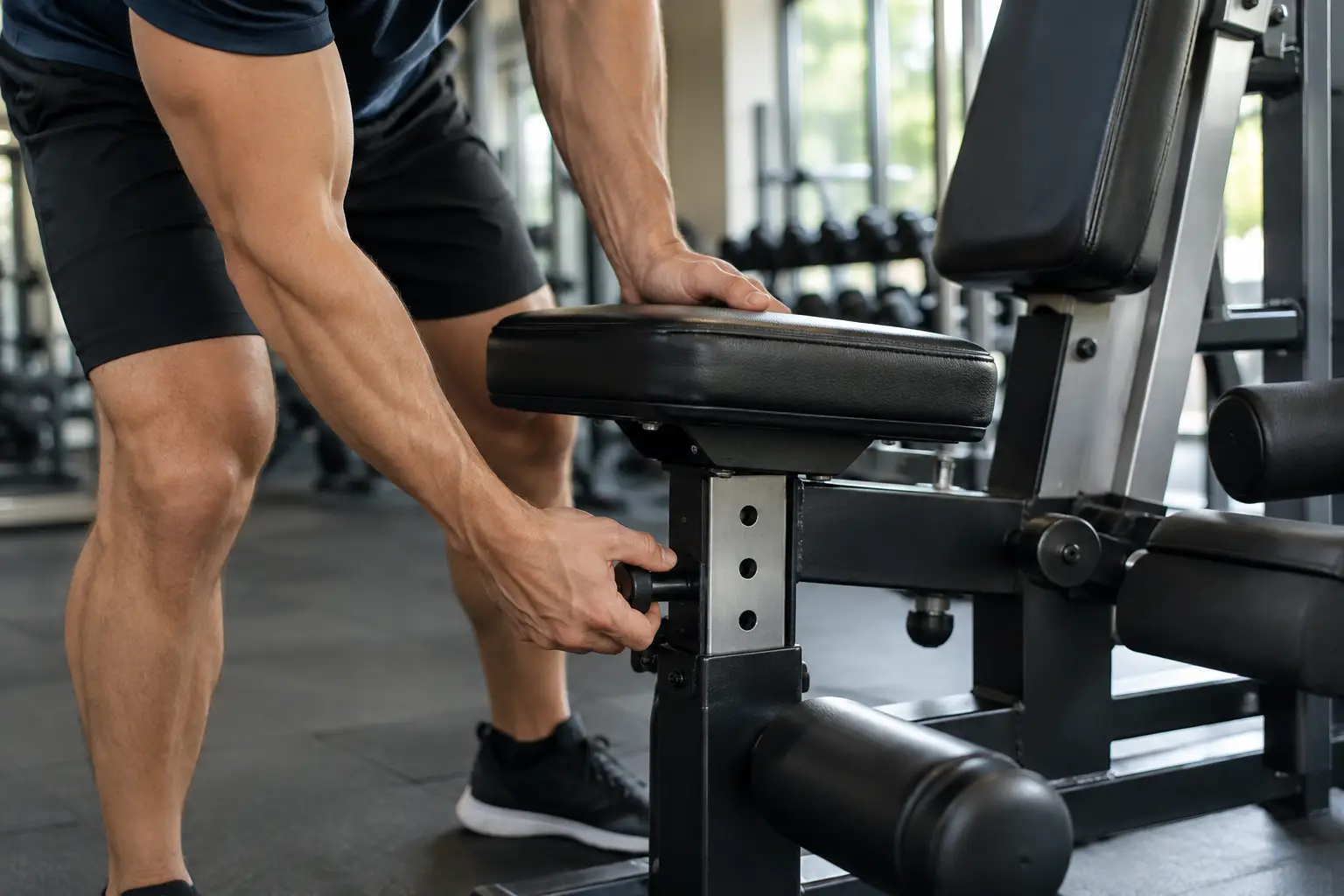
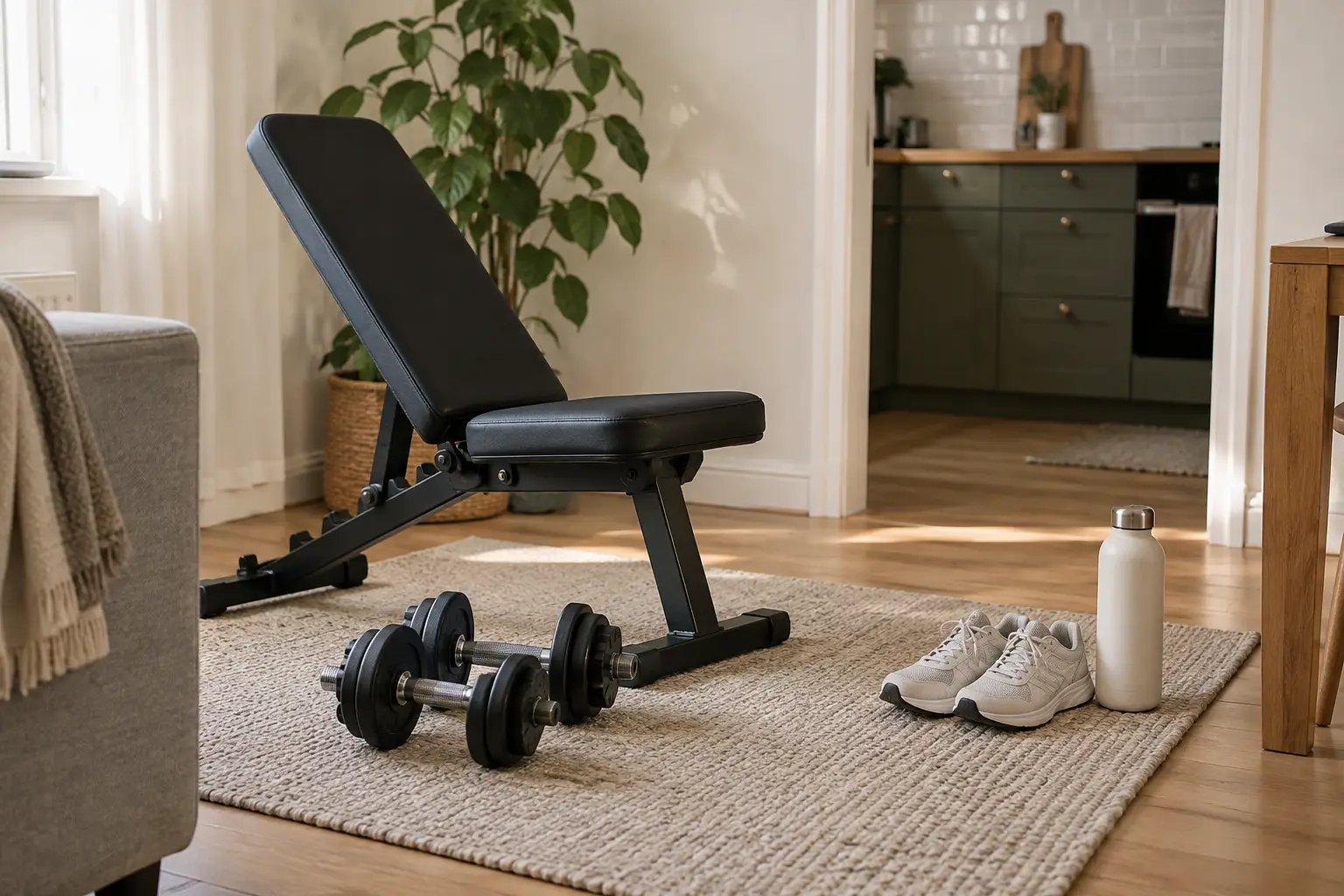
In a small hotel gym, a bench and dumbbells are enough for most of this session. At home, use chair squats, wall or counter push-ups, a securely loaded backpack row, glute bridges and dead bugs.
Keep the same idea: controlled repetitions, easy starting effort and no race against the clock. Choose stable furniture and secure equipment.
5. Let Recovery Decide Your Week-Three Progression
Mild muscle soreness can happen after unfamiliar training. It is not proof that the workout burned more fat.
Before adding work, check whether you can:
- Walk and use stairs normally.
- Perform the movements without pain.
- Complete your planned repetitions with steady technique.
- Get through your working day without unusual exhaustion.
If those checks look good, keep two sets per exercise in weeks three and four. Gradually build from eight towards ten repetitions.
When both sets reach ten controlled repetitions with roughly three good repetitions still available, try the smallest practical weight increase at your next session. Returning to eight repetitions is fine.
Do not increase weight, sets and training days together. Two sessions can remain your plan beyond the first month.
If soreness changes how you move, repeat a lighter session or allow more recovery. Sharp pain, joint pain or symptoms that worsen are reasons to stop the exercise and seek appropriate advice, not push harder.
6. Eat for a Smaller Waist Without Undereating
Restarting weights does not mean you need a bulking diet. It also does not mean you should live on salad.
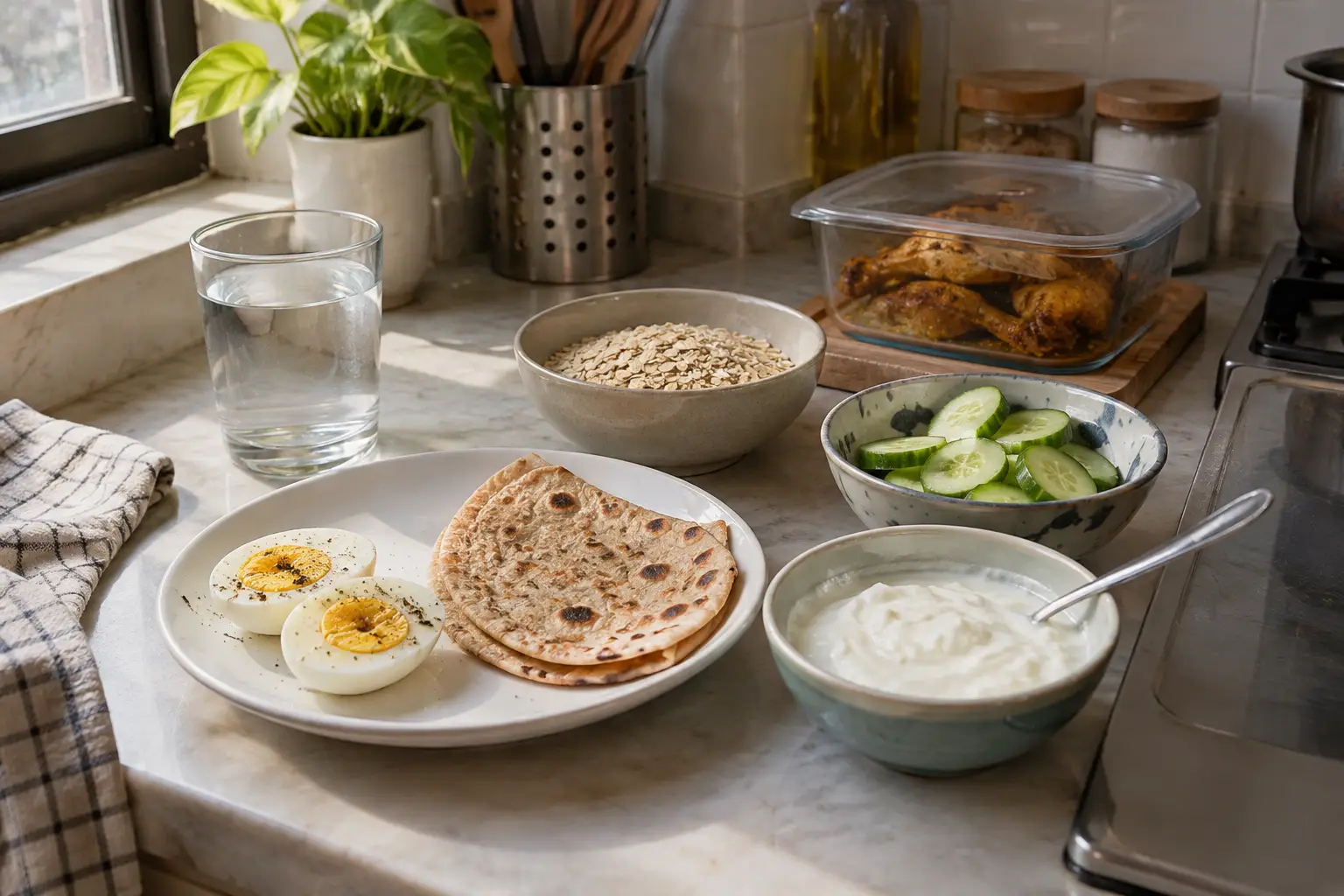
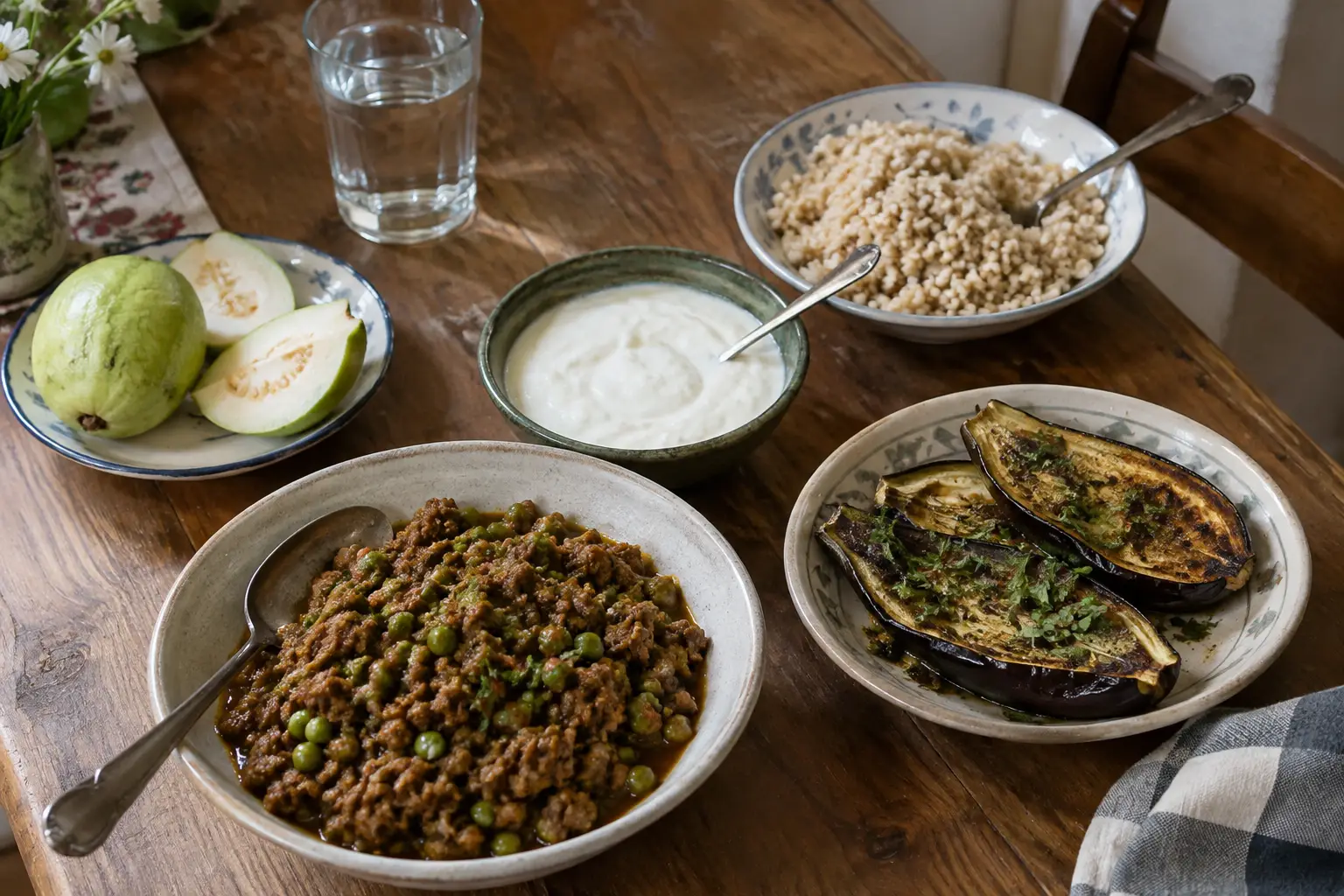
Start with regular meals built around protein, vegetables or fruit, and a manageable portion of roti, rice or another carbohydrate. Carbohydrates can stay in your fat-loss plan.
For many healthy adults lifting weights, around 1.2–1.6 grams of protein per kilogram of body weight per day is a useful starting range. At 80 kg, that is roughly 96–128 grams. This is a guide, not a compulsory calculation for everyone.
These everyday foods can help:
| Food and portion | Approximate calories | Approximate protein |
|---|---|---|
| Two large eggs, before cooking fat | 140–160 | 12–14 g |
| Cooked skinless chicken breast, 120 g | 190–210 | 35–38 g |
| Cooked lentils, 150 g, before added oil | 170–180 | 12–14 g |
| Plain low-fat Greek yoghurt, 200 g | 120–160 | 18–22 g |
| Roti made with 30 g wholemeal flour, no added fat | 100–110 | 3–4 g |
Recipes and brands vary. Oily gravy, larger rotis and cooking fat can change the total substantially.
A practical dinner could be chicken salan with a clear portion of chicken, one or two small rotis according to your needs, and cooked vegetables. A lentil-based meal can include plain high-protein yoghurt to bring its protein up.
If the shared cooking pot makes portions difficult to estimate, use this guide to tracking calories in homemade Pakistani food.
7. Protect Movement and Check the Right Results
A workout can leave you sitting more for the rest of the day. That matters when fat loss is your goal.
Keep a comfortable baseline of walking instead of adding a demanding step target immediately. A short walk after lunch and another after dinner may fit better than a long cardio session.
In UAE or Saudi summer heat, choose comfortable indoor walking options rather than forcing outdoor exercise in extreme conditions. In UK or Canadian winters, indoor corridors or a treadmill can make movement more practical.
Track three things during the month:
- Training: sessions completed, repetitions and weights.
- Waist: measure weekly at the same point under similar conditions.
- Body weight: if comfortable weighing regularly, compare weekly averages rather than individual readings.
Returning to lifting can temporarily affect scale weight through muscle soreness and changes in stored carbohydrate and water. A short-term increase does not automatically mean fat gain.
If your waist and average weight are not trending down after several consistent weeks, review portions and activity. Make one modest adjustment rather than doubling training.
8. Finish the Month With a Plan You Can Repeat
Knowing how to get back to weight training after a long break is mainly about choosing a manageable dose, checking recovery and progressing gradually. Keep the sessions that fit your week, then build from there.
Coach Usman is a Level 3 Personal Trainer, weight loss coach, offering 1-on-1 online coaching through the My Coach app. Explore the personal trainer Pakistan overview, or see how a weight loss coach pakistan approach can fit your food and routine.
For individual support, review premium coaching and coaching options and pricing.
Want a plan built around your job and your food? Start online coaching with Coach Usman at coachusman.com.
This is general fitness information, not medical advice. Please talk to a doctor before changing your diet or exercise routine, especially if you have a health condition.
FAQ
How many days a week should I lift after a long break?
Start with two full-body sessions on non-consecutive days. Keep the first sessions light and short enough that you recover comfortably. Add training only when your schedule, technique and recovery support it.
Can I lose fat while rebuilding strength?
Yes. A manageable calorie deficit, enough protein and consistent strength training can support fat loss while you rebuild strength. Some returning lifters also regain muscle, but the pace varies and scale weight may not show every change.
What if I stopped training because of pain or a health condition?
Check with your doctor if you have a medical condition. If injury or surgery caused your break, seek individual return-to-exercise guidance. Do not train through sharp, worsening or persistent pain.
Coach Usman, 12+ years of coaching experience
1:1 online coach for Pakistani men worldwide, building fat-loss plans around real jobs, shifts and desi food.
coachusman.comWant a coach who builds the plan around you?
Coach Usman builds your diet and training around your job, your schedule and the desi food you already eat.
Start with Coach UsmanComments (0)
No comments yet. Be the first.