
In this article
- Myth: How to Weigh Food Raw or Cooked for Calorie Tracking Has One Correct Answer
- Myth: Cooking Changes Food Weight and Calories in the Same Way
- Myth: Every Portion of Rice Needs a Fixed Raw-to-Cooked Conversion
- Myth: Chicken Losing Weight Means You Should Log Fewer Calories
- Myth: A Cooked Roti Weight Tells You Exactly How Much Flour It Contains
- Myth: One Cooked-Food Entry Can Accurately Cover Any Biryani or Salan
- Myth: Accurate Tracking Requires Weighing Every Bite Forever
Want a plan built around your job and desi food? Try 1:1 online coaching with Coach Usman.
You divide a pot of rice between tomorrow’s lunch boxes, but your tracking app makes one portion look like a whole day’s food.
You weighed it carefully. So why does the number look wrong?
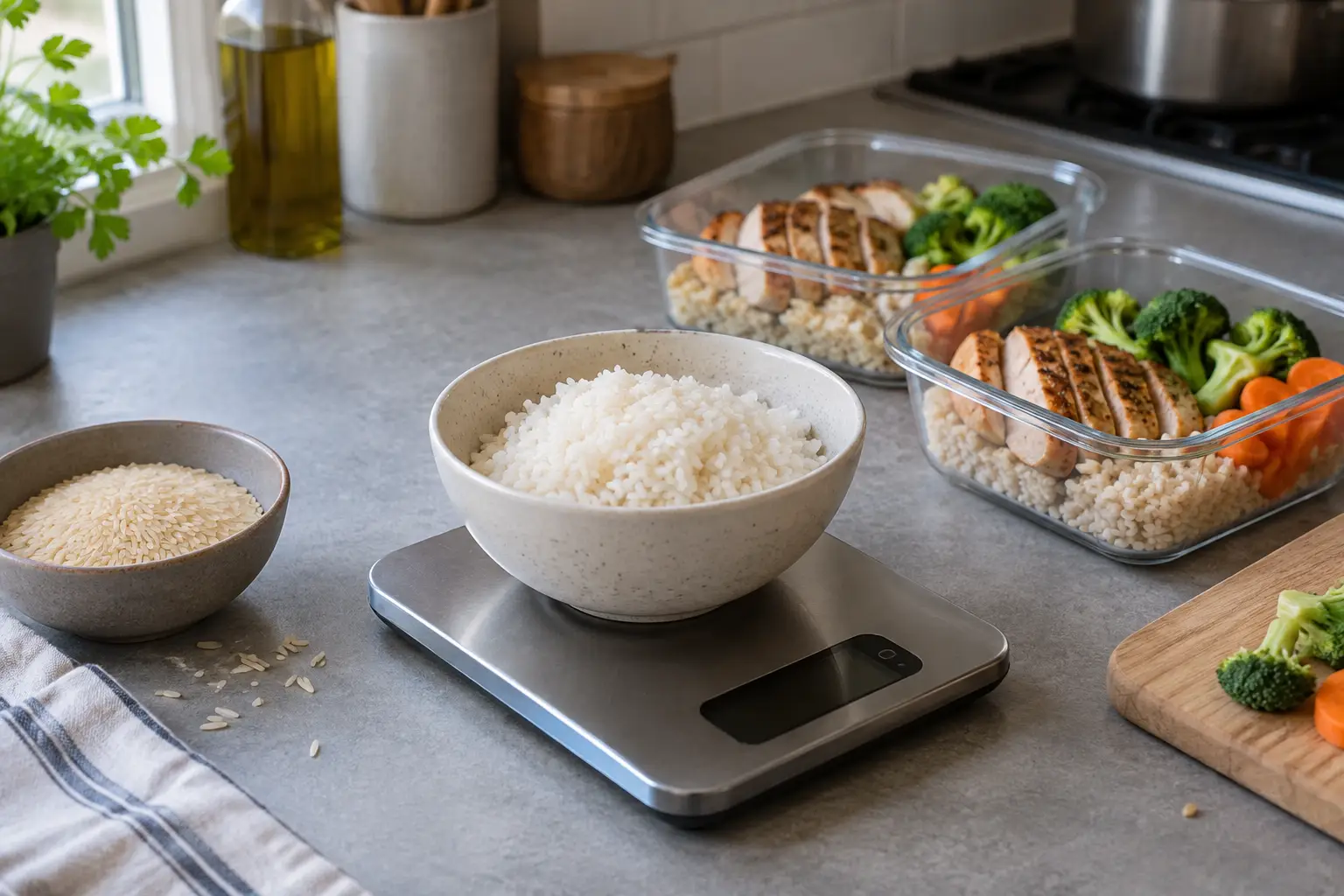
Learning how to weigh food raw or cooked for calorie tracking starts with one simple check: does the food entry match the condition of the food on your scale? Cooked rice logged as dry rice can make your record look much higher than it should.
Whether you pack lunch for a UAE shift or eat after a desk job in Pakistan, you need a repeatable method—not a separate diet menu.
Myth: How to Weigh Food Raw or Cooked for Calorie Tracking Has One Correct Answer
Fact: Both methods work when the weight and the database entry match.
Raw weighing is often easier when you prepare your own food. You can use the packet information and record ingredients before they go into the pan.
Cooked weighing is useful when dinner is already made, someone else cooks, or you serve from a shared pot. Choose an entry that describes the cooked food and its preparation.
Use these basic pairings:
- Dry rice on the scale: select dry or uncooked rice.
- Boiled rice on the scale: select cooked or boiled rice.
- Raw chicken breast: select raw, skinless chicken breast.
- Grilled chicken breast: select cooked or grilled, skinless chicken breast.
Check whether the app uses grams, ounces or a suggested serving. An entry labelled “one bowl” tells you very little unless its weight is stated.
Match the food on your scale to the food in your app.
You can weigh rice dry and chicken cooked in the same meal. The important part is matching each ingredient correctly.
Myth: Cooking Changes Food Weight and Calories in the Same Way
Fact: Water changes weight without adding calories. Added ingredients and discarded cooking juices complicate the picture.
Rice absorbs water and gets heavier. Chicken usually loses water and gets lighter. Neither change means water has created or removed calories.
Here are approximate reference values for plain foods:
| Food and condition | Calories per 100 g | Protein per 100 g |
|---|---|---|
| Dry white rice | 350–370 kcal | 7–8 g |
| Cooked white rice | 125–140 kcal | 2–3 g |
| Raw skinless chicken breast | 110–125 kcal | 22–24 g |
| Cooked skinless chicken breast | 155–170 kcal | 29–32 g |
These are estimates, not universal numbers. The rice variety, cut of meat and cooking method matter. Use the relevant label or a reliable database entry when available.
Cooked chicken has more protein per 100 g mainly because it contains less water. Cooking has not magically added protein to the original piece.
Also, frying with oil is different from boiling in water. Added oil contributes calories; fat or juices left behind can reduce what you actually eat. Home tracking is an estimate, even with a good scale.
Myth: Every Portion of Rice Needs a Fixed Raw-to-Cooked Conversion
Fact: Your actual batch is more useful than a universal multiplier.
You might hear that rice always triples in weight. That can be a rough guide, but rice absorbs different amounts of water depending on the variety and cooking method.
For a batch you prepare yourself:
- Weigh the dry rice.
- Log its calories using the dry entry or packet.
- Cook it, then weigh the whole edible cooked batch without the pot.
- Divide the batch calories according to each portion’s cooked weight.
Suppose you cook 240 g dry rice, with a label showing 360 calories per 100 g. The whole batch contains approximately 864 calories before any additions.
Your cooked batch weighs 720 g. A 180 g cooked portion is one-quarter of the batch, so it contains about 216 calories.
If another batch finishes at 650 g, do not reuse the same cooked portion calculation blindly. Its water content is different.
For plain rice already cooked by someone else, use an appropriate cooked-rice entry instead. You do not need to reverse-engineer dinner.
Myth: Chicken Losing Weight Means You Should Log Fewer Calories
Fact: A smaller cooked weight does not mean the original portion lost the same percentage of its calories.
Imagine you weigh 200 g raw, boneless, skinless chicken breast. Using an example entry of 120 calories and 23 g protein per 100 g, that portion starts at approximately 240 calories and 46 g protein.
After cooking, it might weigh 150 g because it lost moisture. If you logged the original raw portion, do not replace it with 150 g in the raw entry. That would count less chicken than you started with.
For simple meal preparation, choose one route:
- Raw route: weigh and log the raw chicken, plus added ingredients.
- Cooked route: weigh the cooked edible chicken and use a matching cooked entry.
Do not record both. They are two ways to estimate the same food.
Bones need attention too. A 200 g bone-in piece is not 200 g of edible meat. Use edible meat weight with an edible-meat entry, and match whether you eat the skin.
Myth: A Cooked Roti Weight Tells You Exactly How Much Flour It Contains
Fact: Roti weight includes water, so flour weight is often the clearer starting point.
Two rotis can weigh the same after cooking but contain different amounts of flour and moisture. Thickness, cooking time and added fat all affect the result.
If you make your own dough, weigh the atta before adding water. For example, 40 g atta might provide approximately 135–145 calories and 4–5 g protein, depending on the flour.
Water adds no calories. Oil or ghee does: 5 g adds about 45 calories.
For a batch, record the flour and any added fat, then divide the dough into equal portions before rolling. If the pieces are unequal, weigh each dough ball and allocate the recipe by weight.
You do not need to weigh the cooked roti again when you have already logged its ingredients.
When someone else makes your rotis, use a consistent estimate based on a similar size and recipe. For more ways to manage shared meals, read how to lose weight when your family cooks all your meals.
Myth: One Cooked-Food Entry Can Accurately Cover Any Biryani or Salan
Fact: Mixed dishes need a recipe estimate, not just a raw-versus-cooked label.
A database entry for “chicken biryani” cannot know how much rice, chicken or oil went into your family’s pot.
When you control the recipe, record the ingredients once. After cooking, weigh the finished edible batch and save that weight as the recipe yield.
The calculation is:
Portion calories = total recipe calories × portion weight ÷ finished batch weight.
For example, a recipe containing 2,400 calories that finishes at 2,000 g averages 1.2 calories per gram. A 350 g serving would be approximately 420 calories.
That estimate works best when portions have a similar mix of ingredients. One serving full of chicken and another mostly rice will not have identical nutrition per gram. Distribute major ingredients fairly when packing containers.
Do not enter the whole recipe and then add its chicken, rice and oil again. That double-counts the meal.
The broader process is covered in how to track calories in homemade Pakistani food.
Myth: Accurate Tracking Requires Weighing Every Bite Forever
Fact: A short learning period can build useful portion awareness without making food a second job.
For your next week, focus on foods where weighing answers a real question: rice, flour, meat and added fats. Press the scale’s tare button after placing an empty bowl on it, then add the food.
Keep one repeatable lunch: a measured rice portion, chicken logged using your chosen method, and vegetables. Save it in your app and update amounts when they change.
If you share a kitchen in Saudi Arabia or the UAE, you may only control your lunch container. Weigh cooked portions and choose sensible matching entries. A consistent estimate is more useful than skipping the record because you could not weigh the raw ingredients.
For how to weigh food raw or cooked for calorie tracking, remember the conclusion: match the entry, count each ingredient once, and use your own batch yield when practical. Tracking supports a calorie deficit; it does not replace one or guarantee fat loss.
As a Level 3 Personal Trainer, weight loss coach, Coach Usman offers 1-on-1 online coaching through the My Coach app. Explore support from a personal trainer in Pakistan, learn about working with a weight loss coach pakistan, or see premium coaching.
Want a plan built around your job and your food? Start online coaching with Coach Usman at coachusman.com. You can view coaching options and pricing when you are ready.
This is general fitness information, not medical advice. Please talk to a doctor before changing your diet or exercise routine, especially if you have a health condition.
FAQ
Should I weigh food raw or cooked for calorie tracking?
Either works. Match a raw weight to a raw food entry and a cooked weight to a cooked entry. Raw weighing is often simpler when preparing food yourself; cooked weighing is useful when serving food that is already made.
Can I convert cooked rice to dry rice by dividing by three?
Only as a rough estimate. Water absorption varies. For a more useful calculation, weigh your own rice before and after cooking, then allocate the dry batch’s calories according to each cooked portion’s share.
Do I need to weigh food to lose weight?
No. Weighing is an optional tool for learning portions and improving calorie estimates. You can also use consistent meals and portion sizes. If tracking becomes stressful, a less detailed approach may suit you better. Check with your doctor if you have a medical condition.
Coach Usman, 12+ years of coaching experience
1:1 online coach for Pakistani men worldwide, building fat-loss plans around real jobs, shifts and desi food.
coachusman.comWant a coach who builds the plan around you?
Coach Usman builds your diet and training around your job, your schedule and the desi food you already eat.
Start with Coach UsmanComments (0)
No comments yet. Be the first.