In this article
- 1. Leaving Protein to Chance — Reserve Your Portions First
- 2. Making Sehri and Iftar Meals to Maintain Muscle Too Large — Split the Job
- 3. Treating Sehri as Bread With Extras — Build a Complete Plate
- Egg-and-Yoghurt Sehri
- No-Stove Sehri
- 4. Counting Iftar Snacks as Dinner — Keep a Proper Main Meal
- 5. Cutting Carbs and Calories Too Hard — Leave Fuel for Training
- 6. Planning for a Perfect Kitchen — Build a Shift-Friendly Backup
- 7. Expecting Meals to Do Everything — Keep a Small Strength Routine
Want a plan built around your job and desi food? Try 1:1 online coaching with Coach Usman.
You wake for sehri, open the fridge, and realise the family finished the chicken while you were at work.
There is leftover roti, some yoghurt and yesterday’s salan. You eat what is available and promise to sort the protein out at iftar.
When I plan sehri and iftar meals to maintain muscle, this is the problem I want to solve: not a lack of fancy food, but useful food missing when you need it.
My approach is to reserve protein, make portions realistic and keep enough energy for training. You can still eat with your family and work towards a smaller waist.
1. Leaving Protein to Chance — Reserve Your Portions First
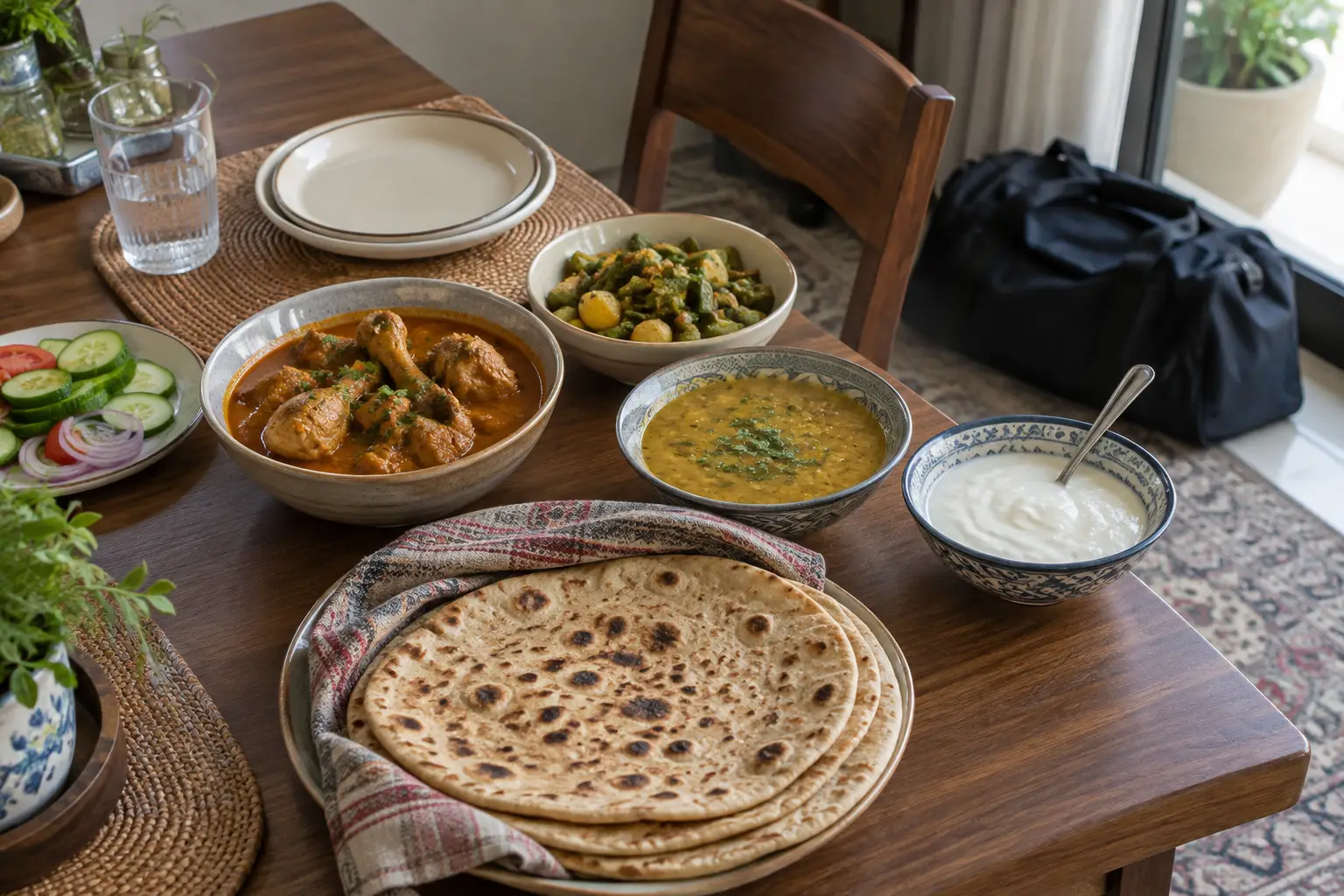
A big shared dish can look like plenty of food. But if most of what reaches your plate is gravy, potatoes or vegetables, your protein portion may be smaller than you think.
I would not tell you to cook a separate fitness dinner. I would ask you to put tomorrow’s portion aside before serving tonight’s meal.
For a healthy adult doing resistance training, roughly 1.4–2.0 grams of protein per kilogram of body weight per day is a useful planning range. Around 1.6 grams per kilogram is a practical starting point for many men, not a compulsory number for everyone.
For an 80 kg man, that starting point is about 128 grams daily. If you carry considerable excess weight, I would individualise the target rather than automatically multiplying your current weight.
You do not need to reach that number perfectly every day. You do need more than a vague plan to eat some chicken later.
My practical fix:
- Decide which protein food belongs to sehri.
- Reserve the cooked portion in a covered container.
- Check what will provide protein at iftar or dinner.
- Keep one easy backup, such as eggs, milk or a labelled high-protein yoghurt.
Reserve the protein before you rely on the leftovers.
2. Making Sehri and Iftar Meals to Maintain Muscle Too Large — Split the Job
Trying to squeeze your entire protein target into two enormous plates can make eating uncomfortable. It can also leave you feeling too full to train or sleep comfortably.
I prefer two main meals and, when the evening allows, one smaller protein-rich meal between them.
For that illustrative 80 kg man, the plan might look like:
- Sehri: around 40–45 grams of protein.
- Iftar main meal: around 45–50 grams.
- Later small meal: around 30–35 grams.
These are planning portions, not strict absorption limits. Your body does not stop using protein after an arbitrary amount at one meal.
If your work shift only allows two eating opportunities, make those meals more substantial. Do not sacrifice a large chunk of sleep just to create a third feeding.
For a smaller evening option, 250 grams of plain high-protein yoghurt plus 250 ml of milk can provide roughly 30–35 grams of protein, depending on the products. Check the labels: ordinary dahi often contains much less protein than strained or high-protein yoghurt.
I use the same food-first approach on my sehri and iftar meals to maintain muscle coaching page. The schedule should fit your available eating window, not an ideal timetable you cannot follow.
3. Treating Sehri as Bread With Extras — Build a Complete Plate
Roti is not the problem. The problem is expecting roti and a small spoonful of yoghurt to do the work of a full meal.
At sehri, I want a clear protein source alongside carbohydrates, some fruit or vegetables, and fluids.
Here are two combinations I would use as starting points. All figures are approximate; ingredients, brands and cooking fat change the totals.
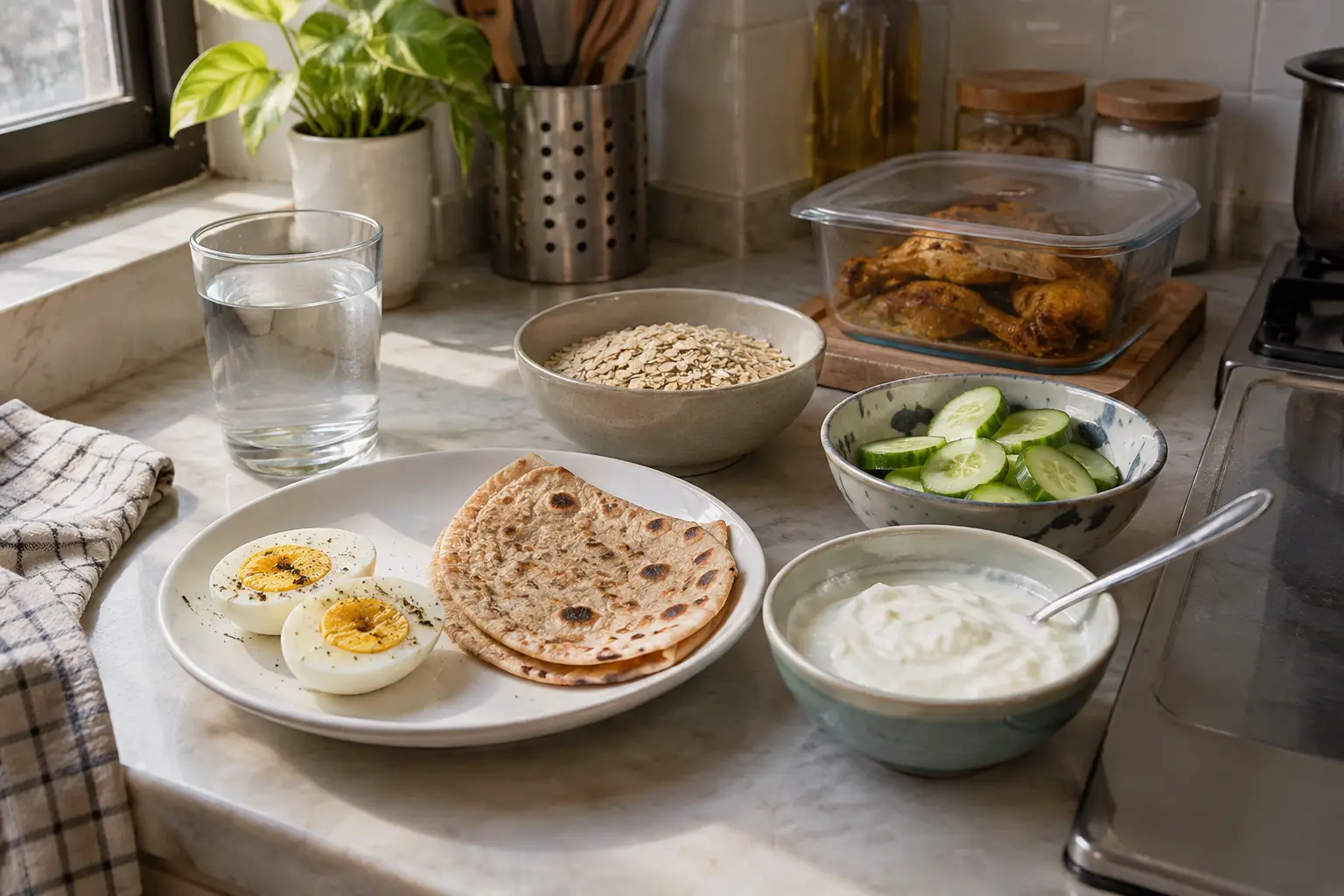
Egg-and-Yoghurt Sehri
- Three large eggs: about 210–240 calories and 18–21 grams of protein.
- 200 grams of plain high-protein yoghurt: about 120–160 calories and 18–22 grams of protein.
- One medium roti without added fat: about 100–130 calories and 3–4 grams of protein.
- Cucumber and a small orange: about 60–90 calories.
That gives roughly 490–620 calories and 39–47 grams of protein, before any oil used for the eggs.
No-Stove Sehri
Mix 50 grams of oats with 250 ml of milk and 250 grams of plain high-protein yoghurt. Add a small banana if you want more carbohydrate.
Depending on the milk and yoghurt, this provides roughly 530–650 calories and 35–43 grams of protein.
Neither option is a complete daily diet prescription. Your other meals and energy needs still matter.
4. Counting Iftar Snacks as Dinner — Keep a Proper Main Meal
Dates, fruit and a couple of pakoras can be part of iftar. But they do not automatically provide the protein needed for a muscle-supporting day.
The mistake is grazing until you feel full, then skipping the meal that contained the chicken, fish or lentils.
I would keep the opening of iftar manageable, then have a proper main meal when it suits your prayers, appetite and training.
One straightforward plate could contain:
- 150 grams of cooked, skinless chicken breast: about 245–260 calories and 45–47 grams of protein, before sauce or oil.
- 150 grams of cooked rice: about 190–210 calories and 3–4 grams of protein.
- A generous serving of vegetables or salad.
- A measured amount of cooking oil or dressing.
Skinless thigh meat also works, although its calorie and protein figures differ. Choose a portion you enjoy and can afford.
For a meat-free meal, combine lentils or chickpeas with another protein source rather than assuming a small bowl of daal is enough. A cup of cooked lentils contains roughly 18 grams of protein; a thin, watery daal serving may contain less.
If you need affordable alternatives, my budget fat-loss guide explains how to organise ordinary groceries without buying special diet foods.
5. Cutting Carbs and Calories Too Hard — Leave Fuel for Training
Some men make two changes together: they start fasting and sharply reduce their food portions because they want faster belly-fat loss.
Then their workouts feel harder, hunger rises and the evening becomes difficult to manage.
Maintaining muscle is not only about protein. Resistance training, enough overall food and recovery also matter.
If fat loss is your goal, I would normally favour a modest calorie deficit rather than making every meal as small as possible. If maintaining strength is already difficult, holding your weight steady through Ramadan can also be a reasonable choice.
Keep a useful carbohydrate portion at your main meals. That might be roti, rice, oats, potatoes or fruit. Adjust the amount to your appetite, activity and progress rather than banning the whole food group.
I would also look beyond one weigh-in. Changes in water, stored carbohydrate and food in your digestive system can move the scale quickly. They do not tell you exactly how much muscle or fat you have lost.
Use weight trends alongside your training performance, recovery and how consistently you are eating.
6. Planning for a Perfect Kitchen — Build a Shift-Friendly Backup
If you share accommodation in the Gulf, the cooker may already be occupied when you need it. If you work late in the UK or Canada, shops may be closed by the time you head home.
A useful plan needs a version that works without fresh cooking.
My backup list would include:
- Tinned fish, where suitable, with bread or ready-to-eat rice.
- High-protein yoghurt with oats and fruit.
- Pre-cooked eggs with roti and milk.
- A reserved portion of chicken or lentils from the family meal.
Keep perishable food refrigerated and use an insulated bag with ice packs when needed. A cooked meal left in a hot car through a long shift is not a sensible backup.
Plan fluids too. Drink regularly between iftar and sehri instead of leaving everything until the final few minutes. Your needs vary with heat, body size and sweating; one fixed amount will not suit everyone.
I would rather my clients repeat three convenient meals than collect twenty recipes they never cook.
7. Expecting Meals to Do Everything — Keep a Small Strength Routine
Good meals support muscle maintenance, but they do not replace resistance training.
For a busy Ramadan week, I would start with two manageable full-body sessions. In a hotel gym, one session could include:
- Goblet squat: two sets of 8–12 repetitions.
- Dumbbell Romanian deadlift: two sets of 8–12.
- Dumbbell floor press: two sets of 8–12.
- One-arm dumbbell row: two sets of 8–12 per side.
Choose weights you can control, finishing most sets with around two repetitions still possible. Experienced lifters may need a different workload; this is a simple starting structure, not a universal programme.
Pick a time that lets you train comfortably and recover. My guide to the best time to work out in Ramadan covers the scheduling options without forcing everyone into the same hour.
As a Level 3 Personal Trainer, weight loss coach, I build food and training around the same week. Through my 1-on-1 online coaching in the My Coach app, the aim is a workable plan—not two separate lists competing for your time.
You can learn about my approach as a personal trainer in Pakistan or view the online coaching options. Start by fixing the meal that is currently hardest to organise.
This is general fitness information, not medical advice. Please talk to a doctor before changing your diet or exercise routine, especially if you have a health condition.
FAQ
Can I maintain muscle during Ramadan with only two meals?
Yes, two well-planned meals can work. Your total protein, overall food intake, resistance training and recovery matter more than forcing a perfect meal schedule. A smaller third meal can help if large portions are uncomfortable.
Do I need chicken at both sehri and iftar?
No. Eggs, fish, milk, high-protein yoghurt, lentils and beans can all contribute. Plant-based meals may need a combination of foods and larger portions to provide similar protein amounts.
Does a quick Ramadan weight drop mean I am losing muscle?
Not necessarily. Water, stored carbohydrate and digestive contents can change your weight quickly. Look at trends alongside strength, recovery and food intake rather than drawing conclusions from one reading.
What if I have a medical condition?
Check with your doctor if you have a medical condition. Ask for individual guidance on fasting, protein intake, fluids and exercise before changing your routine.
Can you help me plan meals around my shifts?
Want a plan built around your job and your food? Start online coaching with Coach Usman at coachusman.com.
Coach Usman, 12+ years of coaching experience
1:1 online coach for Pakistani men worldwide, building fat-loss plans around real jobs, shifts and desi food.
coachusman.comWant a coach who builds the plan around you?
Coach Usman builds your diet and training around your job, your schedule and the desi food you already eat.
Start with Coach UsmanComments (0)
No comments yet. Be the first.