In this article
- Can I lose weight without controlling the cooking?
- What is the first step in how to lose weight when your family cooks all your meals?
- How do I turn the same dinner into a meal that suits me?
- What do I say when my family keeps offering more?
- What if dinner changes every day and nobody follows a recipe?
- How can I help without becoming the family’s diet manager?
- Do I need more exercise to make up for family food?
- How will I know whether these changes are enough?
- What if I need help fitting this around my household?
Want a plan built around your job and desi food? Try 1:1 online coaching with Coach Usman.
Ammi puts another kebab on your plate before you have finished the first one, and saying no feels harder than any workout.
You appreciate the effort. You also want your trousers to fit better. But whenever you mention eating less, someone worries that you are starving yourself or no longer enjoying their food.
Learning how to lose weight when your family cooks all your meals starts with a better agreement, not a new diet menu. You can respect the person cooking while taking responsibility for what you eat.
Can I lose weight without controlling the cooking?
Yes. Fat loss needs a calorie deficit: over time, you eat less energy than your body uses. Cooking your own food can make that easier to measure, but it is not a requirement.
You may not choose the recipe. You can often influence:
- How much goes on your plate.
- Whether you accept an automatic refill.
- What you eat between meals.
- Whether you stop when comfortably satisfied.
- How much you move during the week.
Those choices still count, whether you live with parents in Pakistan or share a family home in the UK.
The mistake is treating limited control as no control. Start with the decisions that belong to you rather than asking everyone else to change their dinner.
You can appreciate the cooking without accepting every extra serving.
What is the first step in how to lose weight when your family cooks all your meals?
Have one short conversation away from the dinner table. Trying to negotiate while someone holds a serving spoon usually makes things awkward.
Explain what you want without criticising the food:
“I enjoy what you cook. I am working on my weight, and I do not need a separate meal. Could I serve my own plate and ask if I want more?”
That request is specific. It does not label the family diet unhealthy or create another job for the cook.
Agree on three simple points:
- You will eat the shared meal.
- You will decide your first serving and any refill.
- You will help with shopping, clearing up, or preparing an easy side.
If someone normally plates your food before you arrive, ask for a slightly smaller first serving with extra food left available. Make the change easy to support, rather than presenting a list of restrictions.
How do I turn the same dinner into a meal that suits me?
Look at what the meal already provides before deciding what needs adjusting.
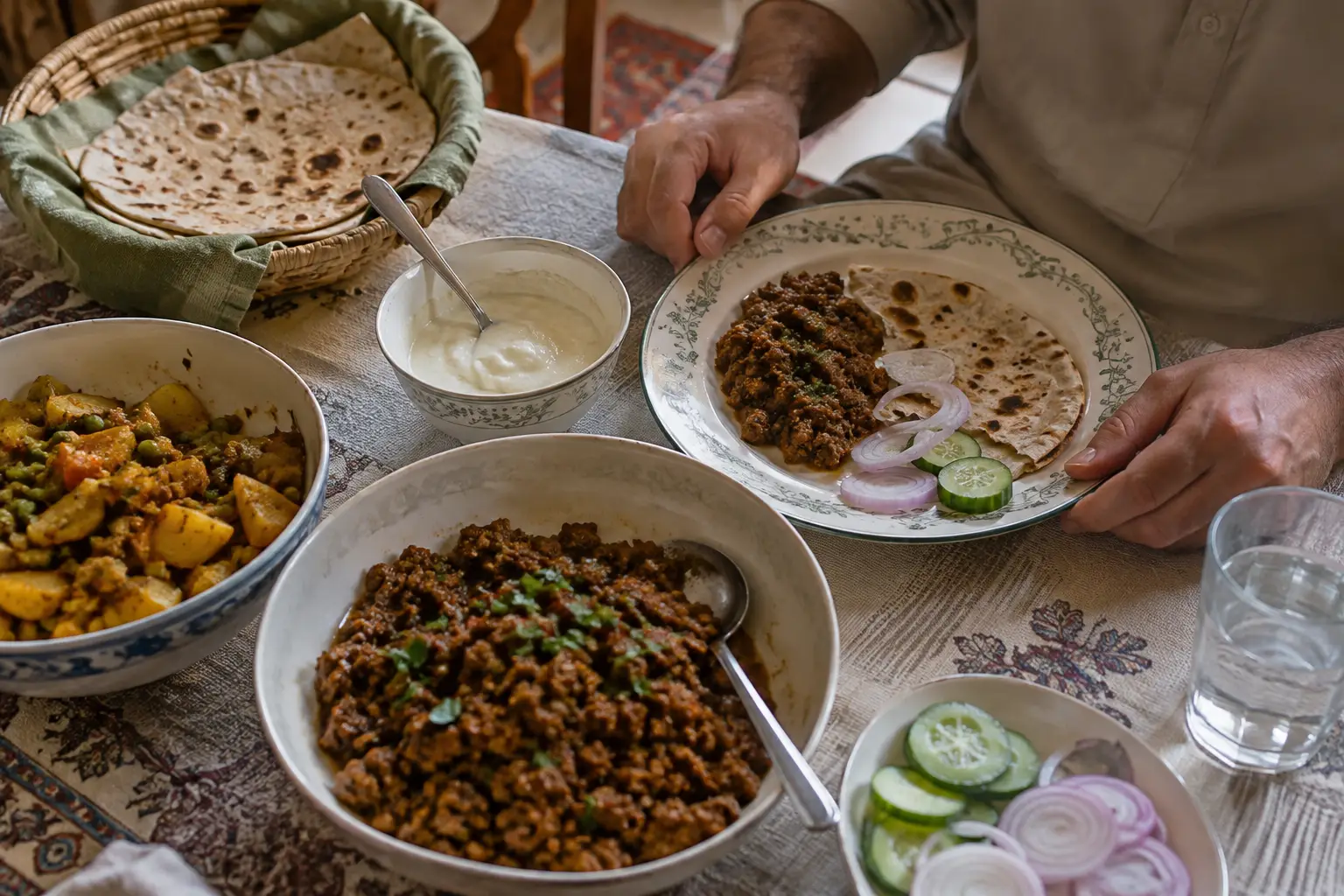
For a dinner of beef keema, roti and vegetables, you could take a clear portion of keema, one medium roti and a generous serving of vegetables. That is a starting point, not a fixed prescription for every man.
If dinner is mostly potato curry and bread, simply cutting everything in half may leave you hungry. You could add plain yoghurt or another available protein food, then choose a bread portion that suits your appetite and overall intake.
Here are useful estimates for common foods:
| Food | Approximate calories | Approximate protein |
|---|---|---|
| One medium plain roti, using about 35 g atta | 120 | 4 g |
| Two boiled eggs | 140–160 | 12–14 g |
| 150 g plain regular yoghurt | 90–120 | 5–8 g |
| 100 g cooked lean beef mince, before added oil | 200–250 | 25–28 g |
Recipes, sizes and fat content change these numbers. Keema with gravy and added oil will not match the plain mince estimate exactly.
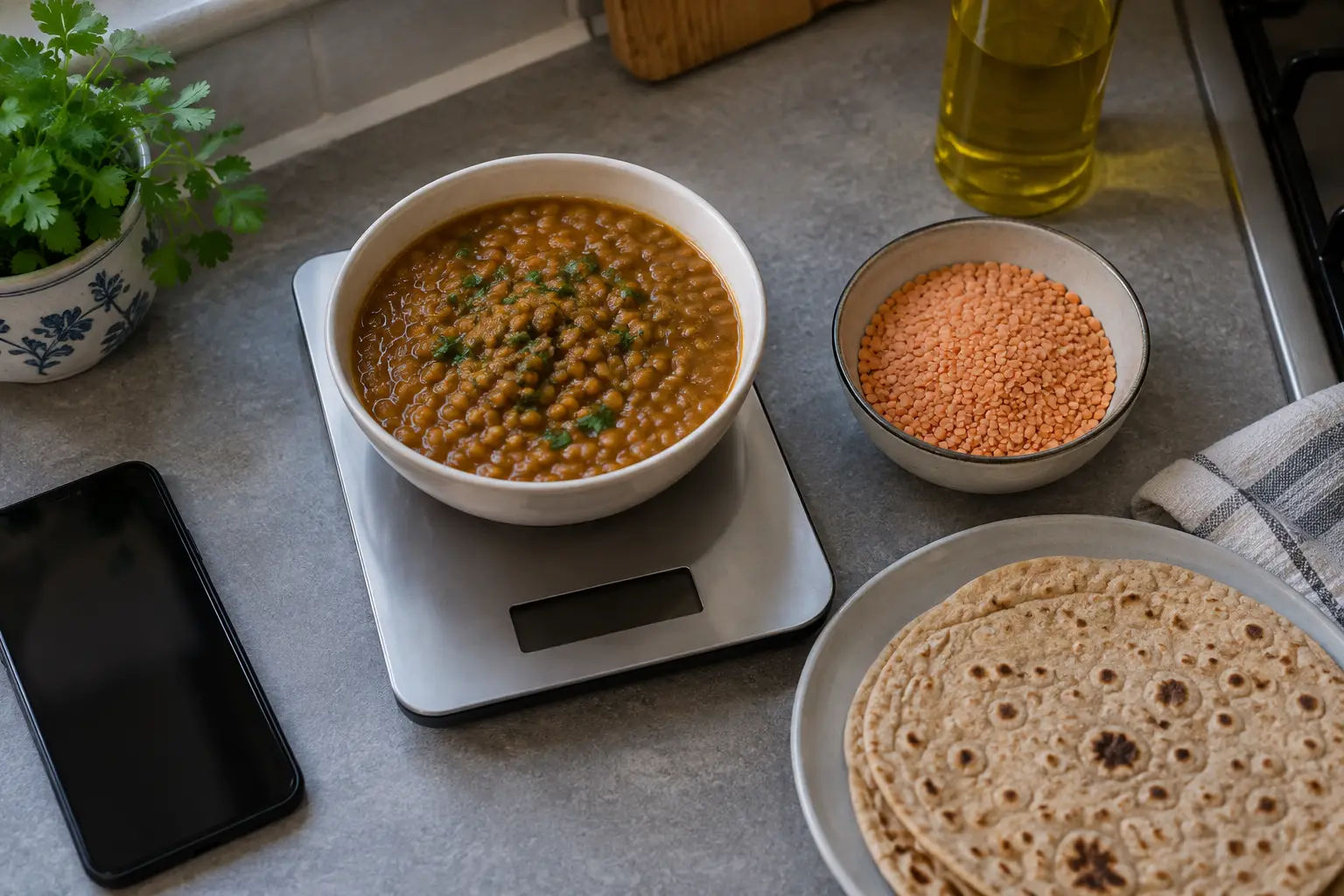
You do not need to calculate every ingredient immediately. Start with a repeatable meal pattern. If you later want closer estimates, use this guide to tracking calories in homemade Pakistani food.
What do I say when my family keeps offering more?
Use a warm, clear answer rather than a long explanation.
Try:
- “It was really good. I am satisfied now, thank you.”
- “Please save some for my lunch tomorrow.”
- “I will take more if I am still hungry.”
Notice that none of these statements blames the cook or asks permission to stop eating.
You might need to repeat the same answer over several meals. That does not mean the approach failed. Your family is used to an old pattern, and a new one may take time.
If somebody has already added food, you do not have to finish it out of politeness. Save it safely for later if possible. Preventing waste is useful, but eating beyond your needs is not the only way to do that.
What if dinner changes every day and nobody follows a recipe?
Build a flexible response instead of demanding a fixed menu.
Before serving, ask yourself:
- What is the main protein food?
- What bread, rice or other starchy food is available?
- Are there vegetables, salad or fruit I can include?
- Am I hungry enough for a full meal, or am I still full from earlier?
Then make a reasonable first plate. Eat sitting down and give yourself time to notice whether you want more.
On a richer dinner night, you might take less gravy and a moderate starch portion while keeping enough protein. On a lighter night, you may need a larger serving to feel satisfied.
Do not skip most of the day to “make room” for an unknown dinner. Arriving extremely hungry makes it harder to choose calmly.
A planned afternoon snack, such as fruit with plain yoghurt, can help if there is a long gap before the family eats. It belongs within your day's food, rather than becoming an extra meal on top.
How can I help without becoming the family’s diet manager?
Take on one practical task yourself.
You could wash and chop cucumber, buy yoghurt during the weekly shop, or pack leftovers after dinner. These actions support your choices without telling the cook to weigh ingredients or prepare special meals.
Keep requests within the household budget. There is no need to replace ordinary groceries with expensive products. For more ideas, read the guide to fat loss on a budget.
Avoid commenting on everyone else's portions. Your brother may have different needs, and your children do not need a running discussion about calories at dinner.
This is your routine, not a family competition. The more quietly you manage your own choices, the less resistance you may create.
Do I need more exercise to make up for family food?
No. Exercise is not a payment for eating dinner. Use it to support fitness, strength and your overall routine.
Start with two manageable strength sessions each week. A simple home session could include:
- Chair squats: 2 sets of 8–12 repetitions.
- Wall or sturdy-counter push-ups: 2 sets of 6–12.
- Backpack rows: 2 sets of 8–12 per side.
- Glute bridges: 2 sets of 10–15.
Use controlled movements, rest between sets, and finish while you could still do a couple of good repetitions. Make exercises gradually harder as they become comfortable.
Add a short walk when it fits. In Gulf heat, use an indoor space or a cooler, safe time rather than forcing an outdoor target.
For help choosing where to spend limited exercise time, see step count versus gym for fat loss.
How will I know whether these changes are enough?
Give the routine a few weeks before judging it. If you are comfortable weighing yourself, use several morning readings under similar conditions and compare weekly averages, not individual days.
You can also check your waist every few weeks and notice how your clothes fit. A salty meal, digestion and other normal changes can temporarily affect scale weight.
If your trend is not moving after several consistent weeks, adjust one thing. You might stop an unnecessary refill, reduce a regular snack, or slightly reduce a starch portion while keeping protein and vegetables.
Avoid cutting everything at once. If you are constantly hungry or struggling through work, the plan needs reviewing, not more punishment.
What if I need help fitting this around my household?
Good coaching should work with your family meals, not pretend you live alone with unlimited cooking time.
Coach Usman is a Level 3 Personal Trainer, weight loss coach offering 1-on-1 online coaching through the My Coach app. Explore support from a personal trainer in Pakistan, or see how a weight loss coach pakistan approach can fit your household routine.
You can review the online coaching options and pricing before deciding.
Want a plan built around your job and your food? Start online coaching with Coach Usman at coachusman.com.
This is general fitness information, not medical advice. Please talk to a doctor before changing your diet or exercise routine, especially if you have a health condition.
FAQ
Can I lose weight if my family will not change their recipes?
Yes. You can work on your own servings, refills, snacks and activity without changing the shared recipe. Start with changes you can repeat, then review your weight trend over several weeks.
Should I refuse dinner if it looks too heavy?
Usually, you can eat a moderate serving of the shared meal instead. Include available protein and vegetables, and avoid turning one richer dinner into a reason to skip meals or punish yourself with exercise.
Do I have to weigh food cooked by my family?
No. Consistent portions and progress checks can be a useful starting point. Food weighing is optional and may help later if you need more detail, but it should not become a demand placed on the cook.
What if I have a medical condition or a prescribed diet?
Check with your doctor if you have a medical condition. Follow any prescribed dietary guidance and discuss changes to food intake or activity with your healthcare professional.
Coach Usman, 12+ years of coaching experience
1:1 online coach for Pakistani men worldwide, building fat-loss plans around real jobs, shifts and desi food.
coachusman.comWant a coach who builds the plan around you?
Coach Usman builds your diet and training around your job, your schedule and the desi food you already eat.
Start with Coach UsmanComments (0)
No comments yet. Be the first.