In this article
- Myth: You need to attempt a full push-up from day one
- Myth: Kneeling push-ups are the only beginner option
- Myth: You should lower your chest as far as possible on every rep
- Myth: You need to train push-ups every day
- Myth: You should move to the next level after a fixed number of days
- Myth: Push-ups alone will make your arms and chest bigger
- Myth: A missed session means you have lost your progress
- Myth: You must figure out every training detail by yourself
- How to start push ups when you cannot do one: your first week
Want a plan built around your job and desi food? Try 1:1 online coaching with Coach Usman.
You have a little space beside the bed, but lowering yourself to the floor for a push-up feels like a challenge before the first rep even starts.
If you are figuring out how to start push ups when you cannot do one, you do not need to force a shaky floor rep. I coach beginners to start with a version they can control, practise it consistently and move to a harder version when they are ready.
Push-ups train your chest, shoulders and triceps, while your middle helps keep your body steady. You can build towards them without a gym, special equipment or a punishing routine. Here are common myths I want you to leave behind.
Myth: You need to attempt a full push-up from day one
Fact: You need a starting point that lets you practise good movement. A full floor push-up is only one level in a progression, not the entry test.
Start with a wall push-up. Stand facing a wall and place your hands a little wider than shoulder-width, around chest height. Step back until your body leans towards the wall. Keep your body in a straight line, bend your elbows to bring your chest closer, then press back.
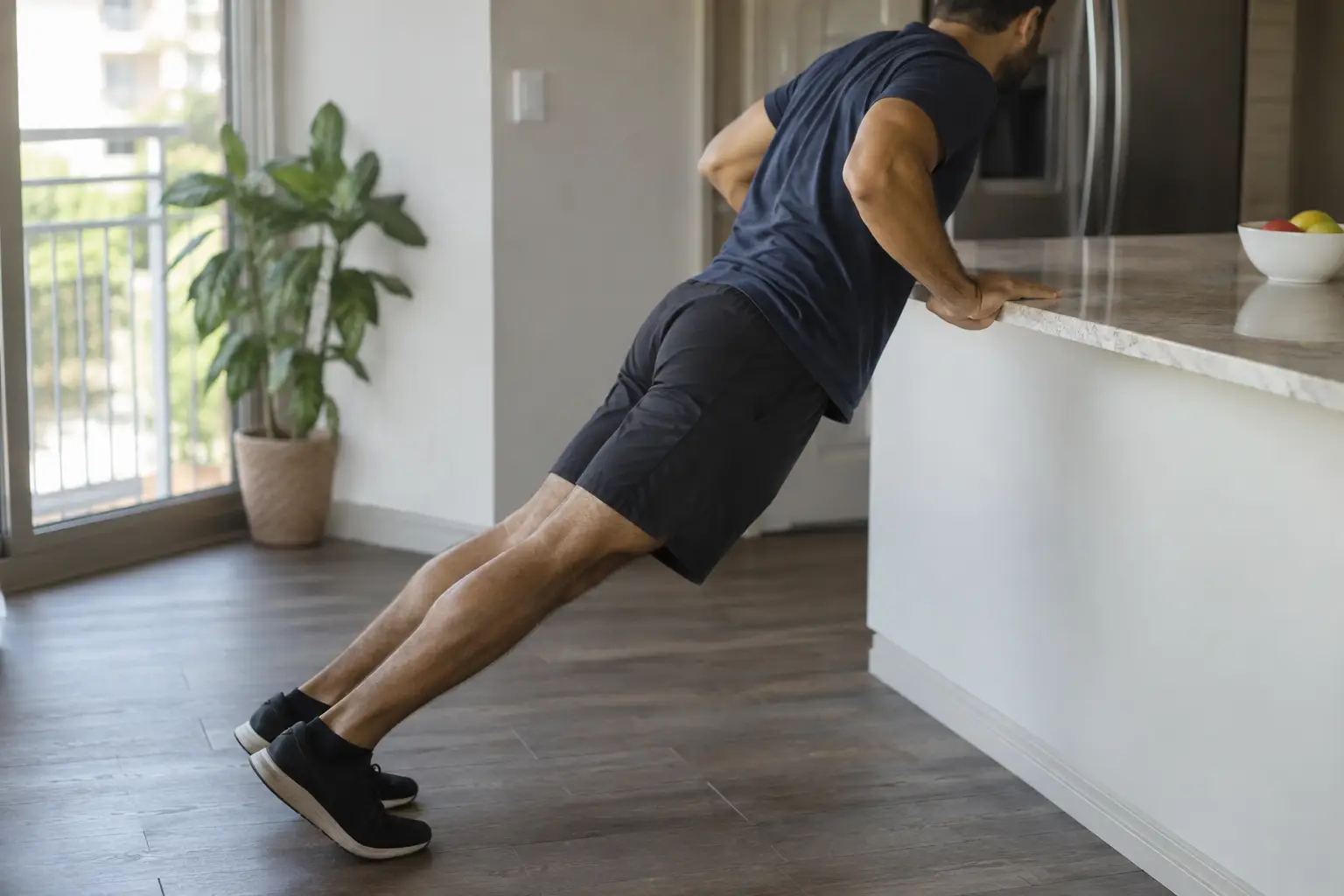
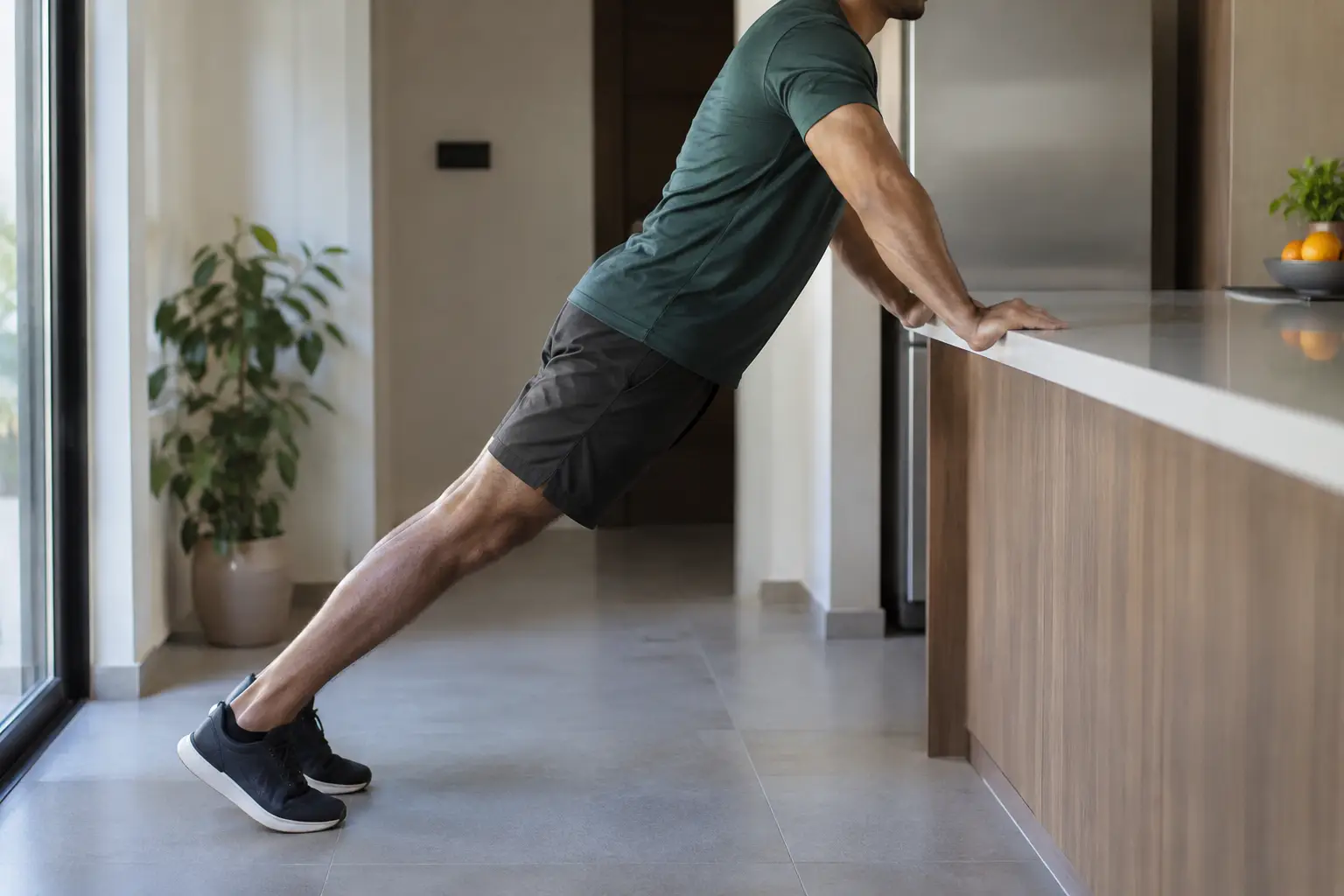
Try 2 or 3 sets of 6 to 10 controlled reps. If that feels very easy and your form stays steady, move your feet farther from the wall or choose a sturdy kitchen counter. If you cannot complete six smooth reps, stand closer to the wall.
The right variation should feel like work, but it should not make you rush, twist or hold your breath. Start where you can control the whole rep.
A smaller, controlled rep is a better starting point than a full rep you cannot manage.
Myth: Kneeling push-ups are the only beginner option
Fact: There are several useful progressions. Wall push-ups, hands-elevated push-ups and kneeling push-ups can all help you practise. Choose the one that gives you a steady body position and a manageable range of motion.
A simple order to try is:
- Wall push-ups.
- Push-ups with your hands on a sturdy counter or bench.
- Kneeling push-ups on the floor.
- Full push-ups from your toes.
You do not have to use every step. For some people, a higher hand position is easier to control than kneeling on the floor. Use a stable surface that will not slide or tip, and keep your hands at a height where you can move smoothly.
Myth: You should lower your chest as far as possible on every rep
Fact: Use a range you can control, then build it gradually. A deep rep is not useful if your hips sag, your shoulders shrug towards your ears or you drop quickly and struggle to press back.
For a clean rep, set your hands just wider than your shoulders and spread your fingers for support. Brace your middle as if you are preparing for a gentle nudge. Keep your head in line with your body rather than reaching your chin forward.
Lower yourself under control, keeping your elbows angled slightly back instead of flaring straight out to the sides. Press away from the surface until your arms straighten comfortably. Breathe in as you lower and breathe out as you push away.
If you lose your straight body line, make the movement easier by standing closer to the wall or raising your hands onto a higher surface. Form is information: it helps you choose a sensible level.
Myth: You need to train push-ups every day
Fact: Regular practice matters, but daily max-effort attempts are not required. Start with two or three short sessions each week, leaving a day between sessions when you can.
A beginner session might look like this:
- Wall or counter push-ups: 2–3 sets of 6–10 reps.
- A comfortable rest between sets, long enough to repeat good form.
- Stop each set when you think you could still do one or two tidy reps.
You can fit this into a home session or add it to a short workout. If you are training at a hotel gym during a work trip, use a stable bench or fixed bar only if it is secure. Do not improvise with a chair that could slide.
For a wider routine, pair push-ups with a squat variation and a pulling movement, such as a resistance-band row if you have a suitable band. My beginner gym anxiety guide also covers ways to make starting feel less intimidating.
Myth: You should move to the next level after a fixed number of days
Fact: Progress when your current version is repeatable, not just because a calendar says so. The goal is to complete your sets with a steady body line and controlled lowering, without needing to turn each rep into a struggle.
For example, if you can do 3 sets of 10 wall push-ups with control, try a slightly harder angle in your next session. You might step a little farther from the wall or use a stable counter. Begin with fewer reps at the new level, then build them up.
If the new version feels too difficult, return to the easier one and keep practising. That is not going backwards. It is adjusting the exercise so you can keep training well.
I encourage clients to focus on small improvements: one extra controlled rep, a slightly lower hand position, or less effort for the same set. These are useful signs that your strength and movement control are developing.
Myth: Push-ups alone will make your arms and chest bigger
Fact: Push-ups can be part of strength training, but no single exercise guarantees a particular result. Your overall training, food, recovery and consistency all matter.
If your goal is to build muscle, practise push-ups alongside other movements that train your whole body. Choose a level that challenges you, keep a record, and gradually make the work more demanding as you become stronger. Eating regular meals with a protein source can support a balanced routine; you do not need to make your food complicated.
For fat loss, push-ups can help you build or maintain strength, but they do not specifically burn fat from your chest or belly. Your overall eating pattern and activity matter too. If you are working on food habits as well, you can read how to lose weight without counting calories every day.
If you want structure for both training and meals, [CU Fit] (https://coachusman.fit) offers daily workouts that unlock as you progress and a custom diet based on foods you already eat. You can use the plan to make training easier to follow around work and home life.
Myth: A missed session means you have lost your progress
Fact: One missed workout does not erase the practice you have already done. Pick up with your next planned session instead of doubling the work or trying to punish yourself with a difficult test.
A busy week in the Gulf, a late shift, or a family commitment can disrupt your routine. Make a backup version of the session: do two sets of wall push-ups at home, or move your session to another day. A shorter practice still gives you a chance to repeat the movement.
To keep the habit simple, decide in advance which days you will practise and where. Put the session beside something you already do, such as changing after work or finishing your morning routine. The fewer choices you need to make at the last minute, the easier it is to begin.
Myth: You must figure out every training detail by yourself
Fact: A clear plan can help you know what to do next, especially when you are new to exercise. But the plan should fit your current level and real schedule, not an imaginary week with endless free time.
I’m a Level 3 Personal Trainer, specialized as a weight loss coach, and I coach people to build routines they can repeat. CU Fit includes daily workouts that unlock as you progress, weekly check-ins with photos, weight and waist, progress charts, a Coach Usman Assistant chat, and a reset option for a difficult day. Coach Usman personally reviews your progress after 6 check-ins.
That can be useful if you want practical structure while training on your own. For more about coaching support, see my weight loss coach Pakistan page. If you prefer direct 1:1 coaching with weekly check-in reviews, Premium coaching options are available. You can also learn more about personal training in Pakistan.
How to start push ups when you cannot do one: your first week
Fact: Keep your first week simple enough to repeat. On two or three non-consecutive days, try 2 sets of 6 wall push-ups. If the reps feel controlled, add a third set or a couple of reps next time. If they feel too hard, stand closer to the wall.
Once you can manage 3 sets of 10 with good form, try a slightly harder angle. Do not rush from wall to floor. Your next step should still let you lower and press with control.
Record the version you used and how many good reps you completed. Review that note after a few sessions. Progress is not only reaching the floor; it is also gaining control, repeating your practice and feeling more confident with the movement.
Want a plan built around your job and your food? Start with CU Fit at coachusman.fit for an affordable custom diet and workout plan. Want Coach Usman to coach you 1:1? Choose Premium coaching at coachusman.com.
Check with your doctor if you have a medical condition.
This is general fitness information, not medical advice. Please talk to a doctor before changing your diet or exercise routine, especially if you have a health condition.
FAQ
How often should a beginner practise push-ups?
Two or three sessions per week is a practical starting point. Leave time between sessions when possible, and choose a variation you can perform with control.
Should I start with wall or kneeling push-ups?
Start with whichever version lets you keep a steady body position and complete controlled reps. Wall, elevated-hand and kneeling push-ups can all be useful progressions.
How do I know when to try a harder push-up variation?
When you can complete your planned sets with controlled reps and steady form, try a slightly harder angle or variation. Reduce the reps at the new level if needed.
Coach Usman, 12+ years of coaching experience
1:1 online coach for Pakistani men worldwide, building fat-loss plans around real jobs, shifts and desi food.
coachusman.comWant a coach who builds the plan around you?
Coach Usman builds your diet and training around your job, your schedule and the desi food you already eat.
Start with Coach UsmanComments (0)
No comments yet. Be the first.