In this article
- Myth: Progressive Overload With Limited Weights Means Adding Weight Every Workout
- Myth: Any Higher Rep Count Proves You Are Getting Stronger
- Myth: Lighter Dumbbells Mean You Must Do Endless Repetitions
- Myth: Shorter Rest and Slower Reps Are Always Better
- Myth: Limited Equipment Requires More Exercises Every Week
- Myth: Better Workouts Automatically Remove Belly Fat
- Myth: A Workout Without a New Record Is Wasted
Want a plan built around your job and desi food? Try 1:1 online coaching with Coach Usman.
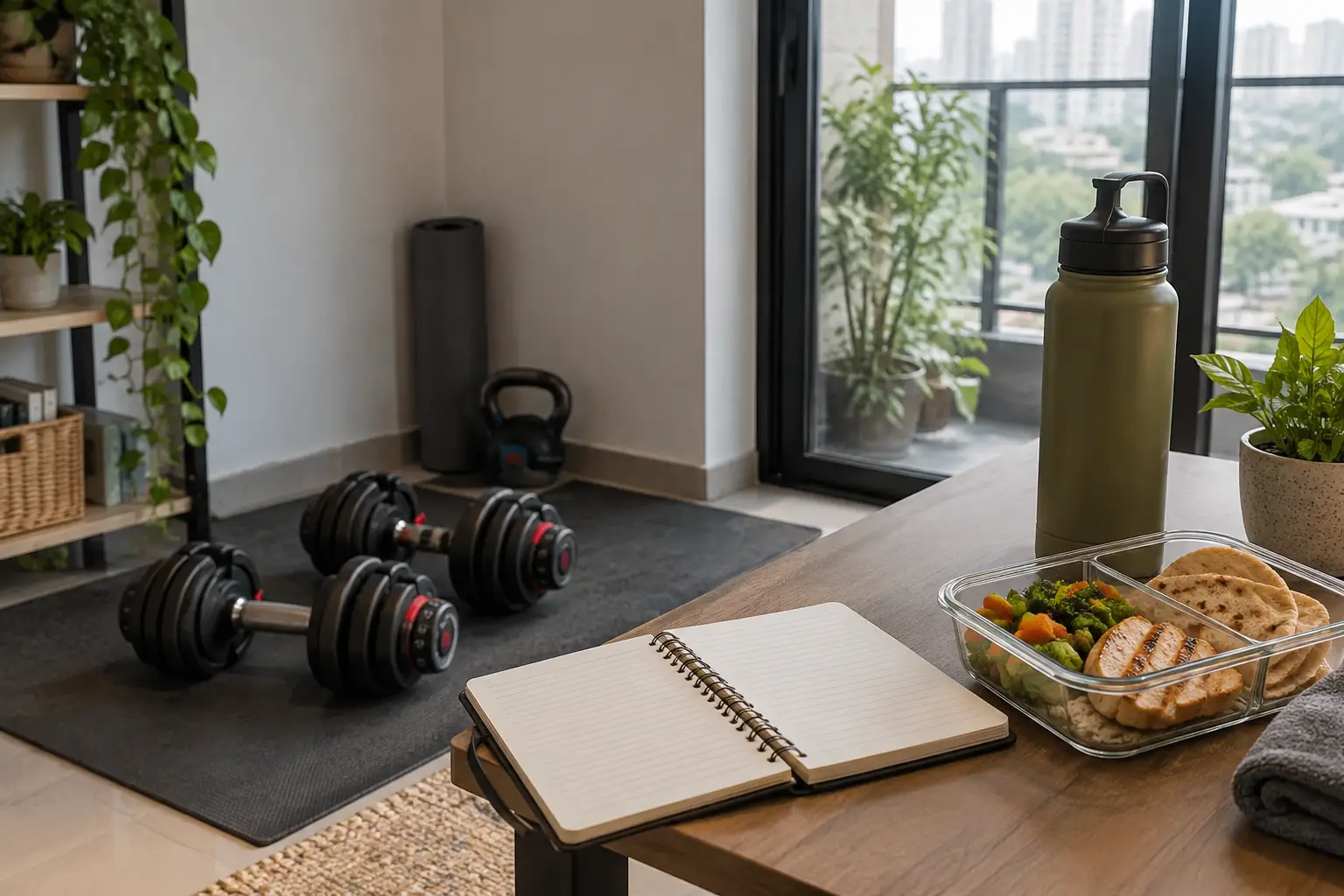
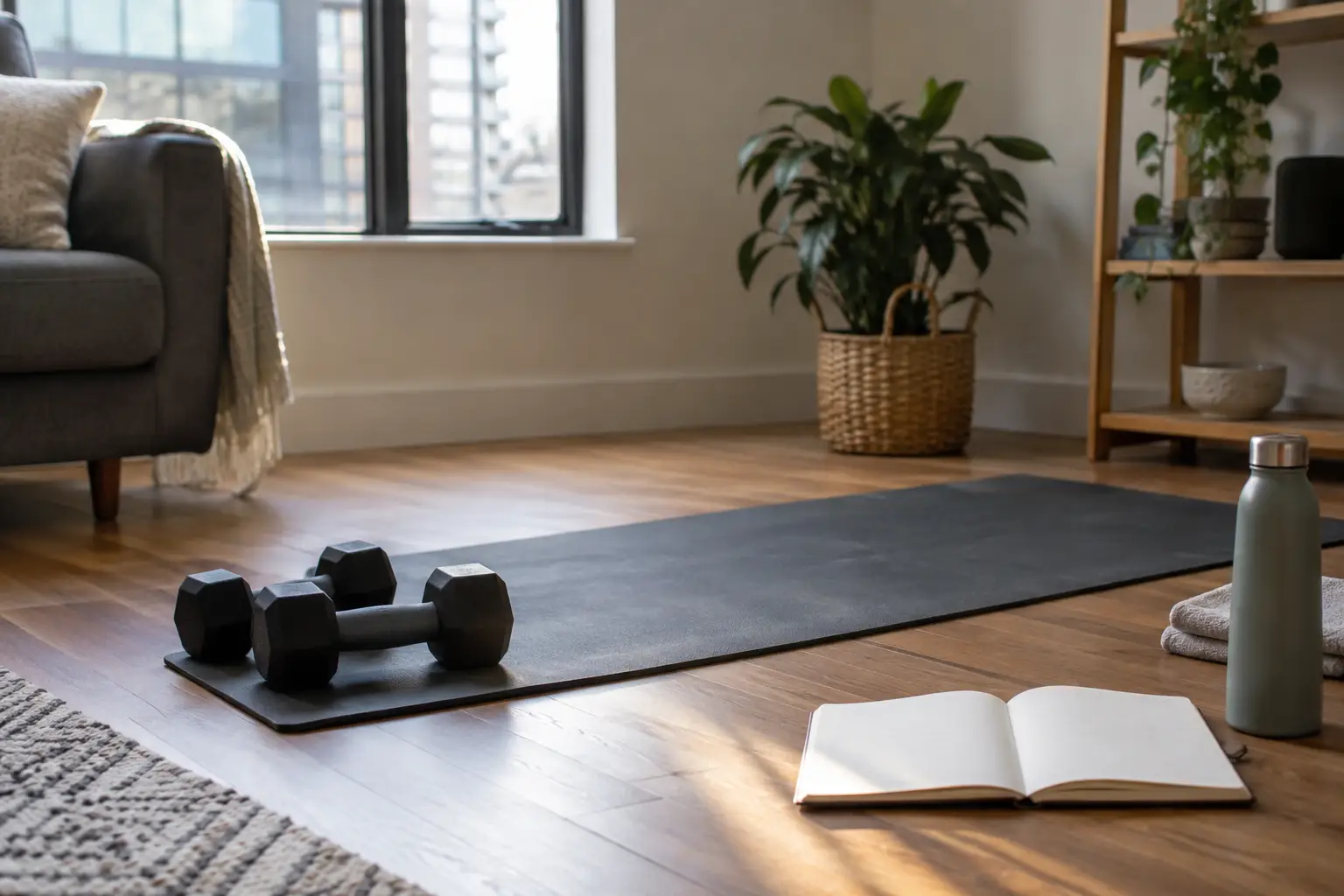
The spare room has two dumbbells, a prayer mat folded on the shelf, and barely enough floor space to exercise.
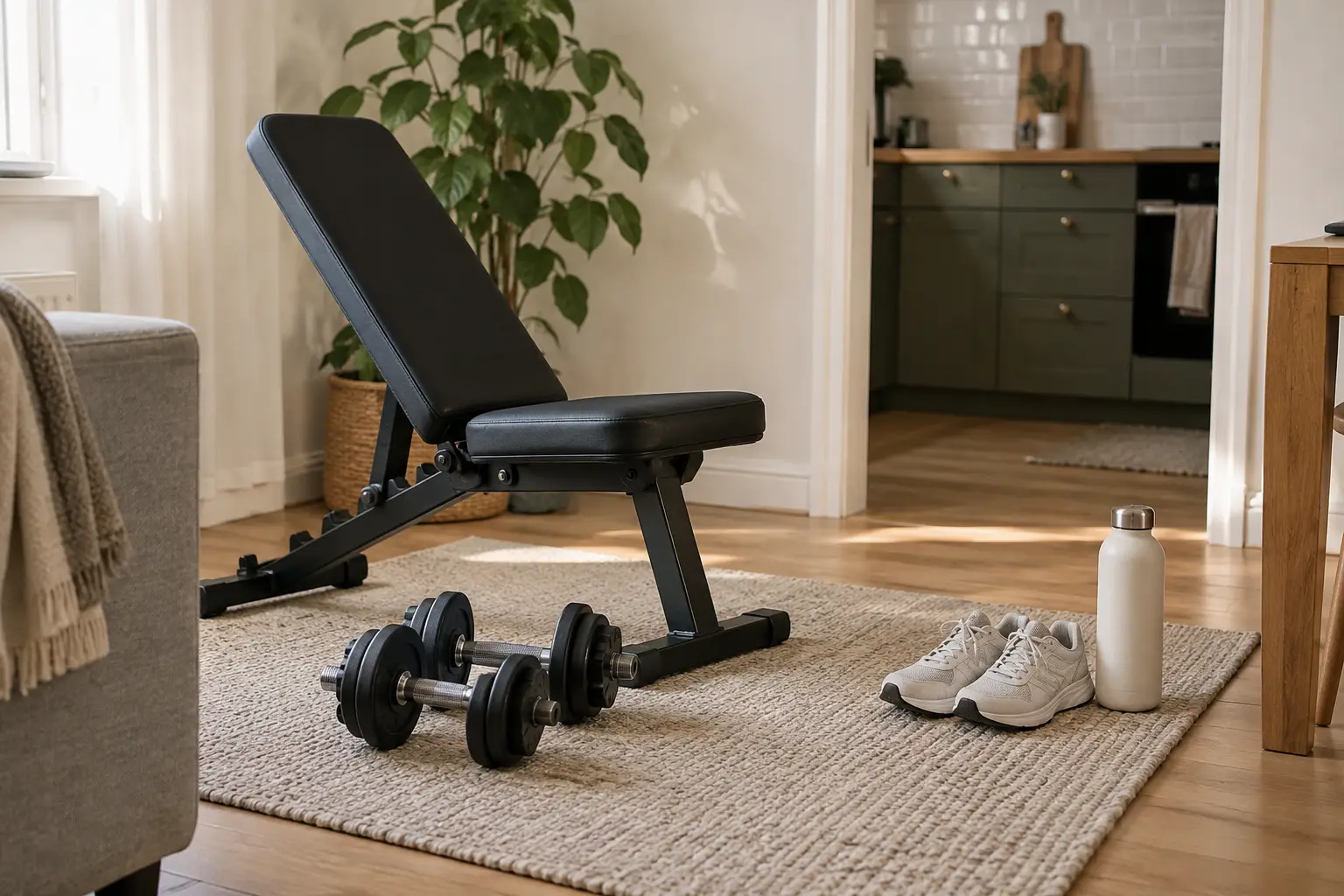
You can train after work, but buying a full weight rack is not happening. Perhaps you live in shared accommodation in Qatar, or your apartment has no room for more equipment.
That does not mean your workouts must stay the same forever. Progressive overload with limited weights means gradually increasing the useful challenge your muscles receive, even when your equipment options are small.
The important word is gradually. You need a repeatable way to progress, not a different punishment every session.
Here are seven myths that can keep busy men stuck with the same dumbbells—and the practical facts that help you move forward.
Myth: Progressive Overload With Limited Weights Means Adding Weight Every Workout
Fact: Heavier weights are one progression tool, not the only one.
Progressive overload means increasing training demands over time as your ability improves. With fixed dumbbells, adding controlled repetitions is often the simplest place to start.
Suppose you perform a dumbbell floor press for three sets in an 8–15 repetition range. Choose a weight that makes the final repetitions challenging while you can still finish with clean technique.
Your training log might develop like this:
- First session: 10, 9, 8 repetitions.
- Later session: 10, 10, 9 repetitions.
- Another session: 11, 10, 10 repetitions.
These are illustrations, not a promised weekly schedule. Some sessions will look identical, especially after demanding shifts.
Keep the exercise, movement range and rest periods similar. Otherwise, you cannot tell whether you improved or simply changed the test.
When you eventually reach the top of your range on every set with the intended effort, consider a heavier weight or a harder variation.
Progress is a better repeatable performance, not just a bigger number on a dumbbell.
Myth: Any Higher Rep Count Proves You Are Getting Stronger
Fact: More repetitions count as progress only when the movement remains comparable.
Imagine doing 12 rows one week, then 16 the next. That looks good in your notes. But if you started swinging your torso and cutting the movement short, the comparison is weak.
Before increasing repetitions, agree on your own movement standard:
- Use a comfortable, controlled range of motion.
- Keep your setup consistent.
- Avoid bouncing or swinging to finish the set.
- Stop when you cannot maintain your chosen technique.
For a supported dumbbell row, use the same support height and a stable torso. For a floor press, lower under control and avoid bouncing your upper arms off the floor.
You do not need to film everything. An occasional short video can help you spot a change that your workout log cannot show.
Also record roughly how many clean repetitions you think remained. Twelve repetitions with four left is a different effort from twelve with one left.
If that judgment is unfamiliar, read how close beginners should lift to failure. You do not need to reach failure on every set to train productively.
Myth: Lighter Dumbbells Mean You Must Do Endless Repetitions
Fact: Higher-repetition sets can build muscle when sufficiently challenging, but there are practical limits.
If your dumbbells feel easy after dozens of repetitions, your workout may become long and uncomfortable before your target muscles receive a useful challenge.
Instead of turning every exercise into a marathon, try a more demanding variation that you can perform safely.
For example:
- Move from a bodyweight squat to a supported split squat.
- Progress from a high-surface incline push-up to a lower stable surface.
- Use a brief pause in a dumbbell floor press instead of rushing through it.
- Perform a controlled single-leg calf raise while holding stable support.
A harder variation is a new version of the exercise, not a directly comparable personal record. Start a separate log entry and establish a fresh baseline.
Single-leg exercises can make lighter loads challenging, but balance should not become the main test. Use support when needed.
There is also an equipment ceiling. If a movement remains easy despite sensible changes, heavier weights, resistance bands or access to more equipment may eventually help. You cannot make one light pair of dumbbells serve every goal forever.
Myth: Shorter Rest and Slower Reps Are Always Better
Fact: Making a workout feel harder is not automatically the same as improving its muscle-building stimulus.
Cutting rest from two minutes to thirty seconds may leave you breathless. It can also reduce the repetitions you manage on the next set.
If your goal is to improve lifting performance, allow enough rest to repeat good-quality work. Around two minutes is a useful starting point for demanding exercises; adjust according to how ready you feel.
A controlled lowering phase or brief pause can help you avoid momentum. But extremely slow repetitions are not a special shortcut to muscle growth.
Use these tools for a clear reason:
- A pause helps you stop bouncing.
- A controlled lowering phase helps you maintain position.
- Shorter rest can save time when it does not undermine your intended performance.
Do not change all three at once and then wonder why your repetitions fell.
In Gulf heat, do not use a hot room or heavy sweating as another progression method. Choose a suitable training space, drink water normally and judge the work—not how soaked your shirt becomes.
Myth: Limited Equipment Requires More Exercises Every Week
Fact: A small, stable exercise menu makes progress easier to measure.
Constantly adding new exercises can make your workout longer without making it better. For a busy man, a routine you can repeat is more valuable than a collection of movements you rarely finish.
Here is a simple home session using dumbbells and stable support:
| Exercise | Working sets | Repetition range |
|---|---|---|
| Supported split squat | 2 per leg | 8–15 |
| Dumbbell floor press | 2 | 8–15 |
| Supported dumbbell row | 2 per side | 10–20 |
| Dumbbell Romanian deadlift | 2 | 10–20 |
Warm up first with easy movement and lighter practice sets. Start with manageable loads and leave roughly two clean repetitions available on most working sets.
For the Romanian deadlift, move your hips back, keep the weights close and stop within a range you can control. If a movement causes pain, stop rather than forcing the planned numbers.
Repeat the session twice a week on separated days to begin with. Record the weight, repetitions and any important technique notes.
Do not add sets simply because you own light weights. First check whether the existing sets are challenging enough. Add volume only when it fits your recovery and available time.
Myth: Better Workouts Automatically Remove Belly Fat
Fact: Resistance training supports muscle retention and growth, but fat loss still requires a sustained calorie deficit.
You can improve your floor press while your waist stays unchanged if your food intake consistently matches or exceeds what you use.
You do not need to ban Pakistani food. Give meals a protein source, then manage portions and cooking fats according to your goal.
Useful approximate values include:
- Two large eggs: around 140–160 calories and 12–14 g protein, before cooking fat.
- A roti made with 30 g whole-wheat flour: roughly 100–110 calories and 3–4 g protein, without added oil or ghee.
- A 170 g serving of plain strained yogurt: often around 100–150 calories and 15–18 g protein, depending on the product.
Check labels where available. Homemade dishes vary, so these are estimates rather than exact tracking entries.
A simple breakfast could be eggs, one roti and tomatoes. Later, build a meal around fish or chicken, vegetables and a measured portion of potatoes or roti.
Let your portions match your fat-loss plan rather than eating extra because you trained. For more detail, see how to keep strength while losing weight.
Myth: A Workout Without a New Record Is Wasted
Fact: Progress happens across repeated sessions, not on demand every evening.
After a long shift or a poor night's sleep, matching your previous performance can be a sensible result. Forcing extra repetitions with poor technique does not improve the session.
Review several comparable workouts before changing your plan. Ask:
- Have repetitions gradually increased at a similar effort?
- Is the movement more controlled?
- Are you completing the planned sessions?
- Does the weight still challenge the target muscles?
- Are sleep and food supporting your training?
If performance stalls repeatedly, investigate before adding more work. You may need better recovery, a clearer technique standard or heavier equipment—not another exercise.
Progressive overload with limited weights works best when you keep the test clear: repeat a few useful movements, record honest repetitions and increase the challenge when you are ready.
Coach Usman is a Level 3 Personal Trainer, weight loss coach, offering personal training support for Pakistani men. If you work in Qatar, explore online personal training in Qatar for coaching that fits your setting.
You can also review premium coaching and coaching options and pricing. Training and food guidance are managed through the My Coach app.
Want a plan built around your job and your food? Start online coaching with Coach Usman at coachusman.com.
This is general fitness information, not medical advice. Please talk to a doctor before changing your diet or exercise routine, especially if you have a health condition.
FAQ
Can I build muscle with just one pair of dumbbells?
Yes, if the exercises sufficiently challenge your muscles and you train consistently. Add controlled repetitions before changing variations. Eventually, some movements may require heavier equipment to keep progressing.
How often should I increase repetitions or weight?
Increase them when your performance supports it, not according to a fixed weekly deadline. Keep technique, range of motion and rest similar. Once you reach the top of your chosen repetition range across all sets, consider a small load increase or a harder variation.
What if an exercise hurts or I have a medical condition?
Stop an exercise that causes pain rather than pushing for a record. Seek qualified guidance for persistent pain or uncertainty about suitable exercise. Check with your doctor if you have a medical condition.
Coach Usman, 12+ years of coaching experience
1:1 online coach for Pakistani men worldwide, building fat-loss plans around real jobs, shifts and desi food.
coachusman.comWant a coach who builds the plan around you?
Coach Usman builds your diet and training around your job, your schedule and the desi food you already eat.
Start with Coach UsmanComments (0)
No comments yet. Be the first.