In this article
- On Waking: Why Does My Weight Go Up After a Salty Desi Meal?
- Salt Can Temporarily Change Water Balance
- Carbohydrate Storage Includes Water
- Dinner Still Has Physical Weight
- Before Breakfast: Record Once, Then Leave the Scale
- Breakfast: Eat Normally Instead of Starting a Compensation Day
- Mid-Morning: Hydrate Normally, Especially During Gulf Shifts
- Lunch: Separate Salt From Calories
- Late Afternoon: Keep Your Planned Movement
- Dinner: Make One Practical Adjustment, Not a New Diet
- Before Bed: Decide When You Will Review Progress
- Tomorrow Morning: Return to the Routine, Not the Panic
Want a plan built around your job and desi food? Try 1:1 online coaching with Coach Usman.
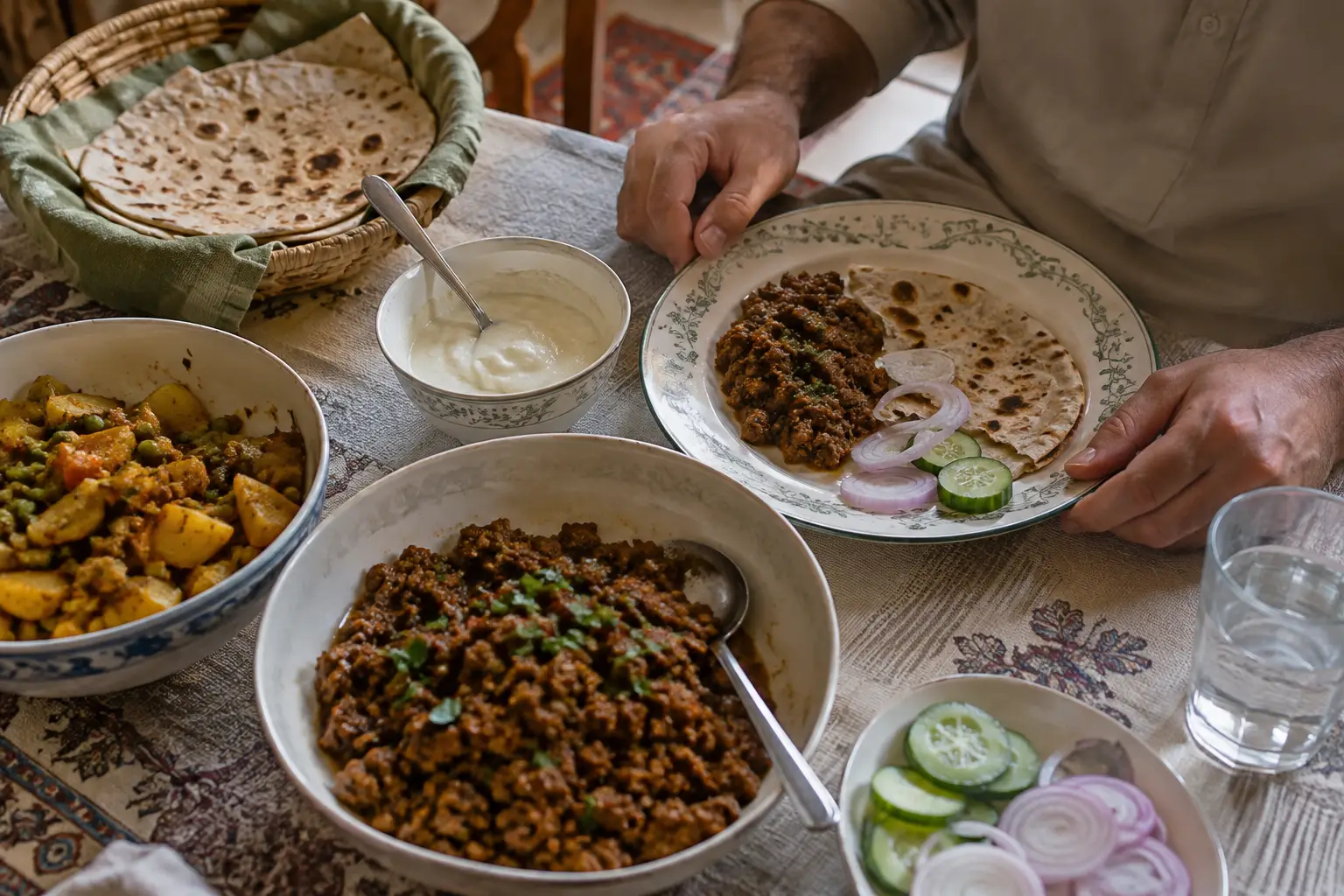
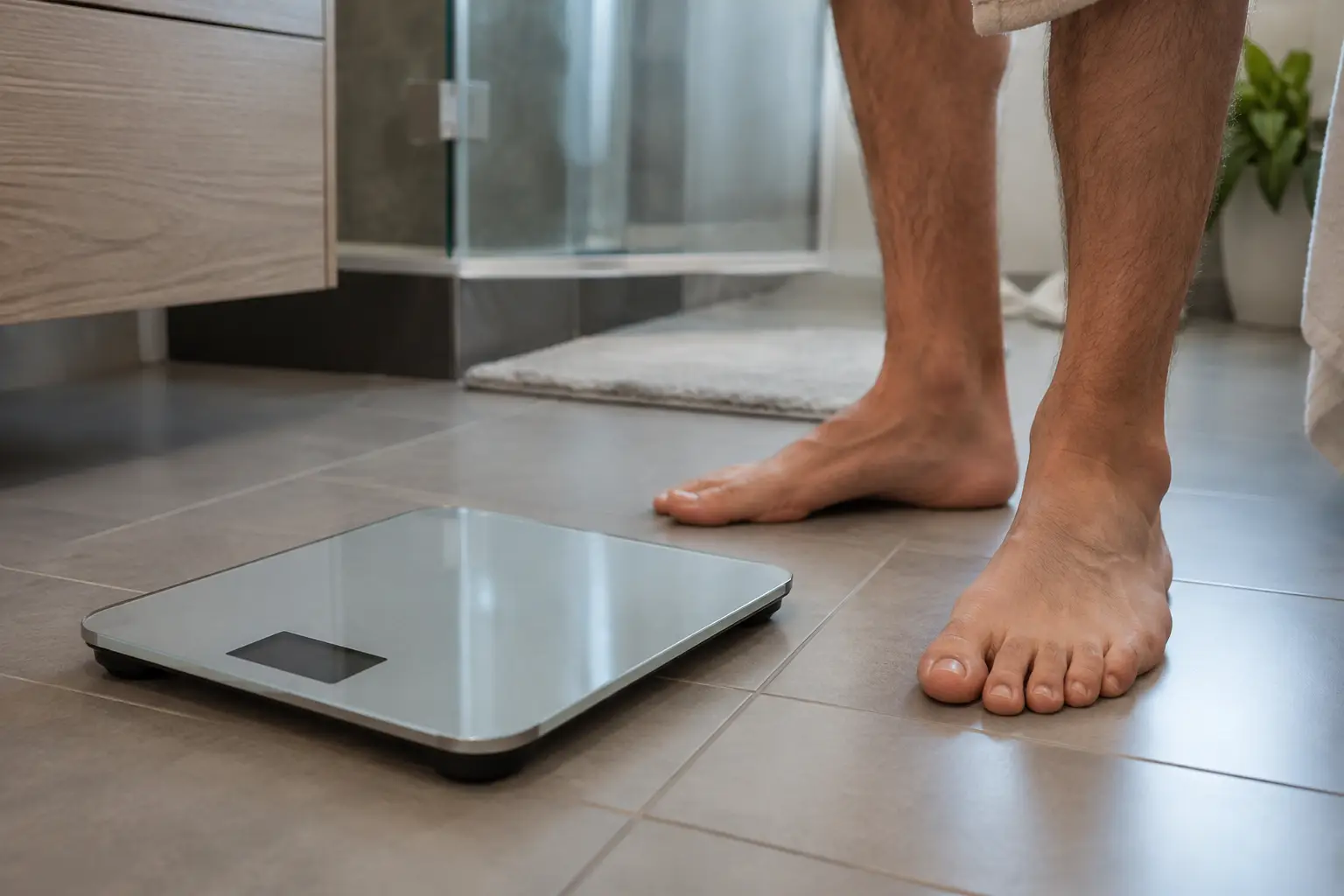
Last night’s chicken karahi was salty, and this morning you step off the scale and move it to another tile. Surely that number cannot be right.
You try again. Same reading. Now you are searching why does my weight go up after a salty desi meal and wondering whether breakfast needs to disappear.
Keep breakfast. A sudden increase can reflect extra water, stored carbohydrate and food still being digested—not just body fat. One reading cannot separate those things.
Here is how to handle the next day, from your first weigh-in to bedtime, without turning a normal meal into a punishment plan.
On Waking: Why Does My Weight Go Up After a Salty Desi Meal?
Your scale measures your total weight at that moment. It does not measure yesterday’s fat gain.
After a larger, saltier dinner, several things can push the number up together.
Salt Can Temporarily Change Water Balance
Sodium, which is part of salt, helps regulate fluid balance. When you eat more sodium than usual, your body may temporarily hold more water while it adjusts.
Restaurant karahi, achar, salty sauces and packaged seasonings can make a meal much saltier than your usual home food. You do not need to know the exact sodium total to recognise that the meal was different.
The comparison with your usual intake matters. The same dinner will not produce an identical scale change for everyone, so another person’s next-morning reading is not a useful target for yours.
Carbohydrate Storage Includes Water
If dinner also included more roti or rice than usual, you may replenish more glycogen. This is stored carbohydrate in your muscles and liver, and it is stored with water.
That does not make carbohydrates bad. It means a change in carbohydrate intake can change scale weight without an equivalent change in body fat.
Dinner Still Has Physical Weight
Food and drinks have weight while they pass through your digestive system. A late, large meal leaves less time before your morning weigh-in than an earlier, smaller dinner.
Some fat gain is possible if you ate more energy than you used. But you cannot assume that the entire overnight jump is fat—or work out how much fat you gained from that reading.
A heavier morning is information, not an instruction to eat less immediately.
Before Breakfast: Record Once, Then Leave the Scale
If weighing is already part of your routine, use consistent conditions:
- Use the same scale on a firm, level surface.
- Weigh after using the toilet and before food or drink.
- Wear similar clothing, or as little as practical.
- Record the number once rather than checking repeatedly.
Add a short note: “Late dinner, saltier than usual.” That gives the number context without pretending you can subtract a precise amount of water weight.
For example, imagine your usual readings sit around 88 kg and today shows 89 kg. That is a one-kilogram increase in total measured weight. It is not proof of one kilogram of new fat. This is an illustration, not a predicted response; changes vary between people.
If you work nights in Saudi Arabia or Qatar, use your main waking period rather than forcing a morning weigh-in after a shift. Consistency matters more than the clock.
Also avoid comparing today’s after-breakfast reading with yesterday’s before-breakfast reading. Different conditions add noise to a number that already needs context.
Breakfast: Eat Normally Instead of Starting a Compensation Day
Skipping breakfast because you dislike the scale can leave you very hungry later. If you normally eat breakfast, have your usual planned meal.
A simple option is two boiled eggs, one medium plain roti and some cucumber or tomato.
Approximate food values are:
- Two large eggs: 140–160 calories and 12–14 g protein.
- One plain roti made with 35–40 g wholemeal flour: 120–145 calories and 4–5 g protein, before added oil or ghee.
- Cucumber and tomato: a low-calorie addition that adds volume and variety.
These are estimates, not a compulsory breakfast or a daily calorie target. Your portions still need to fit your needs.
Drink water with breakfast if you are thirsty. You do not need lemon water, a special cleansing drink or several litres in one sitting. The aim is to resume your normal routine, not force the scale down by lunchtime.
If breakfast is not normally part of your schedule, the point is not to add a meal you do not want. Keep your usual planned eating pattern rather than changing it out of fear of the number.
Mid-Morning: Hydrate Normally, Especially During Gulf Shifts
Keep water available and drink regularly through the day. Thirst is a useful guide for many people, although heat, physical work and heavy sweating require more attention to hydration.
If you work outdoors in the UAE, follow your workplace heat-safety guidance. Do not deliberately restrict water to get a lighter reading tomorrow.
The opposite approach is not useful either: forcing excessive water to “flush out” dinner can be unsafe. There is no universal bottle count that suits every body, job and climate.
If you have been given specific fluid or salt guidance by your doctor, follow that rather than changing your intake based on a general fitness article.
At a desk, take a short movement break when practical. Walk to refill your bottle or spend a few minutes away from your chair. This supports your usual activity routine; it is not a method for cancelling salt.
Lunch: Separate Salt From Calories
This distinction makes the rest of the day easier: salt can affect short-term water weight, while your energy balance over time affects fat loss.
A salty meal is not automatically high in calories. A lightly salted meal can still contain plenty of calories from oil, ghee or large portions. Some takeaway meals contain both plenty of salt and plenty of energy.
For lunch, use an ordinary meal rather than a tiny “repair” plate:
- A portion of chicken, fish, beans or lentils.
- Your usual planned portion of roti or rice.
- Vegetables or salad.
- Plain yoghurt if you enjoy it.
For reference, 150 g of cooked skinless chicken breast provides roughly 240–260 calories and 45–47 g protein before sauce or oil. One cup of cooked plain lentils provides around 230 calories and 18 g protein; a finished daal recipe changes with its ingredients.
If you track food, record a reasonable estimate for last night and move on. Do not invent an extremely high calorie entry simply because your weight increased. This guide to tracking calories in homemade Pakistani food explains how to handle recipes and portions more consistently.
Keep the two questions separate: “Was this meal saltier than usual?” and “Were my portions larger than planned?” Both can be true, but they need different responses. Neither needs a punishment lunch.
Late Afternoon: Keep Your Planned Movement
If today was a training day, follow your normal session, provided you feel well. If it was a rest day, you do not need to convert it into an emergency workout.
For a busy day at home or in a hotel gym, a short session could look like this:
- Warm up with five minutes of easy movement.
- Chair squats or dumbbell squats: two sets of 8–12 repetitions.
- Wall or incline push-ups: two sets of 6–12 repetitions.
- Backpack or dumbbell rows: two sets of 8–12 repetitions per side.
- Finish with a comfortable walk if time allows.
Choose versions you can control and stop with a few good repetitions still available. This is ordinary strength practice, not a penalty for dinner.
Avoid chasing sweat with extra layers or prolonged heat exposure. Losing water through sweating may reduce scale weight temporarily, but that is not the same as losing body fat.
A hard or unfamiliar workout can also temporarily affect water retention during recovery. Adding an exhausting session may make tomorrow’s reading harder to interpret, not more useful.
Dinner: Make One Practical Adjustment, Not a New Diet
Eat your next normal dinner. You do not need to remove all salt or stop eating Pakistani food.
If last night tasted unusually salty, make tonight closer to your usual routine. Taste before adding salt, use less salty sauce, or keep achar as a small side rather than adding it automatically.
In shared accommodation, you may not control the cooking pot. Focus on the extras you choose and your usual portions. Avoid demanding a separate meal because of one weigh-in.
If the same meals regularly contain generous amounts of oil, that is a separate calorie issue worth reviewing calmly. These practical ways to reduce cooking oil in Pakistani meals can help without removing familiar dishes.
The useful question is not “How do I erase yesterday?” It is “What does a repeatable dinner look like tonight?”
For your next takeaway or dawat, one manageable change might be having sauces on the side or choosing a smaller serving of achar. You do not need to turn every shared meal into a calculation exercise.
Before Bed: Decide When You Will Review Progress
Do not weigh again tonight to check whether the plan worked. Food and fluid consumed during the day make that comparison unhelpful.
Instead, decide how you will review your trend. If daily weighing feels comfortable, compare seven-day averages rather than individual mornings. If it makes you anxious, use a less frequent, consistent schedule and consider support with monitoring.
To calculate a seven-day average, add your seven daily readings and divide by seven. Compare that with another full week measured under similar conditions. An average reduces the influence of one unusual morning, although it does not remove every source of fluctuation.
A salt-related increase often settles over the following days, but the timing varies. Meal size, carbohydrate intake, digestion, training and other factors can overlap.
If your average weight is not moving towards your goal over several weeks, review your overall portions and activity. Do not keep blaming salt for a sustained trend, but do not rewrite your diet after one high reading either.
Persistent unexplained increases or unusual swelling deserve medical advice rather than another adjustment to your meal plan. Breathing difficulty or chest pain needs urgent medical attention.
Tomorrow Morning: Return to the Routine, Not the Panic
The practical answer to why does my weight go up after a salty desi meal is that the scale can register water and digestive contents alongside any change in body fat. Watch the trend before changing the plan.
Your next-day checklist is simple:
- Record one reading under your usual conditions, if you track weight.
- Eat your normal planned meals.
- Hydrate normally and follow any personal medical guidance.
- Keep your planned activity without chasing sweat.
- Review the trend rather than demanding a lower number tomorrow.
Coach Usman is a Level 3 Personal Trainer and weight loss coach based in Gujranwala, Pakistan. If you want support interpreting progress, explore working with a weight loss coach in Pakistan. His 1:1 online coaching supports Pakistani men in Pakistan and overseas with a plan built around their food, work and daily routine.
Coaching includes support through the My Coach app and costs Rs 25,000/month or Rs 125,000 for 6 months, paid by card through Stripe. For questions about getting started, email support@coachusman.com.
Want a plan built around your job and your food? Start online coaching with Coach Usman at coachusman.com. The aim is to understand your progress and make sensible adjustments—not let one salty dinner decide the rest of your week.
This is general fitness information, not medical advice. Please talk to a doctor before changing your diet or exercise routine, especially if you have a health condition.
FAQ
How long does extra weight after a salty meal last?
It often settles over the following days as you return to your usual routine, but there is no fixed deadline. Carbohydrate intake, meal size, digestion and training can also affect weight. Use consistent readings and look at the trend rather than expecting a specific number tomorrow.
Should I cut carbohydrates or skip meals to lose the extra weight?
No compensation is needed for a single high reading. Cutting carbohydrates can lower stored carbohydrate and its associated water, but that does not prove greater fat loss. Return to your normal planned meals, hydration and activity.
When should I get advice about a sudden weight increase?
Do not assume every unexplained or persistent increase is from salt. Seek medical advice if it continues or comes with unusual swelling, and seek urgent care for breathing difficulty or chest pain. Check with your doctor if you have a medical condition. Follow any prescribed salt or fluid guidance rather than changing it yourself.
Does gaining one kilogram overnight mean I gained one kilogram of fat?
No. The scale measures total weight, including water, stored carbohydrate and food still being digested. Some fat gain is possible after an energy surplus, but the overnight change cannot tell you how much. Compare consistent readings over time rather than treating the whole increase as fat.
Should I drink extra water to flush out a salty meal?
Drink regularly and stay normally hydrated rather than forcing large amounts of water. Excessive water intake can be unsafe, and restricting fluids to lower your weight is not a useful response either. Heat and physical work affect your needs; follow workplace heat-safety advice and any fluid guidance from your doctor.
Can my weight rise after a salty meal even in a calorie deficit?
Yes. Temporary changes in water balance and digestive contents can raise scale weight even while you are eating in a calorie deficit. That does not mean the deficit has stopped working. If your average weight stays flat or rises over several weeks, review your intake and activity rather than assuming salt explains everything.
Do I need to stop eating karahi, biryani or achar to lose weight?
No. Familiar foods can fit into a weight-loss plan with suitable portions and attention to overall intake. Salt affects short-term water balance, while portions, oil and other ingredients affect calories. Keep achar as a small side if you enjoy it, and focus on a routine you can repeat.
Coach Usman, 12+ years of coaching experience
1:1 online coach for Pakistani men worldwide, building fat-loss plans around real jobs, shifts and desi food.
coachusman.comWant a coach who builds the plan around you?
Coach Usman builds your diet and training around your job, your schedule and the desi food you already eat.
Start with Coach UsmanComments (0)
No comments yet. Be the first.