
In this article
- Myth: Choosing an Online Weight Loss Programme Is Mainly About Comparing Diet Plans
- Myth: A Proper Programme Must Replace Pakistani Food
- Myth: More Workouts Mean Better Value
- Myth: The Fastest Promised Result Is the Best Programme
- Myth: Unlimited Messaging Means Good Coaching
- Myth: Pakistani Background Alone Proves a Coach Understands You
- Myth: Choosing Well Means Needing a Coach Forever
- A quick checklist before you join
Want a plan built around your job and desi food? Try 1:1 online coaching with Coach Usman.
The sample diet says grilled salmon at six, but your shift ends at eight and there is qeema waiting at home.
That gap matters more than the design of the coaching app. If you are searching for how to choose an online weight loss programme for Pakistani men, I would start with one question: what happens when the written plan meets your actual week?
I am Coach Usman, a Level 3 Personal Trainer and weight loss coach based in Gujranwala, Pakistan. I want my clients to understand their choices, not just follow instructions until something interrupts them.
Here are the myths I would clear up before choosing support.
Myth: Choosing an Online Weight Loss Programme Is Mainly About Comparing Diet Plans
Fact: The useful comparison is how each programme handles a normal disruption.
Almost anyone can show you a tidy sample menu. That does not tell you whether the coach can help when your overtime changes, your kitchen is shared or your family dinner is different from the plan.
I would give a prospective coach one ordinary situation:
“My shift has moved two hours later. I cannot cook lunch, and I have only 25 minutes to train. What would we change?”
Listen for a practical answer. They might move a meal, suggest an available food option and shorten the session. They should also ask questions before deciding.
An answer like “you just need to commit” tells you very little.
You do not need a free personalised plan before joining. You do need a clear explanation of how the coaching responds to your life.
Ask what happens after the first plan arrives, too. Who reviews it? What information do they use? How do you raise a problem that cannot wait until the next planned review? A personalised starting document is useful, but ongoing coaching should include a way to make sensible changes.
A useful programme should survive an ordinary difficult Tuesday.
Myth: A Proper Programme Must Replace Pakistani Food
Fact: Your portions and overall intake matter more than whether dinner looks like a fitness advert.
Fat loss requires a calorie deficit over time: eating less energy than your body uses. Removing roti is not a special shortcut, and keeping it does not stop progress.
I would look for a coach who can discuss familiar meals without labelling your whole food culture a problem.
Useful approximate food references include:
- 100 g cooked lean beef mince: roughly 200–250 calories and 25–28 g protein, before added oil or sauce.
- 100 g boiled chickpeas: about 160 calories and 8–9 g protein.
- 150 g plain low-fat yoghurt: around 90–110 calories and 7–9 g protein, depending on the product.
These are estimates, not exact values for every homemade recipe.
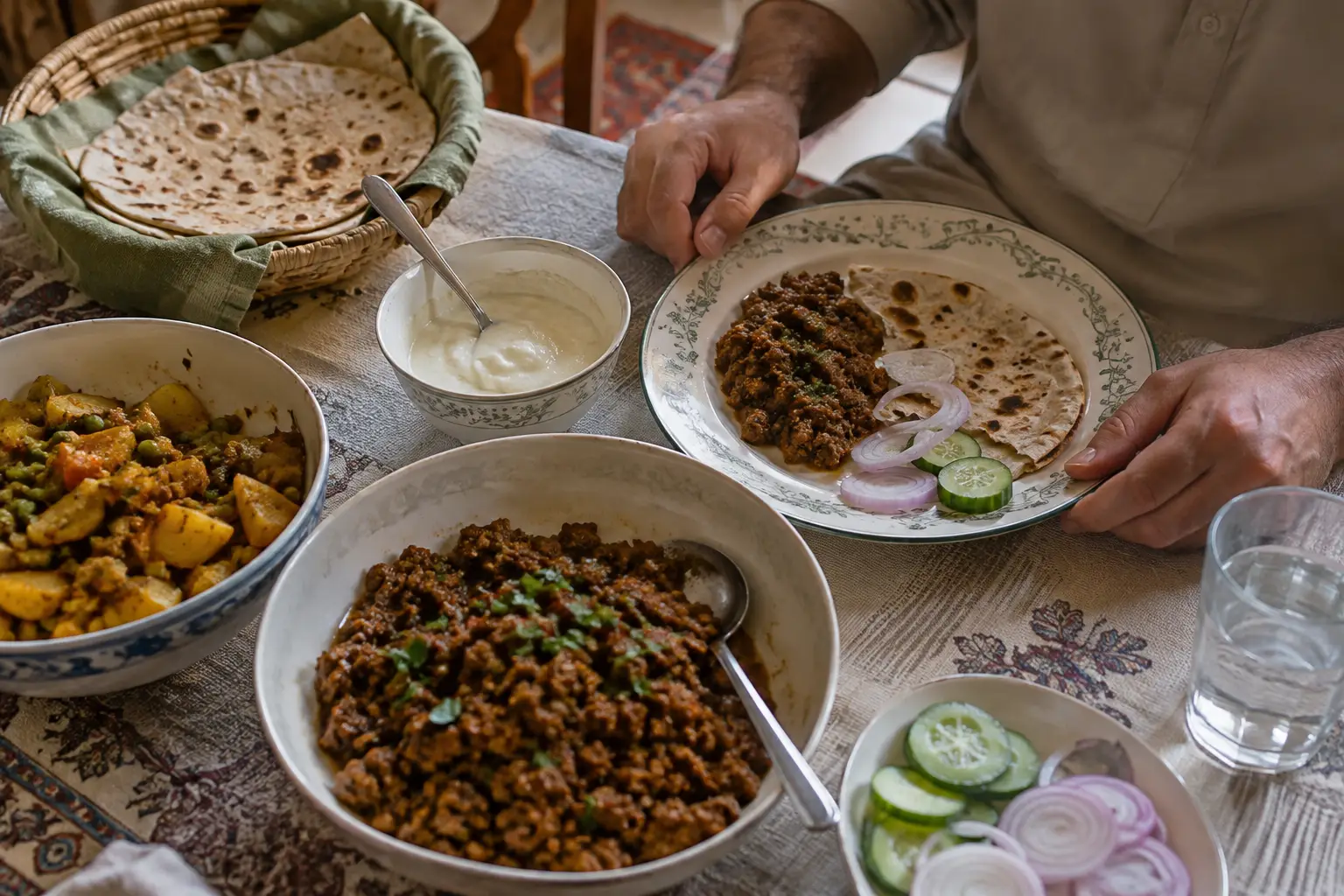
A practical lunch could be a measured portion of lean qeema, a small roti, cucumber and plain yoghurt. The coach should help adjust the amounts rather than automatically replacing the meal.
Ask: “Can you work with meals where I do not know every ingredient?”
My guide to tracking calories in homemade Pakistani food explains why useful estimates beat pretending every serving is identical.
If your family cooks, the plan should not depend on you taking over the kitchen. Ask how the coach would use consistent serving sizes, available protein foods and a realistic allowance for cooking oil. You need an approach you can repeat without turning every dinner into a negotiation.
Myth: More Workouts Mean Better Value
Fact: Training is valuable when you can repeat it and gradually improve.
Six sessions on a dashboard are not better than two sessions you actually complete. For a busy beginner, I would rather establish a manageable strength routine than sell a crowded calendar.
Ask whether the programme has a shorter version of each session and alternatives for unavailable equipment.
For example, a simple hotel-gym session might include:
- Five minutes of easy movement and light practice sets.
- Goblet squat: two sets of 8–12 repetitions.
- Dumbbell floor press: two sets of 8–12 repetitions.
- One-arm dumbbell row: two sets of 8–12 repetitions per side.
- Dumbbell Romanian deadlift: two sets of 8–12 repetitions, if you know the movement.
Rest around 60–120 seconds between sets. Choose weights that leave about two comfortable repetitions available, rather than forcing every set to failure.
This is an example, not a prescription for everyone. A coach should adapt exercises to your experience, equipment and limitations, and explain how to perform them.
Ask how exercise technique is reviewed remotely and how you will know when to add repetitions or weight. A list of exercises alone does not explain progression. You should also know what to do if a movement causes pain: stop that movement and seek appropriate guidance rather than pushing through it.
For Gulf workers, walking plans should also respect heat and access to indoor space. “Walk outside at lunchtime” is not automatically sensible advice.
Myth: The Fastest Promised Result Is the Best Programme
Fact: A responsible coach explains uncertainty instead of selling a deadline for your belly.
A promise to lose a fixed amount by a fixed date may sound reassuring. It does not account for your starting point, previous dieting, schedule or ability to follow the plan.
Early scale changes can also include water and changes in food volume, not just body fat.
I would ask how progress is assessed beyond one weigh-in. Useful measures can include:
- Weight trends collected under similar conditions.
- Waist measurements taken consistently.
- Strength and exercise progress.
- Whether hunger and tiredness are manageable.
- How often the plan actually fits your week.
You cannot choose where fat comes off first. A programme promising targeted belly-fat loss through a special workout is giving you the wrong explanation.
My preference is a clear process: establish a starting plan, gather enough information, then adjust when the trend and your experience justify it.
Ask what the coach checks before changing your food intake. A useful review considers consistency, measurement conditions, activity and recent disruptions. One higher weigh-in after a salty meal is not enough information to decide that the whole programme has failed.
Myth: Unlimited Messaging Means Good Coaching
Fact: Clear responses and useful decisions matter more than the word “unlimited.”
Ask who answers messages, the usual response window and what happens during weekends or different time zones. A man working in Canada should not have to guess when support will be available.
You should also know what a check-in includes. Is someone reviewing your training and meals, or simply replying “keep going”?
I want my clients to leave a review knowing what to continue, what to change and why. That might mean keeping food unchanged while fixing a missed lunch, rather than immediately cutting calories again.
Useful feedback should be specific enough to act on. “Prepare a lunch option before your next two late shifts” is clearer than “be more disciplined.”
My article on common fat-loss feedback mistakes explains how to make those conversations more useful from your side too.
Also ask what you are expected to submit. If the programme requires detailed daily records, make sure you can realistically provide them. Clear expectations on both sides are more useful than a long feature list that nobody explains.
Myth: Pakistani Background Alone Proves a Coach Understands You
Fact: Cultural familiarity helps, but thoughtful questions show whether the support is personal.
Knowing the names of your foods is a starting point. It does not tell a coach whether you live alone, share a kitchen with five colleagues or eat whatever is served after work.
I would expect questions about your working hours, cooking access, food budget, training history and family responsibilities. Your preferences should influence the plan too.
A Pakistani man working a desk job in the USA may need different practical support from someone doing physical shifts in Saudi Arabia. Neither needs assumptions based only on nationality.
If you are comparing a personal trainer in Pakistan, look beyond the location label. Ask how remote coaching works for your particular routine.
Qualifications, professional boundaries and willingness to refer you elsewhere when something is outside their scope also matter. Cultural understanding does not replace those basics.
If you observe Ramadan, ask how meal timing, training and recovery would be reviewed during that period. If you travel between countries, ask how the plan handles different food options and equipment. These are ordinary planning questions, not reasons to expect a perfect routine all year.
Myth: Choosing Well Means Needing a Coach Forever
Fact: Good coaching should build skills you can eventually use with less help.
Before joining, ask what you should learn during the programme. I would want you to become more confident with meal portions, exercise technique, training progression and sensible adjustments during busy periods.
Also check the practical terms: total cost, minimum commitment, cancellation arrangements, what support is included and how your information is handled. These should be understandable before payment.
You can review my premium coaching to compare the support with what you actually need. My 1:1 online coaching is for Pakistani men in Pakistan and overseas and costs Rs 25,000/month or Rs 125,000 for 6 months, paid by card through Stripe. It runs through the My Coach app, but the app is a delivery tool, not the reason a plan works.
Before choosing either option, read the current terms and refund policy. Ask about anything unclear, including renewal arrangements and what happens if your circumstances change. Do not assume that a longer option includes a pause or cancellation arrangement unless that is stated.
A quick checklist before you join
Use the same questions when comparing programmes:
- Food: Can the plan work with your normal meals and cooking access?
- Training: Does it fit your available time, experience and equipment?
- Feedback: Who reviews your progress, and how are changes explained?
- Communication: Are response windows and time-zone arrangements clear?
- Progress: Does the coach assess trends rather than react to a single number?
- Cost: Do you understand the price, commitment and payment terms?
- Independence: Will you learn skills rather than only receive instructions?
You do not need every coach to use the same method. You do need answers you understand and an approach you can realistically follow.
My central advice on how to choose an online weight loss programme for Pakistani men is simple: choose support that helps you make better decisions in your real week, not just follow a perfect sample day.
Want a plan built around your job and your food? Start online coaching with Coach Usman at coachusman.com. For questions before joining, email support@coachusman.com.
This is general fitness information, not medical advice. Please talk to a doctor before changing your diet or exercise routine, especially if you have a health condition.
FAQ
Can I use online weight loss coaching without joining a gym?
Yes. I would look for a programme that adapts strength training to your available equipment and space. Food habits, manageable activity and a repeatable routine still matter; gym access is not a requirement for losing weight.
Do I need to count calories every day?
Not necessarily. A coach can use calorie tracking, consistent portions or a combination. I would choose an approach you can follow and review, rather than one that requires more detail than your schedule allows.
What should I tell a coach before starting?
Share your work schedule, training experience, food access, previous difficulties, injuries and relevant health information. Explain your equipment, budget and family responsibilities too. Check with your doctor if you have a medical condition.
Can I keep eating roti, rice and family meals?
Yes. These foods can fit a weight loss plan. Portions, cooking oil and your overall intake matter more than removing one familiar food. Ask how the coach handles shared dishes and meals where you cannot measure every ingredient.
How do I compare online weight loss programmes before paying?
Ask each coach how they would handle the same realistic problem, such as a late shift and limited training time. Compare their assessment process, meal flexibility, training options, feedback, response windows and payment terms—not just the sample menu.
How much does Coach Usman's online coaching cost?
Coach Usman's 1:1 online coaching costs Rs 25,000/month or Rs 125,000 for 6 months, paid by card through Stripe. Coaching runs through the My Coach app. Review the current terms and refund policy before paying, and email support@coachusman.com with questions.
Can Pakistani men living overseas use online coaching?
Yes. Coach Usman offers 1:1 online coaching for Pakistani men in Pakistan and overseas. Before joining any programme, check how communication, food options, work shifts and training access will fit your location and time zone.
What should happen if my weight stops going down?
A coach should review the trend, measurement conditions, food consistency, activity and recent routine changes before deciding what to adjust. One weigh-in is not enough to identify a plateau. Ask how those reviews work before you join.
Coach Usman, 12+ years of coaching experience
1:1 online coach for Pakistani men worldwide, building fat-loss plans around real jobs, shifts and desi food.
coachusman.comWant a coach who builds the plan around you?
Coach Usman builds your diet and training around your job, your schedule and the desi food you already eat.
Start with Coach UsmanComments (0)
No comments yet. Be the first.