In this article
- Mistake 1: Giving Your Online Personal Trainer a Highlight Reel — Show the Ordinary Week
- The fix
- Mistake 2: Reporting “I Followed the Diet” — Describe What You Ate
- The fix
- Mistake 3: Sending Workout Ticks Only — Record the Work Behind Them
- The fix
- Mistake 4: Waiting Until Check-In Day to Mention a Problem — Flag It Early
- The fix
- Mistake 5: Sending Numbers Without Context — Explain the Conditions
- The fix
- Mistake 6: Requesting Five Changes at Once — Test One Useful Adjustment
- The fix
- Mistake 7: Treating Coaching as Permission — Use It to Build Your Own Decisions
- The fix
Want a plan built around your job and desi food? Try 1:1 online coaching with Coach Usman.
You move the leftover chicken karahi out of the photo before sending your dinner update to your coach. The plate looks tidy, but it no longer tells the whole story.
It is a small thing. You want to show that you are trying. But an online personal trainer can help you more with an ordinary, honest week than a carefully edited one.
For busy Pakistani men, the challenge is rarely just knowing which exercise to do. It is explaining what happens between the plan on your phone and your actual working week.
These seven mistakes are about using coaching well once you have started. Better feedback helps your coach adjust food, training and expectations without making your life more complicated.
Your check-in is information, not an exam.
Mistake 1: Giving Your Online Personal Trainer a Highlight Reel — Show the Ordinary Week
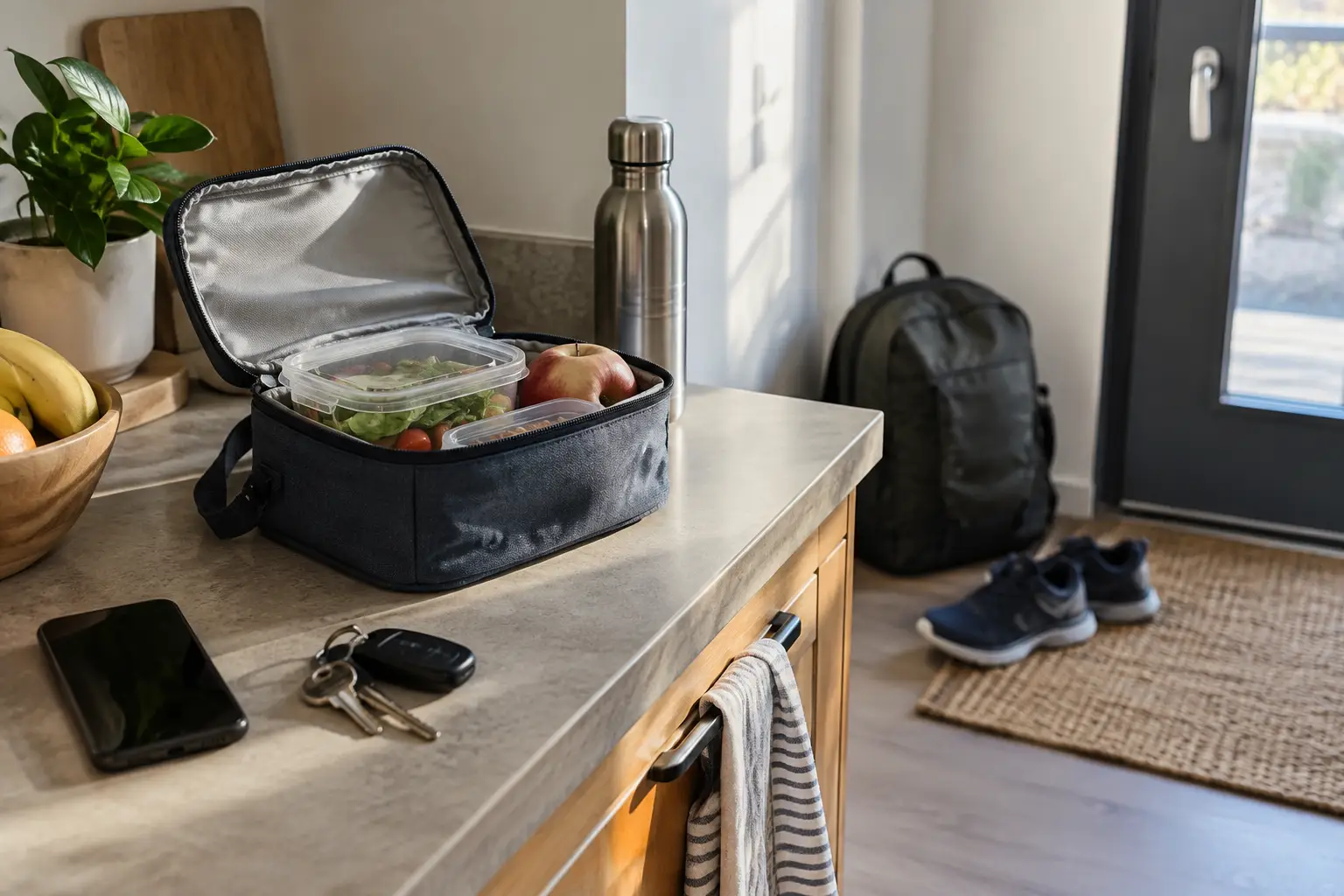
You log the lunch you packed, but not the snacks you ate while finishing a report. You record your best workout, but leave the missed sessions blank.
This creates a misleading picture. Your coach may assume the current plan is manageable when it is actually asking too much of you.
Fat loss needs a sustained calorie deficit: eating less energy than your body uses over time. Missing food information can make that deficit look larger on paper than it really is. Missing schedule information can hide why the plan is difficult to follow.
The fix
Share a short snapshot of normal days, including one less organised day. Depending on your agreed tracking method, that could include:
- Food photos with a brief description of portions and seconds.
- Meals bought outside, even when you cannot estimate them closely.
- Completed and missed workouts.
- The practical reason something changed.
Instead of “I was bad on Thursday,” write: “The meeting ran late, so I bought dinner and ate straight from the takeaway container.”
Now there is something useful to solve: access to dinner and portion visibility, not your character.
Mistake 2: Reporting “I Followed the Diet” — Describe What You Ate
A meal name does not explain its size or preparation. “Chicken and roti” could mean a modest meal or a large serving with plenty of cooking oil.
You do not need laboratory accuracy. You do need enough detail to make comparisons useful.
For perspective, these are approximate values, not fixed numbers:
- One medium plain roti, made from around 30–40 g of atta without added fat: roughly 100–140 calories and 3–5 g protein.
- 150 g cooked skinless chicken breast, before sauce or added oil: roughly 240–260 calories and 43–47 g protein.
- One cup of cooked lentils, before added oil or tarka: roughly 220–240 calories and 16–18 g protein.
- One tablespoon of oil: roughly 120 calories, with no protein.
Homemade recipes, meat cuts and serving sizes change these estimates. Karahi sauce cannot be treated as plain chicken.
The fix
Agree on one simple reporting method with your coach. You might record roti size and count, photograph a serving on the same plate, or measure a few familiar foods temporarily.
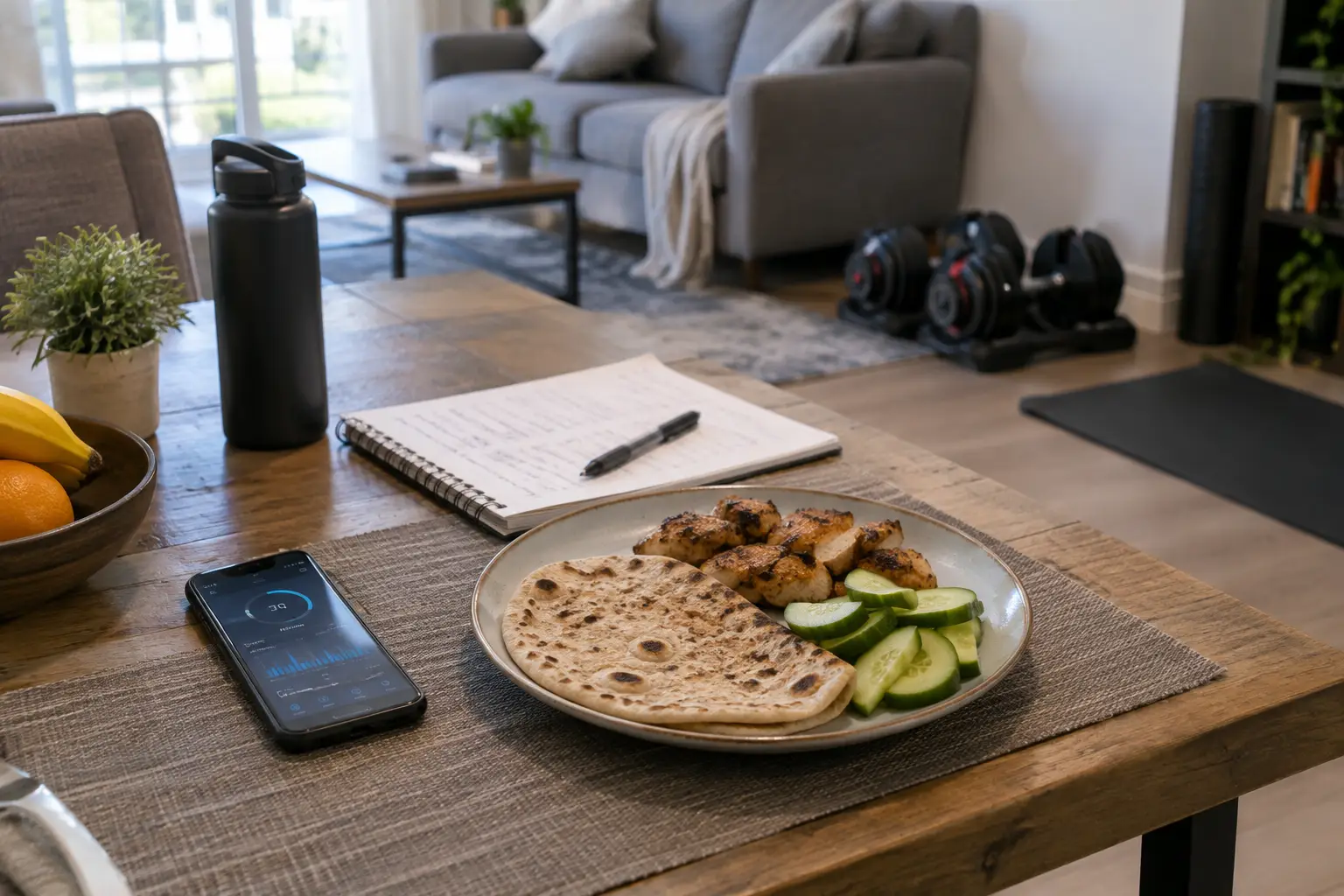
A useful meal note could be: “Two medium rotis, one palm-sized serving of chicken karahi, cucumber, and a small bowl of plain yogurt. No second serving.”
If you share a kitchen in Saudi Arabia or Qatar, you may not control the cooking oil. Say that. A workable adjustment might involve your serving size or meal choice rather than asking you to cook a separate dinner.
Mistake 3: Sending Workout Ticks Only — Record the Work Behind Them
A completed-session tick tells your coach that you trained. It does not show whether the exercises were too easy, too difficult or unsuitable for the equipment available.
This matters during fat loss because strength training helps you retain muscle. The goal is not simply to collect sweaty sessions.
The fix
For your main exercises, record:
- The weight or resistance used.
- Repetitions completed in each set.
- How many more controlled repetitions you think you could have done.
- Any discomfort or equipment problem.
For example: “Goblet squat: 12 kg, two sets of 10. Could probably do two more reps. Bench was unavailable for the next exercise.”
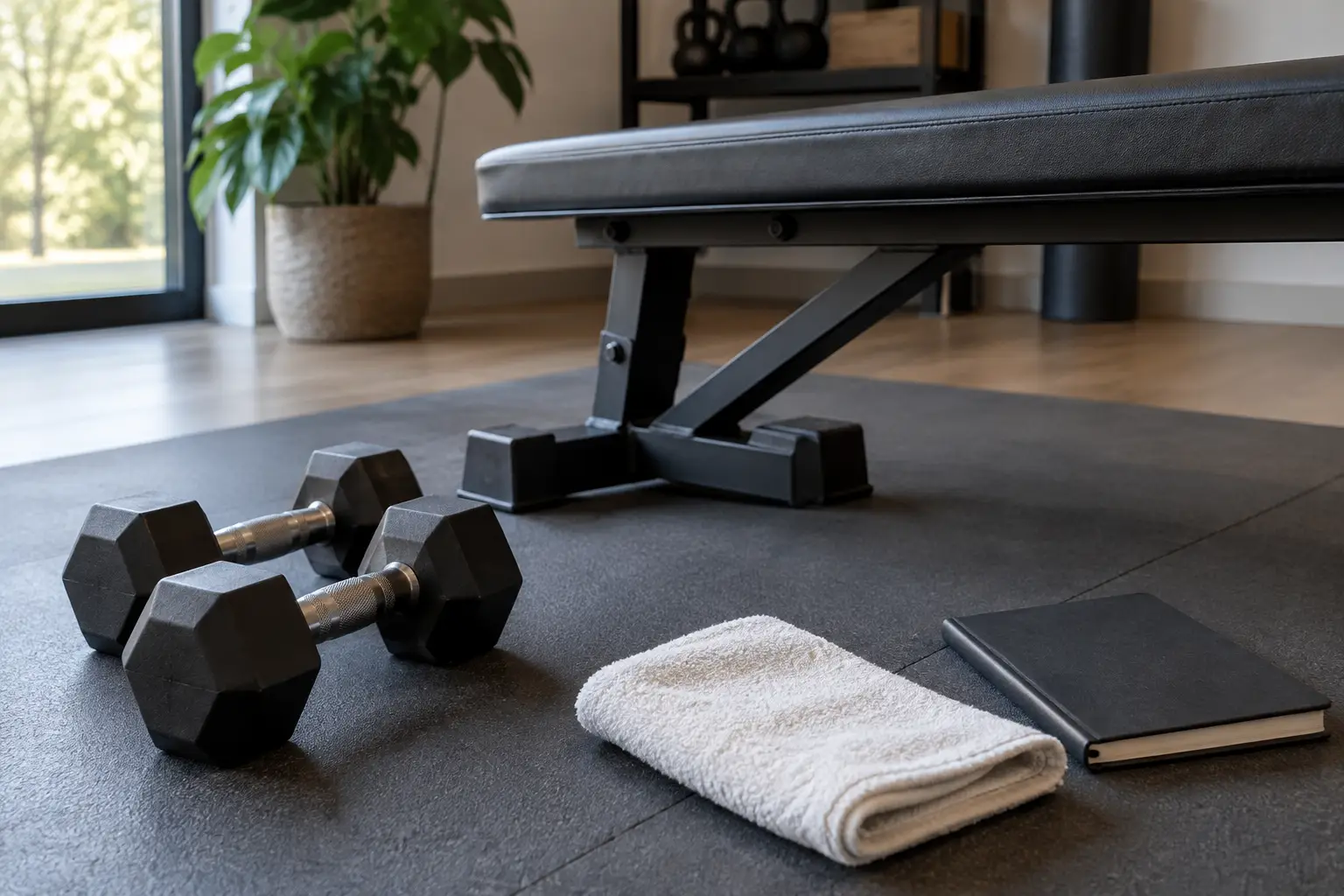
A simple hotel-gym session to discuss with your coach might be:
- Goblet squat: 2 sets of 8–12 repetitions.
- Dumbbell floor press: 2 sets of 8–12.
- One-arm dumbbell row: 2 sets of 10–12 per side.
- Glute bridge: 2 sets of 10–15.
Warm up first, rest between sets and use controlled movements. Your starting loads should match your ability, not somebody else's workout video. Stop an exercise that causes pain rather than pushing through it.
If the movements are unfamiliar, read this guide to learning strength exercises before adding load.
Mistake 4: Waiting Until Check-In Day to Mention a Problem — Flag It Early
Your workplace changes your hours on Tuesday. Your planned training slot disappears. You wait until Sunday to explain why no sessions happened.
A weekly review is useful, but it should not become a waiting room for problems that need a quick adjustment.
Equally, online coaching does not automatically mean instant replies at any hour. Agree on the communication channel and expected response times first.
The fix
Send a short message when something changes enough to affect the plan:
“Work has moved me onto late finishes for the next two weeks. I can train on Saturday and Monday, but not Wednesday. Can we move to two sessions temporarily?”
That message gives your coach a constraint and an available option.
The same applies to limited equipment, travel, persistent hunger or an exercise you cannot perform comfortably. Report the issue before repeatedly forcing a plan that no longer fits.
If training at home becomes the practical option, this quiet-room workout guide offers useful ideas to discuss with your coach.
Mistake 5: Sending Numbers Without Context — Explain the Conditions
You send a body-weight reading after a late restaurant dinner, then another after a lighter day. The numbers differ, so you assume one day worked and the other failed.
Body weight includes more than body fat. Food in your digestive system, fluid changes and measurement conditions can affect the reading.
Your coach needs context, not a dramatic explanation for every small movement.
The fix
Agree on a measurement routine that you can follow without becoming preoccupied with it. If using a scale, take readings under similar conditions, such as after using the toilet and before breakfast.
Useful supporting information can include:
- A weight trend across several comparable readings.
- A waist measurement taken consistently at an agreed interval.
- Changes in strength or repetitions.
- How often you followed the agreed food and activity plan.
Progress photos are optional. Discuss privacy and alternatives if you are uncomfortable sharing them.
A helpful note is: “Weight is higher this morning after travel and a late meal. Here are the other readings from this week.”
That allows a calmer review than asking for a food cut after one number.
Mistake 6: Requesting Five Changes at Once — Test One Useful Adjustment
When progress feels slow, it is tempting to ask for fewer calories, more cardio, extra lifting, a higher step target and a completely new menu.
If everything changes together, it becomes harder to tell what helped. It also increases the work required to follow the plan.
The fix
Ask your coach three questions:
- What is the main issue the feedback suggests?
- What is the smallest useful adjustment?
- When will we review whether it helped?
Suppose your records show an unplanned afternoon snack most working days. A first adjustment might be bringing a filling snack, such as plain yogurt and fruit, rather than adding another gym session.
If food intake is reasonably consistent but activity has dropped, a manageable walking slot may be more appropriate. The choice should follow the information, not frustration.
For help understanding those trade-offs, read how to divide your time between steps and the gym.
Mistake 7: Treating Coaching as Permission — Use It to Build Your Own Decisions
“Can I eat this?” can be a useful early question. But asking permission for every roti, restaurant meal or missed session makes coaching feel like supervision.
The aim should be to understand your plan well enough to handle ordinary decisions yourself.
The fix
Ask for a decision rule rather than a yes-or-no answer:
- “How can I include chicken karahi when I do not know the recipe?”
- “What should I prioritise when I have only 25 minutes to train?”
- “Which parts of my routine should stay the same during travel?”
Then bring your reasoning to the next review: “I chose grilled chicken, a roti and salad because I wanted a meal with protein and a portion I could judge.”
Coach Usman is a Level 3 Personal Trainer, weight loss coach, offering 1-on-1 online coaching through the My Coach app. You can explore the personal trainer Pakistan service or learn about support from an online personal trainer pakistan.
You do not need a perfect report before asking for help. You need an honest starting point and a plan that can be adjusted.
Want a plan built around your job and your food? Start online coaching with Coach Usman at coachusman.com.
This is general fitness information, not medical advice. Please talk to a doctor before changing your diet or exercise routine, especially if you have a health condition.
FAQ
What should I send my online personal trainer each week?
Follow your agreed check-in format. Useful information includes completed workouts, food patterns, comparable progress measurements and anything that made the plan difficult. Brief, honest details are more useful than a polished report.
Do I have to count calories to use online coaching?
Not necessarily. Food photos, consistent portions and meal notes can also guide adjustments. Calorie tracking is one tool; choose an approach with your coach that gives useful information without becoming an unrealistic task.
Can online coaching work if I share a kitchen?
Yes, a plan can account for limited control over recipes and cooking times. Tell your coach what food is available, what storage you have and which portions you can control.
What if I have a medical condition?
Check with your doctor if you have a medical condition. Share any relevant exercise or dietary restrictions with your coach so the plan stays within the guidance you have received.
Coach Usman, 12+ years of coaching experience
1:1 online coach for Pakistani men worldwide, building fat-loss plans around real jobs, shifts and desi food.
coachusman.comWant a coach who builds the plan around you?
Coach Usman builds your diet and training around your job, your schedule and the desi food you already eat.
Start with Coach UsmanComments (0)
No comments yet. Be the first.