
In this article
- How to build muscle without gaining too much fat if I already have a belly?
- How much extra food should I eat if I do need a surplus?
- How much protein do I need without turning every meal into chicken?
- What should my workouts look like if I only have three days?
- Session A
- Session B
- How slowly should my weight go up?
- When should I reduce calories instead of continuing the bulk?
- Can walking and sleep help me avoid gaining unnecessary fat?
- What should I do next if I want a plan I can actually follow?
Want a plan built around your job and desi food? Try 1:1 online coaching with Coach Usman.
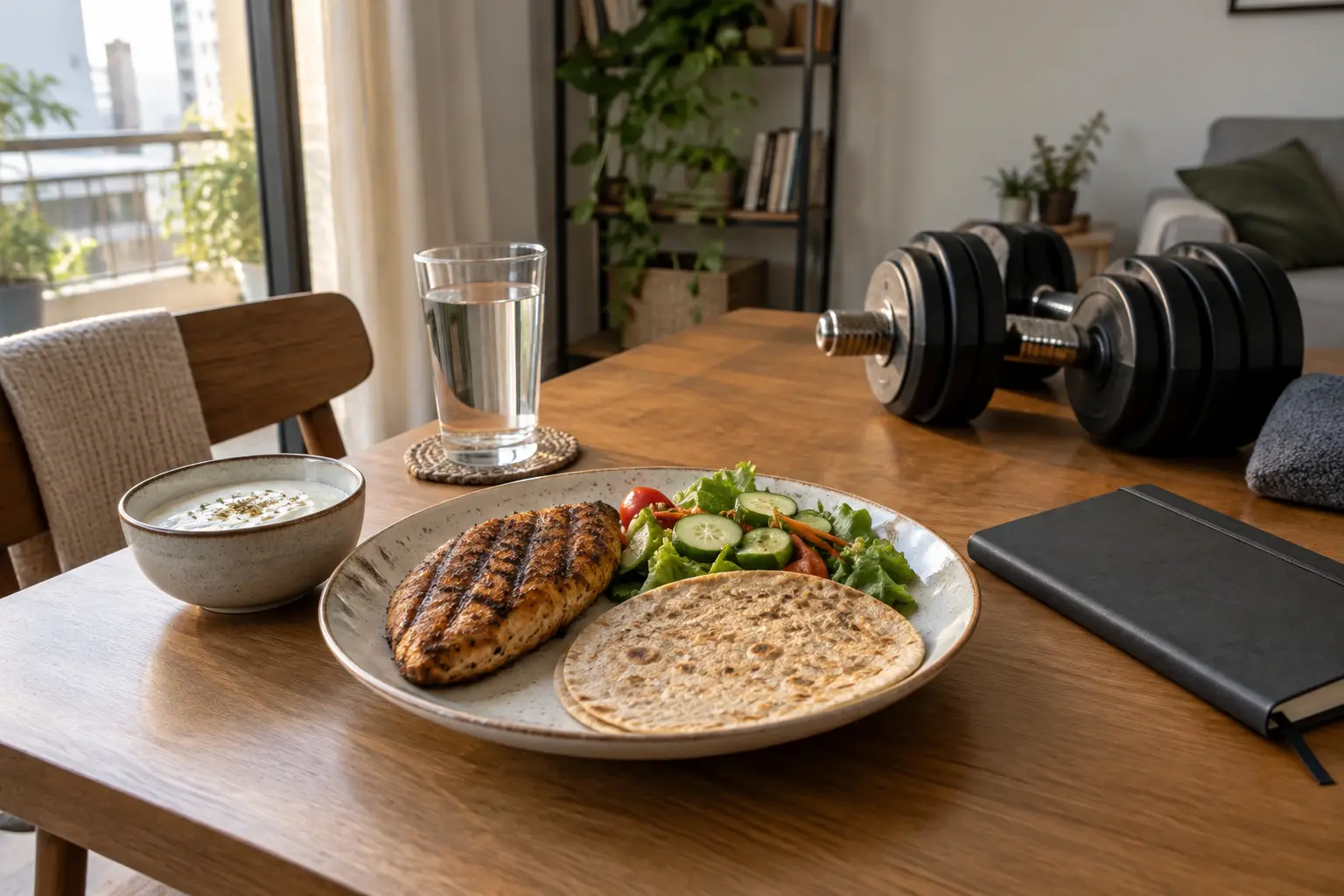
You finish your chicken and roti, then reach for another serving because someone told you that building muscle means eating as much as possible.
But your trousers already feel tight, and you want stronger shoulders—not another reason to loosen your belt.
When I explain how to build muscle without gaining too much fat, I start with this: more food is useful only when it supports productive training. It is not a replacement for it.
Here is how I approach the decision with my clients: choose the right starting point, keep the food increase small if you need one, and let several weeks of evidence guide changes. You do not need to rush into a bulk or make a dramatic change to your meals.
How to build muscle without gaining too much fat if I already have a belly?
You do not automatically need a calorie surplus, which means eating more energy than you burn.
If you are new to lifting, returning after a break, or carrying extra body fat, you may be able to build muscle while eating around maintenance or in a modest calorie deficit. This is not guaranteed, but it makes an aggressive bulk unnecessary.
I use three starting options:
- Fat loss is the main priority: use a modest deficit, eat enough protein and lift consistently.
- You want to improve shape without pushing scale weight up: start near maintenance and watch training progress.
- You are relatively lean and training consistently: consider a small surplus if progress has stalled despite good recovery.
Maintenance is not a magic number from a calculator. It is an estimate you refine by watching your average weight alongside your usual eating and activity. Your daily weight can move around for reasons that have little to do with changes in body fat, so look at the trend rather than one morning's result.
I would rather spend two weeks understanding your baseline than immediately add a large meal you may not need. Keep your usual meals and activity reasonably consistent during that time, and record your weight if doing so feels manageable.
Building muscle needs a training signal, not permission to eat without limits.
How much extra food should I eat if I do need a surplus?
Start small. Around 100–200 extra calories a day can be a reasonable starting experiment, not a promise that it is the perfect amount for everyone.
Keep the rest of your meals fairly consistent. If you increase breakfast, lunch, dinner and snacks together, it becomes difficult to know how much you have added. A single measured addition is easier to monitor and adjust.
Choose one measured addition, such as:
- About 100 g cooked plain rice: roughly 130 calories and 2–3 g protein.
- One medium plain roti made with around 35 g flour: roughly 120 calories and 4 g protein, before added oil or butter.
- Around 200 g plain low-fat yogurt: often 100–140 calories and 8–12 g protein, depending on the label.
These are estimates. Recipes and serving sizes matter, especially when someone else cooks. Oil, butter, sauces and the amount of flour or rice can change the final numbers.
I prefer an addition that fills a real gap. If protein is low, yogurt may be more useful than extra rice. If protein is already covered but training feels under-fuelled, a carbohydrate portion may fit better. The best option is one you can measure, enjoy and repeat.
You do not need different complicated menus for training and rest days. A consistent starting intake is easier to evaluate. Once you have enough information about your progress, you can decide whether a change is needed.
How much protein do I need without turning every meal into chicken?
For most healthy adults lifting regularly, roughly 1.6–2.2 g of protein per kilogram of body weight per day is a useful general range. You do not need to chase the top end automatically.
For an 80 kg man, that means about 128–176 g daily. I would start with a manageable target near the lower end rather than create a plan he cannot follow. Consistency matters more than setting an ambitious target that makes every meal feel like work.
If you carry substantial excess body weight, using your current weight can produce an unnecessarily high target. An appropriate target weight can be a more practical reference.
Spread protein across three or four meals. Familiar foods can do the job:
- Two large eggs: about 140–160 calories and 12–14 g protein.
- 150 g cooked skinless chicken breast: about 240–260 calories and 45–47 g protein, before sauce or oil.
- One cup cooked plain lentils: about 230 calories and 18 g protein, before the daal's added oil.
- 200 g higher-protein plain yogurt: check the label; some provide around 18–20 g protein.
A simple meal could be chicken, a measured serving of rice and vegetables. Another could be daal, yogurt and roti. Neither needs to look like a bodybuilding menu. Portions, preparation and the foods available to you all matter, so use these examples as a guide rather than exact rules for every plate.
If you do not eat meat, my guide to getting enough protein on a Pakistani vegetarian diet explains how to combine practical options.
What should my workouts look like if I only have three days?
I want your training to give the extra food a purpose. Three repeatable full-body sessions can be more useful than a six-day plan you manage once. A plan you can repeat gives you a clearer way to track technique, repetitions and strength over time.
Here is a simple gym or hotel-gym starting structure. Alternate these sessions across three non-consecutive days. For example, you could train Monday, Wednesday and Friday, alternating Session A and Session B. The exact days are less important than having enough recovery time between sessions.
Session A
- Goblet squat: 3 sets of 8–12 repetitions.
- Dumbbell bench press: 3 sets of 8–12.
- One-arm dumbbell row: 3 sets of 10–15 per side.
- Dumbbell Romanian deadlift: 2 sets of 8–12.
Session B
- Reverse lunge: 2 sets of 8–12 per leg.
- Seated dumbbell shoulder press: 3 sets of 8–12.
- Lat pulldown: 3 sets of 8–12.
- Glute bridge: 3 sets of 10–15.
Warm up first, including lighter practice sets. Rest around two minutes between demanding sets, and longer if needed to keep your technique steady. If an exercise causes pain or you are unsure how to perform it, pause and get appropriate guidance before continuing.
Finish most sets with roughly two good repetitions still available. When you reach the top of the range on every set with controlled technique, increase the weight slightly. If the next weight jump is too large, keep the weight and work on adding repetitions with good form.
Record the weight and repetitions. Sweating more is not proof that the workout built more muscle. A simple log helps you see whether you are repeating sessions and gradually improving, rather than guessing from how tired you felt.
The CU Fit app gives you a custom diet built around foods you already eat and daily workouts that unlock as you progress. That can help you follow a structure rather than invent a new plan after every shift.
How slowly should my weight go up?
If you are deliberately gaining weight, a conservative starting pace is around 0.1–0.25% of body weight per week, judged over several weeks—not individual weigh-ins.
For an 80 kg man, that is roughly 0.08–0.2 kg weekly. Changes this small are easily hidden by water, food in your digestive system and normal scale variation. Do not assume you are doing something wrong because the scale does not move in a straight line.
That is why I do not label every increase as muscle or fat. Eating more carbohydrates can raise water weight before meaningful tissue changes occur. A sudden scale change over a day or two is not enough evidence to make a major adjustment to your plan.
Use a few simple measures:
- Morning weight under similar conditions, several times weekly if that feels manageable.
- Waist measurement once weekly, at the same point and without pulling the tape tight.
- Your main exercise weights, repetitions and technique.
- Progress photos every few weeks under similar lighting.
My guide to tracking weight without scale obsession can help you keep those checks useful rather than stressful. You do not need to use every measure if it makes tracking feel like a burden; pick a few that help you make sensible decisions.
When should I reduce calories instead of continuing the bulk?
I look for a pattern, not a single bad measurement.
If your average weight rises faster than intended for several weeks, your waist is clearly increasing, and training progress is limited, your surplus may be bigger than you need.
Reduce intake by roughly 100–200 calories a day, then reassess after another couple of weeks. Start with the extra portion you added rather than cutting protein or removing whole food groups. Make one change at a time so you can tell what is helping.
If weight is stable but you are getting stronger with consistent technique, you may not need to change anything. Maintenance can still be a productive place to build strength and improve your training.
If weight and strength are both flat, first check missed sessions, sleep, inconsistent meals and whether your sets are challenging enough. Only then consider adding food. Also check whether you have given your plan enough time to show a pattern; frequent changes make progress harder to interpret.
As a Level 3 Personal Trainer, specialized as a weight loss coach, I do not treat a bigger scale number as automatic success. My approach as a weight loss coach in Pakistan is to keep your waist, performance and main goal in the same conversation.
Can walking and sleep help me avoid gaining unnecessary fat?
Yes, but not by cancelling unlimited eating.
Keep walking reasonably consistent so your activity does not drop when you start lifting. A short walk after lunch and another after work may be easier than chasing a demanding daily step target. The goal is to choose a realistic routine you can maintain, not to use walking as a way to compensate for every extra serving.
In Gulf heat, use comfortable indoor walking options rather than forcing a midday outdoor walk. If your job already involves plenty of walking, you may not need much extra. Think about your usual activity before adding more to your schedule.
Aim for seven to nine hours of sleep where your schedule allows. If you work shifts, protect a regular sleep window as much as possible and avoid expanding your training plan beyond what you can recover from. Sleep and recovery support your ability to keep training consistently; they do not need to be perfect for you to make progress.
I would rather you complete three solid sessions while reasonably rested than add workouts and spend every evening exhausted. A manageable plan is easier to repeat than one that depends on having unlimited time and energy.
What should I do next if I want a plan I can actually follow?
Start with two weeks of consistent meals, three planned lifting sessions and a simple training log. Decide whether fat loss, maintenance or a small surplus best matches your starting point. Keep your changes modest, and use your weight trend, waist and training record to guide what happens next.
That is my practical answer to how to build muscle without gaining too much fat: earn food adjustments through evidence, not impatience.
CU Fit includes a new diet every 30 days, weekly check-ins with photos, weight and waist, and progress charts. Coach Usman Assistant chat and a bad day reset help you get back to the plan after a slip. I personally review your progress after six check-ins.
Pricing starts from $14.99/month worldwide or Rs 1,499 in Pakistan, with a seven-day money-back offer. You can review the pricing options before deciding.
Want a plan built around your job and your food? Start with CU Fit at coachusman.fit for an affordable custom diet and workout plan. Want Coach Usman to coach you 1:1? Choose Premium coaching.
For more on working directly with me, see my personal training approach.
This is general fitness information, not medical advice. Please talk to a doctor before changing your diet or exercise routine, especially if you have a health condition.
FAQ
Can I build muscle without gaining any fat?
Some people, especially beginners and those returning to training, can build muscle at maintenance or in a modest deficit. However, zero fat gain cannot be guaranteed. Consistent strength training, adequate protein and careful calorie adjustments help limit unnecessary gain.
Should I bulk if I already have belly fat?
Not automatically. If reducing your waist is your main priority, start with a modest calorie deficit and strength training. Maintenance may also suit some beginners. Choose a starting point based on your goal and how your weight and training are progressing.
How long should I wait before adjusting my muscle-gain calories?
Usually assess at least two to three weeks of consistent eating and training before making a small adjustment. Compare average weight, waist measurements and workout performance. An early scale increase after eating more carbohydrates may reflect water rather than fat.
How much of a calorie surplus should I start with?
A small increase of around 100–200 calories a day can be a reasonable starting experiment if you need a surplus. It is not a perfect amount for everyone. Keep other meals fairly consistent, then review your weight trend, waist and training after a few weeks.
How much protein should I eat to build muscle?
For most healthy adults who lift regularly, roughly 1.6–2.2 g of protein per kilogram of body weight per day is a useful general range. You do not automatically need the top end. Choose a manageable target and spread protein across meals.
Can I build muscle with three workouts a week?
Three repeatable full-body sessions can provide a useful training structure. Focus on controlled technique, challenging sets, gradual progress and enough recovery between sessions. Consistency matters more than choosing a schedule that is difficult to maintain.
Should I change my plan if my weight goes up after increasing food?
Not based on one weigh-in. Water, food in your digestive system and normal scale variation can change your weight from day to day. Compare averages over several weeks alongside waist measurements and training performance before adjusting your intake.
Coach Usman, 12+ years of coaching experience
1:1 online coach for Pakistani men worldwide, building fat-loss plans around real jobs, shifts and desi food.
coachusman.comWant a coach who builds the plan around you?
Coach Usman builds your diet and training around your job, your schedule and the desi food you already eat.
Start with Coach UsmanComments (0)
No comments yet. Be the first.