In this article
- How to measure waist size accurately for fat loss progress: the checklist
- 1. Pick a repeatable day and time
- 2. Find the same spot each time
- 3. Set the tape correctly
- 4. Keep a simple record
- 5. Avoid these measurement traps
- 6. Use the number as feedback, not a grade
- 7. Make your weekly check easy to repeat
- Conclusion: how to measure waist size accurately for fat loss progress
Want a plan built around your job and desi food? Try 1:1 online coaching with Coach Usman.
A tape measure can give you useful progress information, but only if you use it the same way each time. If you want to know how to measure waist size accurately for fat loss progress, your first job is not to pull the tape as tight as possible. It is to create a repeatable routine you can follow on a busy workweek, at home, or while living abroad.
Your waist measurement is one useful progress marker, not a verdict on your effort. Food, training, water, and normal day-to-day changes can all affect what you see. A steady method helps you focus on the longer trend instead of reacting to one reading.
How to measure waist size accurately for fat loss progress: the checklist
Use this short checklist each time:
- Measure once a week, around the same time and on the same day.
- Use the same flexible, non-stretch tape measure.
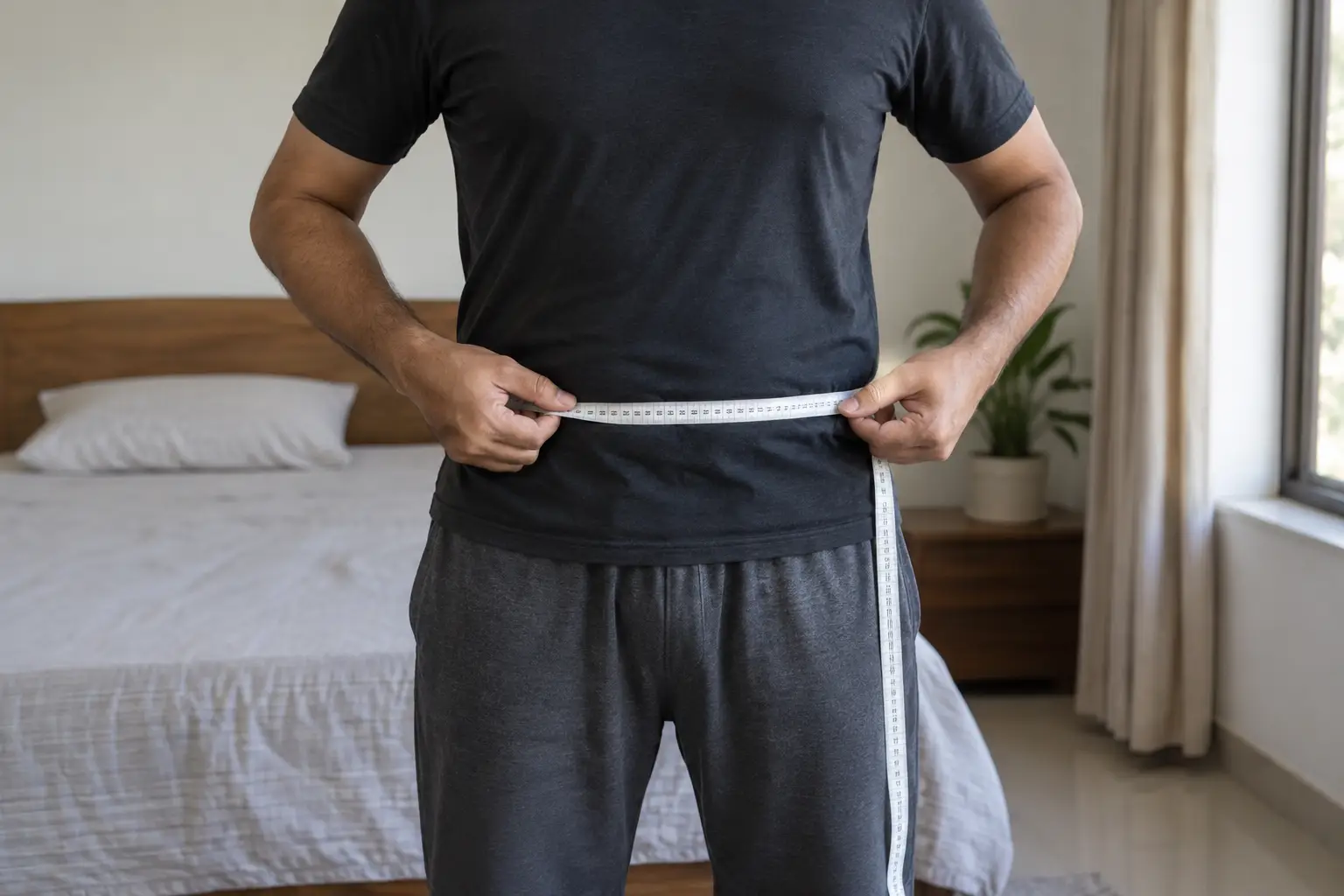
- Stand tall with your feet about hip-width apart and your stomach relaxed.
- Place the tape around your bare waist, midway between the bottom of your lowest rib and the top of your hip bone.
- Keep the tape level around your body and snug against your skin, without pressing in.
- Breathe out normally, then read the number without sucking in or pushing your stomach out.
- Record the measurement and conditions; do not change your plan because of one result.
That is the basic routine. The details below help you make it consistent and avoid common measurement mistakes.
1. Pick a repeatable day and time
Choose a weekly slot that suits your routine. For example, Sunday morning before breakfast might work for you, while a man working weekend shifts may prefer Tuesday morning. The specific day is less important than repeating the same conditions.
Measure at a similar time, ideally before a large meal or workout. Your stomach contents, posture, and recent activity can affect a reading, so measuring first thing on one week and late at night after dinner the next can make comparisons less useful.
You do not need to measure every day. Daily checks can make normal small changes feel more important than they are. One weekly reading, recorded consistently, gives you a clearer way to review your trend.
A useful measurement is one you can repeat—not the smallest number you can get.
2. Find the same spot each time
Stand naturally, with your feet around hip-width apart. Keep your weight balanced and your shoulders relaxed. Do not brace your stomach or pose as if you are taking a photo.
For a standard waist measurement, locate the midpoint between the bottom of your lowest rib and the top of your hip bone. Wrap the tape around that level. It should sit parallel to the floor, rather than slanting upward at the back or dipping at the front.
It can be tricky to find the same point on your own. Use a mirror, or ask someone you trust to help you position the tape. Once you have found the spot, take a moment to notice its location so you can repeat it the following week.
Some people measure at the navel because it is easier to locate. That can still help you follow your own progress if you keep using exactly the same spot, but it may not match a standard waist measurement. Do not switch between the navel and the midpoint during your tracking period.
3. Set the tape correctly
Use a flexible tape that does not stretch. Wrap it around your bare waist, keeping it level all the way around. It should touch your skin without digging in or leaving a mark.
Check the tape in a mirror if possible. Make sure it has not twisted, and look at where the end meets the measurement line. If the tape is too tight, it can pull the skin inward and give a smaller reading. If it is loose, you may record a larger one.
Measure in the same way each week. If you make a mistake—such as reading the tape while it is angled—reset it and take another reading. If two readings differ slightly, take a third and record the middle value. You are aiming for a fair, repeatable check, not perfect laboratory precision.
4. Keep a simple record
Write down the date, measurement, and any useful notes. For example: “Sunday morning, before breakfast, normal routine.” You do not need a detailed diary, but a short note can explain why a particular check was different.
A table or notes app is enough:
| Week | Waist | Note |
|---|---|---|
| 1 | 104 cm | Sunday morning |
| 2 | 103.5 cm | Sunday morning |
| 3 | 103 cm | Sunday morning |
These numbers are only an example, not a promised rate of change. Your own readings may stay the same for a while or move up and down. Look at the trend over several weeks rather than judging your plan by a single measurement.
If you also track body weight, compare patterns rather than expecting both measures to change in a straight line. A waist measurement is one part of the picture; your training consistency, clothing fit, and overall routine can offer helpful context too. For more ways to review changes without overreacting to one number, see how to track progress without obsessing over the scale.
5. Avoid these measurement traps
A few small errors can make your results hard to compare:
- Pulling the tape tight: This can compress your skin and reduce the reading.
- Measuring over clothes: Fabric adds bulk and can shift under the tape.
- Changing the measurement spot: Navel one week and the narrowest point the next are not the same check.
- Sucking in your stomach: It changes the measurement and makes it difficult to repeat naturally.
- Measuring after a large meal: Your stomach may feel fuller than it did in your usual check conditions.
- Checking several times a day: This adds noise without making the trend more useful.
- Changing the plan after one result: One reading does not tell the whole story.
A family dinner, travel, or an unusual schedule can make your normal measurement time difficult. If you cannot measure under your usual conditions, skip that week or note the difference and return to your regular routine next time. Do not turn one missed check into a reason to stop tracking altogether.
6. Use the number as feedback, not a grade
If your waist measurement gradually decreases over several weeks, that may be a sign your overall routine is moving in the direction you want. If it stays similar, first check whether your measurements were taken consistently and whether your meals and activity have followed a repeatable pattern.
A flat reading is not a reason to skip meals or suddenly double your workouts. Review the basics: Are your portions similar from day to day? Are you getting regular movement? Are you completing the training sessions you planned? Small changes that you can maintain are more useful than a drastic response to one number.
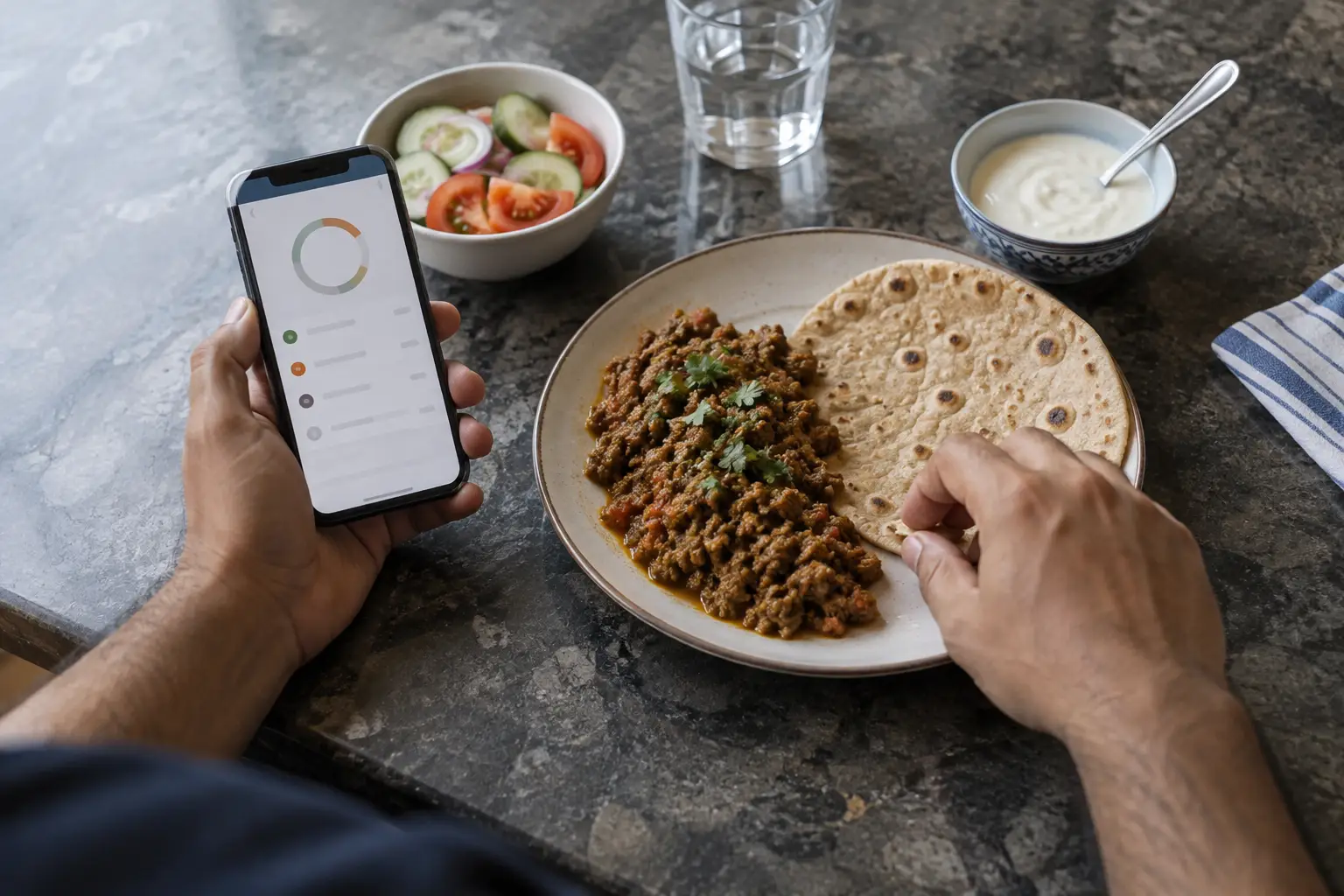
For example, a busy man in the Gulf may spend long hours at a desk and share family meals at home. He could keep his usual roti and daal, choose a steady portion, add a protein source when available, and take a short walk during a break. The point is to build a routine that works with real life, then review the measurement trend after a few weeks.
If you want structure for food, workouts, and regular progress checks, the CU Fit app offers a custom diet built around the foods you already eat, daily workouts that unlock as you progress, weekly check-ins with photos, weight and waist, and progress charts. Coach Usman personally reviews your progress after six check-ins. You can also read about choosing a calorie tracking app with Pakistani foods if you are deciding what kind of tracking suits you.
7. Make your weekly check easy to repeat
Put your tape measure somewhere you will remember it, such as beside your bathroom scale or in your workout bag. Add a weekly reminder to your phone, then record the result straight away. Keep the process brief so it does not become another demanding task in an already full week.
If you miss a measurement, simply continue at your next planned check. There is no need to measure twice the following week or make up for it. Consistency over time matters more than a perfect streak.
If you prefer personal guidance, you can learn about Premium 1:1 coaching, where direct coaching and weekly check-in reviews are available. For readers looking for a weight loss coach pakistan, the important thing is to choose support that fits your schedule and helps you make sensible adjustments.
Conclusion: how to measure waist size accurately for fat loss progress
To measure your waist accurately, choose a regular weekly time, use the same anatomical spot, keep the tape level and snug, and breathe out normally before reading. Record the result and compare several weeks instead of treating one number as a final judgment.
Waist measurement works best as one simple feedback tool alongside habits you can repeat. If your routine needs more structure, start with CU Fit at coachusman.fit. The app includes weekly check-ins, waist and weight tracking, progress charts, a bad-day reset, and Coach Usman’s personal progress review after six check-ins.
Want a plan built around your job and your food? Start with CU Fit at coachusman.fit for an affordable custom diet and workout plan. Want Coach Usman to coach you 1:1? Choose Premium coaching at coachusman.com.
This is general fitness information, not medical advice. Please talk to a doctor before changing your diet or exercise routine, especially if you have a health condition.
FAQ
How often should I measure my waist for fat loss progress?
Once a week is usually enough to follow a trend. Measure on the same day and at a similar time under similar conditions.
Where should I place the tape to measure my waist?
For a standard waist measurement, place the tape around the midpoint between the bottom of your lowest rib and the top of your hip bone. Keep it level and use the same spot each time.
Should I pull my stomach in when measuring my waist?
No. Stand relaxed, breathe out normally, and do not suck in your stomach. Keep the tape snug without pressing into your skin.
Coach Usman, 12+ years of coaching experience
1:1 online coach for Pakistani men worldwide, building fat-loss plans around real jobs, shifts and desi food.
coachusman.comWant a coach who builds the plan around you?
Coach Usman builds your diet and training around your job, your schedule and the desi food you already eat.
Start with Coach UsmanComments (0)
No comments yet. Be the first.